




59 per cent Indians sceptical about covid-19 vaccine, won’t rush to take it: Survey

Agencies
December 2, 2020

1599761909-5711.jpg

New Delhi, Dec 2: With chances of affordable COVID-19 vaccine likely to be available by February 2021, 59 per cent Indians divulged that they will not rush to take it, a survey revealed on Wednesday.

The last few weeks have given hope to the world with three vaccine makers -- Pfizer, Moderna and Oxford-AstraZeneca releasing their efficacy data. Oxford-AstraZeneca has a partnership with Serum Institute of India for production and reports suggest that the vaccine could be available as early as February at Rs 500-600 per dose.

With the possibility of an affordable vaccine by February 2021, a survey was conducted by 'LocalCircles' to understand the hesitancy levels. The survey received more than 25,000 responses from citizens across 262 districts of India.

The first question in the survey asked, "The COVID-19 vaccine is likely to be available from February 2021 via private and Government channels. If that happens, what will be your approach to taking this vaccine?".

Responses from 8,936 citizens were received. Of which, 8 per cent said, "I am a health or frontline worker and will get it on priority through the government", 13 per cent said "will get it as quickly as it becomes available via any healthcare channel", 11 per cent said "will get it as quickly as it becomes available via private healthcare channel".

Another 59 per cent of respondents said that they will not rush to take the vaccine even if it is available in the near future. The perception of the majority of citizens sceptical on taking vaccine has not changed much as compared to the result of the survey conducted in mid-October by LocalCircles.

Sixty-one per cent of 8,312 voters at the time had said they are sceptical about COVID-19 vaccine and will not rush to take it in 2021 even if it is available.

Closer home in India, where Serum Institute of India is conducting trials for the vaccine under name Covishield, a participant who undertook the trial has alleged the vaccine of causing him serious side-effects, both neurological and psychological filing for damages against Serum.

Serum has dismissed the claims as "oblique pecuniary motive" maintaining that the participant's suffering was independent of the vaccine trial he underwent and has sought damages for malicious allegations in excess of Rs 100 crores.

According to some experts, Serum should have made the adverse event public with some already calling this low level of transparency on the vaccine and it possibly leading to increase in distrust amongst citizens.

In July 2020, citizens via LocalCircles had alerted the Drug Controller General of India (DCGI) on black marketing of Remdesivir leading to immediate issuance of an order by DCGI to all state drug controllers asking them to up enforcement against the same. Many posts have been received from citizens in the last 3 weeks raising concerns of black marketing of vaccine.

The second question asked citizens, "Once the COVID-19 vaccine is ready and commercially available, what is the level of black-marketing risk do you envisage?". 8,934 responses were received. Notably, 72 per cent Indians believe that once the vaccine is available, there is a high risk of it being sold in the market.

In mid-July, after the Remdesivir black marketing escalation, LocalCircles on citizen recommendation wrote to Department of Pharmaceuticals and Ministry of Health and Family Welfare to implement serial number and bar code based tracking of vaccine from factory to administration to a patient such that there is no room for black-marketing.

The same was acknowledged by Department of Pharmaceuticals which directed the National Pharmaceutical Pricing Authority (NPPA) to evaluate the same. In early October, the Government announced the implementation of a digital platform to track the administration of the COVID-19 vaccine, movement, storage and distribution to individual beneficiaries. However the timeline of this platform's availability is still unclear.

The third question asked citizens, "Should the vaccine be rolled out for hospitals only after a digital platform is introduced with the use of a unique serial number to track the supply of COVID-19 vaccine from factory to administration to citizens?".

Of 7,786 responses, 65 per cent of citizens believe that the COVID-19 vaccine should not be rolled out till a digital platform to track every dose from factory to final administration to citizens is functional.

With 65 per cent citizens believing that the vaccine should not be rolled for commercial or hospital use till the digital vaccine tracking platform is ready indicates that people of India believe that there is a high risk that the vaccine without a working digital platform could get in the wrong hands leading to black-marketing scenarios and even counterfeiting.

The digital vaccine tracking platform would reportedly need to track the supply of close to 1.7 billion COVID-19 vaccine doses needed to immunise most of India's adult population - a mammoth task than any in the history, keeping in mind the country's experience with large immunisation campaigns.

The Prime Minister has asked all States to set up steering committees and task forces, down to block level preparation for COVID-19 vaccine disbursal so India is prepared when the vaccine does become ready.

Comments

Add new comment

  • Coastaldigest.com reserves the right to delete or block any comments.
  • Coastaldigset.com is not responsible for its readers’ comments.
  • Comments that are abusive, incendiary or irrelevant are strictly prohibited.
  • Please use a genuine email ID and provide your name to avoid reject.
News Network
December 3,2025

indigo.jpg

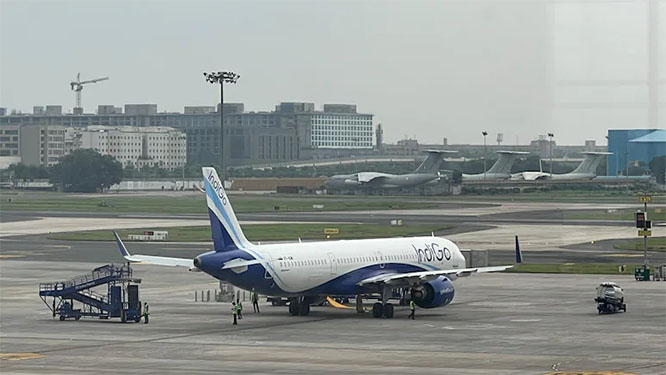
IndiGo, India’s largest airline, is battling one of its worst operational disruptions in recent years, with hundreds of delays and cancellations throwing domestic travel into chaos.

Government data on Tuesday showed its on-time performance plunging to 35%, an unusual dip for a carrier long associated with punctuality.

By Wednesday afternoon, airports in Delhi, Mumbai, Bengaluru and Hyderabad had collectively reported close to 200 cancellations, stranding travellers across the country.

Crew Shortage After New Duty Norms

A major trigger behind the meltdown is a severe crew shortage, especially among pilots, following the rollout of revised Flight Duty Time Limitation (FDTL) norms last month.

The rules mandate longer rest hours and more humane rosters — a shift IndiGo has struggled to incorporate across its vast network.

Sources said several flights were grounded due to lack of cabin crew, while some delays stretched upwards of eight hours.

With IndiGo controlling over 60% of India’s domestic aviation market, the ripple effect has impacted airports nationwide.

IndiGo Issues Apology, Lists “Compounding Factors”

In a statement, IndiGo acknowledged the large-scale disruption:

“We sincerely apologise to customers. A series of unforeseen operational challenges — technology glitches, winter schedule changes, adverse weather, system congestion and updated FDTL norms — created a compounding impact that could not have been anticipated.”

To stabilise operations, the airline has begun calibrated schedule adjustments for the next 48 hours, aiming to restore punctuality. Affected passengers are being offered refunds or alternate travel arrangements, IndiGo said.

What the FDTL Rules Require

The FDTL norms, designed to reduce pilot fatigue, cap duty and flying hours as follows:
•    Maximum 8 hours of flying per day
•    35 hours per week
•    125 hours per month
•    1,000 hours per year

Crew must also receive rest equalling twice the flight duration, with a minimum 10-hour rest period in any 24-hour window.

The DGCA introduced these limits to enhance flight safety.

Hyderabad: 33 Flights Cancelled, Long Queues Reported

Hyderabad’s Rajiv Gandhi International Airport saw heavy early-morning crowds as 33 IndiGo flights (arrivals and departures) were cancelled.

The airport clarified on X that operations were normal, advising passengers to contact IndiGo directly for latest flight status.

Cancellations included flights to and from Visakhapatnam, Goa, Ahmedabad, Delhi, Bengaluru, Chennai, Madurai, Hubli, Bhopal and Bhubaneswar.

Bengaluru: 42 Flights Disrupted

Bengaluru’s Kempegowda International Airport recorded 42 cancellations — 22 arrivals and 20 departures — affecting routes to Delhi, Mumbai, Chennai, Hyderabad, Goa, Kolkata and Lucknow.

Passengers Vent on Social Media

Irate travellers took to X to share their experiences. One passenger stranded in Hyderabad wrote: “I have been here since 3 a.m. and missed an important meeting.”

Another said: “My flight was pushed from 1:55 PM to 2:55 PM and now 4:35 PM. I was informed only three minutes before entering the airport.”

Delhi Airport Hit by Tech Glitch

At Delhi Airport, the disruption deepened due to a slowdown in the Amadeus system — used for reservations, check-ins and departure control.

The technical issue led to longer queues and sluggish processing, adding to delays already worsened by staff shortages.

Comments

Add new comment

  • Coastaldigest.com reserves the right to delete or block any comments.
  • Coastaldigset.com is not responsible for its readers’ comments.
  • Comments that are abusive, incendiary or irrelevant are strictly prohibited.
  • Please use a genuine email ID and provide your name to avoid reject.
News Network
December 7,2025

Mangaluru, Dec 7: A 34-year-old fruit and vegetable trader in Mangaluru has reportedly lost ₹33.1 lakh after falling victim to an online investment scam run through a fake mobile app.

Police said the scam began in September, when the victim received a link on Facebook. Clicking it connected him to a WhatsApp number, where an unidentified person introduced a high-return investment scheme and instructed him to download an app.

To build trust, the fraudster asked him to invest ₹30,000 on September 24. The trader soon received ₹34,000 as “profit,” convincing him the scheme was genuine. Over the next two months, he transferred money in multiple instalments via Google Pay and IMPS to different scanner codes and bank accounts shared by the scammers. Between September 24 and December 3, he ended up sending a total of ₹33.1 lakh.

When he later requested a refund of his investment and promised returns, the scammers demanded additional payments, claiming he needed to pay a “service tax” first. Even after he paid a small amount, no money was returned, and the scammers continued pressuring him for more.

A case has been registered at the CEN Crime Police Station.

Comments

Add new comment

  • Coastaldigest.com reserves the right to delete or block any comments.
  • Coastaldigset.com is not responsible for its readers’ comments.
  • Comments that are abusive, incendiary or irrelevant are strictly prohibited.
  • Please use a genuine email ID and provide your name to avoid reject.
News Network
December 6,2025

pilot.jpg

New Delhi: IndiGo, India’s largest airline, faced major operational turbulence this week after failing to prepare for new pilot-fatigue regulations issued by the Directorate General of Civil Aviation (DGCA). The stricter rules—designed to improve flight safety—took effect in phases through 2024, with the latest implementation on November 1. IndiGo has acknowledged that inadequate roster planning led to widespread cancellations and delays.

Below are the key DGCA rules that affected IndiGo’s operations:

1. Longer Mandatory Weekly Rest

Weekly rest for pilots has been increased from 36 hours to 48 hours.

The government says the extended break is essential to curb cumulative fatigue. This rule remains in force despite the current crisis.

2. Cap on Night Landings

Pilots can now perform only two night landings per week—a steep reduction from the earlier limit of six.

Night hours, defined as midnight to early morning, are considered the least alert period for pilots.

Given the disruptions, this rule has been temporarily relaxed for IndiGo until February 10.

3. Reduced Maximum Night Flight Duty

Flight duty that stretches into the night is now capped at 10 hours.

This measure has also been kept on hold for IndiGo until February 10 to stabilize operations.

4. Weekly Rest Cannot Be Replaced With Personal Leave

Airlines can no longer count a pilot’s personal leave as part of the mandatory 48-hour rest.

Pilots say this closes a loophole that previously reduced actual rest time.

Currently, all airlines are exempt from this rule to normalise travel.

5. Mandatory Fatigue Monitoring

Airlines must submit quarterly fatigue reports along with corrective actions to DGCA.

This system aims to create a transparent fatigue-tracking framework across the industry.

The DGCA has stressed that these rules were crafted to strengthen flight safety and align India with global fatigue-management standards. The temporary relaxations are expected to remain until February 2025, giving IndiGo time to stabilise its schedules and restore normal air travel.

Comments

Add new comment

  • Coastaldigest.com reserves the right to delete or block any comments.
  • Coastaldigset.com is not responsible for its readers’ comments.
  • Comments that are abusive, incendiary or irrelevant are strictly prohibited.
  • Please use a genuine email ID and provide your name to avoid reject.
