6 years on, people of India still smarting from deadly note-ban blow

News Network
January 2, 2023

noteban.jpg

New Delhi, Jan 2: The father with money in the bank but none to pay vendors for his daughter’s wedding, the retailer scrounging for funds to keep business going, the house help who didn’t get a salary for two months.

On Monday, these and many other similar tales of hardship became alive again, when the Supreme Court upheld the government's November 8, 2016 decision to demonetise Rs 1000 and Rs 500 denomination notes.

The decision, touted by the government to be a 'surgical attack' on black money, missed its mark by a great margin and became the bane of the daily-wage labourers and poor Indians, a section which relies almost exclusively on cash.

To 38-year-old house help Parvesh, even the mere mention of the word 'notebandi' sends a shiver down her spine.

The single mother of a 20-year-old son said she was forced to work without a salary for almost two months and went empty stomach for days at a stretch.

"It was the worst time of my life. Worse than even Covid-19, because during the Covid there was at least some help from the government and society at large. But during demonetisation, we are left alone to suffer," said Parvesh.

"I mean how can I expect my employer to help me when he himself was struggling with money?" she said, having little to no idea about Monday's Supreme Court verdict.

The SC in its verdict said the decision-making process behind the 2016 demonetisation was "not flawed."

In a five-judge bench, four judges voted in favour of upholding the note-ban decision-making whereas one judge dissented.

The pain was not limited to the poor, and the middle class too struggled to understand the withdrawal rules that cascaded with everyday regularity in the wake of demonetisation. Nor was it any more inured to the agony of standing in the unending queues before the ATMs, which too often ran out of cash, and too early.

Many small-scale businesses are still reeling from demonetisation.

"Our business relies on cash and this makes it impossible for us to function properly and run our business. A limited time was given by the government to exchange the cash left with us, we were in continuous confusion about whether we should do business or stand in long queues for hours to get our cash exchanged," Manish Shah, a Surat-based retailer, recounted.

"The whole business cycle was disrupted in the entire country," he added.

For Jammu-based Rajendra Gupta, the cash crunch due had turned the once-in-a-lifetime occasion of his only daughter's wedding into a nightmare.

He recalled how he was made to beg for his own hard-earned money to pay the vendors so that preparations could go on without a hitch.

"I didn't have enough money to pay the vendors. There was a limitation on how much money you could withdraw from banks. And then the government's continuous flip-flop on rules and regulations and whatnot," he said.

An unprecedented rush at her workplace with hundreds scrambling to get inside was the last thing Taniya Sharma, then a trainee at a leading bank in New Delhi, thought she would witness in the initial days of her career.

"There were scuffles, sights of people crying, some even collapsing -- I saw it all. Those scenes continue to haunt me till today," Sharma recalled. "The verdict does little to victims of those times."

According to reports, several people died in different parts of the country while standing in queues for money withdrawal and exchange of the scrapped notes.

In March 2017, months before the status quo would return, the Union government said it had "no official report" on how many people died in queues.

"No such official report has been received," Minister of State for Finance Arjun Ram Meghwal had then said in a written reply in the Lok Sabha. 

Comments

Add new comment

  • Coastaldigest.com reserves the right to delete or block any comments.
  • Coastaldigset.com is not responsible for its readers’ comments.
  • Comments that are abusive, incendiary or irrelevant are strictly prohibited.
  • Please use a genuine email ID and provide your name to avoid reject.
News Network
December 3,2025

indigo.jpg

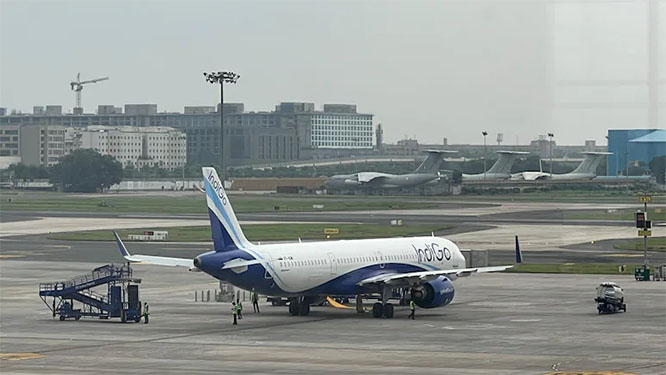
IndiGo, India’s largest airline, is battling one of its worst operational disruptions in recent years, with hundreds of delays and cancellations throwing domestic travel into chaos.

Government data on Tuesday showed its on-time performance plunging to 35%, an unusual dip for a carrier long associated with punctuality.

By Wednesday afternoon, airports in Delhi, Mumbai, Bengaluru and Hyderabad had collectively reported close to 200 cancellations, stranding travellers across the country.

Crew Shortage After New Duty Norms

A major trigger behind the meltdown is a severe crew shortage, especially among pilots, following the rollout of revised Flight Duty Time Limitation (FDTL) norms last month.

The rules mandate longer rest hours and more humane rosters — a shift IndiGo has struggled to incorporate across its vast network.

Sources said several flights were grounded due to lack of cabin crew, while some delays stretched upwards of eight hours.

With IndiGo controlling over 60% of India’s domestic aviation market, the ripple effect has impacted airports nationwide.

IndiGo Issues Apology, Lists “Compounding Factors”

In a statement, IndiGo acknowledged the large-scale disruption:

“We sincerely apologise to customers. A series of unforeseen operational challenges — technology glitches, winter schedule changes, adverse weather, system congestion and updated FDTL norms — created a compounding impact that could not have been anticipated.”

To stabilise operations, the airline has begun calibrated schedule adjustments for the next 48 hours, aiming to restore punctuality. Affected passengers are being offered refunds or alternate travel arrangements, IndiGo said.

What the FDTL Rules Require

The FDTL norms, designed to reduce pilot fatigue, cap duty and flying hours as follows:
•    Maximum 8 hours of flying per day
•    35 hours per week
•    125 hours per month
•    1,000 hours per year

Crew must also receive rest equalling twice the flight duration, with a minimum 10-hour rest period in any 24-hour window.

The DGCA introduced these limits to enhance flight safety.

Hyderabad: 33 Flights Cancelled, Long Queues Reported

Hyderabad’s Rajiv Gandhi International Airport saw heavy early-morning crowds as 33 IndiGo flights (arrivals and departures) were cancelled.

The airport clarified on X that operations were normal, advising passengers to contact IndiGo directly for latest flight status.

Cancellations included flights to and from Visakhapatnam, Goa, Ahmedabad, Delhi, Bengaluru, Chennai, Madurai, Hubli, Bhopal and Bhubaneswar.

Bengaluru: 42 Flights Disrupted

Bengaluru’s Kempegowda International Airport recorded 42 cancellations — 22 arrivals and 20 departures — affecting routes to Delhi, Mumbai, Chennai, Hyderabad, Goa, Kolkata and Lucknow.

Passengers Vent on Social Media

Irate travellers took to X to share their experiences. One passenger stranded in Hyderabad wrote: “I have been here since 3 a.m. and missed an important meeting.”

Another said: “My flight was pushed from 1:55 PM to 2:55 PM and now 4:35 PM. I was informed only three minutes before entering the airport.”

Delhi Airport Hit by Tech Glitch

At Delhi Airport, the disruption deepened due to a slowdown in the Amadeus system — used for reservations, check-ins and departure control.

The technical issue led to longer queues and sluggish processing, adding to delays already worsened by staff shortages.

Comments

Add new comment

  • Coastaldigest.com reserves the right to delete or block any comments.
  • Coastaldigset.com is not responsible for its readers’ comments.
  • Comments that are abusive, incendiary or irrelevant are strictly prohibited.
  • Please use a genuine email ID and provide your name to avoid reject.
News Network
November 24,2025

israelsyra.jpg

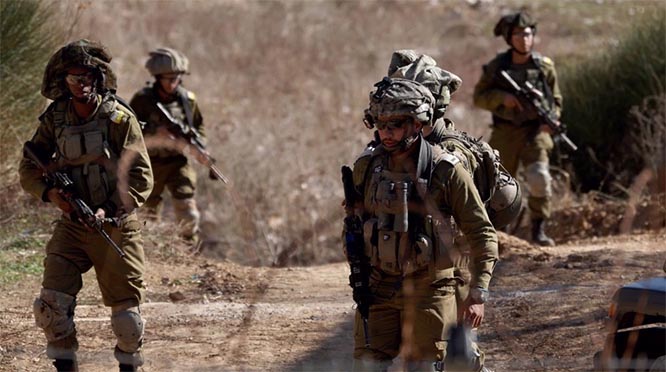
Israeli forces have pushed over the Syrian frontier, erecting a checkpoint and stopping vehicles in the southwestern city of Quneitra, in yet another breach of the Arab country’s sovereignty.

The violation took place on Sunday, when the troops made their way across the border, setting up the outpost near the Ain al-Bayda junction in northern Quneitra, Syrian outlets reported.

According to the al-Ikhbariya paper, an Israeli detachment positioned itself at the junction, halting cars and conducting searches.

The Syrian Arab News Agency (SANA) reported that three Israeli military vehicles then moved further into the northern countryside, deploying between the town of Jubata al-Khashab and the villages of Ofaniya and Ain al-Bayda. The agency added that a separate Israeli unit mounted a new incursion in the central region, approaching the villages of Umm Batina and al-Ajraf.

Residents said such activities have surged in recent months, pointing to Israeli advances onto farmland, leveling of extensive forested areas, arrests, and spread of mobile checkpoints.

The Israeli regime began markedly increasing its military aggression against Syria last year.

The escalation coincided with increasingly ferocious onslaughts throughout the country by the so-called Hay'at Tahrir al-Sham (HTS) Takfiri terrorist group, which the government of President Bashar al-Assad had confined to northwestern Syria. The HTS, however, managed to overthrow the government as the Israeli attacks would pummel the country’s civilian and defensive infrastructure.

Various reports have shown that, during the escalation, the regime conducted more than 1,000 airstrikes on the Syrian territory and over 400 ground raids into the south.

Following the collapse of the Assad government, Tel Aviv also widened its grip over the occupied Golan Heights by taking control of a demilitarized buffer zone, in defiance of a 1974 Disengagement Agreement. Earlier this month, senior Israeli officials, including Prime Minister Benjamin Netanyahu, visited the buffer zone, prompting expressions of alarm on the part of the United Nations.

The United States, the regime’s biggest ally, has, meanwhile, been fraternizing the HTS head Abu Mohammed al-Jolani amid the widely reported prospect of rapprochement with Tel Aviv.

Comments

Add new comment

  • Coastaldigest.com reserves the right to delete or block any comments.
  • Coastaldigset.com is not responsible for its readers’ comments.
  • Comments that are abusive, incendiary or irrelevant are strictly prohibited.
  • Please use a genuine email ID and provide your name to avoid reject.
News Network
December 3,2025

arrival.jpg

Mangaluru, Dec 3: A group of Congress workers gathered at the Mangaluru International Airport on Wednesday to welcome AICC general secretary K C Venugopal, but the reception quickly turned into a display of support for Deputy Chief Minister D K Shivakumar.

Venugopal arrived in the city to participate in the centenary commemoration of the historic dialogue between Mahatma Gandhi and Narayana Guru. The event, organised by the Sivagiri Mutt, Varkala, in association with the Mangalore University Sri Narayana Guru Study Chair, is being held on the university’s Konaje campus.

KPCC general secretary Mithun Rai and several party workers had assembled at the airport to receive Venugopal. However, the moment he stepped out, workers began raising slogans backing Shivakumar.

The university programme will be inaugurated by Chief Minister Siddaramaiah.

This show of support comes just a day after Siddaramaiah remarked that Shivakumar would lead the government “when the high command decides.” The chief minister made the comment after a breakfast meeting at Shivakumar’s residence—another public display of camaraderie between the two leaders amid ongoing attempts by the party high command to downplay their leadership rivalry.

Comments

Add new comment

  • Coastaldigest.com reserves the right to delete or block any comments.
  • Coastaldigset.com is not responsible for its readers’ comments.
  • Comments that are abusive, incendiary or irrelevant are strictly prohibited.
  • Please use a genuine email ID and provide your name to avoid reject.