



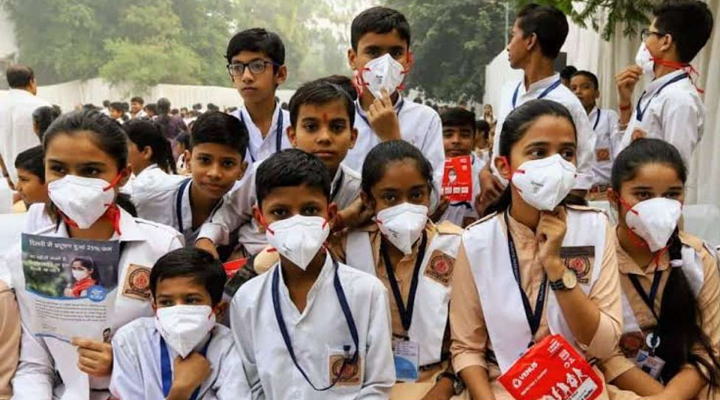
Check out complete guidelines for reopening of schools for 9th to 12th students

News Network
September 10, 2020

school.jpg

New Delhi, Sept 10: The Union health ministry on September 8 announced that higher educational institutions as well as skill training centres can resume their classes from September 21. Releasing a standard operating procedure (SOP), the ministry asked institutions to implement staggered classroom activities with separate time slots, mandatory six feet distance between desks and carry out disinfection of premises, among other COVID-19 safety measures. All States/UTs are expected to comply with the COVID-19 related guidelines issued by Ministry of Home Affairs and Ministry of Health & Family Welfare.

Check out the complete SOP guideline for the partial reopening of Schools for students of 9th to 12th classes on a voluntary basis, for taking guidance from their teachers

Generic Preventive Measures

The generic preventive measures include simple public health measures that are to be followed to reduce the risk of COVID-19. These measures need to be observed by all (teachers, employees and students) in these places at all times. These include:

• Physical distancing of at least 6 feet to be followed as far as feasible.

• Use of face covers/masks to be made mandatory.

• Frequent hand washing with soap (for at least 40-60 seconds) even when hands are not visibly dirty. Use of alcohol-based hand sanitizers (for at least 20 seconds) can be done wherever feasible.

• Respiratory etiquettes to be strictly followed. This involves strict practice of covering one’s mouth and nose while coughing/sneezing with a tissue/handkerchief/flexed elbow and disposing off used tissues properly.

• Self-monitoring of health by all and reporting any illness at the earliest.

• Spitting shall be strictly prohibited.

• Installation & use of Aarogya Setu App may be advised wherever feasible.

Before opening up of the school

Planning of reopening of school

• School outside the containment zones only shall be allowed to open. Further, students, teachers and employees living in containment zones will not be allowed to attend the school. Students, teachers and employees shall also be advised not to visit areas falling within containment zones.

• Prior to resumption of activities, all work areas intended for teaching/demonstrations etc., including laboratories, other common utility areas shall be sanitized with 1% sodium hypochlorite solution, with particular attention to frequently touched surfaces.

• Schools that were used as quarantine centres will be properly sanitized and deep cleaned before partial functioning is resumed. The concerned teaching and non-teaching employees (up to 50 % of the strength) may be called to schools for online teaching/tele-counselling and related work.

• Students from class 9th to 12th will have the option of attending the classes remotely/virtually or physically only on a voluntary basis for guidance from their teachers subject to written permission of parent / guardian.

• Instead of biometric attendance alternate arrangements for contactless attendance shall be made by the school administration.

• At all times, the teachers and students shall maintain a physical distancing of 6 feet apart, wherever feasible. Scheduling of activities and seating plan shall be made accordingly.

• Ensure hand washing facilities along with provision of soap.

• For ensuring queue management, inside and outside the premises, specific markings on the floor with a gap of 6 feet may be made. Similarly, physical distancing shall also be maintained in staff rooms, office areas (including reception area), and other places (mess, libraries, cafeterias, etc.)

• Weather permitting, outdoor spaces may be utilized for conducting teacher student interactions, keeping in view the safety and security of students and physical distancing protocols.

• Assemblies, sports and events that can lead to overcrowding are strictly prohibited.

• The school should display State helpline numbers and also numbers of local health authorities etc. to teachers /students / employees to contact in case of any emergency.

• For air-conditioning/ventilation, the guidelines of CPWD shall be followed which emphasizes that the temperature setting of all air conditioning devices should be in the range of 24-30oC, relative humidity should be in the range of 40-70%, intake of fresh air should be as much as possible and cross ventilation should be adequate.

• Lockers of students will remain in use, as long as physical distancing and regular disinfection is maintained.

• Gymnasiums shall follow MoHFW guidelines

• Swimming Pool (wherever applicable) shall remain closed.

Planning and scheduling of activities

All employees who are at higher risk i.e. older employees, pregnant employees and employees who have underlying medical conditions to take extra precautions. They should preferably not be exposed to any front-line work requiring direct contact with the students.

Availability and management of supplies

• Appropriate back-up stock of personal protection items like face covers/masks, visors, hand sanitizers etc. shall be made available by management to the teachers and employee.

• Provide an adequate supply of thermal guns, alcohol wipes or 1% sodium hypochlorite solutions and disposable paper towels, soap, IEC materials on COVID.

• Pulse oximeter to check oxygen saturation levels of any symptomatic person must be arranged.

• Ensure availability of sufficient covered dustbins and trash cans

• Provision for proper disposal of used personal protective items and general waste in accordance with CPCB guidelines

• Housekeeping employee to be informed & trained about norms for waste management & disposal

After opening of the schools

At the entry point

• Entrance to have mandatory hand hygiene (sanitizer dispenser) and thermal screening provisions. Multiple gates/separate gates, if feasible, should be used for entry and exit.

• Only asymptomatic persons (teachers, employees and students) to be allowed in the premises. If a teacher/employee/student is found to be symptomatic, he/she should be referred to nearest health center.

• Posters/standees on preventive measures about COVID-19 to be displayed prominently.

• Proper crowd management in the parking lots, in corridors and in elevators – duly following physical distancing norms shall be organized.

• Entry of visitors should be strictly regulated/restricted.

Conduct of guidance activities in the rooms or open spaces within the school campus

• Seating arrangement to ensure a distance of 6 feet between chairs, desks etc.

• Staggering of guidance activities to be done, with separate timing slots, to allow for adequate physical distancing and disinfection of classroom premises

• The teaching faculty will ensure that they themselves and students wear masks throughout the conduct of the teaching/guidance activities.

• Sharing of items like notebook, pens/pencil, eraser, water bottle etc. amongst students should not be allowed.

Conduct of skill based training in workshops/laboratories

• For practical activities in laboratories maximum capacity per session based on redesigned spaces, may be planned and scheduled accordingly.

• Ensure that the equipments have been disinfected, particularly the frequently touched surfaces before and after each use.

• Ensure a floor area of 4m2 per person is available for working on equipment/work station.

• Ensure that members sanitize their hands before and after using training equipment. For such purpose hand sanitizer should be provided at workstations/simulation labs etc.

Activities in common areas – library, mess/canteen, common rooms, gymnasium etc.

• Physical distancing of 6 feet needs to be maintained

• Persons using the common areas need to use mask/face cover all the time

• Cafeteria/mess facility, if any within the premises, shall remain closed.

Transportation to and from the institution

If transportation facility is being managed by the school, proper physical distancing, sanitization of buses/other transport vehicles (with 1% sodium hypochlorite) shall be ensured.

Hygiene and Sanitation

• Daily cleaning of the floors shall be taken up.

• Provision of soap in toilets and hand sanitizers in other common areas in sufficient quantity must be ensured.

• Cleaning and regular disinfection (using 1% sodium hypochlorite) of frequently touched surfaces (door knobs, elevator buttons, hand rails, chairs, benches, washroom fixtures, etc.) to be made Page 5 of 5 mandatory in all class rooms, laboratories, lockers, parking areas, other common areas etc. before beginning of classes and at the end of the day.

• Teaching materials, computers, laptops, printers, shall be disinfected with 70% alcohol wipes.

• Deep cleaning of all drinking and hand washing stations, washrooms and lavatories shall be ensured.

• Students and employee should be advised to dispose of used face covers / masks in separate covered bins placed in classrooms, work stations and other common areas. The same may remain stored in the bins for 3 days and disposed of as dry general solid waste after cutting/shredding.

• Students should not be involved in any of the cleaning activities for health safety reasons.

SOP to be followed in case a student/teacher/employee develops symptoms (fever, cough, difficulty in breathing)

• Place the ill person in a room or area where they are isolated from others.

• Inform parents/guardians as the case may be.

• Patient will remain isolated while wearing a mask/face cover till such time they are examined by a doctor.

• Immediately inform the nearest medical facility (hospital/clinic) or call the state or district helpline.

• A risk assessment shall be undertaken by the designated public health authority (district RRT/treating physician) and accordingly further action be initiated regarding management of case, their contacts and need for disinfection.

• Disinfection of the premises to be taken up if the person is found positive.

Comments

Add new comment

  • Coastaldigest.com reserves the right to delete or block any comments.
  • Coastaldigset.com is not responsible for its readers’ comments.
  • Comments that are abusive, incendiary or irrelevant are strictly prohibited.
  • Please use a genuine email ID and provide your name to avoid reject.
News Network
December 4,2025

indigoflight.jpg

Domestic carrier IndiGo has cancelled over 180 flights from three major airports — Mumbai, Delhi and Bengaluru — on Thursday, December 4, as the airline struggles to secure the required crew to operate its flights in the wake of new flight-duty and rest-period norms for pilots.

While the number of cancellations at Mumbai airport stands at 86 (41 arrivals and 45 departures) for the day, at Bengaluru, 73 flights have been cancelled, including 41 arrivals, according to a PTI report that quoted sources.

"IndiGo cancelled over 180 flights on Thursday at three airports-Mumbai, Delhi and Bengaluru," the source told the news agency.

Besides, it had cancelled as many as 33 flights at Delhi airport for Thursday, the source said, adding, "The number of cancellations is expected to be higher by the end of the day."

The Gurugram-based airline's On-Time Performance (OTP) nosedived to 19.7 per cent at six key airports — Delhi, Mumbai, Chennai, Kolkata, Bengaluru and Hyderabad — on December 3, as it struggled to get the required crew to operate its services, down from almost half of December 2, when it was 35 per cent.

"IndiGo has been facing acute crew shortage since the implementation of the second phase of the FDTL (Flight Duty Time Limitations) norms, leading to cancellations and huge delays in its operations across the airports," a source had told PTI on Wednesday.

Chaos continued at several major airports for the third day on Thursday because of the cancellations.

A spokesperson for the Kempegowda International Airport (KIA) in Bengaluru said that 73 IndiGo flights had been cancelled on Thursday.

At least 150 flights were cancelled and dozens of others delayed on Wednesday, airport sources said, leaving thousands of travellers stranded, according to news agency Reuters.

The Directorate General of Civil Aviation (DGCA) has said it is investigating IndiGo flight disruptions and has asked the airline to submit the reasons for the current situation, as well as its plans to reduce flight cancellations and delays.

It may be mentioned here that the pilots' body, Federation of Indian Pilots (FIP), has alleged that IndiGo, despite getting a two-year preparatory window before the full implementation of new flight duty and rest period norms for cockpit crew, "inexplicably" adopted a "hiring freeze".

The FIP said it has urged the safety regulator, the DGCA, not to approve airlines' seasonal flight schedules unless they have adequate staff to operate their services "safely and reliably" in accordance with the New Flight Duty Time Limitations (FDTL) norms.

In a letter to the DGCA late on Wednesday, the FIP urged the DGCA to consider re-evaluating and reallocating slots to other airlines, which have the capacity to operate them without disruption during the peak holiday and fog season if IndiGo continues to "fail in delivering on its commitments to passengers due to its own avoidable staffing shortages."

Comments

Add new comment

  • Coastaldigest.com reserves the right to delete or block any comments.
  • Coastaldigset.com is not responsible for its readers’ comments.
  • Comments that are abusive, incendiary or irrelevant are strictly prohibited.
  • Please use a genuine email ID and provide your name to avoid reject.
News Network
December 2,2025

A major upgrade in safety and monitoring is planned for Haj 2026, with every Indian pilgrim set to receive a Haj Suvidha smart wristband linked to the official Haj Suvidha mobile app. The initiative aims to support pilgrims—especially senior citizens—who may struggle with smartphones during the 45-day journey.

What the Smart Wristband Will Do

Officials said the device will come with:
•    Location tracking
•    Pedometer
•    SOS emergency button
•    Qibla compass
•    Prayer timings
•    Basic health monitoring

SP Tiwari, secretary of the UP State Haj Committee, said the goal is to make the pilgrimage safer and more comfortable.

“Most Hajis are elderly and not comfortable with mobile apps,” he said. “The smartwatch will help locate pilgrims who forget their way or cannot communicate their location.”

The wristbands will be monitored by the Consulate General of India in Saudi Arabia, similar to mobile tracking via the Haj Suvidha App.

Free Distribution and Training

•    Smart wristbands will be given free of cost.
•    Training for pilgrims will be conducted between January and February 2026.
•    Sample units will reach state Haj committees soon.
•    Final devices will be distributed as pilgrims begin their journey.

New Rules for Accommodation

Two major decisions have also been finalised for Haj 2026:
1.    Separate rooms for men and women – including married couples. They may stay on the same floor but must occupy different rooms, following stricter Saudi guidelines.
2.    Cooking banned – gas cylinders will not be allowed; all meals will be provided through official catering services arranged by the Haj Committee of India.

These decisions were finalised during a meeting of the Haj Committee of India and state representatives in Mumbai.

Haj Suvidha App Launched Earlier

The government launched the Haj Suvidha App in 2024, offering:

•    Training modules
•    Accommodation and flight details
•    Baggage information
•    SOS and translation tools
•    Grievance redressal

Haj 2026 Quota and Key States

•    India’s total Haj quota for 2026: 1,75,025 pilgrims
•    70% (1,25,000) allotted to the Haj Committee of India
•    30% (around 50,000) reserved for Haj Group Organisers

Uttar Pradesh has the largest allocation (around 30,000 seats), though approximately 18,000 pilgrims are expected to go this year. States with high pilgrim numbers include Kerala, Maharashtra and Gujarat.

Dates of Haj 2026

The pilgrimage is scheduled to take place from 24 May to 29 May, 2026 (tentative).
Haj is one of the five pillars of Islam and is mandatory for Muslims who meet the required conditions.

Comments

Add new comment

  • Coastaldigest.com reserves the right to delete or block any comments.
  • Coastaldigset.com is not responsible for its readers’ comments.
  • Comments that are abusive, incendiary or irrelevant are strictly prohibited.
  • Please use a genuine email ID and provide your name to avoid reject.
News Network
November 30,2025

The United Nations Committee against Torture (CAT) has condemned the Israeli regime for enforcing a policy of “organized torture” against Palestinians.

In a report published on Friday, CAT stated that the occupying regime enforces a deliberate policy of “organized and widespread torture and ill-treatment” against Palestinian abductees, particularly since October 7, 2023, when Israel launched its genocidal war on Gaza.

The committee expressed “deep concern over repeated severe beatings, dog attacks, electrocution, water-boarding, use of prolonged stress positions [and] sexual violence” inflicted on Palestinians.

Palestinian prisoners were degraded by “being made to act like animals or being urinated on,” systematically denied medical care, and subjected to excessive restraints, “in some cases resulting in amputation,” the report added.

CAT also condemned the routine application of “unlawful combatants law” to justify the prolonged detention without trial of thousands of Palestinian men, women, and children.

More than 10,000 Palestinians, including women and children, are currently held in Israeli prisons, according to Palestinian and international human rights groups, with 3,474 Palestinians in “administrative detention,” meaning they are imprisoned without trial for indefinite periods.

The report highlighted the “high proportion of children who are currently detained without charge or on remand,” noting that while Israel sets the age of criminal responsibility at 12, even younger children have been abducted.

Children designated as security prisoners face severe restrictions on family contact, may be subjected to solitary confinement, and are denied access to education, in clear violation of international law.

The committee further suggested that Israel’s policies across the Occupied Territories constitute collective torture against the Palestinian population.

“A range of policies adopted by Israel in the course of its continued unlawful presence in the Occupied Palestinian Territory amounts to cruel, inhuman or degrading living conditions for the Palestinian population,” the report said.

On Thursday, the Palestinian resistance movement Hamas condemned the systematic killing and torture of Palestinian abductees in Israeli prisons, urging international action to halt these abuses.

Citing human rights data, Hamas stated that 94 Palestinians have been killed in Israeli prisons since the start of Tel Aviv’s genocidal war on Gaza.

“This reflects an organized criminal approach that has turned these prisons into direct killing grounds to eliminate our people,” the resistance movement said.

Hamas called on the international community, the UN, and human rights organizations to immediately pressure Israel to end crimes against prisoners and uphold their rights as guaranteed by all international conventions and norms.

Comments

Add new comment

  • Coastaldigest.com reserves the right to delete or block any comments.
  • Coastaldigset.com is not responsible for its readers’ comments.
  • Comments that are abusive, incendiary or irrelevant are strictly prohibited.
  • Please use a genuine email ID and provide your name to avoid reject.