



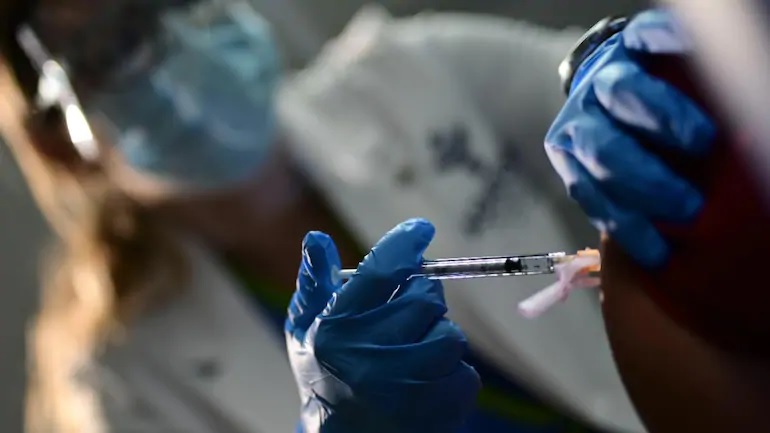
New Delhi, Dec 28: Dry runs of the coronavirus vaccination programme started on Monday in four states, a day after India recorded its lowest single-day rise in Covid-19 cases in nearly six months.
The two-day dry run from Monday in four states comes ahead of Centre's proposed ambitious vaccination drive likely to be kicked off in January.
What is a dry run?
To assess the readiness of the mechanism laid out for the Covid-19 vaccination drive, a dry run has been planned by the Centre on December 28 and 29 in four states Punjab, Assam, Andhra Pradesh and Gujarat.
A dry run is aimed at testing the planned operations and the laid out mechanisms for Covid-19 vaccination in the state. It will provide insights into any gaps or bottlenecks so that those could be addressed before the commencement of the actual drive.
The exercise will include necessary data entry in Co-WIN, an online platform for monitoring vaccine delivery, testing receipt and allocation, deployment of team members, mock drill of session sites with test beneficiaries.
It will also include testing for cold storage and transportation arrangements for the Covid-19 vaccine, management of crowd at the session sites with proper physical distancing.
How are dry runs being conducted?
The Union ministry for health and family welfare said that the detailed checklist has been prepared and shared with the four states to guide them in the dry run.
The dry run would be carried out in five sessions at identified locations with 25 test beneficiaries (healthcare workers) for each session.
Each State will plan it in two districts and preferably in different five-session type settings e.g. district hospital, CHC/PHC, urban site, private health facility, rural outreach, etc
All the beneficiaries will be pre-identified. Beneficiaries are to be compulsory pre-registered on Co-WIN portal and will also require to provide their photo IDs.
After the dry run, authorities will prepare a report for the State Task Force (STF). The STF will review the feedback and guide officials on further actions. The report will also be submitted to the Union ministry of health and family welfare.
How many people have been trained
The government has already trained participants who will administer the vaccine.
Detailed training modules have been developed for different categories of vaccine handlers and administrators including medical officers, vaccinators, alternate vaccinators, cold chain handlers, supervisors, data managers, ASHA coordinators and others.
As many as, 2,360 participants were trained during national-level training comprising of state immunisation officers, cold chain officers, IEC officials and development partner.
Till today, the state-level training has been completed in all states and Union Territories (UTs) with the participation of more than 7,000 district level trainees, except Lakshadweep which will conduct on December 29.
Cascading down, 681 districts (49,604 trainees) have completed the training of medical officers on operational guidelines. Vaccination team training has been completed in 1,399 out of 17,831 blocks/planning units, as per government.
Putting cold chain to test
The present cold chain system consisting of 85,634 equipments for storage of vaccine at about 28,947 cold chain points across the country will be used for the cold chain administration, as vaccines are temperature sensitive and need to be stored in a specific temperature.
The current cold chain is capable of storing additional quantity of Covid-19 vaccine required for the first three crores prioritised population—health care workers and front line workers.


Comments
Add new comment