



Election Commission denies reports about postal ballot facilities for non-Gulf NRIs first

Agencies
December 24, 2020

postal.jpg

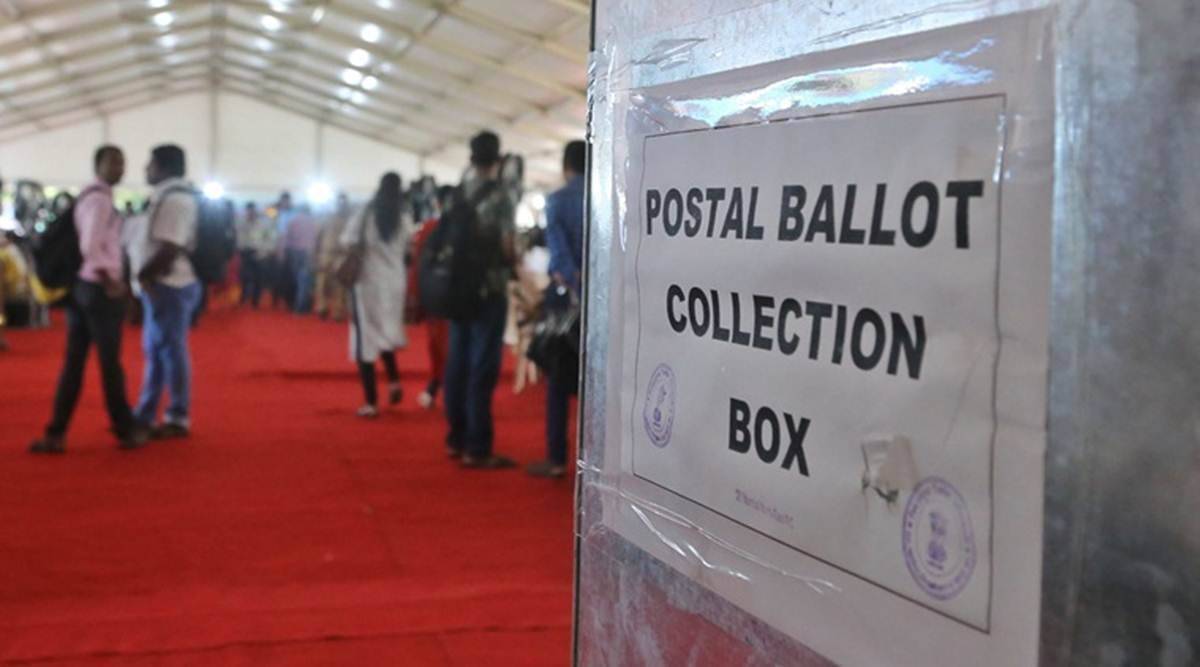
New Delhi, Dec 24: The Election Commission of India has clarified that it has not made any proposal to introduce postal ballots system for non-Gulf countries and categorical denied the media reports on the issue. 

In its reply to a Member of Parliament’s query, dated December 23, the commission has unequivocally denied reports that postal ballot facilities will be extended to select non-Gulf countries first.

“At the outset it is made clear that the commission has not made any pilot proposal,” the EC said in its reply. “The current proposal to extend the Electronically transmitted Postal Ballot System (ETPBS) voting option in favour of overseas electors is an extension of the continuing efforts of the commission to facilitate voting to the overseas electors, notwithstanding the amendment in the Act in 2011, which is yet to be materialised in the true sense.”

The commission added that the logistics of the same are being worked out in consultation with the ministry of external affairs. “The proposal, which is still to be approved by the law ministry, will be implemented across the globe, not launched selectively,” said a person familiar with the matter.

The EC wrote to the law ministry on November 27 to expedite the amendment of the People’s Representation Act, 1951, to extend the postal ballot facility to overseas electors. Of the 12.6 million Indians residing overseas, only little over a hundred thousand are registered as voters with the Election Commission of India, people familiar with the matter said. According to official estimates, at least 60-65% of the 12.6 million people residing overseas are likely to be eligible to vote in the Indian elections.

It has proposed that voting be done via Electronically Transmitted Postal Ballot System (ETPBS), which was tested in the 2019 Lok Sabha elections for service voters.

“One needs to understand how the ETPBS works,” said a person familiar with the matter. “A designated officer is appointed in the regiment of the service voter to whom postal ballots are sent electronically. The officer gives this to the voter and then posts the ballot to the Returning Officer (RO).”

The commission, in its letter to the Law Ministry, has similarly proposed the appointment of a designated officer by the diplomatic or consular representative of India. The modalities for how the postal ballot process will be conducted, however, are yet to be finalised. The commission has asked that the facility be extended before the upcoming polls next year in the states of Tamil Nadu, West Bengal, Assam, Kerala and Puducherry.

The proposed amendment faced backlash from political parties that alleged that they had not been consulted in the process. CPI(M) general secretary Sitaram Yechury had said that the amendment may be open to large-scale manipulation, with ballots being sold for profits.

Countering Yechury’s claim that political parties had not been consulted, the commission on December 19 wrote to veteran political leader, stating that the postal ballot facility was only an “extension of the continuing efforts of the Commission to facilitate voting for overseas electors”.

The commission added that detailed consultations were held with various stakeholders in 2015, including political parties, wherein a committee was set up by the EC to look into the matter.

Comments

Add new comment

  • Coastaldigest.com reserves the right to delete or block any comments.
  • Coastaldigset.com is not responsible for its readers’ comments.
  • Comments that are abusive, incendiary or irrelevant are strictly prohibited.
  • Please use a genuine email ID and provide your name to avoid reject.
News Network
December 5,2025

Mangaluru: In a significant step to curb online hate and intimidation, Mangaluru City Police have registered a suo motu case against multiple Instagram accounts accused of circulating alleged provocative and threatening content.

While monitoring social media activity on Tuesday, Kankanady Town PSI Anitha Nikkam identified the Instagram handle ‘team_targetttt_900’ for posting a hate message alongside images of lethal weapons. Another account, ‘team_nagara_900’, allegedly shared a threatening post targeting activist Bharath Kumdelu, tagging additional pages such as KARAVALI-OFFICIAL.

Several other accounts — including ‘immu_bhai.fan’, ‘target_boy_900’, ‘kings_of_manglore’, ‘team_target_boys.900’, ‘arshad_mangalore’, ‘target_ka19_ullal’, ‘team_target__’, ‘troll_tigersz_900’, ‘tr_group_900’, and ‘team_target_900’ — are also under scrutiny for spreading similar inflammatory material, police said.

Authorities have urged citizens, especially young social media users, to report suspicious pages and avoid engaging with groups that glorify violence or threaten individuals. Online hate can quickly escalate into real-world harm, and police stress that sharing or promoting such content can attract legal consequences.

Comments

Add new comment

  • Coastaldigest.com reserves the right to delete or block any comments.
  • Coastaldigset.com is not responsible for its readers’ comments.
  • Comments that are abusive, incendiary or irrelevant are strictly prohibited.
  • Please use a genuine email ID and provide your name to avoid reject.
News Network
December 7,2025

envoy.jpg

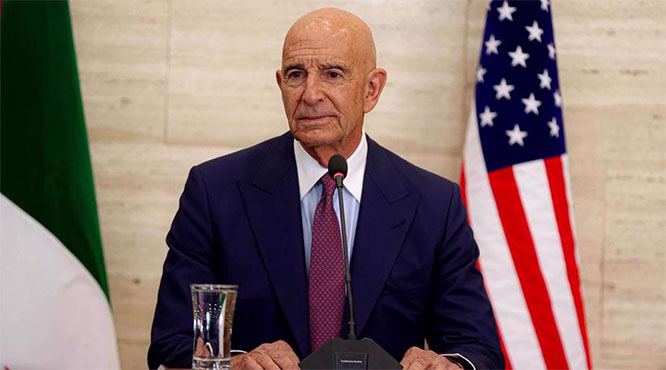
Since 1946, the United States has attempted 93 coups or “regime change” operations across the world — including two in Iran, US Special Envoy for Syria Tom Barrack has admitted.

Speaking to the UAE-based IMI Media Group, in remarks published by The National, Barrack said Washington tried twice to overthrow the Iranian government but failed both times. 

“For (Trump) then to be imputed with regime change — we had two regime changes in Iran already. Neither one worked. So I think wisely leave it to the region to solve,” said Barrack, who also serves as the US ambassador to Turkey.

His comments come six months after the US joined Israel in airstrikes against Iran during ongoing indirect nuclear negotiations between Tehran and Washington.

On June 13, Israel launched an attack on Iran that killed at least 1,064 people and hit civilian infrastructure. Days later, the United States targeted three nuclear facilities — Fordow, Natanz and Isfahan — in what Iran called a clear violation of international law. Iranian retaliation eventually forced a halt to the assault on June 24.

Barrack further claimed that US President Donald Trump and Foreign Secretary Marco Rubio are “not into regime change” and prefer a regional approach driven by Middle Eastern countries themselves. According to him, regional dialogue and non-interference by outside powers offer a more durable path forward.

He added that Washington is still open to an agreement with Tehran if Iranian authorities show “seriousness” and willingness to engage constructively.

However, Iran maintains the US has not shown readiness for meaningful talks. In an interview with Japan’s Kyodo News, Iranian Foreign Minister Abbas Araghchi said negotiations could advance only if Washington acknowledges Iran’s right to peaceful nuclear energy and lifts unilateral sanctions.

Comments

Add new comment

  • Coastaldigest.com reserves the right to delete or block any comments.
  • Coastaldigset.com is not responsible for its readers’ comments.
  • Comments that are abusive, incendiary or irrelevant are strictly prohibited.
  • Please use a genuine email ID and provide your name to avoid reject.
News Network
December 6,2025

pilot.jpg

New Delhi: IndiGo, India’s largest airline, faced major operational turbulence this week after failing to prepare for new pilot-fatigue regulations issued by the Directorate General of Civil Aviation (DGCA). The stricter rules—designed to improve flight safety—took effect in phases through 2024, with the latest implementation on November 1. IndiGo has acknowledged that inadequate roster planning led to widespread cancellations and delays.

Below are the key DGCA rules that affected IndiGo’s operations:

1. Longer Mandatory Weekly Rest

Weekly rest for pilots has been increased from 36 hours to 48 hours.

The government says the extended break is essential to curb cumulative fatigue. This rule remains in force despite the current crisis.

2. Cap on Night Landings

Pilots can now perform only two night landings per week—a steep reduction from the earlier limit of six.

Night hours, defined as midnight to early morning, are considered the least alert period for pilots.

Given the disruptions, this rule has been temporarily relaxed for IndiGo until February 10.

3. Reduced Maximum Night Flight Duty

Flight duty that stretches into the night is now capped at 10 hours.

This measure has also been kept on hold for IndiGo until February 10 to stabilize operations.

4. Weekly Rest Cannot Be Replaced With Personal Leave

Airlines can no longer count a pilot’s personal leave as part of the mandatory 48-hour rest.

Pilots say this closes a loophole that previously reduced actual rest time.

Currently, all airlines are exempt from this rule to normalise travel.

5. Mandatory Fatigue Monitoring

Airlines must submit quarterly fatigue reports along with corrective actions to DGCA.

This system aims to create a transparent fatigue-tracking framework across the industry.

The DGCA has stressed that these rules were crafted to strengthen flight safety and align India with global fatigue-management standards. The temporary relaxations are expected to remain until February 2025, giving IndiGo time to stabilise its schedules and restore normal air travel.

Comments

Add new comment

  • Coastaldigest.com reserves the right to delete or block any comments.
  • Coastaldigset.com is not responsible for its readers’ comments.
  • Comments that are abusive, incendiary or irrelevant are strictly prohibited.
  • Please use a genuine email ID and provide your name to avoid reject.
