



Exit polls show 2nd consecutive win for Pinarayi Vijayan-led LDF in Kerala

News Network
April 29, 2021

Thiruvananthapuram, Apr 29: Exit poll results from Kerala on Thursday appeared to give the edge to the ruling Left Democratic Front (LDF) coalition while the Congress-led United Democratic Front (UDF) seemed to come in second. The BJP was seen winning a couple of seats as well.

An aggregate of five exit polls showed the LDF front is likely to win 85 of 140 seats - ahead of the half-way mark - and the Congress-led UDF at 53 seats, the polls say. The BJP is set to make its presence felt with two seats.

Exit polls often get the results wrong. Votes for the elections are set to be counted on Sunday, alongside other state and territory elections in West Bengal, Assam, Tamil Nadu and Puducherry.

In a state with a four-decades-old tradition of alternating between the two main coalitions every five years, the exit polls seem to show these elections bucking the trend.

After weeks of a stormy campaign with marathon rallies and mammoth roadshows, the state admired for its high governance and progress metrics, voted for a new administration on April 6 and picked from more than 900 candidates including high-profile leaders for its 140 assembly constituencies.

The two traditional coalitions - the Communist Party of India-Marxist (CPI-M)-led LDF and the UDF sought another term in these polls while the BJP, long an outlier in the southern state, made attempts to wedge its way in.

Chief Minister Pinarayi Vijayan, Health Minister KK Shailaja, Devaswom Minister Kadakampally Surendran, Power Minister MM Mani and Higher Education Minister KK Jaleel were among the prominent faces trying their electoral luck from the ruling side.

Opposition leader Ramesh Chennithala, former Chief Minister Oommen Chandy, senior leaders K Muraleedharan, PT Thomas and Thiruvanchoor Radhakrishnan, MK Muneer, VS Sivakumar were among those contesting from the UDF fold.

The elections were crucial for an array of BJP leaders including former Mizoram Governor Kummam Rajasekharan, "Metroman" E Sreedharan, who joined the party recently, state president K Surendran, senior leader Shobha Surendran, Rajya Sabha members Suresh Gopi and KJ Alphons among others.

As much as they are a test for one of the last remaining communist strongholds in the country, it is also a litmus test for Congress leader Rahul Gandhi, an MP from the state who spent several days and took part in dozens of corner meetings and rallies across Kerala to campaign for the UDF.

Usually host to just one or two prominent national figures, this time Kerala saw multiple visits by leaders from Prime Minister Narendra Modi, Union Home Minister Amit Shah and a dozen of their cabinet colleagues including Nirmala Sitharaman, Rajnath Singh and Prahlad Joshi and UP Chief Minister Yogi Adityanath to Congress leaders Rahul Gandhi, Priyanka Gandhi Vadra, Sachin Pilot, AK Antony, Salman Khurshid and others.

In election manifestos influenced by the pandemic, all three fronts came out with populist promises including pension for housewives, raising of welfare pensions, free gas cylinders for the poor, free laptops for economically disadvantaged students.

In a state with a large Christian and Muslim population, the BJP pulled out all stops to draw Hindu votes, even promising a law to tackle "Love Jihad" - the rights wing conspiracy theory that Muslim men seduce Hindu women to make them convert.

Both UDF and the BJP also tried their best to highlight the contentious subject of women's entry to the Sabarimala temple and the controversial gold and dollar smuggling cases, in which the Chief Minister's office, Speaker P Sreeramakrishnan and some other ministers were facing allegations.

The ruling LDF, meanwhile, strived to focus on the government's achievements in the development and welfare fronts in the last five years and its internationally acclaimed measures in tackling COVID-19 and flood management.

They also accused the Congress of adopting a soft stand towards the Hindutva agenda to pick a hole in their vote-bank. These allegations have been denied by the Chief Minister, as the centre and state governments have hit out each other over central probe agencies.

Comments

Add new comment

  • Coastaldigest.com reserves the right to delete or block any comments.
  • Coastaldigset.com is not responsible for its readers’ comments.
  • Comments that are abusive, incendiary or irrelevant are strictly prohibited.
  • Please use a genuine email ID and provide your name to avoid reject.
News Network
December 3,2025

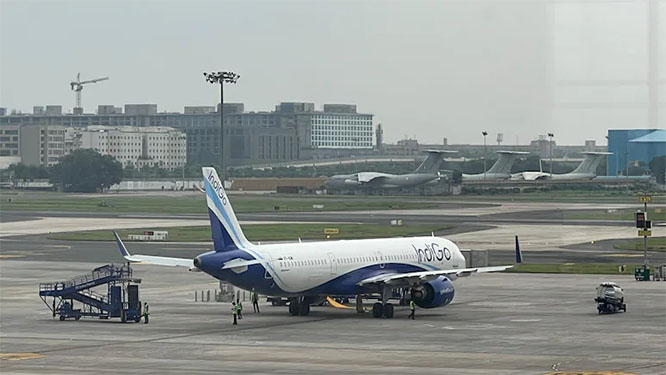
indigo.jpg

IndiGo, India’s largest airline, is battling one of its worst operational disruptions in recent years, with hundreds of delays and cancellations throwing domestic travel into chaos.

Government data on Tuesday showed its on-time performance plunging to 35%, an unusual dip for a carrier long associated with punctuality.

By Wednesday afternoon, airports in Delhi, Mumbai, Bengaluru and Hyderabad had collectively reported close to 200 cancellations, stranding travellers across the country.

Crew Shortage After New Duty Norms

A major trigger behind the meltdown is a severe crew shortage, especially among pilots, following the rollout of revised Flight Duty Time Limitation (FDTL) norms last month.

The rules mandate longer rest hours and more humane rosters — a shift IndiGo has struggled to incorporate across its vast network.

Sources said several flights were grounded due to lack of cabin crew, while some delays stretched upwards of eight hours.

With IndiGo controlling over 60% of India’s domestic aviation market, the ripple effect has impacted airports nationwide.

IndiGo Issues Apology, Lists “Compounding Factors”

In a statement, IndiGo acknowledged the large-scale disruption:

“We sincerely apologise to customers. A series of unforeseen operational challenges — technology glitches, winter schedule changes, adverse weather, system congestion and updated FDTL norms — created a compounding impact that could not have been anticipated.”

To stabilise operations, the airline has begun calibrated schedule adjustments for the next 48 hours, aiming to restore punctuality. Affected passengers are being offered refunds or alternate travel arrangements, IndiGo said.

What the FDTL Rules Require

The FDTL norms, designed to reduce pilot fatigue, cap duty and flying hours as follows:
•    Maximum 8 hours of flying per day
•    35 hours per week
•    125 hours per month
•    1,000 hours per year

Crew must also receive rest equalling twice the flight duration, with a minimum 10-hour rest period in any 24-hour window.

The DGCA introduced these limits to enhance flight safety.

Hyderabad: 33 Flights Cancelled, Long Queues Reported

Hyderabad’s Rajiv Gandhi International Airport saw heavy early-morning crowds as 33 IndiGo flights (arrivals and departures) were cancelled.

The airport clarified on X that operations were normal, advising passengers to contact IndiGo directly for latest flight status.

Cancellations included flights to and from Visakhapatnam, Goa, Ahmedabad, Delhi, Bengaluru, Chennai, Madurai, Hubli, Bhopal and Bhubaneswar.

Bengaluru: 42 Flights Disrupted

Bengaluru’s Kempegowda International Airport recorded 42 cancellations — 22 arrivals and 20 departures — affecting routes to Delhi, Mumbai, Chennai, Hyderabad, Goa, Kolkata and Lucknow.

Passengers Vent on Social Media

Irate travellers took to X to share their experiences. One passenger stranded in Hyderabad wrote: “I have been here since 3 a.m. and missed an important meeting.”

Another said: “My flight was pushed from 1:55 PM to 2:55 PM and now 4:35 PM. I was informed only three minutes before entering the airport.”

Delhi Airport Hit by Tech Glitch

At Delhi Airport, the disruption deepened due to a slowdown in the Amadeus system — used for reservations, check-ins and departure control.

The technical issue led to longer queues and sluggish processing, adding to delays already worsened by staff shortages.

Comments

Add new comment

  • Coastaldigest.com reserves the right to delete or block any comments.
  • Coastaldigset.com is not responsible for its readers’ comments.
  • Comments that are abusive, incendiary or irrelevant are strictly prohibited.
  • Please use a genuine email ID and provide your name to avoid reject.
News Network
December 4,2025

Mangaluru: Chaos erupted at Mangaluru International Airport (MIA) after IndiGo flight 6E 5150, bound for Mumbai, was repeatedly delayed and ultimately cancelled, leaving around 100 passengers stranded overnight. The incident highlights the ongoing country-wide operational disruptions affecting the airline, largely due to the implementation of new Flight Duty Time Limitations (FDTL) norms for crew.

The flight was initially scheduled for 9:25 PM on Tuesday but was first postponed to 11:40 PM, then midnight, before being cancelled around 3:00 AM. Passengers expressed frustration over last-minute communication and the lack of clarity, with elderly and ailing travellers particularly affected. “Though the airline arranged food, there was no proper communication, leaving us confused,” said one family member.

An IndiGo executive at MIA cited the FDTL rules, designed to prevent pilot fatigue by limiting crew working hours, as the cause of the cancellation. While alternative arrangements, including hotel stays, were offered, about 100 passengers chose to remain at the airport, creating tension. A replacement flight was arranged but also faced delays due to the same constraints, finally departing for Mumbai around 1:45 PM on Wednesday. Passengers either flew, requested refunds, or postponed their travel.

The Mangaluru delay is part of a broader crisis for IndiGo. The airline has been forced to make “calibrated schedule adjustments”—a euphemism for widespread cancellations and delays—after stricter FDTL norms came into effect on November 1.

While an IndiGo spokesperson acknowledged unavoidable flight disruptions due to technology issues, operational requirements, and the updated crew rostering rules, the DGCA has intervened, summoning senior airline officials to explain the chaos and outline corrective measures.

The ripple effect has been felt across the country, with major hubs like Bengaluru and Mumbai reporting numerous cancellations. The Mangaluru incident underscores the systemic operational strain currently confronting India’s largest carrier, leaving passengers nationwide grappling with uncertainty and delays.

Comments

Add new comment

  • Coastaldigest.com reserves the right to delete or block any comments.
  • Coastaldigset.com is not responsible for its readers’ comments.
  • Comments that are abusive, incendiary or irrelevant are strictly prohibited.
  • Please use a genuine email ID and provide your name to avoid reject.
News Network
December 6,2025

pilot.jpg

New Delhi: IndiGo, India’s largest airline, faced major operational turbulence this week after failing to prepare for new pilot-fatigue regulations issued by the Directorate General of Civil Aviation (DGCA). The stricter rules—designed to improve flight safety—took effect in phases through 2024, with the latest implementation on November 1. IndiGo has acknowledged that inadequate roster planning led to widespread cancellations and delays.

Below are the key DGCA rules that affected IndiGo’s operations:

1. Longer Mandatory Weekly Rest

Weekly rest for pilots has been increased from 36 hours to 48 hours.

The government says the extended break is essential to curb cumulative fatigue. This rule remains in force despite the current crisis.

2. Cap on Night Landings

Pilots can now perform only two night landings per week—a steep reduction from the earlier limit of six.

Night hours, defined as midnight to early morning, are considered the least alert period for pilots.

Given the disruptions, this rule has been temporarily relaxed for IndiGo until February 10.

3. Reduced Maximum Night Flight Duty

Flight duty that stretches into the night is now capped at 10 hours.

This measure has also been kept on hold for IndiGo until February 10 to stabilize operations.

4. Weekly Rest Cannot Be Replaced With Personal Leave

Airlines can no longer count a pilot’s personal leave as part of the mandatory 48-hour rest.

Pilots say this closes a loophole that previously reduced actual rest time.

Currently, all airlines are exempt from this rule to normalise travel.

5. Mandatory Fatigue Monitoring

Airlines must submit quarterly fatigue reports along with corrective actions to DGCA.

This system aims to create a transparent fatigue-tracking framework across the industry.

The DGCA has stressed that these rules were crafted to strengthen flight safety and align India with global fatigue-management standards. The temporary relaxations are expected to remain until February 2025, giving IndiGo time to stabilise its schedules and restore normal air travel.

Comments

Add new comment

  • Coastaldigest.com reserves the right to delete or block any comments.
  • Coastaldigset.com is not responsible for its readers’ comments.
  • Comments that are abusive, incendiary or irrelevant are strictly prohibited.
  • Please use a genuine email ID and provide your name to avoid reject.
