Govt not going back on privatisation of Air India, BPCL

Agencies
December 27, 2020

b4a76.jpg

New Delhi, Dec 27: Covid-19 carnage may have slightly pushed back timelines but there is certainly no going back on privatisation of bluechip public sector undertakings like BPCL and Air India as the government feels it has no business to be in business.

The spadework started late last year and 2020 was supposed to be the landmark year in India's history of privatisation with at least three top PSUs — the nation's second-biggest fuel retailer Bharat Petroleum Corporation (BPCL), national carrier Air India and Shipping Corporation of India (SCI) up for sale.

The outbreak of the coronavirus pandemic pushed the timelines into the next fiscal but the government is firm on not going back on its disinvestment plans with Finance Minister Nirmala Sitharaman on more than one occasion emphatically stating that the government will continue to push for stake sales.

Oil Minister Dharmendra Pradhan, whose ministry is the nodal ministry for BPCL, went to the extent of saying that, "the government has no business to be in the business".

In February, Sitharaman set a record disinvestment target of Rs 2.10 lakh crore for the fiscal beginning April but Rs 12,380 crore from minority stake sales in four public sector companies is all that has been garnered so far.

The disinvestment target, like last year, looks almost impossible to achieve. The target was anyway daunting as it was four times that of Rs 50,298 crore raised in 2019-20.

The target of Rs 2.10 lakh crore, includes Rs 1.20 lakh crore from CPSE disinvestments and Rs 90,000 crore from stake sale in state-run financial institutions, including LIC and IDBI.

Government officials expressed confidence in completing BPCL and Air India sale in the next few months.

Privatisation drive

The Department of Investment and Public Asset Management (DIPAM), which manages government stake sale programs, had kicked off the privatisation drive inviting preliminary bids for debt-laden Air India in January. In early March, it invited bids for selling its 53.29 per cent in oil marketing and refining firm BPCL.

But then, India imposed a nationwide lockdown to contain the spread of coronavirus from March 25. The outbreak of the pandemic took its toll on the privatisation drive and the government had to repeatedly extend the deadline for submission of bids for the two companies.

As the year drew to a close, the government said it has received "multiple" preliminary bids for the two companies, but the real test remains with those translating into financial bids after potential investors undertake detailed scrutiny of the companies.

While mining-to-oil conglomerate Vedanta and two global private equity funds -- Apollo Global Management and I Squared Capital-owned Think Gas -- have put in bids for BPCL, salt-to-software conglomerate Tata Group and US-based fund Interups Inc are among the potential buyers of Air India.

Late in 2020, the government invited preliminary bids for the sale of its entire stake in Shipping Corporation of India (SCI) with the hope of completing the transaction in 2021.

With over two dozen companies, including Container Corporation, Cement Corporation, BEML, Pawan Hans, Scooters India and some steel plants of SAIL lined up for strategic sale since 2019, the question remains as to how soon the real privatisation drive starts.

Trailing CPSE shares

With share prices of CPSEs (Central Public Sector Enterprises) trailing compared to private sector peers, the government has put the onus on the top management of CPSEs to improve investor confidence by way of quarterly dividend payout to reward them and engage with them to assuage their concerns, if any.

DIPAM Secretary Tuhin Kanta Pandey had flagged the issue of lagging market valuation of CPSEs saying that between March and November while the Sensex and the Nifty rose by about 50 per cent, the BSE CPSE Index climbed only 19 per cent.

"In general, we have a problem with PSU stock valuation in the market. We must also do atma chintan (introspection)... as to why this is happening. Is it due to something inherently problematic in the way we manage our companies, or is it some issue in the government policy," Pandey had said.

He had also suggested the inclusion of CPSEs' market capitalisation improvement and asset monetisation as parameters in the MoU target they sign with the government.

Improving share price is the need of the time and till privatisation starts, the government would be banking on minority stake sales to meet its disinvestment target.

Revenue pressure

The run rate of disinvestment mop-up has been slow in the first nine months, but then typically, it is the January-March period that sees the conclusion of a spate of deals. The plans to launch the initial public offering of Life Insurance Corporation (LIC) this fiscal is ambitious as the pre-IPO process of the country's largest insurer would take time with technicalities involved in actuarial valuation and valuation of huge real estate assets of the company.

While Air India disinvestment is not likely to conclude by March 2021, the BPCL deal, coupled with privatisation of Shipping Corporation and CONCOR can push disinvestment proceeds to close to Rs 80,000 crore this fiscal. However, that would still be far less than the Rs 2.10 lakh crore earmarked from disinvestment.


Comments

Add new comment

  • Coastaldigest.com reserves the right to delete or block any comments.
  • Coastaldigset.com is not responsible for its readers’ comments.
  • Comments that are abusive, incendiary or irrelevant are strictly prohibited.
  • Please use a genuine email ID and provide your name to avoid reject.
News Network
December 6,2025

pilot.jpg

New Delhi: IndiGo, India’s largest airline, faced major operational turbulence this week after failing to prepare for new pilot-fatigue regulations issued by the Directorate General of Civil Aviation (DGCA). The stricter rules—designed to improve flight safety—took effect in phases through 2024, with the latest implementation on November 1. IndiGo has acknowledged that inadequate roster planning led to widespread cancellations and delays.

Below are the key DGCA rules that affected IndiGo’s operations:

1. Longer Mandatory Weekly Rest

Weekly rest for pilots has been increased from 36 hours to 48 hours.

The government says the extended break is essential to curb cumulative fatigue. This rule remains in force despite the current crisis.

2. Cap on Night Landings

Pilots can now perform only two night landings per week—a steep reduction from the earlier limit of six.

Night hours, defined as midnight to early morning, are considered the least alert period for pilots.

Given the disruptions, this rule has been temporarily relaxed for IndiGo until February 10.

3. Reduced Maximum Night Flight Duty

Flight duty that stretches into the night is now capped at 10 hours.

This measure has also been kept on hold for IndiGo until February 10 to stabilize operations.

4. Weekly Rest Cannot Be Replaced With Personal Leave

Airlines can no longer count a pilot’s personal leave as part of the mandatory 48-hour rest.

Pilots say this closes a loophole that previously reduced actual rest time.

Currently, all airlines are exempt from this rule to normalise travel.

5. Mandatory Fatigue Monitoring

Airlines must submit quarterly fatigue reports along with corrective actions to DGCA.

This system aims to create a transparent fatigue-tracking framework across the industry.

The DGCA has stressed that these rules were crafted to strengthen flight safety and align India with global fatigue-management standards. The temporary relaxations are expected to remain until February 2025, giving IndiGo time to stabilise its schedules and restore normal air travel.

Comments

Add new comment

  • Coastaldigest.com reserves the right to delete or block any comments.
  • Coastaldigset.com is not responsible for its readers’ comments.
  • Comments that are abusive, incendiary or irrelevant are strictly prohibited.
  • Please use a genuine email ID and provide your name to avoid reject.
News Network
November 24,2025

israelsyra.jpg

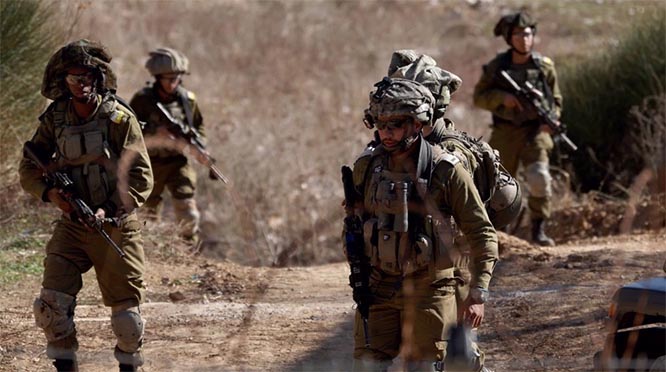
Israeli forces have pushed over the Syrian frontier, erecting a checkpoint and stopping vehicles in the southwestern city of Quneitra, in yet another breach of the Arab country’s sovereignty.

The violation took place on Sunday, when the troops made their way across the border, setting up the outpost near the Ain al-Bayda junction in northern Quneitra, Syrian outlets reported.

According to the al-Ikhbariya paper, an Israeli detachment positioned itself at the junction, halting cars and conducting searches.

The Syrian Arab News Agency (SANA) reported that three Israeli military vehicles then moved further into the northern countryside, deploying between the town of Jubata al-Khashab and the villages of Ofaniya and Ain al-Bayda. The agency added that a separate Israeli unit mounted a new incursion in the central region, approaching the villages of Umm Batina and al-Ajraf.

Residents said such activities have surged in recent months, pointing to Israeli advances onto farmland, leveling of extensive forested areas, arrests, and spread of mobile checkpoints.

The Israeli regime began markedly increasing its military aggression against Syria last year.

The escalation coincided with increasingly ferocious onslaughts throughout the country by the so-called Hay'at Tahrir al-Sham (HTS) Takfiri terrorist group, which the government of President Bashar al-Assad had confined to northwestern Syria. The HTS, however, managed to overthrow the government as the Israeli attacks would pummel the country’s civilian and defensive infrastructure.

Various reports have shown that, during the escalation, the regime conducted more than 1,000 airstrikes on the Syrian territory and over 400 ground raids into the south.

Following the collapse of the Assad government, Tel Aviv also widened its grip over the occupied Golan Heights by taking control of a demilitarized buffer zone, in defiance of a 1974 Disengagement Agreement. Earlier this month, senior Israeli officials, including Prime Minister Benjamin Netanyahu, visited the buffer zone, prompting expressions of alarm on the part of the United Nations.

The United States, the regime’s biggest ally, has, meanwhile, been fraternizing the HTS head Abu Mohammed al-Jolani amid the widely reported prospect of rapprochement with Tel Aviv.

Comments

Add new comment

  • Coastaldigest.com reserves the right to delete or block any comments.
  • Coastaldigset.com is not responsible for its readers’ comments.
  • Comments that are abusive, incendiary or irrelevant are strictly prohibited.
  • Please use a genuine email ID and provide your name to avoid reject.
News Network
December 7,2025

envoy.jpg

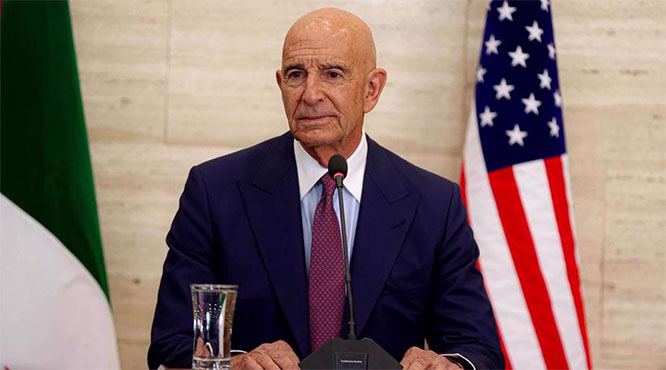
Since 1946, the United States has attempted 93 coups or “regime change” operations across the world — including two in Iran, US Special Envoy for Syria Tom Barrack has admitted.

Speaking to the UAE-based IMI Media Group, in remarks published by The National, Barrack said Washington tried twice to overthrow the Iranian government but failed both times. 

“For (Trump) then to be imputed with regime change — we had two regime changes in Iran already. Neither one worked. So I think wisely leave it to the region to solve,” said Barrack, who also serves as the US ambassador to Turkey.

His comments come six months after the US joined Israel in airstrikes against Iran during ongoing indirect nuclear negotiations between Tehran and Washington.

On June 13, Israel launched an attack on Iran that killed at least 1,064 people and hit civilian infrastructure. Days later, the United States targeted three nuclear facilities — Fordow, Natanz and Isfahan — in what Iran called a clear violation of international law. Iranian retaliation eventually forced a halt to the assault on June 24.

Barrack further claimed that US President Donald Trump and Foreign Secretary Marco Rubio are “not into regime change” and prefer a regional approach driven by Middle Eastern countries themselves. According to him, regional dialogue and non-interference by outside powers offer a more durable path forward.

He added that Washington is still open to an agreement with Tehran if Iranian authorities show “seriousness” and willingness to engage constructively.

However, Iran maintains the US has not shown readiness for meaningful talks. In an interview with Japan’s Kyodo News, Iranian Foreign Minister Abbas Araghchi said negotiations could advance only if Washington acknowledges Iran’s right to peaceful nuclear energy and lifts unilateral sanctions.

Comments

Add new comment

  • Coastaldigest.com reserves the right to delete or block any comments.
  • Coastaldigset.com is not responsible for its readers’ comments.
  • Comments that are abusive, incendiary or irrelevant are strictly prohibited.
  • Please use a genuine email ID and provide your name to avoid reject.