



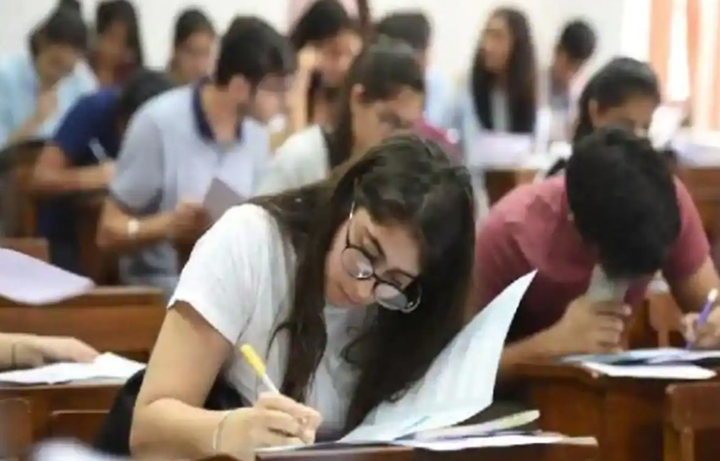
Health Ministry issues new guidelines for exams in covid times

News Network
September 10, 2020

exam.jpg

New Delhi, Sep 10: The Health Ministry on Thursday issued fresh standard operating procedures to conduct examinations amidst the coronavirus pandemic, which involves following precautionary measures.

"Examination centres are frequented by a large number of students, as well as their parents, and staff till the entire duration of the exam and therefore, it's vital to plan and conduct these examinations, while following specific preventive measures," said the Health Ministry.

The guidelines include ensuring physical distancing, use of face cover, frequent hand washing, use of alcohol-based hand sanitisers and following respiratory etiquette. It also involves strict practice of covering one's mouth and nose while coughing and sneezing, self-monitoring of health by everybody, not spitting and reporting any illness at the earliest.

Only those examination centres which are outside the containment zone would be allowed to function. Staff and examinees from containment zones will not be permitted.

"Such examinees shall be given an opportunity to undertake the examination through other means or the universities, educational institutions, agency may consider appropriate measures in this regard," the guidelines stated.

Universities, educational institutions and examination conducting authorities may plan out the examination schedule in a staggered manner so as to avoid overcrowding at any examination centre on any day.

"Keeping in view physical distancing norms, institutions should have adequate room capacity to ensure proper seating arrangement for the examination. Appropriate arrangements for personal protection gear like face covers, masks, and other logistic like hand sanitisers, soap, sodium hypochlorite solution etc. shall be made available."

Exam functionaries and examinees may submit a self-declaration about their health status at the time of entrance to the examination centre. Such self-declaration form may be circulated at the time of issue of admit tickets.

Students should also be given prior information on what they should carry, which includes exam related documents, admit card, ID card etc., face mask, water bottle, hand sanitiser etc.

Adequate manpower shall be deployed by the institution for maintaining discipline to ensure observance to distancing norms and other preventive measures at all times during conduct of the examination.

Adequate number of registration rooms and manpower for document verification and recording of attendance shall be planned duly ensuring social distancing norms.

Invigilators and supervisory staff need to be briefed on the code of conduct in the context of Covid-19. The examination centre should have a designated isolation room for isolating any person who is found symptomatic at the time of screening or during examination, till such time medical advice may be sought.

Besides this, entrances will have mandatory hand hygiene and thermal screening provisions. If any examination functionary and examinee fails to meet the self-declaration criteria, they shall not be allowed entry.

Only asymptomatic staff and students shall be allowed inside the examination hall. In regular course, a symptomatic candidate should be referred to the nearest health centre and given an opportunity to undertake the examination through other means or at a later date.

"However, if a student is found to be symptomatic, the permission or denial thereof, in such cases shall be granted as per the policy already enunciated on the issue by the examination conducting authorities," the Ministry added.

All staff and students to be allowed entry only if using face cover and masks. The face cover and mask has to be worn at all times inside the examination centre by all. Enough entry and exits gates for students and staff shall be ensured to avoid overcrowding.

Maintaining physical distancing of a minimum of 6 feet, when queuing up for entry and inside the centre as far as feasible. Specific markings may be made with sufficient distance to manage the queue and ensure social distancing in the premises.

Proper crowd management in the examination centre as well as outside premises like parking lots, waiting areas... duly following physical distancing norms shall be ensured. Bags, books, mobiles should not be allowed in the examination centre.

The examinees will be taken to a registration room in batches maintaining adequate physical distancing norms for document verification and recording of attendance. Thereafter they will be escorted in batches to the allotted examination hall.

Frisking of examinees, if needed, shall be undertaken after thermal screening. Personnel involved in frisking shall wear triple layer medical mask in addition to gloves.


Comments

Add new comment

  • Coastaldigest.com reserves the right to delete or block any comments.
  • Coastaldigset.com is not responsible for its readers’ comments.
  • Comments that are abusive, incendiary or irrelevant are strictly prohibited.
  • Please use a genuine email ID and provide your name to avoid reject.
News Network
December 6,2025

pilot.jpg

New Delhi: IndiGo, India’s largest airline, faced major operational turbulence this week after failing to prepare for new pilot-fatigue regulations issued by the Directorate General of Civil Aviation (DGCA). The stricter rules—designed to improve flight safety—took effect in phases through 2024, with the latest implementation on November 1. IndiGo has acknowledged that inadequate roster planning led to widespread cancellations and delays.

Below are the key DGCA rules that affected IndiGo’s operations:

1. Longer Mandatory Weekly Rest

Weekly rest for pilots has been increased from 36 hours to 48 hours.

The government says the extended break is essential to curb cumulative fatigue. This rule remains in force despite the current crisis.

2. Cap on Night Landings

Pilots can now perform only two night landings per week—a steep reduction from the earlier limit of six.

Night hours, defined as midnight to early morning, are considered the least alert period for pilots.

Given the disruptions, this rule has been temporarily relaxed for IndiGo until February 10.

3. Reduced Maximum Night Flight Duty

Flight duty that stretches into the night is now capped at 10 hours.

This measure has also been kept on hold for IndiGo until February 10 to stabilize operations.

4. Weekly Rest Cannot Be Replaced With Personal Leave

Airlines can no longer count a pilot’s personal leave as part of the mandatory 48-hour rest.

Pilots say this closes a loophole that previously reduced actual rest time.

Currently, all airlines are exempt from this rule to normalise travel.

5. Mandatory Fatigue Monitoring

Airlines must submit quarterly fatigue reports along with corrective actions to DGCA.

This system aims to create a transparent fatigue-tracking framework across the industry.

The DGCA has stressed that these rules were crafted to strengthen flight safety and align India with global fatigue-management standards. The temporary relaxations are expected to remain until February 2025, giving IndiGo time to stabilise its schedules and restore normal air travel.

Comments

Add new comment

  • Coastaldigest.com reserves the right to delete or block any comments.
  • Coastaldigset.com is not responsible for its readers’ comments.
  • Comments that are abusive, incendiary or irrelevant are strictly prohibited.
  • Please use a genuine email ID and provide your name to avoid reject.
News Network
December 2,2025

Mangaluru, Dec 2: Mangaluru International Airport responded to a medical emergency late on Monday night. Air India Express flight IX 522, travelling from Riyadh to Thiruvananthapuram, was diverted to Mangaluru Airport after a passenger in his late 30s experienced a medical emergency on board.

The Airport’s Operations Control Centre received an alert regarding the passenger’s health condition. The airport activated its emergency response protocol, mobilising the airport medical team and coordinating with stakeholders including CISF, immigration, and customs. 

Upon landing, airport medical personnel attended to the passenger, assessed his condition, and arranged to shift him to a local tertiary-care hospital for further treatment. The passenger’s relatives accompanied the passenger, who incidentally received necessary medical care on board, which helped stabilise the situation.

Following the handling of the emergency, the flight departed for Thiruvananthapuram at 2:05 am on Tuesday.

"We appreciate the cooperation of all parties involved, and this incident reaffirms our ongoing commitment to prioritising passenger safety and readiness to respond to unforeseen emergencies with professionalism and care," the Airport spokesperson said. 

Comments

Add new comment

  • Coastaldigest.com reserves the right to delete or block any comments.
  • Coastaldigset.com is not responsible for its readers’ comments.
  • Comments that are abusive, incendiary or irrelevant are strictly prohibited.
  • Please use a genuine email ID and provide your name to avoid reject.
News Network
December 4,2025

Udupi: A 40-year-old NRI from Udupi has reportedly lost more than Rs 12.25 lakh in an online investment scam operated through Telegram.

According to a complaint filed at the CEN police station, Leo Jerome Mendonsa, who has been working in Dubai for the past 15 years in computer accessories sales, maintains NRI accounts in Karkala and Nitte.

On November 12, 2025, Mendonsa was added to a Telegram group called Instaflow Earnings by unknown individuals. Users identified as Priya and Dipannita persuaded him to invest in “Revenue Tasks.” Initially, Mendonsa transferred Rs 1,100 multiple times and received the promised returns, encouraging him to continue.

On November 14, another user, Nishmitha Shetty, directed him to register on a website, digitvisionuoce.cc, and invest Rs 4 lakh in various shares. Over the next few days, he made multiple transfers totaling Rs 12,25,000, including Rs 50,000 via Google Pay, believing the scheme was legitimate.

After receiving the money, the alleged handlers stopped responding, and neither the invested amount nor the promised profits were returned.

The CEN police have registered a case under Sections 66(C) and 66(D) of the IT Act and Section 318(4) of the Bharatiya Nyaya Sanhita (BNS), and investigations are ongoing.

Comments

Add new comment

  • Coastaldigest.com reserves the right to delete or block any comments.
  • Coastaldigset.com is not responsible for its readers’ comments.
  • Comments that are abusive, incendiary or irrelevant are strictly prohibited.
  • Please use a genuine email ID and provide your name to avoid reject.