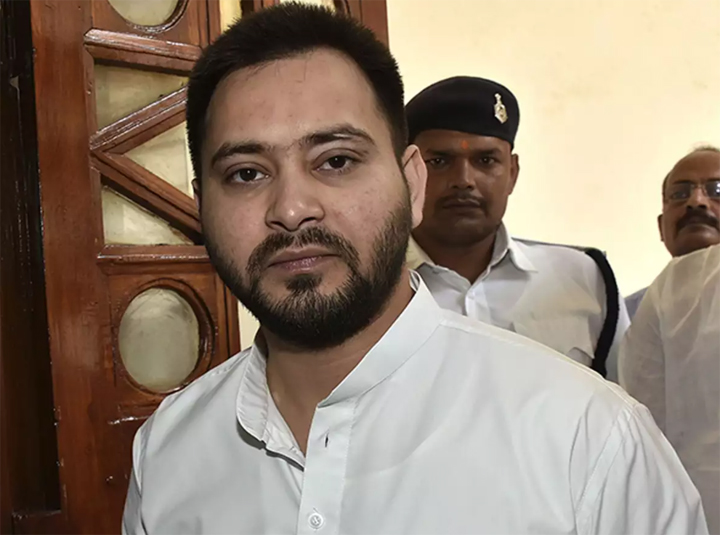
How political novice Tejashwi Yadav gave veterans a run for their money

News Network
November 11, 2020

yadav.jpg

Patna, Nov 11: An avid cricketer whose career never really took off, a political greenhorn who got power on a silver platter but failed to keep it, a scion of Bihar's most powerful family who could not get past the 9th grade.

That was Tejashwi Yadav until the 2020 assembly polls marked the coming of age of a politician who valiantly went down fighting an army of battle-hardened veterans.

He may have failed to learn the textbook lessons at DPS, R K Puram, in the national capital but showed an uncanny knack of reading the mind of voters, like his more famous father, as he led the opposition Grand Alliance to an impressive performance in the polls winning 110 seats in the 243-member assembly.

He also powered the RJD to the status of the single largest party in the House with 75 seats.

Analysts feel Tejashwi's poll promise of sanctioning "10 lakh government jobs at my first cabinet meeting" was a masterstroke which had the young voter swooning in a state reeling from widespread joblessness sparked by Covid-induced lockdown when the return of countless migrants home brought the state's largely agrarian economy under further stress.

The promise was good but not good enough to bring down the NDA government.

As part of a cleverly crafted strategy that endeared him to liberals, he chose to steer clear of contentious issues like the Ram temple, a bait thrown at him by top BJP leaders, and stuck to his core agenda of unemployment and alleged corruption in the Nitish Kumar administration.

For a young man whose ability to lead the party was called into question after the RJD's unprecedented debacle in the Lok Sabha elections when it failed to win even one of the state's 40 seats, it was no mean feat that he succeeded in galvanising an organisational machinery in stupor after the battering.

Doubting his leadership qualities, allies HAM of former chief minister Jitan Ram Manjhi, RLSP of former union minister Upendra Kushwaha and VIP of Mukesh Sahni jumped the ship in search of greener pastures elsewhere.

Humility is a trait which, according to those who saw him at school or later as an aspiring cricketer, defines the younger son of two former chief ministers which was reflected in the manner in which he accommodated the Congress and the Left, seen as a spent force in the state ever since it was swept over by the Mandal wave.

Another hallmark of his personality is the ability to think on his feet. After deciding early on in life that studies were not for him, Yadav chose not to cling to his cricketing aspirations either after the much-needed big break eluded him. Contracted by IPL franchise Delhi Daredevils for some time he remained in the reserve list.

He announced his "retirement" from cricket just a couple of years before entering politics in 2015 at the tender age of 25. The new vocation came as a perfect pitch to bat on as he won from Raghopur in the assembly election comfortably.

Soon Lalu made it clear that Tejashwi was his chosen successor, and he was appointed the Deputy Chief Minister in the Nitish Kumar government.

As fate would have it, Tejashwi's name cropped up in a money laundering case related to alleged illegal land transactions when his father was the railway minister in the UPA-1 government. Tejashwi was in his teens when the alleged scam happened.

The development drew heavy opposition fire and Nitish Kumar snapped his ties with the RJD, before returning to the NDA, giving up his ambition of heading a nationwide coalition for a "Sangh Mukt Bharat" which could pose a challenge to the Narendra Modi juggernaut.

Tejashwi took the sudden loss of power on the chin, transitioning seamlessly into a doughty leader of the opposition.

As Lalu landed in jail following conviction in a number of fodder scam cases, Tejashwi, by now the RJD's chief ministerial candidate, kept the party afloat and also rallied leaders as diverse as Rahul Gandhi, Arvind Kejriwal and the Left bigwigs at a rally in New Delhi against the Muzaffarpur shelter home sex scandal, making his presence felt at the national level.

Towards the end of 2018, he seemed bogged down by problems in the family. Much of his time and energy was spent trying unsuccessfully to prevent mercurial elder brother Tej Pratap's nasty marital dispute from playing out in the open.

After the Lok Sabha poll fiasco, Tejashwi showed signs of torpor, choosing to spend most of his time away from Bihar and even giving a month-long assembly session a miss during an outbreak of brain fever and flash floods in north Bihar, providing the opposition with ample ammunition to attack him.

Leaders of the JD(U)-BJP combine ridiculed him as an "ill-prepared student afraid of facing exams" when he demanded that the assembly elections be deferred in view of the raging Covid-19 pandemic.

However, once the elections were announced, he steeled himself for the fight.

The young leader displayed quiet ruthlessness while marginalising dissenters and guile in keeping his ambitious eldest sister Misa Bharti, a Rajya Sabha MP, away from campaign and Tej Pratap confined to his Hasanpur seat.

As the NDA seemed losing its earlier surefootedness, doddering under the weight of LJP leader Chirag Paswan's rebellion, he seized the moment and launched an indefatigable campaign, addressing more than a dozen rallies a day.

His frequent references to himself as "sher ka beta" (son of a lion) notwithstanding, leaders of the JD(U) and the BJP claimed he was shying away from using the pictures of his parents in his campaign as they were emblematic of the "jungle raj".

Prime Minister Narendra Modi lent weight to the narrative by frequently referring to him as the "Jungle Raj Ke Yuvraj".

He might have failed to lead his alliance to victory, but the assembly polls have heralded the advent of a young leader on Bihar's political firmament who can feel the pulse of youth and has abundant promise.

Comments

Add new comment

  • Coastaldigest.com reserves the right to delete or block any comments.
  • Coastaldigset.com is not responsible for its readers’ comments.
  • Comments that are abusive, incendiary or irrelevant are strictly prohibited.
  • Please use a genuine email ID and provide your name to avoid reject.
News Network
December 6,2025

indigoticket.jpg

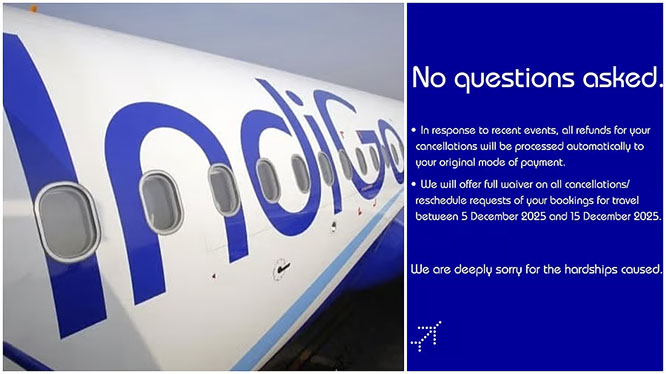
With IndiGo flight disruptions impacting thousands of passengers, the airline on Saturday said that it will offer full waiver on all cancellations/reschedule requests for travel bookings between December 5, 2025 and December 15, 2025.

Earlier in the day, the civil aviation ministry had directed the airline to complete the ticket refund process for the cancelled flights by Sunday evening, as well as ensure baggage separated from the travellers are delivered in the next two days.

In a post on X, titled 'No questions asked', IndiGo wrote, "In response to recent events, all refunds for your cancellations will be processed automatically to your original mode of payment."

"We are deeply sorry for the hardships caused," it further added.

Several passengers, however, complained of not getting full refund as promised by the airline.

Netizens have shared screenchots of getting charged for airline cancellation fee and convenience fee.

"Please tell me why u have did this airline cancellation charges when u say full amount will be refunded (sic)," a user wrote sharing a screenshot of the refund page.

"Well, but you have still debited the convenience charges," wrote another.

Passengers have also raised concerns about the "cancel" option being disabled on the IndiGo app. "First enable the 'Cancel' button on your App & offer full refund on tickets cancelled by customers between the said dates," wrote a user.

A day after the country's largest airline, IndiGo, cancelled more than 1,000 flights and caused disruptions for the fifth day on Saturday, the ministry said that any delay or non-compliance in refund processing will invite immediate regulatory action.

The refund process for all cancelled or disrupted flights must be completed by 8 pm on Sunday, the ministry said in a statement.

"Airlines have also been instructed not to levy any rescheduling charges for passengers whose travel plans were affected by cancellations," it said.

On Saturday, more than 400 flights were cancelled at various airports.

IndiGo has also been instructed to set up dedicated passenger support and refund facilitation cells.

Comments

Add new comment

  • Coastaldigest.com reserves the right to delete or block any comments.
  • Coastaldigset.com is not responsible for its readers’ comments.
  • Comments that are abusive, incendiary or irrelevant are strictly prohibited.
  • Please use a genuine email ID and provide your name to avoid reject.
News Network
December 4,2025

indigocrisis.jpg

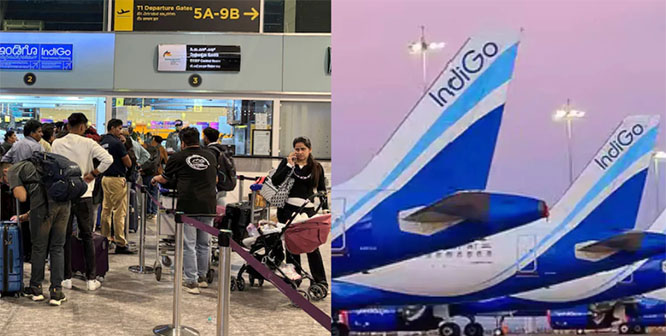
Angry outbursts, long queues, and desperate appeals filled airports across India today as IndiGo grappled with a severe operational breakdown. Hundreds of flights have been cancelled or delayed, leaving thousands of passengers stranded through the night and forcing many to spend long hours at helpdesks.

Social media was flooded with videos of fliers pleading for assistance, accusing the airline of misleading updates, and demanding accommodation after being stuck for 10 to 12 hours at airports such as Hyderabad and Bengaluru.

What Triggered the Meltdown?

IndiGo has attributed the widespread disruption to “a multitude of unforeseen operational challenges.” These include:

•    Minor technology glitches
•    Winter-season schedule adjustments
•    Bad weather
•    Congestion in the aviation network
•    New crew rostering rules (Flight Duty Time Limitations or FDTL)

Among these, the most disruptive has been the implementation of the updated FDTL norms introduced by the Directorate General of Civil Aviation (DGCA) in January 2024.

These rules were designed to reduce pilot fatigue and improve passenger safety. Key changes include:

•    Longer weekly rest periods for flight crew
•    A revised definition of “night,” extending it by an extra hour
•    Tighter caps on flight duty timing and night landings
•    Cutting night shifts for pilots and crew from six per roster cycle to just two

Once these norms became fully enforceable, airlines were required to overhaul rosters well in advance. For IndiGo, this triggered a sudden shortage of crew available for duty, leading to cascading delays and cancellations.

Why IndiGo Was Hit the Hardest

IndiGo is India’s largest airline by a wide margin, operating over 2,200 flights daily. That’s roughly double the number operated by Air India.

When an airline of this size experiences even a 10–20% disruption, it translates to 200–400 flights being delayed or grounded — producing massive spillover effects across the country.

IndiGo also relies heavily on high-frequency overnight operations, a model typical of low-cost carriers that aim to maximise aircraft utilisation and reduce downtime. The stricter FDTL norms clash with these overnight-heavy schedules, forcing the airline to pull back services.

Aviation bodies have also criticised IndiGo’s preparedness. The Airline Pilots' Association of India (ALPA) said airlines were given a two-year window to plan for the new rules but “started preparing rather late.” IndiGo, it said, failed to rebuild crew rosters 15 days in advance as required.

The Federation of Indian Pilots (FIP) went further, calling the crisis the result of IndiGo’s “prolonged and unorthodox lean manpower strategy,” and alleging that the airline adopted a hiring freeze even as it knew the new rules would require more careful staffing.

How Many Flights Are Affected?

In the past 48 hours, over 300 flights have been cancelled. At least 100 more are expected to be cancelled today.

City-wise impact:

•    Hyderabad: 33 expected cancellations; several fliers stranded overnight
•    Bengaluru: over 70 expected cancellations
•    Delhi, Mumbai, Chennai, Kolkata: widespread delays and missed connections

Passengers shared distressing accounts online.

One customer at Hyderabad airport said they waited from 6 PM to 9 AM with “no action taken” regarding their delayed Pune flight. Another said IndiGo repeatedly told them the crew was “arriving soon,” only for the delay to stretch over 12 hours.

IndiGo has apologised for the disruption and promised that operations will stabilise within 48 hours, adding that “calibrated adjustments” are being made to contain the chaos.

What Should Passengers Do Now?

For those flying in the next few days, especially with IndiGo, here are key precautions:

1. Keep Checking Flight Status
Monitor your flight closely before leaving for the airport, as delays may be announced last-minute.

2. Arrive Early
Expect long queues at counters and security due to crowding and rescheduling.

3. Carry Essentials
Pack snacks, water, basic medicines, chargers, and items for children or senior citizens. Extended waiting times should be anticipated.

4. Use Flexible Booking Options
If you booked tickets with a free-date-change or cancellation option, consider using them.
If you haven’t booked yet, prefer refundable or flexible fares, or even consider alternate airlines.

5. Follow IndiGo’s Updates
Keep an eye on IndiGo’s official social media channels and contact customer support for rebooking and refund queries.

What Needs to Change?

Pilot groups have raised concerns not just about staffing but also the planning practices behind it.
The Federation of Indian Pilots accused IndiGo of:

•    Imposing an unexplained hiring freeze despite knowing the FDTL changes were coming
•    Entering non-poaching agreements that limited talent movement
•    Keeping pilot pay frozen
•    Underestimating the need to restructure operations in advance

They have urged DGCA to approve seasonal schedules only after airlines prove they have adequate pilot strength under the new norms.

ALPA also warned that some airlines might be using the delays as an “immature pressure tactic” to push DGCA for relaxations in the new rules — which, if granted, could compromise the very safety standards the norms were meant to protect.

Both pilot bodies stressed that no exemption should dilute safety, and any deviations should be based solely on scientific risk assessment.

Is a Solution in Sight?

While IndiGo says normalcy will return within two days, aviation experts believe that fully stabilising operations could take longer, depending on how quickly the airline can:
•    Re-align rosters
•    Mobilise rested crew
•    Boost staffing
•    Adjust its winter schedule to match regulatory requirements
Passengers are advised to remain prepared for continued delays over the next few days as the airline works through its backlog. 

Comments

Add new comment

  • Coastaldigest.com reserves the right to delete or block any comments.
  • Coastaldigset.com is not responsible for its readers’ comments.
  • Comments that are abusive, incendiary or irrelevant are strictly prohibited.
  • Please use a genuine email ID and provide your name to avoid reject.
News Network
November 24,2025

lebanon.jpg

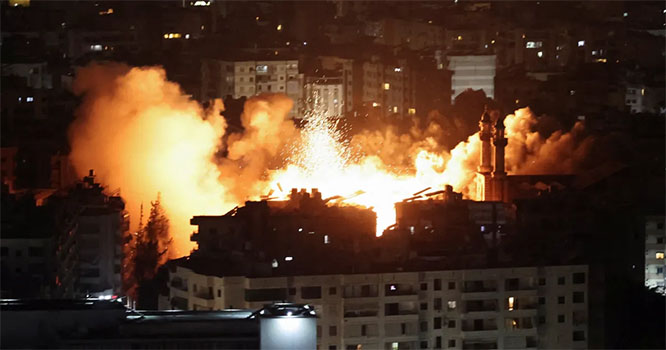
Israel has launched a new act of aggression on a residential neighborhood in Lebanon's capital, Beirut, killing and injuring about two dozen civilians.

The Israeli regime's military said in a statement that its forces carried out a so-called precise strike in a residential apartment in Dahiyeh in the southern suburbs of Beirut on Sunday.

The aggression targeted residential areas, killing at least five people and injuring more than 28 people, Lebanon's Health Ministry said. 

Hezbollah announced the martyrdom of senior Hezbollah commander Haytham Ali Tabatabai and four resistance fighters.

Lebanese President Michel Aoun condemned the airstrike, calling it a clear demonstration of Tel Aviv’s disregard for repeated international calls to halt violations on Lebanese soil.

“Israel refuses to implement international resolutions and all efforts aimed at ending the escalation and restoring stability,” Aoun said, urging the international community to take action to prevent further aggression.

The Palestinian Islamic Jihad movement also condemned the attack, holding the international community accountable. 

“The international community bears responsibility and continues to provide cover for these attacks as long as it does not restrain the occupiers,” said Ali Abu Shahin, a member of the group’s political bureau.

Israeli prime minister Benjamin Netanyahu’s office announced that the Israeli army carried out a strike “in the heart of Beirut."

Netanyahu reportedly approved the operation following recommendations from top Israeli security officials.

Two senior US officials commented on the Israeli strike.

The first official said that Israel did not notify Americans in advance about the attack. "We were informed immediately after the strike was carried out."

The second senior official said that the "US knew for several days that Israel was planning to escalate its strikes in Lebanon, but did not know in advance the timing, location, or target of the strike."

Speaking from the site of the Israeli strike, Lebanese MP Ali Ammar condemned the attack as part of a broader campaign of aggression that has targeted "all of Lebanon since the Washington-sponsored ceasefire."

He stated that "any attack on Lebanon is a violation of red lines; this aggression is part and parcel of the entity that targets Lebanon's dignity, sovereignty, and security of citizens."

Ammar went on to say the resistance is responding with "utmost wisdom, patience, and will confront the enemy at the appropriate time."

"Unfortunately, the enemy is emboldened to commit its aggression by voices within Lebanon that have turned themselves into tools that support its aggression," he added.

The Israeli attack on the southern suburbs of the Lebanese capital is the latest blatant violation of the ceasefire Israel signed with Hezbollah in November 2024, which was intended to end hostilities that had escalated into full-scale war.

An Israeli strike on the Ain al-Hilweh camp near Sidon in southern Lebanon late Tuesday killed at least 14 people. It wounded several others, including young students, according to the Lebanese health ministry.

The military claimed the attack targeted “a Hamas training compound” used to plan and carry out attacks against the regime -- a claim that has frequently been made without evidence.

Hamas rejected the allegations as “a blatant lie aimed at justifying the massacre,” stating it had “no military installations in the Palestinian camps in Lebanon” and that the targeted site was merely “an open sports field.”

According to Lebanese authorities, Israeli attacks have killed approximately 4,000 people and displaced more than 1.2 million residents across the country since October 2023.

Comments

Add new comment

  • Coastaldigest.com reserves the right to delete or block any comments.
  • Coastaldigset.com is not responsible for its readers’ comments.
  • Comments that are abusive, incendiary or irrelevant are strictly prohibited.
  • Please use a genuine email ID and provide your name to avoid reject.