India among most unequal nations; top 1% population holds 22% of national income

News Network
December 8, 2021

Mukeshmodiadani.jpg

New Delhi, Dec 8: India stands out as a poor and very unequal country, with the top 1 per cent of the population holding more than one-fifth of the total national income in 2021 and the bottom half just 13 per cent, according to a report. 

The report, titled 'World Inequality Report 2022', has been authored by Lucas Chancel, co-director of the World Inequality Lab, and coordinated by several experts, including French economist Thomas Piketty.

It further said India is now among the most unequal countries in the world.

 The report pointed out that the average national income of the Indian adult population is Rs 204,200. While the bottom 50 per cent earns Rs 53,610, the top 10 per cent earns more than 20 times (Rs 1,166,520).

"While the top 10 per cent and top 1 per cent hold respectively 57 per cent and 22 per cent of total national income, the bottom 50 per cent share has gone down to 13 per cent.

 "India stands out as a poor and very unequal country, with an affluent elite," it said.      

According to the report, average household wealth in India stands at Rs 983,010.

It observed that the deregulation and liberalisation policies implemented since the mid-1980s have led to "one of the most extreme increases in income and wealth inequality observed in the world". 

It also said gender inequalities in India are very high.  

"The female labor income share is equal to 18 per cent. This is significantly lower than the average in Asia (21 per cent, excluding China)," the report said, adding that this value is one of the lowest in the world, slightly higher than the average share in Middle East (15 per cent).

The world map of inequalities reveals that national average income levels are poor predictors of inequality -- among high-income countries, some are very unequal (such as the US), while other are relatively equal (Sweden).

"The same is true among low- and middle-income countries, with some exhibiting extreme inequality (Brazil and India), somewhat high levels (China) and moderate to relatively low levels (Malaysia, Uruguay)," it said.

The report noted that income and wealth inequalities have been on the rise nearly everywhere since the 1980s, following a series of deregulation and liberalisation programs which took different forms in different countries.

"The rise has not been uniform: certain countries have experienced spectacular increases in inequality (including the US, Russia and India) while others (European countries and China) have experienced relatively smaller rises," it said.

The report pointed out that in 2021, after three decades of trade and financial globalisation, global inequalities remain extremely pronounced.

"They are about as great today as they were at the peak of Western imperialism in the early 20th century," it said. 

Lucas Chancel, lead author of the report, said the Covid crisis has exacerbated inequalities between the very wealthy and the rest of the population.

"Yet, in rich countries, government intervention prevented a massive rise in poverty, this was not the case in poor countries. This shows the importance of social states in the fight against poverty," he said.

Comments

Add new comment

  • Coastaldigest.com reserves the right to delete or block any comments.
  • Coastaldigset.com is not responsible for its readers’ comments.
  • Comments that are abusive, incendiary or irrelevant are strictly prohibited.
  • Please use a genuine email ID and provide your name to avoid reject.
News Network
December 4,2025

Mangaluru: Chaos erupted at Mangaluru International Airport (MIA) after IndiGo flight 6E 5150, bound for Mumbai, was repeatedly delayed and ultimately cancelled, leaving around 100 passengers stranded overnight. The incident highlights the ongoing country-wide operational disruptions affecting the airline, largely due to the implementation of new Flight Duty Time Limitations (FDTL) norms for crew.

The flight was initially scheduled for 9:25 PM on Tuesday but was first postponed to 11:40 PM, then midnight, before being cancelled around 3:00 AM. Passengers expressed frustration over last-minute communication and the lack of clarity, with elderly and ailing travellers particularly affected. “Though the airline arranged food, there was no proper communication, leaving us confused,” said one family member.

An IndiGo executive at MIA cited the FDTL rules, designed to prevent pilot fatigue by limiting crew working hours, as the cause of the cancellation. While alternative arrangements, including hotel stays, were offered, about 100 passengers chose to remain at the airport, creating tension. A replacement flight was arranged but also faced delays due to the same constraints, finally departing for Mumbai around 1:45 PM on Wednesday. Passengers either flew, requested refunds, or postponed their travel.

The Mangaluru delay is part of a broader crisis for IndiGo. The airline has been forced to make “calibrated schedule adjustments”—a euphemism for widespread cancellations and delays—after stricter FDTL norms came into effect on November 1.

While an IndiGo spokesperson acknowledged unavoidable flight disruptions due to technology issues, operational requirements, and the updated crew rostering rules, the DGCA has intervened, summoning senior airline officials to explain the chaos and outline corrective measures.

The ripple effect has been felt across the country, with major hubs like Bengaluru and Mumbai reporting numerous cancellations. The Mangaluru incident underscores the systemic operational strain currently confronting India’s largest carrier, leaving passengers nationwide grappling with uncertainty and delays.

Comments

Add new comment

  • Coastaldigest.com reserves the right to delete or block any comments.
  • Coastaldigset.com is not responsible for its readers’ comments.
  • Comments that are abusive, incendiary or irrelevant are strictly prohibited.
  • Please use a genuine email ID and provide your name to avoid reject.
News Network
November 22,2025

gaza.jpg

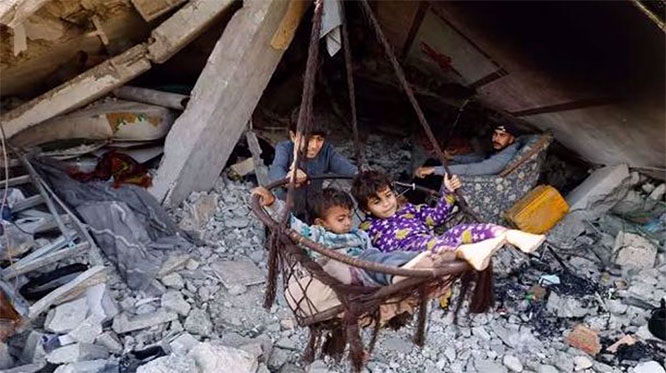
The Israeli regime’s forces have killed two Palestinian children in the Gaza Strip every day since the ceasefire began in early October, UNICEF has warned.

The UN children’s agency said on Friday that Israeli forces continue to attack Palestinians in Gaza even though the agreement was meant to stop the killing.

“Since 11 October, while the ceasefire has been in effect, at least 67 children have been killed in conflict-related incidents in the Gaza Strip. Dozens more have been injured. That is an average of almost two children killed every day since the ceasefire took effect,” UNICEF spokesperson Ricardo Pires said in Geneva, reminding that each number in the statistics represents a child whose life had ended violently.

“These are not statistics,” he said. “Each child had a story, a family, and a future that was stolen from them.”

Data from Palestinian factions, human rights groups, and government bodies recorded since the US-brokered ceasefire deal went into effect on October 10 show that Israeli forces have carried out numerous attacks, each constituting a separate ceasefire violation.

UNICEF teams say they repeatedly continue to witness heart-wrenching scenes of fearful Palestinian children sleeping outdoors with amputated limbs, while others live as orphans in flooded, makeshift shelters.

“I saw this myself in August. There is no safe place for them. The world cannot normalize their suffering,” Pires said, lamenting that the UN could “do a lot more if the aid that is really needed was entering faster.”

The UNICEF spokesperson warned that with the advent of winter, the risks for hundreds of thousands of displaced children will increase.

He warned, “The stakes are incredibly high” for children as winter acts as a threat multiplier, where children have no heating, no insulation, and few blankets. He said respiratory infections rise.

“Too many children have already paid the highest price,” Pires said. “Too many are still paying it, even under a ceasefire. The world promised them it would stop and that we would protect them.”

“Now we must act like it,” the UNICEF spokesperson added.

Since the Israeli regime launched its genocidal war against Palestinians in Gaza in October 2023, it has killed nearly 70,000 people in the territory, most of them women and children, and injured over 170,000 more, while reducing most of the structures in the enclave to rubble.

Comments

Add new comment

  • Coastaldigest.com reserves the right to delete or block any comments.
  • Coastaldigset.com is not responsible for its readers’ comments.
  • Comments that are abusive, incendiary or irrelevant are strictly prohibited.
  • Please use a genuine email ID and provide your name to avoid reject.
coastaldigest.com news network
November 29,2025

health1.jpg

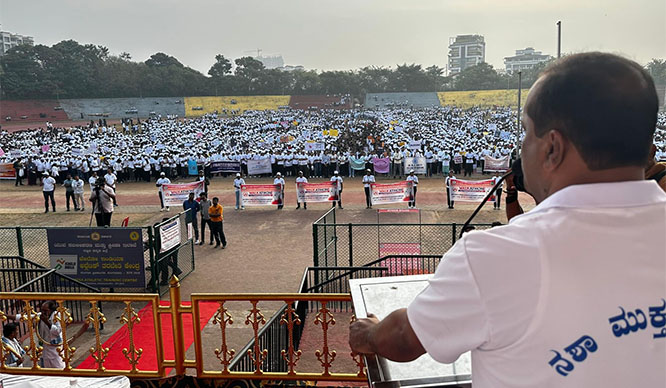
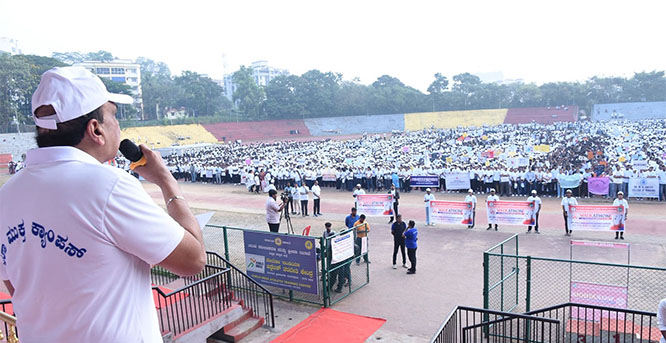
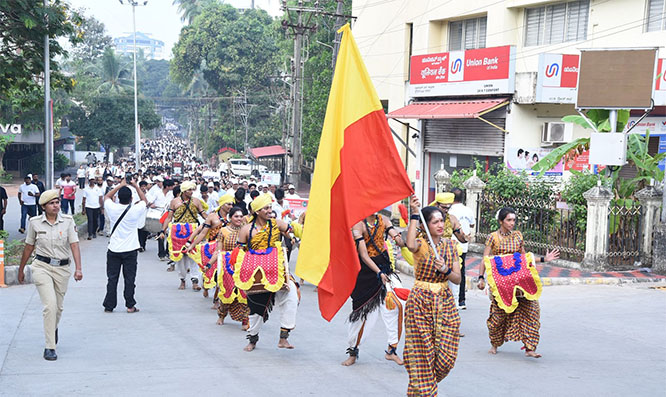
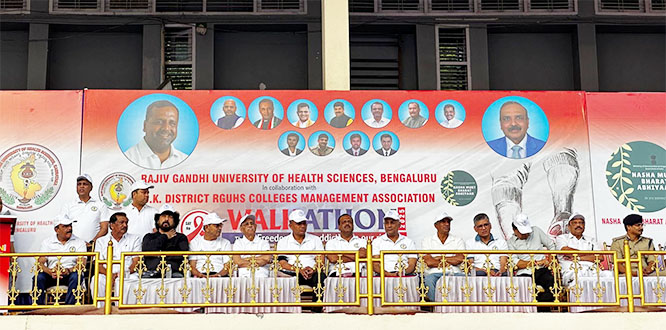
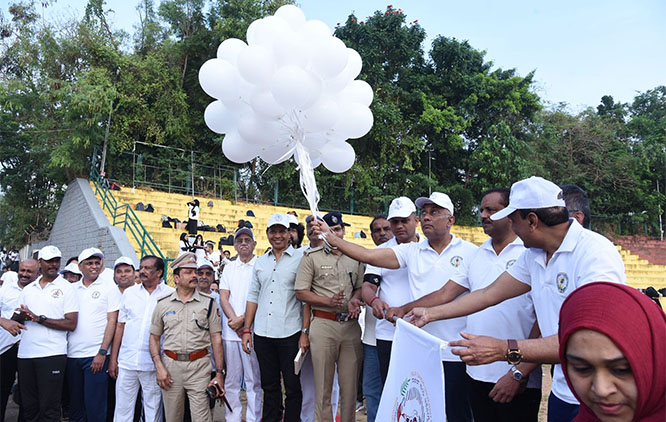
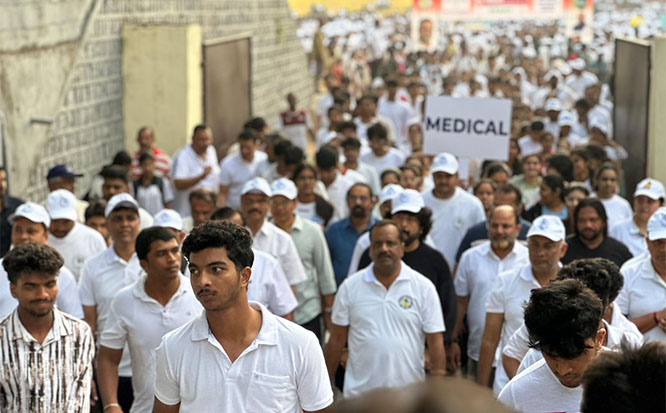
Mangaluru, Nov 29: Around 12,500 healthcare students from Medical, Dental, AYUSH, Pharmacy, Nursing, Physiotherapy and Allied Health Sciences colleges of Dakshina Kannada, affiliated to Rajiv Gandhi University of Health Sciences (RGUHS), took part in a massive walkathon to promote awareness on Organ Donation and Nasha Mukth Bharat.

The inaugural ceremony was held at Mangala Stadium. Dr Bhagavan B C, Hon’ble Vice-Chancellor of RGUHS, delivered the welcome address. The walkathon was flagged off by Shri U T Khader, Hon’ble Speaker of the Karnataka Legislative Assembly, and presided over by Shri Dinesh Gundu Rao, Hon’ble Minister for Health, Family Welfare and Dakshina Kannada District In-charge. Dakshina Kannada MP Shri Brijesh Chowta also addressed the students.

Music director Guru Kiran, MLA Dr Bharat Shetty (Mangalore North), Police Commissioner Shri Sudheer Kumar Reddy, Shri Manjunath Bhandary and Shri Harish Kumar were among those present.

Institution heads including Dr Haji U K Monu (Kanachur Colleges), Dr Shantharam Shetty (Tejaswini College), Dr Bhaskar Shetty (City Group of Colleges), Mr Abdul Rahiman (Kanachur Institute of Medical Sciences), and the District Health Officer, Mangalore, also participated.

The vote of thanks was delivered by Prof U T Ifthikar Fareed, Syndicate Member, RGUHS.

The event was organised by Dr U T Ifthikar Ali and Dr Shiva Sharan (Syndicate Members), Prof Vaishali (Senate Member), Prof Mohammad Suhail (Chairman, BOS Physiotherapy), Dr Sharan Shetty (Former Senate Member), along with principals and faculty of various colleges.

Students marched from Mangala Stadium to Karavali Grounds via MCC and Lalbagh signal. The event set a record as one of the largest gatherings of healthcare students for a social cause in the RGUHS Dakshina Kannada Zone.

health7.jpg

health6.jpg

health5.jpg

health4.jpg

health3.jpg

health2.jpg

Comments

Add new comment

  • Coastaldigest.com reserves the right to delete or block any comments.
  • Coastaldigset.com is not responsible for its readers’ comments.
  • Comments that are abusive, incendiary or irrelevant are strictly prohibited.
  • Please use a genuine email ID and provide your name to avoid reject.