India detects first case of covid sub-variant JN.1 in Kerala | Should we worry?

News Network
December 16, 2023

kerala.jpg

India has detected its first Covid-19 sub-variant JN.1 case from Kerala’s Karakulam. The sample from a 79-year-old woman had returned a positive result in an RT-PCR test conducted on November 18, reported news agency PTI, adding that she had mild symptoms of influenza-like illnesses and had recovered from Covid-19.

Earlier, a traveler from Tamil Nadu’s Tiruchirapalli district was detected with the JN.1 sub-variant of Covid-19 in Singapore on October 25.

No increase in cases was observed in Tiruchirapalli district or other places in Tamil Nadu following the strain being detected in them. “No other case of JN.1 variant has been detected in India,” the source said.

Currently, over 90 percent of Covid-19 cases in India are mild and under home isolation, according to the news agency.

JN.1 SUB-VARIANT

The JN.1 sub-variant was first identified in Luxembourg and has since spread to several countries. The variant is said to be a descendant of the Pirola variant (BA.2.86).

It contains a significant number of unique mutations, particularly in the spike protein, that have a chance to contribute to increased infectivity and immune evasion among masses, a source explained to the agency.

However, initial data suggests that updated vaccines and treatments can protect people against JN.1 sub-strain, the source stated.

This sub-variant’s resemblance to earlier sub-strains with distinct spike proteins is also noteworthy. Most of the changes in the JN.1 sub-variant are found in the spike protein, which likely correlates to increases in infectivity and immune evasion.

SHOULD INDIA BE WORRIED?

“India is keeping a vigil and that’s the reason no hospitalisation or severe disease has been reported so far,” quoted news agency ANI to INSACOG Chief, NK Arora.

Rajeev Jayadevan, the National Indian Medical Association Covid Task Force’s co-chairman shared insight with ANI, “After a seven-month gap, cases are rising in India. In Kerala, there are reports of people getting Covid, but the severity so far appears to be the same as before.”

Jayadevan added that the sub-strain is capable of spreading faster and evading immunity. “JN.1 is rising quickly in several Western countries, and India being connected by international travel with the rest of the world should be no exception,” he said.

CASES OF JN.1 SUB-VARIANT

Globally, 3,608 cases of BA.2.86 and its sub-variants have been reported mostly from Europe and North America.

The US Centers for Disease Control and Prevention (CDC) has stated that the updated Covid-19 vaccines are likely to offer protection against the JN.1 sub-strain.

It also said an analysis from the federal government’s SARS-CoV-2 Interagency Group suggests treatments and testing will remain effective, they said. 

Comments

Add new comment

  • Coastaldigest.com reserves the right to delete or block any comments.
  • Coastaldigset.com is not responsible for its readers’ comments.
  • Comments that are abusive, incendiary or irrelevant are strictly prohibited.
  • Please use a genuine email ID and provide your name to avoid reject.
News Network
December 3,2025

indigo.jpg

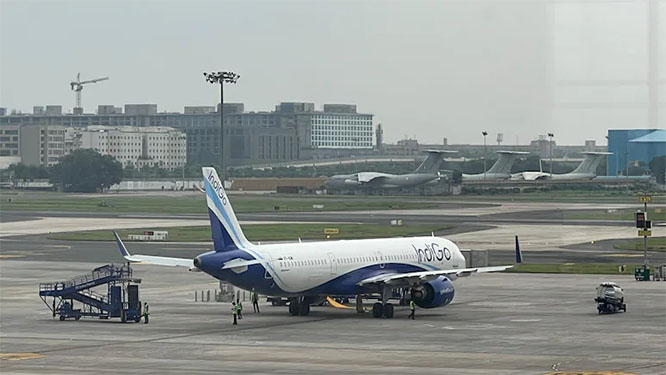
IndiGo, India’s largest airline, is battling one of its worst operational disruptions in recent years, with hundreds of delays and cancellations throwing domestic travel into chaos.

Government data on Tuesday showed its on-time performance plunging to 35%, an unusual dip for a carrier long associated with punctuality.

By Wednesday afternoon, airports in Delhi, Mumbai, Bengaluru and Hyderabad had collectively reported close to 200 cancellations, stranding travellers across the country.

Crew Shortage After New Duty Norms

A major trigger behind the meltdown is a severe crew shortage, especially among pilots, following the rollout of revised Flight Duty Time Limitation (FDTL) norms last month.

The rules mandate longer rest hours and more humane rosters — a shift IndiGo has struggled to incorporate across its vast network.

Sources said several flights were grounded due to lack of cabin crew, while some delays stretched upwards of eight hours.

With IndiGo controlling over 60% of India’s domestic aviation market, the ripple effect has impacted airports nationwide.

IndiGo Issues Apology, Lists “Compounding Factors”

In a statement, IndiGo acknowledged the large-scale disruption:

“We sincerely apologise to customers. A series of unforeseen operational challenges — technology glitches, winter schedule changes, adverse weather, system congestion and updated FDTL norms — created a compounding impact that could not have been anticipated.”

To stabilise operations, the airline has begun calibrated schedule adjustments for the next 48 hours, aiming to restore punctuality. Affected passengers are being offered refunds or alternate travel arrangements, IndiGo said.

What the FDTL Rules Require

The FDTL norms, designed to reduce pilot fatigue, cap duty and flying hours as follows:
•    Maximum 8 hours of flying per day
•    35 hours per week
•    125 hours per month
•    1,000 hours per year

Crew must also receive rest equalling twice the flight duration, with a minimum 10-hour rest period in any 24-hour window.

The DGCA introduced these limits to enhance flight safety.

Hyderabad: 33 Flights Cancelled, Long Queues Reported

Hyderabad’s Rajiv Gandhi International Airport saw heavy early-morning crowds as 33 IndiGo flights (arrivals and departures) were cancelled.

The airport clarified on X that operations were normal, advising passengers to contact IndiGo directly for latest flight status.

Cancellations included flights to and from Visakhapatnam, Goa, Ahmedabad, Delhi, Bengaluru, Chennai, Madurai, Hubli, Bhopal and Bhubaneswar.

Bengaluru: 42 Flights Disrupted

Bengaluru’s Kempegowda International Airport recorded 42 cancellations — 22 arrivals and 20 departures — affecting routes to Delhi, Mumbai, Chennai, Hyderabad, Goa, Kolkata and Lucknow.

Passengers Vent on Social Media

Irate travellers took to X to share their experiences. One passenger stranded in Hyderabad wrote: “I have been here since 3 a.m. and missed an important meeting.”

Another said: “My flight was pushed from 1:55 PM to 2:55 PM and now 4:35 PM. I was informed only three minutes before entering the airport.”

Delhi Airport Hit by Tech Glitch

At Delhi Airport, the disruption deepened due to a slowdown in the Amadeus system — used for reservations, check-ins and departure control.

The technical issue led to longer queues and sluggish processing, adding to delays already worsened by staff shortages.

Comments

Add new comment

  • Coastaldigest.com reserves the right to delete or block any comments.
  • Coastaldigset.com is not responsible for its readers’ comments.
  • Comments that are abusive, incendiary or irrelevant are strictly prohibited.
  • Please use a genuine email ID and provide your name to avoid reject.