India is hungry as Modi talks of feeding the world

Agencies
May 26, 2022

hungryindia.jpg

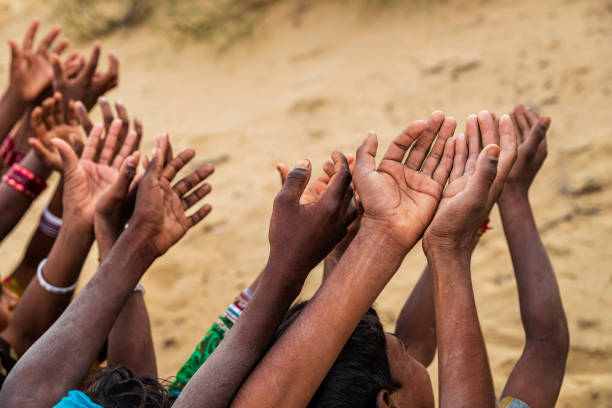
The only thing India can possibly do during this year’s global food crisis is to not make it any worse for its own poor. As the cost of basic nutrition balloons everywhere, the second-most-populous nation’s best bet is to fall back on its extensive system of state procurement and public distribution to soften the blow.

But, around mid-April, Prime Minister Narendra Modi promised US President Joe Biden that India could feed the world. If the World Trade Organisation allowed it, “India is ready to supply food stocks to the world from tomorrow,” Modi said, recalling the conversation.

Modi’s ministers and advisers ought to have known better. Just as the Indian leader was talking to Biden, the north Indian wheat crop was being scorched by a deadly heat wave. The Ukraine war and the resulting grain shortage may have presented India with an opportunity to script a role for itself in international trade, but climate change and a brewing chapati crisis should have been reasons to curb the enthusiasm.

Eventually it had to do just that: In mid-May, India imposed a hasty ban on wheat exports to ensure its own food security. It was a repeat of the Covid-19 fiasco when Modi bragged about how India, the world’s pharmacy, will save humanity. But a vicious outbreak of the delta variant forced it to backtrack. By March 31, India’s share of the global vaccine trade was just 2.3 per cent. Just as with the pandemic, the ripples of New Delhi’s wheat flip-flop are being felt internationally. The Group of Seven nations criticized the embargo. "If everyone starts to impose export restrictions or to close markets, that would worsen the crisis," German agriculture minister Cem Ozdemir said.

Actually, the opposite might be true. From Indonesia’s restrictions on palm-oil shipments to Malaysia’s ban on chicken exports, some 30 countries have resorted to such measures. Had India not closed its markets, the country might have faced a shortage of chapatis — India’s ubiquitous, unleavened daily bread. People, rich or poor, don’t consume wheat; they buy flour to make chapatis. And this year, there may be 6.5 per cent fewer chapatis for the same crop as previous harvests, while wheat output itself will likely see its first dip in seven years. 

In a nutshell, the problem is this: Last year, one kilo of Indian wheat resulted in about 770 grams of flour. This year, that might go down to 720 grams. The hottest March in 122 years has stunted grain formation. In fact, traders are buying wheat that is below their normal flour-yield cut-off level — that would be a score below 76 on a hectoliter test. Now, inferior readings of 72 are acceptable because of the scarcity of good wheat, according to industry sources.

Blame can be laid to the unusually early heat wave that engulfed India and Pakistan, weather that was made at least 30 times more likely by human-caused climate change, according to scientists at the World Weather Attribution initiative. India’s crop will be lucky to exceed 100 million tons this year, a steep decline from the initial government estimate of a record 111 million-ton harvest.

Taking 15 million metric tons from this total to export to the world — as the government boasted — was more than a little shortsighted. For one, the Food Corporation of India, the state-buying agency, has neglected to fill out its granaries. Last year, it bought 43 million metric tons for its stockpiles. This year’s target has been slashed to less than half of that. Those 19.5 million tons of purchases, plus the 30 million tons currently in FCI storage will mostly go into public distribution if the Modi administration extends the free grain program it started during the pandemic. There will be little left in the state’s wheat pool to tamp down any speculative fervor in the domestic open market.

The government isn’t without tools. If prices skyrocket, New Delhi can impose stock limits to force traders to release their hoards. The FCI could also offload more rice than wheat into the subsidised public distribution system. Most Indian diets nowadays can accommodate both. This could free up about 10 million tons of wheat to accommodate government-to-government supply deals such as with Egypt.

Still, these are stopgap solutions. The premise of Modi’s failed farm-reform legislation was to give more freedom to farmers to discover free-market prices for their produce. The about-face over wheat shows that when it comes to India’s agriculture, primacy of markets remains a pipe dream. A limit on sugar exports has also come up. Unlike wheat, where India is a bit player in global trade, the country is No. 2 in sugar shipments after Brazil. That’s a perfidy in itself because the sweetener guzzles water — and by selling it overseas, India exports its precious rain.

Maybe the current wheat shortage will ease if, as Lithuania has proposed, a protective corridor for grain shipments from Ukraine ends up breaking a Russian blockade of the Black Sea. With that, the pressure to feed India’s 1.4 billion people may also lift. But the long-term threat of climate change won’t go away. As global temperatures rise 2 degrees Celsius or more above pre-industrial levels, the country’s chapati challenge is only going to become more urgent.

Comments

Add new comment

  • Coastaldigest.com reserves the right to delete or block any comments.
  • Coastaldigset.com is not responsible for its readers’ comments.
  • Comments that are abusive, incendiary or irrelevant are strictly prohibited.
  • Please use a genuine email ID and provide your name to avoid reject.
News Network
December 5,2025

indigoCEO.jpg

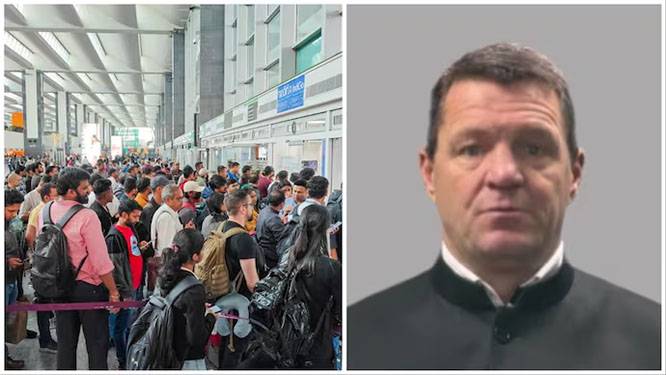
New Delhi, Dec 5: IndiGo CEO Pieter Elbers issued a public apology this evening after more than a thousand flights were cancelled today, making it the "most severely impacted day" in terms of cancellations. The biggest airline of the country cancelled "more than half" of its daily number of flights on Friday, said Elbers. He also said that even though the crisis will persist on Saturday, the airline anticipates fewer than 1,000 flight cancellations.

"Full normalisation is expected between December 10 and 15, though IndiGo cautions that recovery will take time due to the scale of operations," the IndiGo CEO said. 

IndiGo operates around 2,300 domestic and international flights daily.

Pieter Elbers, while apologising for the major inconvenience due to delays and cancellations, said the situation is a result of various causes.

The crisis at IndiGo stems from new regulations that boost pilots' weekly rest requirements by 12 hours to 48 and allow only two night-time landings per week, down from six. IndiGo has attributed the mass cancellations to "misjudgment and planning gaps".

Elbers also listed three lines of action that the airline will adopt to address the issue.

"Firstly, customer communication and addressing your needs, for this, messages have been sent on social media. And just now, a more detailed communication with information, refunds, cancellations and other customer support measures was sent," he said.

The airline has also stepped up its call centre capacity.

"Secondly, due to yesterday's situation, we had customers stranded mostly at the nation's largest airports. Our focus was for all of them to be able to travel today itself, which will be achieved. For this, we also ask customers whose flights are cancelled not to come to the airports as notifications are sent," the CEO said.

"Thirdly, cancellations were made for today to align our crew and planes to be where they need to start tomorrow morning afresh. Earlier measures of the last few days, regrettable, have proven not to be enough, but we have decided today to reboot all our systems and schedules, resulting in the highest numbers of cancellations so far, but imperative for progressive improvements starting from tomorrow," he added.

As airports witnessed chaotic scenes, the Directorate General of Civil Aviation (DGCA) stepped in to grant IndiGo a temporary exemption from stricter night duty rules for pilots. It also allowed substitution of leaves with a weekly rest period. 

Civil Aviation Minister Ram Mohan Naidu has said a high-level inquiry will be ordered and accountability will be fixed.

Comments

Add new comment

  • Coastaldigest.com reserves the right to delete or block any comments.
  • Coastaldigset.com is not responsible for its readers’ comments.
  • Comments that are abusive, incendiary or irrelevant are strictly prohibited.
  • Please use a genuine email ID and provide your name to avoid reject.
News Network
November 28,2025

ministerPM.jpg

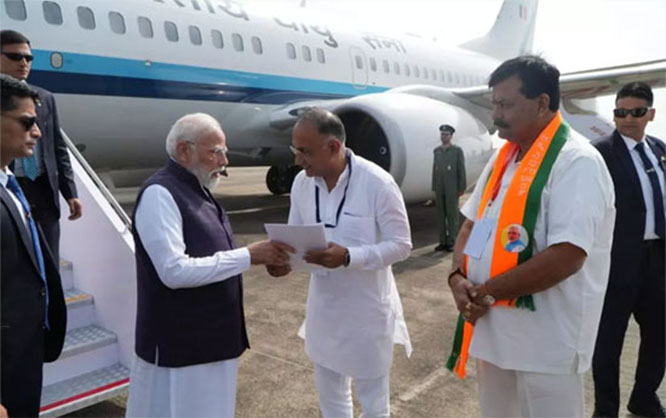
Mangaluru, Nov 28: Karnataka Health Minister and Dakshina Kannada district in-charge minister Dinesh Gundu Rao on Friday handed over Chief Minister Siddaramaiah’s letter to Prime Minister Narendra Modi, highlighting the severe distress faced by farmers due to crashing crop prices.

PM Modi arrived at the Mangaluru International Airport en route to Udupi, where Gundu Rao welcomed him and submitted the letter. The chief minister’s message stressed that farmers are suffering heavy losses because maize and green gram are being bought far below the Minimum Support Price (MSP). The state urged the Centre to immediately begin procurement at MSP.

According to the letter, Karnataka has a bumper harvest this year—over 54.74 lakh metric tons of maize and 1.98 lakh metric tons of green gram—yet farmers are unable to secure fair prices. Against the MSP of ₹2,400/MT for maize and ₹8,768/MT for green gram, market rates have plunged to ₹1,600–₹1,800 and ₹5,400 respectively.

The chief minister has requested the Centre to:

• Direct NAFED, FCI and NCCF to start MSP procurement immediately.
• Ensure ethanol units purchase maize directly from farmers or FPOs.
• Increase Karnataka’s ethanol allocation, citing high production capacity.
• Stop maize imports, which have depressed domestic prices.
• Relax quality norms for green gram, allowing up to 10% discoloration due to rains.

The letter stresses that MSP is crucial for farmer dignity and income stability and calls for swift central intervention to prevent a deepening crisis.

Comments

Add new comment

  • Coastaldigest.com reserves the right to delete or block any comments.
  • Coastaldigset.com is not responsible for its readers’ comments.
  • Comments that are abusive, incendiary or irrelevant are strictly prohibited.
  • Please use a genuine email ID and provide your name to avoid reject.
News Network
December 5,2025

Mangaluru: In a significant step to curb online hate and intimidation, Mangaluru City Police have registered a suo motu case against multiple Instagram accounts accused of circulating alleged provocative and threatening content.

While monitoring social media activity on Tuesday, Kankanady Town PSI Anitha Nikkam identified the Instagram handle ‘team_targetttt_900’ for posting a hate message alongside images of lethal weapons. Another account, ‘team_nagara_900’, allegedly shared a threatening post targeting activist Bharath Kumdelu, tagging additional pages such as KARAVALI-OFFICIAL.

Several other accounts — including ‘immu_bhai.fan’, ‘target_boy_900’, ‘kings_of_manglore’, ‘team_target_boys.900’, ‘arshad_mangalore’, ‘target_ka19_ullal’, ‘team_target__’, ‘troll_tigersz_900’, ‘tr_group_900’, and ‘team_target_900’ — are also under scrutiny for spreading similar inflammatory material, police said.

Authorities have urged citizens, especially young social media users, to report suspicious pages and avoid engaging with groups that glorify violence or threaten individuals. Online hate can quickly escalate into real-world harm, and police stress that sharing or promoting such content can attract legal consequences.

Comments

Add new comment

  • Coastaldigest.com reserves the right to delete or block any comments.
  • Coastaldigset.com is not responsible for its readers’ comments.
  • Comments that are abusive, incendiary or irrelevant are strictly prohibited.
  • Please use a genuine email ID and provide your name to avoid reject.