



India might see 'serious livelihood crisis': Economist Jean Dreze

Agencies
May 11, 2021

crisis.jpg

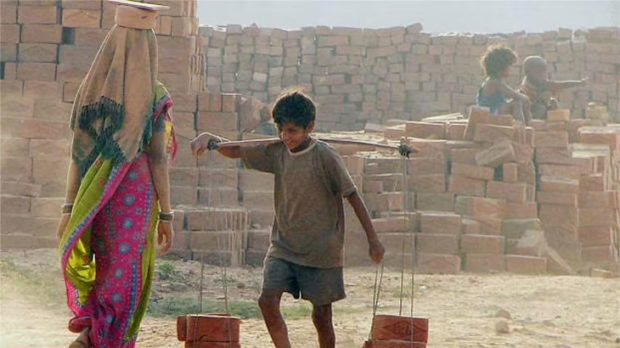
India might be heading towards a "serious livelihood crisis" as the situation seems to be worse this time for the working class amid the Covid crisis and local restrictions by states already add up to something close to a nationwide lockdown, according to noted economist Jean Dreze.

In an interview, he also said the Narendra Modi government's target to make India a USD 5 trillion economy by 2024-25 was never a "feasible target" and was just to pander to the "super-power ambitions" of the Indian elite.

About the impact of the second wave of Covid on the Indian economy, the eminent economist said the situation today is not very different from what it was around this time last year as far as working people are concerned.

"The economic consequences of local lockdowns may not be as destructive as those of a national lockdown. But in some respects, things are worse this time for the working class," he opined.

Further, the eminent economist said the fear of infection is more widespread and that will make it hard to revive economic activity.

"Despite mass vaccination, there is a serious possibility that intermittent crises will continue for a long time, perhaps years.

"Compared with last year, many people have depleted savings and larger debts. Those who borrowed their way through last year's crisis may not be able to do it again this time," he observed.

Dreze also pointed out that last year there was a relief package and today relief measures are not even being discussed.

"On top of all this, local lockdowns may give way to a national lockdown relatively soon. In fact, they already add up to something close to a country-wide lockdown.

"In short, we are heading towards a serious livelihood crisis," he said.

On how the government could have missed seeing the second Covid-19 wave coming, Dreze said the Indian government has been in denial all along.

"Remember, the government refused to admit about any 'community transmission' of Covid for a long time, even as recorded cases were counted in millions.

"When an early analysis of official data exposed the collapse of health services, the government retracted the data," he said.

He pointed out that misleading statistics have been routinely invoked to reassure the public that all is well. "Denying a crisis is the surest way to make it worse. We are now paying the price of this complacency".

India has been reporting more than three lakh new Covid cases daily in recent weeks and the death toll due to the infection is also rising.

Noting that India is also paying the price of a long history of neglect of the health sector, especially public health, Dreze said nothing is more important than health for the quality of life, yet public expenditure on health in India has hovered around a measly 1 per cent of GDP for decades.
When asked about the sort of relief measures that could be put in place to deal with possible livelihood crisis, he said as a starter, the central government could replay the 2020 relief package.

"But it is important to go beyond that, and to consolidate the social security system on a durable basis," the eminent economist said, adding that ad-hoc, short-term relief measures tend to breed confusion, corruption and waste.

Dreze, who was also part of the National Advisory Council (NAC) that had advised the previous UPA government, said much can be done within the framework of existing social security schemes and laws such as the public distribution system, the National Rural Employment Guarantee Act (NREGA), the National Social Assistance Programme, and the Integrated Child Development Services.

He also noted it would be easy to provide supplementary food rations to all ration-card holders for much longer than the proposed two months, and also to expand the coverage of the public distribution system.

"Going beyond existing schemes, I think that a well-designed, inclusive cash-transfer programme would be useful," Dreze opined.

According to him, if intermittent crises are going to continue for years, which is very possible, it would really help to have a well-functioning system of cash relief that can be activated whenever the need arises.

"Turning India into a USD 5 trillion economy by 2024-25 was never a feasible target, and it is a useless target in any case. The function of this target is to pander to the super-power ambitions of the Indian elite," the Belgian-born Indian economist said. In 2019, Prime Minister Narendra Modi envisioned to make India a USD 5 trillion economy and global power house by 2024-25.

According to Dreze, even if we accept GDP as a valid development indicator, the standard approach is to look at GDP at its per capita terms.

"But then India looks like one of the poorer countries in the world, which it is. Looking at aggregate GDP, which is naturally quite large because of India's large population, creates an illusion of prosperity and power," he argued.

Dreze pointed out that actually it is not entirely an illusion because if the government's interest is in power on the world stage rather than in the living conditions of the people, then, yes, aggregate GDP would matter.

"For instance, it would enable you maintain a large army. But this has nothing to do with development," he observed. 

Comments

Add new comment

  • Coastaldigest.com reserves the right to delete or block any comments.
  • Coastaldigset.com is not responsible for its readers’ comments.
  • Comments that are abusive, incendiary or irrelevant are strictly prohibited.
  • Please use a genuine email ID and provide your name to avoid reject.
News Network
December 6,2025

pilot.jpg

New Delhi: IndiGo, India’s largest airline, faced major operational turbulence this week after failing to prepare for new pilot-fatigue regulations issued by the Directorate General of Civil Aviation (DGCA). The stricter rules—designed to improve flight safety—took effect in phases through 2024, with the latest implementation on November 1. IndiGo has acknowledged that inadequate roster planning led to widespread cancellations and delays.

Below are the key DGCA rules that affected IndiGo’s operations:

1. Longer Mandatory Weekly Rest

Weekly rest for pilots has been increased from 36 hours to 48 hours.

The government says the extended break is essential to curb cumulative fatigue. This rule remains in force despite the current crisis.

2. Cap on Night Landings

Pilots can now perform only two night landings per week—a steep reduction from the earlier limit of six.

Night hours, defined as midnight to early morning, are considered the least alert period for pilots.

Given the disruptions, this rule has been temporarily relaxed for IndiGo until February 10.

3. Reduced Maximum Night Flight Duty

Flight duty that stretches into the night is now capped at 10 hours.

This measure has also been kept on hold for IndiGo until February 10 to stabilize operations.

4. Weekly Rest Cannot Be Replaced With Personal Leave

Airlines can no longer count a pilot’s personal leave as part of the mandatory 48-hour rest.

Pilots say this closes a loophole that previously reduced actual rest time.

Currently, all airlines are exempt from this rule to normalise travel.

5. Mandatory Fatigue Monitoring

Airlines must submit quarterly fatigue reports along with corrective actions to DGCA.

This system aims to create a transparent fatigue-tracking framework across the industry.

The DGCA has stressed that these rules were crafted to strengthen flight safety and align India with global fatigue-management standards. The temporary relaxations are expected to remain until February 2025, giving IndiGo time to stabilise its schedules and restore normal air travel.

Comments

Add new comment

  • Coastaldigest.com reserves the right to delete or block any comments.
  • Coastaldigset.com is not responsible for its readers’ comments.
  • Comments that are abusive, incendiary or irrelevant are strictly prohibited.
  • Please use a genuine email ID and provide your name to avoid reject.
News Network
December 4,2025

Mangaluru: Chaos erupted at Mangaluru International Airport (MIA) after IndiGo flight 6E 5150, bound for Mumbai, was repeatedly delayed and ultimately cancelled, leaving around 100 passengers stranded overnight. The incident highlights the ongoing country-wide operational disruptions affecting the airline, largely due to the implementation of new Flight Duty Time Limitations (FDTL) norms for crew.

The flight was initially scheduled for 9:25 PM on Tuesday but was first postponed to 11:40 PM, then midnight, before being cancelled around 3:00 AM. Passengers expressed frustration over last-minute communication and the lack of clarity, with elderly and ailing travellers particularly affected. “Though the airline arranged food, there was no proper communication, leaving us confused,” said one family member.

An IndiGo executive at MIA cited the FDTL rules, designed to prevent pilot fatigue by limiting crew working hours, as the cause of the cancellation. While alternative arrangements, including hotel stays, were offered, about 100 passengers chose to remain at the airport, creating tension. A replacement flight was arranged but also faced delays due to the same constraints, finally departing for Mumbai around 1:45 PM on Wednesday. Passengers either flew, requested refunds, or postponed their travel.

The Mangaluru delay is part of a broader crisis for IndiGo. The airline has been forced to make “calibrated schedule adjustments”—a euphemism for widespread cancellations and delays—after stricter FDTL norms came into effect on November 1.

While an IndiGo spokesperson acknowledged unavoidable flight disruptions due to technology issues, operational requirements, and the updated crew rostering rules, the DGCA has intervened, summoning senior airline officials to explain the chaos and outline corrective measures.

The ripple effect has been felt across the country, with major hubs like Bengaluru and Mumbai reporting numerous cancellations. The Mangaluru incident underscores the systemic operational strain currently confronting India’s largest carrier, leaving passengers nationwide grappling with uncertainty and delays.

Comments

Add new comment

  • Coastaldigest.com reserves the right to delete or block any comments.
  • Coastaldigset.com is not responsible for its readers’ comments.
  • Comments that are abusive, incendiary or irrelevant are strictly prohibited.
  • Please use a genuine email ID and provide your name to avoid reject.
News Network
December 5,2025

Mangaluru: In a significant step to curb online hate and intimidation, Mangaluru City Police have registered a suo motu case against multiple Instagram accounts accused of circulating alleged provocative and threatening content.

While monitoring social media activity on Tuesday, Kankanady Town PSI Anitha Nikkam identified the Instagram handle ‘team_targetttt_900’ for posting a hate message alongside images of lethal weapons. Another account, ‘team_nagara_900’, allegedly shared a threatening post targeting activist Bharath Kumdelu, tagging additional pages such as KARAVALI-OFFICIAL.

Several other accounts — including ‘immu_bhai.fan’, ‘target_boy_900’, ‘kings_of_manglore’, ‘team_target_boys.900’, ‘arshad_mangalore’, ‘target_ka19_ullal’, ‘team_target__’, ‘troll_tigersz_900’, ‘tr_group_900’, and ‘team_target_900’ — are also under scrutiny for spreading similar inflammatory material, police said.

Authorities have urged citizens, especially young social media users, to report suspicious pages and avoid engaging with groups that glorify violence or threaten individuals. Online hate can quickly escalate into real-world harm, and police stress that sharing or promoting such content can attract legal consequences.

Comments

Add new comment

  • Coastaldigest.com reserves the right to delete or block any comments.
  • Coastaldigset.com is not responsible for its readers’ comments.
  • Comments that are abusive, incendiary or irrelevant are strictly prohibited.
  • Please use a genuine email ID and provide your name to avoid reject.
