Indian economy, battered by covid-19, needs its lost growth

News Network
September 1, 2021

The coronavirus continues to batter India’s damaged economy, putting growing pressure on Prime Minister Narendra Modi to nurture a nascent recovery and get the country back to work.

The coronavirus, which has struck in two waves, has killed hundreds of thousands of people and at times has brought cities to a halt. Infections and deaths have eased, and the country is returning to work. Economists predict that growth could surge in the second half of the year on paper.

Still, the damage could take years to undo. Economic output was 9.2% lower for the April-through-June period this year than what it was for the same period in 2019, according to India Ratings, a credit ratings agency.

The coronavirus has essentially robbed India of much of the momentum it needed to provide jobs for its young and fast-growing workforce. It has also exacerbated longer-term problems that were already dragging down growth, such as high debt, a lack of competitiveness with other countries and policy missteps.

Economists are particularly concerned about the slow rate of vaccinations and the possibility of a third wave of the coronavirus, which could prove to be disastrous for any economic recovery.

“Vaccination progress remains slow,” with just 11% of the population fully inoculated so far, Priyanka Kishore, the head of India and Southeast Asia at Oxford Economics, said in a research briefing last week. The firm lowered its growth rate for 2021 to 8.8%, from 9.1%.

Even growth of 8.8% would be a strong number in better times. Compared with the previous year, India’s economy grew 20.1% April through June, according to estimates released by the Ministry of Statistics and Program Implementation.

But those comparisons benefit from comparison with India’s dismal performance last year. The economy shrank 7.3% last year, when the government shut down the economy to stop a first wave of the coronavirus. That led to big job losses, now among the biggest hurdles holding back growth, experts say.

Real household incomes have fallen further this year, said Mahesh Vyas, chief executive of the Center for Monitoring Indian Economy. “Till this is not repaired,” he said, “the Indian economy can’t bounce back.”

At least 3.2 million Indians lost stable, well-paying salaried jobs in July alone, Vyas estimated. Small traders and daily wage labourers had bigger job losses during the lockdowns than others, though they were able to go back to work once the restrictions were lifted, Vyas said in a report in August. “Salaried jobs are not similarly elastic,” he said. “It is difficult to retrieve a lost salaried job.”

About 10 million people have lost such jobs since the beginning of the pandemic, Vyas said.

In August, Modi’s government moved to rekindle the economy by selling stakes worth close to $81 billion in state-owned assets like airports, railway stations and stadiums. But economists largely see the policy as a move to generate cash in the short term. It remains to be seen if it will lead to more investment, they say.

“The whole idea is that the government will borrow this money from the domestic market,” said Devendra Kumar Pant, chief economist at India Ratings. “But what happens if this project goes to a domestic player and he is having to borrow in the domestic market? Your credit demand domestically won’t change.”

Pant added that questions remained about how willing private players would be to maintain those assets long term and how the monetization policy would ultimately affect consumer prices.

 “In India, things will decay for the worse rather than improve,” he said, adding that the costs to users of highways and other infrastructure could go up.

During the second wave in May, Modi resisted calls by many public health researchers, including Dr Anthony Fauci, director of the US National Institute of Allergy and Infectious Diseases, to reinstitute a nationwide lockdown.

The lockdowns in 2021 were nowhere near as severe as the nationwide curbs last year, which pushed millions of people out of cities and into rural areas, often on foot because rail and other transportation had been suspended.

Throughout the second wave, core infrastructure projects across the country, which employ millions of domestic migrant workers, were exempted from restrictions. More than 15,000 miles of Indian highway projects, along with rail and city metro improvements, continued.

On Tuesday, Pant said that India’s growth estimates of 20.1% for the April through June period were nothing but an “illusion.” Growth contracted so sharply around the same period last year, by a record 24%, that even double-digit gains this year would leave the economy behind where it was two years ago.

Economists say that India needs to spend, even splurge, to unlock the full potential of its huge low-skilled workforce. “There is a need for very simple primary health facilities, primary services to deliver nutrition to children,” Vyas said. “All these are highly labour intensive jobs and these are government services largely.”

One of the reasons Indian governments typically have not spent in those areas, Vyas said, is that it has been considered “not a sexy thing to do.” Another is the government's “dogmatic fixation” with keeping fiscal deficits in control, he said. The government simply can’t rely on the private sector alone for creating jobs, Vyas said.

The “only solution,” he said, is for the government to spend and spur private investment. “You have a de-motivated private sector because there isn’t enough demand. That’s what’s holding India back.”


Comments

Ramesh Mishra
 - 
Monday, 13 Sep 2021

INDIAN ECONOMY
Due to the malfeasance in the Judiciary, Politicians and Executives, the economy is gone back 75,years behind. The malfeasance into the three vital branches can not be corrected and consolidated because all the three vital organs of the government have completely collapsed. Modi, PM of India has pilloried, tortured, traumatised, harassed, humiliated, degraded and destroyed his opposition, critics. India is now a " total loss". The internal conflict has ruined the trade commerce and the mutual trust. Hindu, Muslim, Christian and Sikh are divided due to the lack of leadership. The division of India can't be prevented its too late to rebuild the public trust. The public is cheated at every step in India which is a country of crooks.
Ramesh Mishra, Victoria, British Columbia, CANADA

Add new comment

  • Coastaldigest.com reserves the right to delete or block any comments.
  • Coastaldigset.com is not responsible for its readers’ comments.
  • Comments that are abusive, incendiary or irrelevant are strictly prohibited.
  • Please use a genuine email ID and provide your name to avoid reject.
News Network
December 6,2025

pilot.jpg

New Delhi: IndiGo, India’s largest airline, faced major operational turbulence this week after failing to prepare for new pilot-fatigue regulations issued by the Directorate General of Civil Aviation (DGCA). The stricter rules—designed to improve flight safety—took effect in phases through 2024, with the latest implementation on November 1. IndiGo has acknowledged that inadequate roster planning led to widespread cancellations and delays.

Below are the key DGCA rules that affected IndiGo’s operations:

1. Longer Mandatory Weekly Rest

Weekly rest for pilots has been increased from 36 hours to 48 hours.

The government says the extended break is essential to curb cumulative fatigue. This rule remains in force despite the current crisis.

2. Cap on Night Landings

Pilots can now perform only two night landings per week—a steep reduction from the earlier limit of six.

Night hours, defined as midnight to early morning, are considered the least alert period for pilots.

Given the disruptions, this rule has been temporarily relaxed for IndiGo until February 10.

3. Reduced Maximum Night Flight Duty

Flight duty that stretches into the night is now capped at 10 hours.

This measure has also been kept on hold for IndiGo until February 10 to stabilize operations.

4. Weekly Rest Cannot Be Replaced With Personal Leave

Airlines can no longer count a pilot’s personal leave as part of the mandatory 48-hour rest.

Pilots say this closes a loophole that previously reduced actual rest time.

Currently, all airlines are exempt from this rule to normalise travel.

5. Mandatory Fatigue Monitoring

Airlines must submit quarterly fatigue reports along with corrective actions to DGCA.

This system aims to create a transparent fatigue-tracking framework across the industry.

The DGCA has stressed that these rules were crafted to strengthen flight safety and align India with global fatigue-management standards. The temporary relaxations are expected to remain until February 2025, giving IndiGo time to stabilise its schedules and restore normal air travel.

Comments

Add new comment

  • Coastaldigest.com reserves the right to delete or block any comments.
  • Coastaldigset.com is not responsible for its readers’ comments.
  • Comments that are abusive, incendiary or irrelevant are strictly prohibited.
  • Please use a genuine email ID and provide your name to avoid reject.
coastaldigest.com news network
November 29,2025

health1.jpg

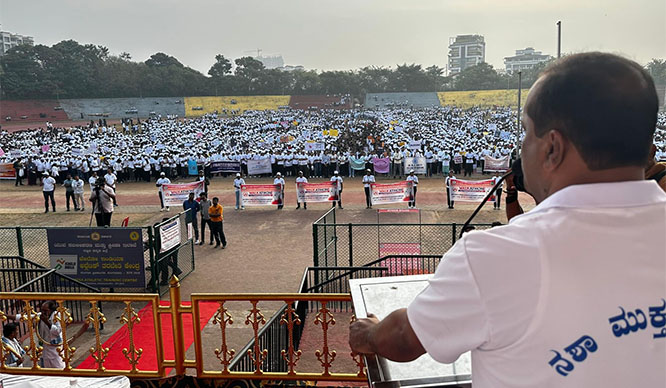
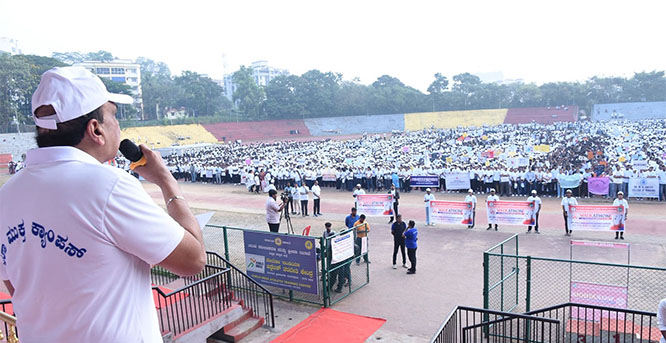
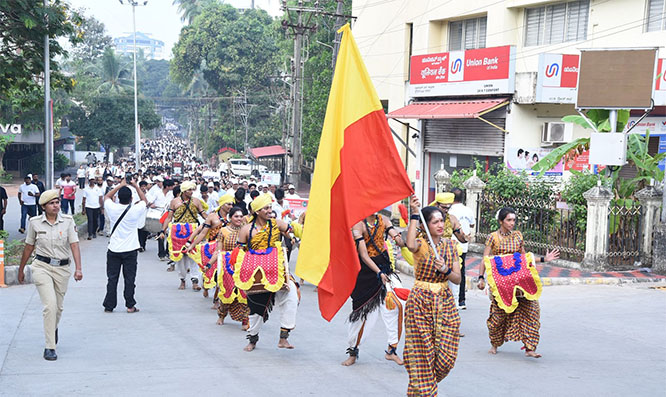
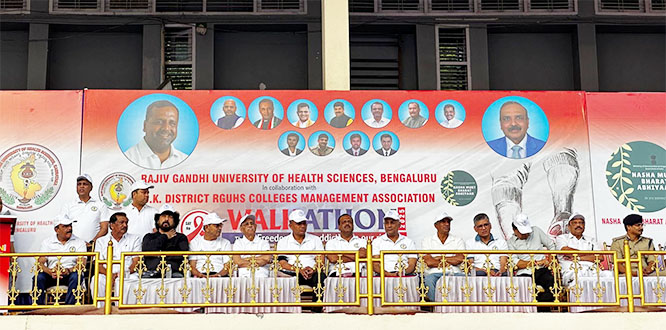
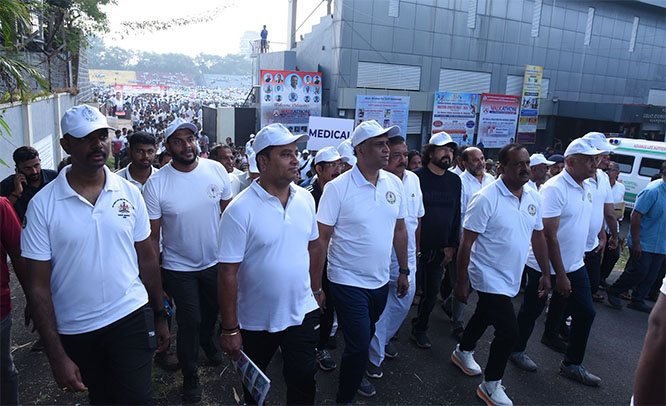
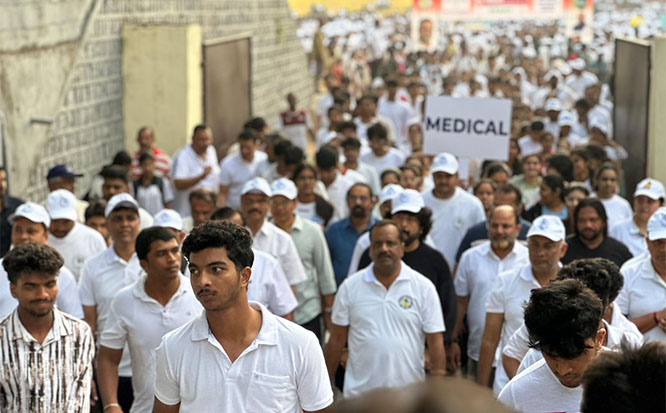
Mangaluru, Nov 29: Around 12,500 healthcare students from Medical, Dental, AYUSH, Pharmacy, Nursing, Physiotherapy and Allied Health Sciences colleges of Dakshina Kannada, affiliated to Rajiv Gandhi University of Health Sciences (RGUHS), took part in a massive walkathon to promote awareness on Organ Donation and Nasha Mukth Bharat.

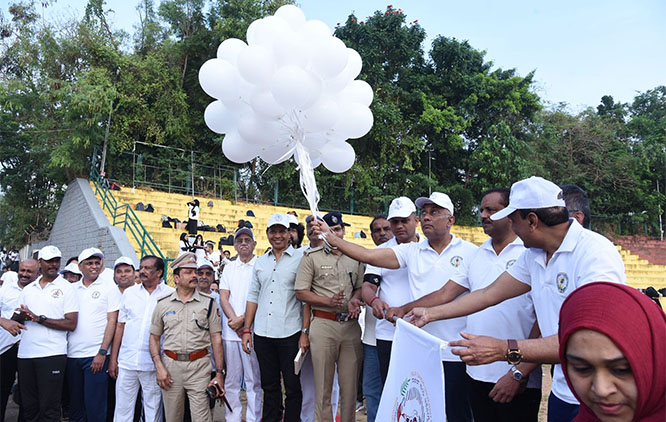
The inaugural ceremony was held at Mangala Stadium. Dr Bhagavan B C, Hon’ble Vice-Chancellor of RGUHS, delivered the welcome address. The walkathon was flagged off by Shri U T Khader, Hon’ble Speaker of the Karnataka Legislative Assembly, and presided over by Shri Dinesh Gundu Rao, Hon’ble Minister for Health, Family Welfare and Dakshina Kannada District In-charge. Dakshina Kannada MP Shri Brijesh Chowta also addressed the students.

Music director Guru Kiran, MLA Dr Bharat Shetty (Mangalore North), Police Commissioner Shri Sudheer Kumar Reddy, Shri Manjunath Bhandary and Shri Harish Kumar were among those present.

Institution heads including Dr Haji U K Monu (Kanachur Colleges), Dr Shantharam Shetty (Tejaswini College), Dr Bhaskar Shetty (City Group of Colleges), Mr Abdul Rahiman (Kanachur Institute of Medical Sciences), and the District Health Officer, Mangalore, also participated.

The vote of thanks was delivered by Prof U T Ifthikar Fareed, Syndicate Member, RGUHS.

The event was organised by Dr U T Ifthikar Ali and Dr Shiva Sharan (Syndicate Members), Prof Vaishali (Senate Member), Prof Mohammad Suhail (Chairman, BOS Physiotherapy), Dr Sharan Shetty (Former Senate Member), along with principals and faculty of various colleges.

Students marched from Mangala Stadium to Karavali Grounds via MCC and Lalbagh signal. The event set a record as one of the largest gatherings of healthcare students for a social cause in the RGUHS Dakshina Kannada Zone.

health7.jpg

health6.jpg

health5.jpg

health4.jpg

health3.jpg

health2.jpg

Comments

Add new comment

  • Coastaldigest.com reserves the right to delete or block any comments.
  • Coastaldigset.com is not responsible for its readers’ comments.
  • Comments that are abusive, incendiary or irrelevant are strictly prohibited.
  • Please use a genuine email ID and provide your name to avoid reject.
News Network
December 1,2025

hindutvaboy.jpg

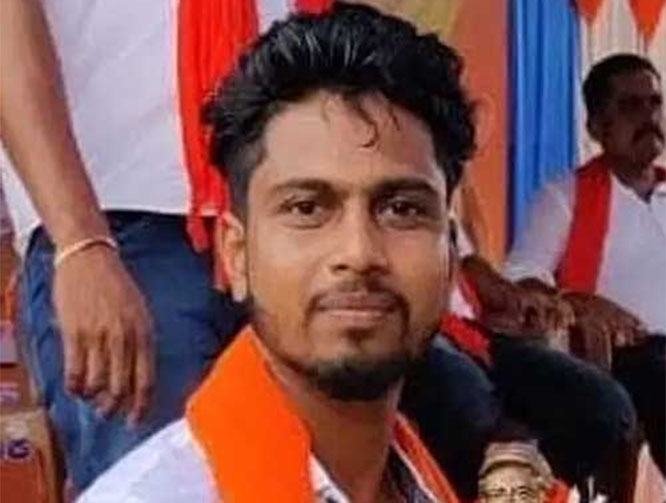
Udupi, Dec 1: A horrific case of alleged rape has unfolded in Udupi, where a worker from a Hindutva organisation, previously arrested and released on bail for harassing a young woman, is now accused of waylaying and sexually assaulting her.

The arrested individual has been identified as Pradeep Poojary (26), a member of the Hindu Jagarana Vedike's Nairkode unit in Perdur.

Poojary had allegedly been relentlessly harassing the young woman, pressuring her to marry him. When she bravely stood up to him and refused his demands, she filed a formal complaint at the Hiriyadka police station. He was subsequently arrested in that initial harassment case but was later granted bail.

According to police reports, driven by the same malicious grudge, Poojary allegedly intercepted the woman again on November 29. While she was walking through a deserted area, the accused is claimed to have threatened her by grabbing her neck. When she again refused to marry him, he allegedly proceeded to rape her.

The survivor immediately informed her family about the traumatic assault. Following this, her parents lodged a complaint at the Udupi women’s police station.

Police arrested Poojary again and produced him before the court. He has since been remanded to judicial custody.

Comments

Add new comment

  • Coastaldigest.com reserves the right to delete or block any comments.
  • Coastaldigset.com is not responsible for its readers’ comments.
  • Comments that are abusive, incendiary or irrelevant are strictly prohibited.
  • Please use a genuine email ID and provide your name to avoid reject.