India's daily covid recoveries more than daily fresh infections for 44 days in a row

News Network
November 16, 2020

corona.JPG

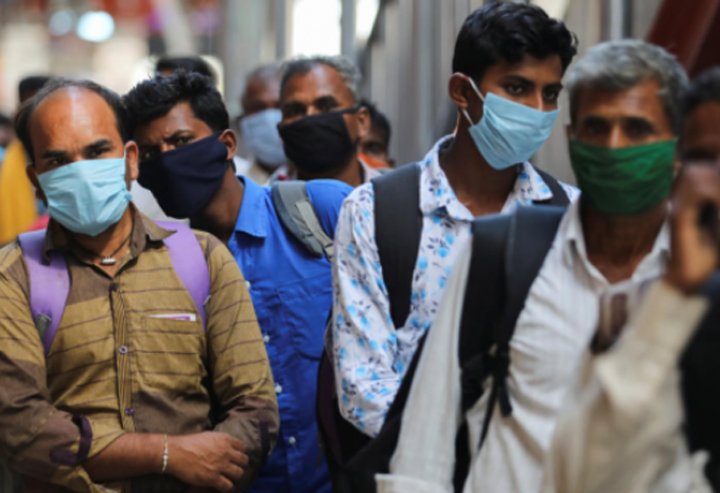
New Delhi, Nov 16: India's trend of registering daily Covid-19 recoveries outpacing the daily infections continued for the 44th day as 43,851 patients recuperated in a span of 24 hours as against 30,548 newly detected cases, the Union Health Ministry said on Monday.

This translates to a net reduction of 13,303 in the active Covid-19 caseload which now stands at 4,65,478 and accounts for 5.26 per cent of the total cases.

"Daily new cases numbering 30,548 is a historic low that assumes significance given many countries in Europe and America are experiencing a continuous steep rise in daily new cases," the ministry said.

The government's efforts to continue to maintain high levels of comprehensive testing have resulted in bringing down the net positivity to sustained low levels.

The recovery rate has improved to 93.27 per cent as the total recovered cases have surged to 82,49,579.

The ministry said that 78.59 per cent of the recovered cases reported in a span of 24 hours are from 10 states and union territories.

Delhi saw the greatest number of recoveries as 7,606 confirmed cases recovered. Kerala registered 6,684 daily recoveries while West Bengal followed by reporting 4,480 new recoveries.

Over 76 per cent of the new cases have been reported from 10 states and UTs.

Kerala recorded 4,581 new cases. Delhi which saw a surge in new cases over the last few days reported only 3,235 new cases on Sunday, followed closely by West Bengal which reported 3,053 new cases.

As much as 78.85 per cent of the 435 new deaths are concentrated in 10 states and UTs.

About a fifth, 21.84 per cent of new fatalities reported are from Delhi which reported 95 deaths, overtaking Maharashtra. Maharashtra reported 60 fatalities, which is 13.79 per cent of the new fatalities, the ministry said.

Fourteen states and UTs have death per million higher than the national average of 94 and 13 states and UTs have a case fatality rate higher than national average, the ministry said.

The Union government is working in close coordination with these states and UTs to improve their clinical care management of the critical patients in the ICU, through a carefully developed standard of care protocol which covers the private and government hospitals and provides guidelines for hospitalised cases and those in home isolation. Multi-disciplinary central teams are also deputed to states/UTs to provide them support in Covid-19 management.

High-level meetings are regularly conducted for review of the public health response measures being taken by the state and UT governments.

The total coronavirus cases mounted to 88,45,127 with 30,548 infections being reported in a day while the death toll climbed to 1,30,070 with 435 new fatalities, the data updated at 8 am showed.


Comments

Add new comment

  • Coastaldigest.com reserves the right to delete or block any comments.
  • Coastaldigset.com is not responsible for its readers’ comments.
  • Comments that are abusive, incendiary or irrelevant are strictly prohibited.
  • Please use a genuine email ID and provide your name to avoid reject.
News Network
December 6,2025

pilot.jpg

New Delhi: IndiGo, India’s largest airline, faced major operational turbulence this week after failing to prepare for new pilot-fatigue regulations issued by the Directorate General of Civil Aviation (DGCA). The stricter rules—designed to improve flight safety—took effect in phases through 2024, with the latest implementation on November 1. IndiGo has acknowledged that inadequate roster planning led to widespread cancellations and delays.

Below are the key DGCA rules that affected IndiGo’s operations:

1. Longer Mandatory Weekly Rest

Weekly rest for pilots has been increased from 36 hours to 48 hours.

The government says the extended break is essential to curb cumulative fatigue. This rule remains in force despite the current crisis.

2. Cap on Night Landings

Pilots can now perform only two night landings per week—a steep reduction from the earlier limit of six.

Night hours, defined as midnight to early morning, are considered the least alert period for pilots.

Given the disruptions, this rule has been temporarily relaxed for IndiGo until February 10.

3. Reduced Maximum Night Flight Duty

Flight duty that stretches into the night is now capped at 10 hours.

This measure has also been kept on hold for IndiGo until February 10 to stabilize operations.

4. Weekly Rest Cannot Be Replaced With Personal Leave

Airlines can no longer count a pilot’s personal leave as part of the mandatory 48-hour rest.

Pilots say this closes a loophole that previously reduced actual rest time.

Currently, all airlines are exempt from this rule to normalise travel.

5. Mandatory Fatigue Monitoring

Airlines must submit quarterly fatigue reports along with corrective actions to DGCA.

This system aims to create a transparent fatigue-tracking framework across the industry.

The DGCA has stressed that these rules were crafted to strengthen flight safety and align India with global fatigue-management standards. The temporary relaxations are expected to remain until February 2025, giving IndiGo time to stabilise its schedules and restore normal air travel.

Comments

Add new comment

  • Coastaldigest.com reserves the right to delete or block any comments.
  • Coastaldigset.com is not responsible for its readers’ comments.
  • Comments that are abusive, incendiary or irrelevant are strictly prohibited.
  • Please use a genuine email ID and provide your name to avoid reject.
News Network
November 28,2025

ministerPM.jpg

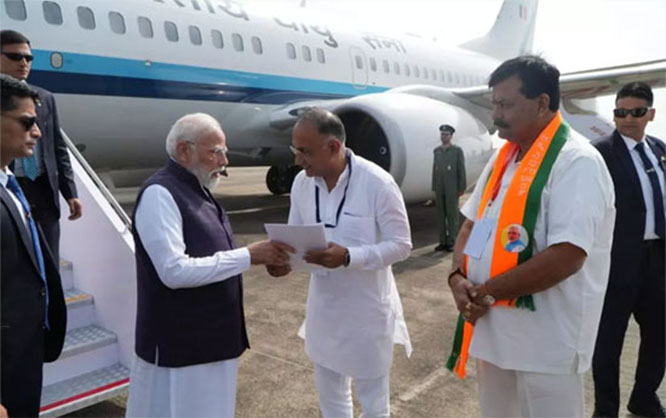
Mangaluru, Nov 28: Karnataka Health Minister and Dakshina Kannada district in-charge minister Dinesh Gundu Rao on Friday handed over Chief Minister Siddaramaiah’s letter to Prime Minister Narendra Modi, highlighting the severe distress faced by farmers due to crashing crop prices.

PM Modi arrived at the Mangaluru International Airport en route to Udupi, where Gundu Rao welcomed him and submitted the letter. The chief minister’s message stressed that farmers are suffering heavy losses because maize and green gram are being bought far below the Minimum Support Price (MSP). The state urged the Centre to immediately begin procurement at MSP.

According to the letter, Karnataka has a bumper harvest this year—over 54.74 lakh metric tons of maize and 1.98 lakh metric tons of green gram—yet farmers are unable to secure fair prices. Against the MSP of ₹2,400/MT for maize and ₹8,768/MT for green gram, market rates have plunged to ₹1,600–₹1,800 and ₹5,400 respectively.

The chief minister has requested the Centre to:

• Direct NAFED, FCI and NCCF to start MSP procurement immediately.
• Ensure ethanol units purchase maize directly from farmers or FPOs.
• Increase Karnataka’s ethanol allocation, citing high production capacity.
• Stop maize imports, which have depressed domestic prices.
• Relax quality norms for green gram, allowing up to 10% discoloration due to rains.

The letter stresses that MSP is crucial for farmer dignity and income stability and calls for swift central intervention to prevent a deepening crisis.

Comments

Add new comment

  • Coastaldigest.com reserves the right to delete or block any comments.
  • Coastaldigset.com is not responsible for its readers’ comments.
  • Comments that are abusive, incendiary or irrelevant are strictly prohibited.
  • Please use a genuine email ID and provide your name to avoid reject.
News Network
December 7,2025

Mangaluru, Dec 7: A 34-year-old fruit and vegetable trader in Mangaluru has reportedly lost ₹33.1 lakh after falling victim to an online investment scam run through a fake mobile app.

Police said the scam began in September, when the victim received a link on Facebook. Clicking it connected him to a WhatsApp number, where an unidentified person introduced a high-return investment scheme and instructed him to download an app.

To build trust, the fraudster asked him to invest ₹30,000 on September 24. The trader soon received ₹34,000 as “profit,” convincing him the scheme was genuine. Over the next two months, he transferred money in multiple instalments via Google Pay and IMPS to different scanner codes and bank accounts shared by the scammers. Between September 24 and December 3, he ended up sending a total of ₹33.1 lakh.

When he later requested a refund of his investment and promised returns, the scammers demanded additional payments, claiming he needed to pay a “service tax” first. Even after he paid a small amount, no money was returned, and the scammers continued pressuring him for more.

A case has been registered at the CEN Crime Police Station.

Comments

Add new comment

  • Coastaldigest.com reserves the right to delete or block any comments.
  • Coastaldigset.com is not responsible for its readers’ comments.
  • Comments that are abusive, incendiary or irrelevant are strictly prohibited.
  • Please use a genuine email ID and provide your name to avoid reject.