India’s GDP expected to contract by 9.6% this fiscal: World Bank

News Network
October 8, 2020

gdp.JPG

The World Bank on Thursday said that India’s GDP is expected to contract by 9.6 per cent this fiscal which is reflective of the national lockdown and the income shock experienced by households and firms due to the Covid-19 pandemic, noting that the country's economic situation is “much worse” than ever seen before.

The Washington-based global lender, in its latest South Asia Economic Focus report ahead of the annual meeting of the World bank and International Monetary Fund, forecasts a sharper than expected economic slump across the region, with regional growth expected to contract by 7.7 per cent in 2020, after topping six per cent annually in the past five years.

“India’s GDP is expected to contract by 9.6 per cent in the fiscal year that started in March,” the World Bank said in the report released here.

Regional growth is projected to rebound to 4.5 per cent in 2021, it said.

Factoring in population growth, however, income-per-capita in the region will remain 6 per cent below 2019 estimates, indicating that the expected rebound will not offset the lasting economic damage caused by the pandemic, it said.

“The situation is much worse in India than we have ever seen before,” Hans Timmer, World Bank Chief Economist for South Asia told reporters during a conference call.

“It is an exceptional situation in India. A very dire outlook,” he said.

There was a 25 per cent decline in GDP in the second quarter of the year, which is the first quarter of the current fiscal year in India.

In the report, the World bank said that the spread of the coronavirus and containment measures have severely disrupted supply and demand conditions in India.

With the intent to contain the spread of COVID-19, Prime Minister Narendra Modi, with effect from March 25, announced a nationwide complete lockdown that brought as much as 70 per cent of economic activity, investment, exports and discretionary consumption to a standstill. Only essential goods and services such as agriculture, mining, utility services, some financial and IT services and public services were allowed to operate.

Dubbed as the world's biggest lockdown, it shut a majority of the factories and businesses, suspended flights, stopped trains and restricted movement of vehicles and people.

According to the World Bank, monetary policy has been deployed aggressively and fiscal resources have been channeled to public health and social protection, but additional counter-cyclical measures will be needed, within a revised medium-term fiscal framework.

Despite measures to shield vulnerable households and firms, the trajectory of poverty reduction has slowed, if not reversed, it said.

“We have seen from the rapid survey that many people have lost their jobs,” Timmer said, adding that this is happening against a background when India's economy was already slowing down before the pandemic.

“We had seen a rise in non-performing loans. Those are all vulnerabilities that India has to deal with,” he said.

Responding to a question, Timmer said what the Indian government has done with limited resources and limited fiscal space is very impressive.

“We have seen a loosening of monetary policy. You have seen attempts to increase credit to the private sector to help a company survive,” he said, adding that there have been big efforts in the health sector and expansion of a social safety net.

“But with every big crisis, I think, we have to realise that this will not go over anytime soon. And it will actually change the longer-term future also. What this reveals is really as good as federal policies, especially the policies related to the informal sector.

“There's a big problem that the informal sector has no coverage in social insurance. What we see now is that especially the informal workers in the middle of the income distribution have lost their jobs. There are no systems in place to support those people,” Timmer said.

Responding to another question, Timmer said that as a result of Covid-19, the World Bank estimates that in one year, the number of people living below the poverty line has increased by 33 per cent.

In its report, the World Bank said that the response of the government of India to the COVID-19 outbreak was swift and comprehensive. A strict lockdown was implemented to contain the health emergency.

To mitigate its impact on the poorest, it was complemented by social protection measures; to ensure that businesses could maintain their operations, the Reserve Bank of India and the government also provided liquidity and other regulatory support, it said.

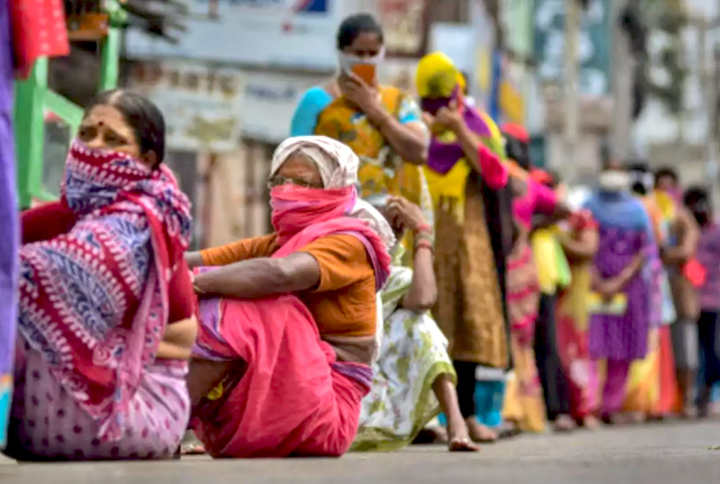
“Nonetheless, there was a massive contraction in output and poor and vulnerable households experienced significant social hardships – specifically urban migrants and workers in the informal economy,” the bank said.

After fiscal 2017, during which the economy grew at 8.3 per cent, growth decelerated in each subsequent year to 7.0, 6.1 and 4.2 per cent.

This was on account of two mutually reinforcing dynamics: emerging weaknesses in non-bank financial companies (a major source of credit growth, making up for risk aversion from banks) and slowing private consumption growth, the bank added.


Comments

Add new comment

  • Coastaldigest.com reserves the right to delete or block any comments.
  • Coastaldigset.com is not responsible for its readers’ comments.
  • Comments that are abusive, incendiary or irrelevant are strictly prohibited.
  • Please use a genuine email ID and provide your name to avoid reject.
News Network
December 2,2025

Mangaluru, Dec 2: Mangaluru International Airport responded to a medical emergency late on Monday night. Air India Express flight IX 522, travelling from Riyadh to Thiruvananthapuram, was diverted to Mangaluru Airport after a passenger in his late 30s experienced a medical emergency on board.

The Airport’s Operations Control Centre received an alert regarding the passenger’s health condition. The airport activated its emergency response protocol, mobilising the airport medical team and coordinating with stakeholders including CISF, immigration, and customs. 

Upon landing, airport medical personnel attended to the passenger, assessed his condition, and arranged to shift him to a local tertiary-care hospital for further treatment. The passenger’s relatives accompanied the passenger, who incidentally received necessary medical care on board, which helped stabilise the situation.

Following the handling of the emergency, the flight departed for Thiruvananthapuram at 2:05 am on Tuesday.

"We appreciate the cooperation of all parties involved, and this incident reaffirms our ongoing commitment to prioritising passenger safety and readiness to respond to unforeseen emergencies with professionalism and care," the Airport spokesperson said. 

Comments

Add new comment

  • Coastaldigest.com reserves the right to delete or block any comments.
  • Coastaldigset.com is not responsible for its readers’ comments.
  • Comments that are abusive, incendiary or irrelevant are strictly prohibited.
  • Please use a genuine email ID and provide your name to avoid reject.
News Network
December 6,2025

pilot.jpg

New Delhi: IndiGo, India’s largest airline, faced major operational turbulence this week after failing to prepare for new pilot-fatigue regulations issued by the Directorate General of Civil Aviation (DGCA). The stricter rules—designed to improve flight safety—took effect in phases through 2024, with the latest implementation on November 1. IndiGo has acknowledged that inadequate roster planning led to widespread cancellations and delays.

Below are the key DGCA rules that affected IndiGo’s operations:

1. Longer Mandatory Weekly Rest

Weekly rest for pilots has been increased from 36 hours to 48 hours.

The government says the extended break is essential to curb cumulative fatigue. This rule remains in force despite the current crisis.

2. Cap on Night Landings

Pilots can now perform only two night landings per week—a steep reduction from the earlier limit of six.

Night hours, defined as midnight to early morning, are considered the least alert period for pilots.

Given the disruptions, this rule has been temporarily relaxed for IndiGo until February 10.

3. Reduced Maximum Night Flight Duty

Flight duty that stretches into the night is now capped at 10 hours.

This measure has also been kept on hold for IndiGo until February 10 to stabilize operations.

4. Weekly Rest Cannot Be Replaced With Personal Leave

Airlines can no longer count a pilot’s personal leave as part of the mandatory 48-hour rest.

Pilots say this closes a loophole that previously reduced actual rest time.

Currently, all airlines are exempt from this rule to normalise travel.

5. Mandatory Fatigue Monitoring

Airlines must submit quarterly fatigue reports along with corrective actions to DGCA.

This system aims to create a transparent fatigue-tracking framework across the industry.

The DGCA has stressed that these rules were crafted to strengthen flight safety and align India with global fatigue-management standards. The temporary relaxations are expected to remain until February 2025, giving IndiGo time to stabilise its schedules and restore normal air travel.

Comments

Add new comment

  • Coastaldigest.com reserves the right to delete or block any comments.
  • Coastaldigset.com is not responsible for its readers’ comments.
  • Comments that are abusive, incendiary or irrelevant are strictly prohibited.
  • Please use a genuine email ID and provide your name to avoid reject.
News Network
December 3,2025

arrival.jpg

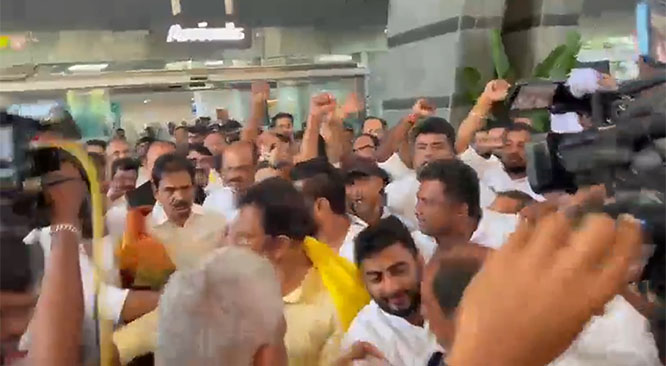
Mangaluru, Dec 3: A group of Congress workers gathered at the Mangaluru International Airport on Wednesday to welcome AICC general secretary K C Venugopal, but the reception quickly turned into a display of support for Deputy Chief Minister D K Shivakumar.

Venugopal arrived in the city to participate in the centenary commemoration of the historic dialogue between Mahatma Gandhi and Narayana Guru. The event, organised by the Sivagiri Mutt, Varkala, in association with the Mangalore University Sri Narayana Guru Study Chair, is being held on the university’s Konaje campus.

KPCC general secretary Mithun Rai and several party workers had assembled at the airport to receive Venugopal. However, the moment he stepped out, workers began raising slogans backing Shivakumar.

The university programme will be inaugurated by Chief Minister Siddaramaiah.

This show of support comes just a day after Siddaramaiah remarked that Shivakumar would lead the government “when the high command decides.” The chief minister made the comment after a breakfast meeting at Shivakumar’s residence—another public display of camaraderie between the two leaders amid ongoing attempts by the party high command to downplay their leadership rivalry.

Comments

Add new comment

  • Coastaldigest.com reserves the right to delete or block any comments.
  • Coastaldigset.com is not responsible for its readers’ comments.
  • Comments that are abusive, incendiary or irrelevant are strictly prohibited.
  • Please use a genuine email ID and provide your name to avoid reject.