



Kashmiri separatist leader Syed Ali Shah Geelani passes away at 92

News Network
September 2, 2021

geelaniali.jpg

The patriarch of separatist politics in the Valley and Hurriyat leader, Syed Ali Shah Geelani, passed away at his residence in Srinagar late Wednesday night. A former elected legislator, the ailing 92-year-old had been under house detention for more than a decade. 

His death comes when both his and the moderate factions of the Hurriyat are in disarray in the wake of a crackdown by the National Investigation Agency (NIA), the abrogation of Article 370 and the downgrade of Jammu and Kashmir into two Union Territories.

Apprehensive that his funeral may attract large crowds, the security establishment has imposed restrictions across the Valley, including Internet suspension. Police sources say curfew would be imposed.

“With shock and grief, we inform (you) that the father of revolution Syed Ali Geelani passed away tonight,” tweeted Geelani’s Pakistan-based representative Abdullah Geelani. “As per his will, he would be buried at the martyrs’ cemetery in Srinagar. The timing of the funeral would be announced later.”

However, it is unlikely that the government will allow Geelani to be buried at this cemetery.

Geelani’s legacy will be that of the hardliner who stood up to New Delhi, seeking resolution of the Kashmir dispute under the aegis of the United Nations. In fact, he was the only separatist leader to oppose Pakistan President Pervez Musharraf when the latter climbed down on Islamabad’s traditional stand on Kashmir and proposed a four-point formula to resolve the Kashmir issue.

Born on September 29, 1929, at Zurmanz, a village on the banks of the Wular lake in Bandipore, Geelani rose to become the face of separatist politics.

A school teacher, he started his political career under the tutelage of Maulana Mohammad Sayeed Masoodi, a senior National Conference (NC) leader, but soon moved to Jamat-e-Islami. The socio-religious organisation stood up to the NC leadership and saw Kashmir as an “unfinished agenda” of Partition.

Geelani’s electoral career started from Sopore, a traditional separatist and Jamat stronghold. He first contested the Assembly elections in 1972, and represented Sopore in the erstwhile Jammu and Kashmir Assembly for three terms. The last term ended abruptly in 1987 when militancy erupted in Kashmir.

Geelani had been one of the four candidates of the Muslim United Front (MUF) — an alliance of political, social and religious organisations — who won in the widely rigged 1987 elections that brought the NC-Congress combine to power and set off militancy in the Valley.

An ardent supporter of armed struggle for resolution of the Kashmir issue, Geelani was among the seven executive members of the Hurriyat Conference when it was formed in 1993. But his support for militancy and unwavering ideology on Kashmir sowed the seeds of discord between him and his colleagues in the Hurriyat Conference, finally culminating in a split in 2003.

In 2004, Geelani also parted ways from Jamat-e-Islami when it distanced itself from militancy, and formed his own political outfit, Tehreek-e-Hurriyat.

While Geelani has been bedridden for years now and incommunicado for the last two years, he sprang a surprise on June 30 last year when he dissociated himself from the faction of Hurriyat that he founded. He left the reins to his deputy Mohammad Ashraf Sehrai, who died in custody in Jammu jail earlier this year.

And though Geelani said he wanted the resolution of the Kashmir issue as per the aspirations of the people, he himself was an ardent supporter of its merger with Pakistan. Last year, the Pakistan government awarded him with Nishan-e-Pakistan, the highest civilian honour of the country.

The NIA, which has till date arrested 18 separatist leaders from Kashmir including those from the Hurriyat in a case of terror funding, has alleged that they received funds from Pakistan to foment unrest in the Valley. The agency had even named Geelani and Mirwaiz Umer Farooq in the chargesheet, claiming they had been pushing for secession and fuelling unrest but had stopped short of naming them as accused.

In February, 2019 the NIA had raided Umer Farooq’s and Geelani’s son Naseem Geelani’s house among others in the case. In March 2019, the Enforcement Directorate had levied a penalty of Rs 14.40 lakh on Geelani in a 17-year-old case of alleged illegal possession of $10,000 in alleged contravention of the foreign exchange law.

Former chief minister and PDP chief Mehbooba Mufti condoled Geelani’s demise, saying, “We may not have agreed on most things but I respect him for his steadfastness and standing for his beliefs.”

People’s Conference leader Sajad Lone tweeted: “Heartfelt condolences to the family of Syed Ali Shah Geelani sahib. Was an esteemed colleague of my late father. May Allah grant him Jannat”.

Comments

Add new comment

  • Coastaldigest.com reserves the right to delete or block any comments.
  • Coastaldigset.com is not responsible for its readers’ comments.
  • Comments that are abusive, incendiary or irrelevant are strictly prohibited.
  • Please use a genuine email ID and provide your name to avoid reject.
News Network
December 4,2025

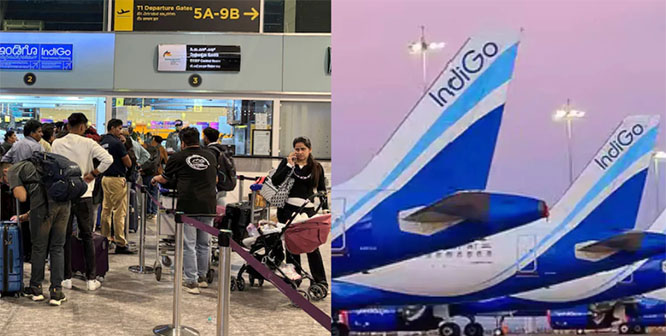
indigocrisis.jpg

Angry outbursts, long queues, and desperate appeals filled airports across India today as IndiGo grappled with a severe operational breakdown. Hundreds of flights have been cancelled or delayed, leaving thousands of passengers stranded through the night and forcing many to spend long hours at helpdesks.

Social media was flooded with videos of fliers pleading for assistance, accusing the airline of misleading updates, and demanding accommodation after being stuck for 10 to 12 hours at airports such as Hyderabad and Bengaluru.

What Triggered the Meltdown?

IndiGo has attributed the widespread disruption to “a multitude of unforeseen operational challenges.” These include:

•    Minor technology glitches
•    Winter-season schedule adjustments
•    Bad weather
•    Congestion in the aviation network
•    New crew rostering rules (Flight Duty Time Limitations or FDTL)

Among these, the most disruptive has been the implementation of the updated FDTL norms introduced by the Directorate General of Civil Aviation (DGCA) in January 2024.

These rules were designed to reduce pilot fatigue and improve passenger safety. Key changes include:

•    Longer weekly rest periods for flight crew
•    A revised definition of “night,” extending it by an extra hour
•    Tighter caps on flight duty timing and night landings
•    Cutting night shifts for pilots and crew from six per roster cycle to just two

Once these norms became fully enforceable, airlines were required to overhaul rosters well in advance. For IndiGo, this triggered a sudden shortage of crew available for duty, leading to cascading delays and cancellations.

Why IndiGo Was Hit the Hardest

IndiGo is India’s largest airline by a wide margin, operating over 2,200 flights daily. That’s roughly double the number operated by Air India.

When an airline of this size experiences even a 10–20% disruption, it translates to 200–400 flights being delayed or grounded — producing massive spillover effects across the country.

IndiGo also relies heavily on high-frequency overnight operations, a model typical of low-cost carriers that aim to maximise aircraft utilisation and reduce downtime. The stricter FDTL norms clash with these overnight-heavy schedules, forcing the airline to pull back services.

Aviation bodies have also criticised IndiGo’s preparedness. The Airline Pilots' Association of India (ALPA) said airlines were given a two-year window to plan for the new rules but “started preparing rather late.” IndiGo, it said, failed to rebuild crew rosters 15 days in advance as required.

The Federation of Indian Pilots (FIP) went further, calling the crisis the result of IndiGo’s “prolonged and unorthodox lean manpower strategy,” and alleging that the airline adopted a hiring freeze even as it knew the new rules would require more careful staffing.

How Many Flights Are Affected?

In the past 48 hours, over 300 flights have been cancelled. At least 100 more are expected to be cancelled today.

City-wise impact:

•    Hyderabad: 33 expected cancellations; several fliers stranded overnight
•    Bengaluru: over 70 expected cancellations
•    Delhi, Mumbai, Chennai, Kolkata: widespread delays and missed connections

Passengers shared distressing accounts online.

One customer at Hyderabad airport said they waited from 6 PM to 9 AM with “no action taken” regarding their delayed Pune flight. Another said IndiGo repeatedly told them the crew was “arriving soon,” only for the delay to stretch over 12 hours.

IndiGo has apologised for the disruption and promised that operations will stabilise within 48 hours, adding that “calibrated adjustments” are being made to contain the chaos.

What Should Passengers Do Now?

For those flying in the next few days, especially with IndiGo, here are key precautions:

1. Keep Checking Flight Status
Monitor your flight closely before leaving for the airport, as delays may be announced last-minute.

2. Arrive Early
Expect long queues at counters and security due to crowding and rescheduling.

3. Carry Essentials
Pack snacks, water, basic medicines, chargers, and items for children or senior citizens. Extended waiting times should be anticipated.

4. Use Flexible Booking Options
If you booked tickets with a free-date-change or cancellation option, consider using them.
If you haven’t booked yet, prefer refundable or flexible fares, or even consider alternate airlines.

5. Follow IndiGo’s Updates
Keep an eye on IndiGo’s official social media channels and contact customer support for rebooking and refund queries.

What Needs to Change?

Pilot groups have raised concerns not just about staffing but also the planning practices behind it.
The Federation of Indian Pilots accused IndiGo of:

•    Imposing an unexplained hiring freeze despite knowing the FDTL changes were coming
•    Entering non-poaching agreements that limited talent movement
•    Keeping pilot pay frozen
•    Underestimating the need to restructure operations in advance

They have urged DGCA to approve seasonal schedules only after airlines prove they have adequate pilot strength under the new norms.

ALPA also warned that some airlines might be using the delays as an “immature pressure tactic” to push DGCA for relaxations in the new rules — which, if granted, could compromise the very safety standards the norms were meant to protect.

Both pilot bodies stressed that no exemption should dilute safety, and any deviations should be based solely on scientific risk assessment.

Is a Solution in Sight?

While IndiGo says normalcy will return within two days, aviation experts believe that fully stabilising operations could take longer, depending on how quickly the airline can:
•    Re-align rosters
•    Mobilise rested crew
•    Boost staffing
•    Adjust its winter schedule to match regulatory requirements
Passengers are advised to remain prepared for continued delays over the next few days as the airline works through its backlog. 

Comments

Add new comment

  • Coastaldigest.com reserves the right to delete or block any comments.
  • Coastaldigset.com is not responsible for its readers’ comments.
  • Comments that are abusive, incendiary or irrelevant are strictly prohibited.
  • Please use a genuine email ID and provide your name to avoid reject.