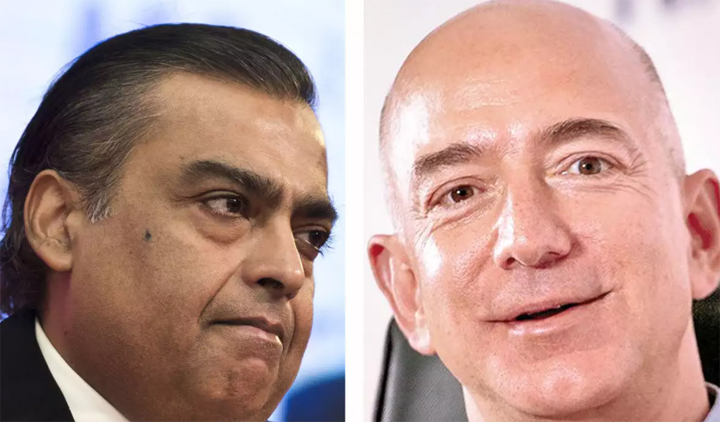
Mukesh Ambani vs Jeff Bezos: A fight or a waiting game?

News Network
November 3, 2020

JIOvsAMAZON.JPG

A vanilla commercial dispute is setting the stage for a clash between the world’s No. 1 and No. 6 richest men. But the legal wrangling is a sideshow. What Jeff Bezos and Mukesh Ambani are really fighting over is pole position in the only billion-plus-people consumer market available to both of them: India.

The ostensible battleground is a $3.4 billion deal Indian tycoon Ambani’s Reliance Industries Ltd. stitched up in August to acquire assets of debt-laden local retailer Future Group. Bezos’s Amazon.com Inc. is trying to block the transaction.

That, in itself, is a bit of a dampener. Expectations were building for the two billionaires to work together. In September, Bloomberg News reported that Ambani had given Amazon an option to buy as much as 40% of Reliance Retail Ventures Ltd., seeking to repeat the success he had earlier this year in bringing in Facebook Inc. and Alphabet Inc. as partners to his digital platform.

By seeking to stall Ambani’s purchase of Future, Bezos may be signaling that he would rather remain a rival. Or, that he’s buying time to sweeten the offer currently on the table.

The actual quarrel is only interesting when you read between the lines of the claims and counterclaims.

Amazon bought a 49% stake last year in a private firm controlled by Kishore Biyani, a pioneer of modern-format retailing in the country. The investment gave the U.S. e-commerce giant the right to acquire Biyani’s shares in the publicly traded Future Retail Ltd. from the third year. Another of Bezos’s conditions was that Biyani wouldn’t sell his assets — about 1,500 stores nationwide — to restricted persons, including Reliance, which operates India’s largest retail chain.

After the Future-Reliance deal was announced, Amazon alleged breach of contract and obtained an interim stay against the sale from an arbitrator in Singapore, a preferred neutral venue in Asia for settling disputes in cross-border agreements. The U.S. company then wrote a letter to Indian stock exchanges and the regulator, asking them to not approve the transaction.

Future Retail has challenged Amazon’s position by saying that the Singapore ruling has no legal basis in India, and that anyway, it wasn’t a party to the founder’s agreement. Given the debilitating impact of the Covid-19 pandemic on operations, the retailer says it’s doing the right thing by all stakeholders in selling assets to Reliance. As for Amazon’s claim of $193 million in damages plus interest, that liability, if awarded by the arbitrator, should fall on Biyani’s private firm that did the deal, Future Retail argues.

Biyani is just a pawn in a much bigger power play. Future's cash crunch didn't emerge suddenly. Amazon had ample opportunity to tiptoe around India’s legal restrictions on foreign ownership of retail chains to act as a white knight. But it didn’t.

Amazon may still be interested in partnering with Ambani — at the right price. Other investors, such as Silver Lake Partners and KKR & Co., have written him checks worth $5 billion in total. They may have feared losing out on what could become India’s most successful mix of physical and digital shopping, a strategy that leverages Reliance Retail’s own outlets together with independently owned neighbourhood stores connected to Ambani’s 4G phone network of 400 million users. However, the portion offered to Amazon would mean a $20 billion commitment. Bezos could afford to see how well Ambani executes his plan.

Amazon’s India website kicked off its annual festival season last month to record sales in the first couple of days. Reliance Retail’s revenue also jumped 30% in the September quarter from the previous three months. But although India’s nationwide lockdown has ended, not all stores have reopened fully. Footfall has yet to recover, especially in fashion and lifestyle and at stores inside malls. In Macquarie’s estimates, the next fiscal year’s earnings per share for Reliance Industries, the holding company, may be 23% below the consensus street forecast. A reason, the brokerage says, is stiff competition, high investment and low margins in retail. Reliance Industries shares fell 8.6% in Mumbai on Monday.

Amazon’s letter to the Securities and Exchange Board of India makes a reference to India’s “ease of doing business,” which has been a sore point with foreign investors from Vodafone Group Plc to Cairn Energy Plc. The regulator needs to hold listed firms accountable for their dealings, Amazon said in the letter, according to Reuters, which has seen a copy.

The last thing India wants is more of a bad rap. The Seattle-based firm already has to operate with one hand tied behind its back: As a foreign e-commerce player, it can’t own inventory or openly discount merchandise. Even harsher rules — covering data and algorithms — may be on their way. It’s important for regulators to not give Amazon the chance to paint a commercial feud as another sign of India’s unfair treatment of global investors.

In more ways than one, a waiting game by Bezos may not be a bad idea.

Comments

Add new comment

  • Coastaldigest.com reserves the right to delete or block any comments.
  • Coastaldigset.com is not responsible for its readers’ comments.
  • Comments that are abusive, incendiary or irrelevant are strictly prohibited.
  • Please use a genuine email ID and provide your name to avoid reject.
News Network
November 24,2025

israelsyra.jpg

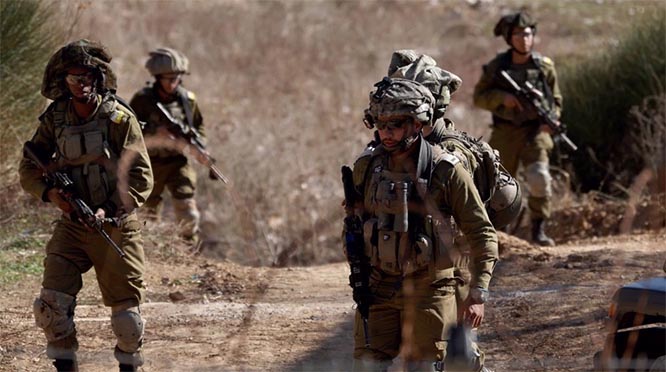
Israeli forces have pushed over the Syrian frontier, erecting a checkpoint and stopping vehicles in the southwestern city of Quneitra, in yet another breach of the Arab country’s sovereignty.

The violation took place on Sunday, when the troops made their way across the border, setting up the outpost near the Ain al-Bayda junction in northern Quneitra, Syrian outlets reported.

According to the al-Ikhbariya paper, an Israeli detachment positioned itself at the junction, halting cars and conducting searches.

The Syrian Arab News Agency (SANA) reported that three Israeli military vehicles then moved further into the northern countryside, deploying between the town of Jubata al-Khashab and the villages of Ofaniya and Ain al-Bayda. The agency added that a separate Israeli unit mounted a new incursion in the central region, approaching the villages of Umm Batina and al-Ajraf.

Residents said such activities have surged in recent months, pointing to Israeli advances onto farmland, leveling of extensive forested areas, arrests, and spread of mobile checkpoints.

The Israeli regime began markedly increasing its military aggression against Syria last year.

The escalation coincided with increasingly ferocious onslaughts throughout the country by the so-called Hay'at Tahrir al-Sham (HTS) Takfiri terrorist group, which the government of President Bashar al-Assad had confined to northwestern Syria. The HTS, however, managed to overthrow the government as the Israeli attacks would pummel the country’s civilian and defensive infrastructure.

Various reports have shown that, during the escalation, the regime conducted more than 1,000 airstrikes on the Syrian territory and over 400 ground raids into the south.

Following the collapse of the Assad government, Tel Aviv also widened its grip over the occupied Golan Heights by taking control of a demilitarized buffer zone, in defiance of a 1974 Disengagement Agreement. Earlier this month, senior Israeli officials, including Prime Minister Benjamin Netanyahu, visited the buffer zone, prompting expressions of alarm on the part of the United Nations.

The United States, the regime’s biggest ally, has, meanwhile, been fraternizing the HTS head Abu Mohammed al-Jolani amid the widely reported prospect of rapprochement with Tel Aviv.

Comments

Add new comment

  • Coastaldigest.com reserves the right to delete or block any comments.
  • Coastaldigset.com is not responsible for its readers’ comments.
  • Comments that are abusive, incendiary or irrelevant are strictly prohibited.
  • Please use a genuine email ID and provide your name to avoid reject.
News Network
December 6,2025

pilot.jpg

New Delhi: IndiGo, India’s largest airline, faced major operational turbulence this week after failing to prepare for new pilot-fatigue regulations issued by the Directorate General of Civil Aviation (DGCA). The stricter rules—designed to improve flight safety—took effect in phases through 2024, with the latest implementation on November 1. IndiGo has acknowledged that inadequate roster planning led to widespread cancellations and delays.

Below are the key DGCA rules that affected IndiGo’s operations:

1. Longer Mandatory Weekly Rest

Weekly rest for pilots has been increased from 36 hours to 48 hours.

The government says the extended break is essential to curb cumulative fatigue. This rule remains in force despite the current crisis.

2. Cap on Night Landings

Pilots can now perform only two night landings per week—a steep reduction from the earlier limit of six.

Night hours, defined as midnight to early morning, are considered the least alert period for pilots.

Given the disruptions, this rule has been temporarily relaxed for IndiGo until February 10.

3. Reduced Maximum Night Flight Duty

Flight duty that stretches into the night is now capped at 10 hours.

This measure has also been kept on hold for IndiGo until February 10 to stabilize operations.

4. Weekly Rest Cannot Be Replaced With Personal Leave

Airlines can no longer count a pilot’s personal leave as part of the mandatory 48-hour rest.

Pilots say this closes a loophole that previously reduced actual rest time.

Currently, all airlines are exempt from this rule to normalise travel.

5. Mandatory Fatigue Monitoring

Airlines must submit quarterly fatigue reports along with corrective actions to DGCA.

This system aims to create a transparent fatigue-tracking framework across the industry.

The DGCA has stressed that these rules were crafted to strengthen flight safety and align India with global fatigue-management standards. The temporary relaxations are expected to remain until February 2025, giving IndiGo time to stabilise its schedules and restore normal air travel.

Comments

Add new comment

  • Coastaldigest.com reserves the right to delete or block any comments.
  • Coastaldigset.com is not responsible for its readers’ comments.
  • Comments that are abusive, incendiary or irrelevant are strictly prohibited.
  • Please use a genuine email ID and provide your name to avoid reject.
News Network
December 3,2025

indigo.jpg

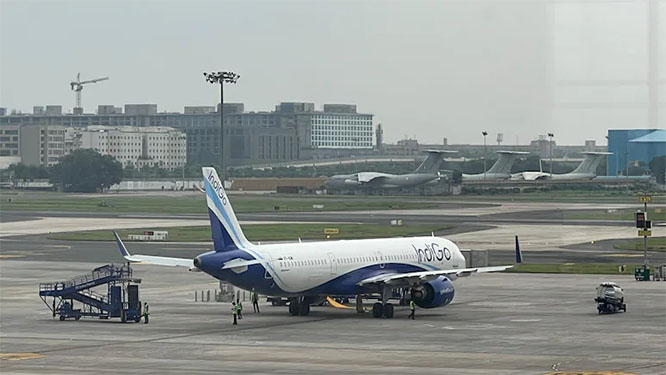
IndiGo, India’s largest airline, is battling one of its worst operational disruptions in recent years, with hundreds of delays and cancellations throwing domestic travel into chaos.

Government data on Tuesday showed its on-time performance plunging to 35%, an unusual dip for a carrier long associated with punctuality.

By Wednesday afternoon, airports in Delhi, Mumbai, Bengaluru and Hyderabad had collectively reported close to 200 cancellations, stranding travellers across the country.

Crew Shortage After New Duty Norms

A major trigger behind the meltdown is a severe crew shortage, especially among pilots, following the rollout of revised Flight Duty Time Limitation (FDTL) norms last month.

The rules mandate longer rest hours and more humane rosters — a shift IndiGo has struggled to incorporate across its vast network.

Sources said several flights were grounded due to lack of cabin crew, while some delays stretched upwards of eight hours.

With IndiGo controlling over 60% of India’s domestic aviation market, the ripple effect has impacted airports nationwide.

IndiGo Issues Apology, Lists “Compounding Factors”

In a statement, IndiGo acknowledged the large-scale disruption:

“We sincerely apologise to customers. A series of unforeseen operational challenges — technology glitches, winter schedule changes, adverse weather, system congestion and updated FDTL norms — created a compounding impact that could not have been anticipated.”

To stabilise operations, the airline has begun calibrated schedule adjustments for the next 48 hours, aiming to restore punctuality. Affected passengers are being offered refunds or alternate travel arrangements, IndiGo said.

What the FDTL Rules Require

The FDTL norms, designed to reduce pilot fatigue, cap duty and flying hours as follows:
•    Maximum 8 hours of flying per day
•    35 hours per week
•    125 hours per month
•    1,000 hours per year

Crew must also receive rest equalling twice the flight duration, with a minimum 10-hour rest period in any 24-hour window.

The DGCA introduced these limits to enhance flight safety.

Hyderabad: 33 Flights Cancelled, Long Queues Reported

Hyderabad’s Rajiv Gandhi International Airport saw heavy early-morning crowds as 33 IndiGo flights (arrivals and departures) were cancelled.

The airport clarified on X that operations were normal, advising passengers to contact IndiGo directly for latest flight status.

Cancellations included flights to and from Visakhapatnam, Goa, Ahmedabad, Delhi, Bengaluru, Chennai, Madurai, Hubli, Bhopal and Bhubaneswar.

Bengaluru: 42 Flights Disrupted

Bengaluru’s Kempegowda International Airport recorded 42 cancellations — 22 arrivals and 20 departures — affecting routes to Delhi, Mumbai, Chennai, Hyderabad, Goa, Kolkata and Lucknow.

Passengers Vent on Social Media

Irate travellers took to X to share their experiences. One passenger stranded in Hyderabad wrote: “I have been here since 3 a.m. and missed an important meeting.”

Another said: “My flight was pushed from 1:55 PM to 2:55 PM and now 4:35 PM. I was informed only three minutes before entering the airport.”

Delhi Airport Hit by Tech Glitch

At Delhi Airport, the disruption deepened due to a slowdown in the Amadeus system — used for reservations, check-ins and departure control.

The technical issue led to longer queues and sluggish processing, adding to delays already worsened by staff shortages.

Comments

Add new comment

  • Coastaldigest.com reserves the right to delete or block any comments.
  • Coastaldigset.com is not responsible for its readers’ comments.
  • Comments that are abusive, incendiary or irrelevant are strictly prohibited.
  • Please use a genuine email ID and provide your name to avoid reject.