Omicron milder; home isolation is sufficient for those without comorbidities: AIIMS chief

News Network
January 2, 2022

New Delhi, Jan 2: With Covid-19 cases starting to mount in the country, the chief of the All India Institute of Medical Sciences (AIIMS), New Delhi, said that there was no need for people without comorbidities to panic and urged them not to block hospital beds.

Dr Randeep Guleria, the AIIMS chief, said that the Omicron variant mainly affects the upper respiratory tract and airways, rather than the lungs even as 27,553 cases were reported on Sunday morning, according to a report by The Indian Express.

Guleria advised patients to isolate at home, citing low recovery time for the new variant. “Omicron is affecting the upper respiratory tract and more of the airways, rather than the lungs. That is why we see very fewer patients with a drop in oxygen saturation or the other severe symptoms we saw in Delta. What we are seeing here is more of fever, running nose, sore throat, and a lot of body ache and headache. If any of these symptoms persist, they should come forward and get themselves tested. Because then they can isolate themselves and prevent the infection from spreading to other people in the community,” he was quoted by the publication.

On Sunday, the Union Health Ministry announced the detection of 1,525 Omicron cases through genomic surveillance, of whom 560 have fully recovered.

Guleria said that hospital beds should be left free to those who are more vulnerable to severe disease. “There is no need to panic. It is important to understand that, unlike last time, this new variant doesn’t cause that much of a fall in oxygen saturation. Therefore, the focus in those who don’t have comorbidities should be home isolation. You should work on a home-isolation strategy, and not get into panic situations, blocking beds in hospitals, which is not required. Data also suggests that recovery happens much faster, therefore people will tend to improve faster,” he told the publication.

Guleria said that the country was “in a much better position at the beginning of the new year” due to high levels of immunity from past exposure, as well as the extensive vaccination coverage.

“It is time to be more vigilant. We are seeing a new variant in the form of Omicron, but we are in a much better position at the beginning of the new year compared to last year. That is because of multiple factors,” he said.

Guleria said that a large number of people have also got immunity because of natural infection, and serosurvey data suggests high immunity in the general population. “We are also better prepared in terms of facilities. Whether it is medical oxygen plants, ICU beds, ventilators. So in terms of preparation and our immune response, we are in a better position,” he told the publication.

Guleria also warned that indoor events can turn super-spreaders and cause a spike. “More importantly, because this is a very highly infectious variant, avoiding crowds, which can be a super spreading event, is also important. Especially, indoor events, where there is poor ventilation, can be one area where one can see a surge in cases,” he was quoted as saying.


Comments

Add new comment

  • Coastaldigest.com reserves the right to delete or block any comments.
  • Coastaldigset.com is not responsible for its readers’ comments.
  • Comments that are abusive, incendiary or irrelevant are strictly prohibited.
  • Please use a genuine email ID and provide your name to avoid reject.
News Network
November 26,2025

Mangaluru, Nov 26: Assembly Speaker and local MLA U.T. Khader has initiated a high-level push to resolve one of Mangaluru’s longest-standing traffic headaches: the narrow, high-density stretch of National Highway-66 between Nanthoor and Talapady.

He announced on Tuesday that a formal proposal has been submitted to the Union Ministry of Road Transport and Highways (MoRTH) seeking approval to prepare a Detailed Project Report (DPR) for the widening of this crucial corridor.

The plan specifically aims to expand the existing 45-meter road width to a full 60 meters, coupled with the construction of dedicated service roads. Khader highlighted that land for a 60-meter highway was originally acquired during the initial four-laning project, but only 45 meters were developed, leading to a perpetual bottleneck.

"With vehicle density rising sharply, the expansion has become unavoidable," Khader stated, stressing that the upgrade is essential for ensuring smoother traffic flow and improving safety at the city's main entry and exit points.

The stretch between Nanthoor and Talapady is a vital link on the busy Kochi-Panvel coastal highway and connects to major city junctions. The move to utilize the previously acquired land for the full 60-meter width is seen as a necessary measure to catch up with the region's rapid vehicular growth and prevent further traffic gridlocks.

Comments

Add new comment

  • Coastaldigest.com reserves the right to delete or block any comments.
  • Coastaldigset.com is not responsible for its readers’ comments.
  • Comments that are abusive, incendiary or irrelevant are strictly prohibited.
  • Please use a genuine email ID and provide your name to avoid reject.
News Network
December 6,2025

pilot.jpg

New Delhi: IndiGo, India’s largest airline, faced major operational turbulence this week after failing to prepare for new pilot-fatigue regulations issued by the Directorate General of Civil Aviation (DGCA). The stricter rules—designed to improve flight safety—took effect in phases through 2024, with the latest implementation on November 1. IndiGo has acknowledged that inadequate roster planning led to widespread cancellations and delays.

Below are the key DGCA rules that affected IndiGo’s operations:

1. Longer Mandatory Weekly Rest

Weekly rest for pilots has been increased from 36 hours to 48 hours.

The government says the extended break is essential to curb cumulative fatigue. This rule remains in force despite the current crisis.

2. Cap on Night Landings

Pilots can now perform only two night landings per week—a steep reduction from the earlier limit of six.

Night hours, defined as midnight to early morning, are considered the least alert period for pilots.

Given the disruptions, this rule has been temporarily relaxed for IndiGo until February 10.

3. Reduced Maximum Night Flight Duty

Flight duty that stretches into the night is now capped at 10 hours.

This measure has also been kept on hold for IndiGo until February 10 to stabilize operations.

4. Weekly Rest Cannot Be Replaced With Personal Leave

Airlines can no longer count a pilot’s personal leave as part of the mandatory 48-hour rest.

Pilots say this closes a loophole that previously reduced actual rest time.

Currently, all airlines are exempt from this rule to normalise travel.

5. Mandatory Fatigue Monitoring

Airlines must submit quarterly fatigue reports along with corrective actions to DGCA.

This system aims to create a transparent fatigue-tracking framework across the industry.

The DGCA has stressed that these rules were crafted to strengthen flight safety and align India with global fatigue-management standards. The temporary relaxations are expected to remain until February 2025, giving IndiGo time to stabilise its schedules and restore normal air travel.

Comments

Add new comment

  • Coastaldigest.com reserves the right to delete or block any comments.
  • Coastaldigset.com is not responsible for its readers’ comments.
  • Comments that are abusive, incendiary or irrelevant are strictly prohibited.
  • Please use a genuine email ID and provide your name to avoid reject.
News Network
December 7,2025

SHRIMP.jpg

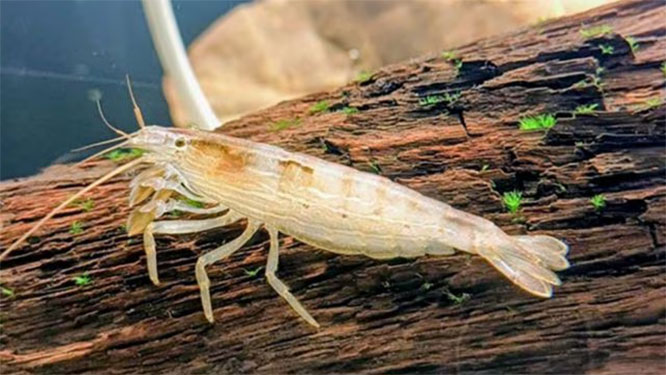
Mangaluru, Dec 7: A rare bamboo shrimp has been rediscovered on mainland India more than 70 years after it was last reported, confirming for the first time the presence of Atyopsis spinipes in the country. The find was made by researchers from the Centre for Climate Change Studies at Sathyabama Institute of Science and Technology, Chennai, during surveys in Karnataka and Odisha.

The team — shrimp expert Dr S Prakash, PhD scholar K Kunjulakshmi, and Mangaluru-based researcher Maclean Antony Santos — combined field surveys, ecological assessments and DNA analysis to identify the elusive species. Their findings, published in Zootaxa, resolve decades of taxonomic confusion stemming from a 1951 report that misidentified the species as Atyopsis moluccensis without strong evidence.

The shrimp has now been confirmed at two locations: the Mulki–Pavanje estuary near Mangaluru and the Kuakhai River in Bhubaneswar. Historical specimens from the Andaman Islands, previously labelled as A. moluccensis, were also found to be misidentified and actually belong to A. spinipes.

The rediscovery began after an aquarium hobbyist in Odisha spotted a shrimp in 2022, prompting systematic surveys across Udupi, Karwar and Mangaluru. Four female specimens were collected in Mulki and one in Odisha, all genetically matching.

Researchers warn the species may exist in very small, vulnerable populations as freshwater habitats face increasing pressure from pollution, sand mining and infrastructure development. All verified specimens have been deposited with the Zoological Survey of India for future reference.

Comments

Add new comment

  • Coastaldigest.com reserves the right to delete or block any comments.
  • Coastaldigset.com is not responsible for its readers’ comments.
  • Comments that are abusive, incendiary or irrelevant are strictly prohibited.
  • Please use a genuine email ID and provide your name to avoid reject.