Over 27% students have no access to gadgets for online classes: NCERT

Agencies
August 20, 2020

online-classes.jpg

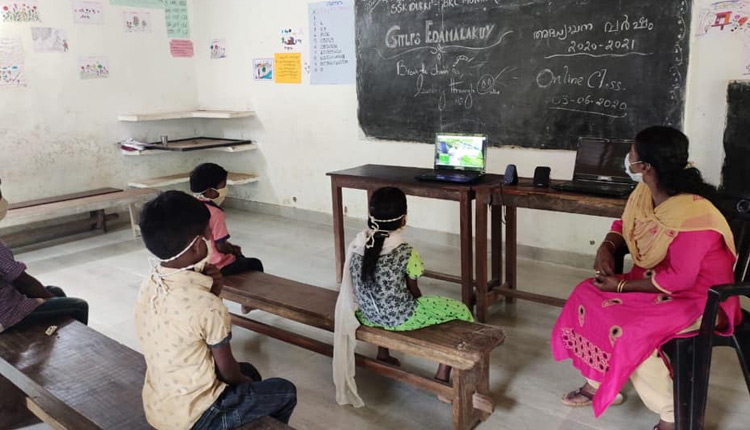
New Delhi, Aug 20: At least 27 per cent students do not have access to smartphones or laptops to attend online classes, while 28 per cent students and parents believe intermittent or lack of electricity is one of the major concerns hindering teaching-learning, according to a survey by the NCERT.

The survey with over 34,000 participants, including students, parents, teachers and school principals from Kendriya Vidyalayas, Navodyaya Vidyalas and CBSE affiliated schools, has pointed out that lack of knowledge of using devices for effective educational purposes and teachers not being well-versed with online teaching methodologies, caused hindrance in the learning process.

"Approximately 27 per cent of the students mentioned the non-availability of smartphones and laptops. The maximum number of stakeholders have opted for mobile phones as a medium for teaching-learning during the Covid-19 period," the survey by the National Council of Educational Research and Training (NCERT) said.

"About 36 per cent of the students used the textbooks and other books available with them. Laptops were the second most favoured option amongst teachers and principals. Television and radio were the least utilized devices for the teaching-learning in the pandemic situation. The absence of enriched interaction between the teacher and the students was one of the reasons as identified by the stakeholders," it added.

The survey noted that almost all of the responsive states use physical (non-digital) mechanisms to track the progress of learners with the majority of them either practising home visit by teachers or systematic parental guidance via phone calls.

"About half of the students stated that they did not have the school textbooks. Although the e-textbooks are available on NCERT website and DIKSHA, the probable reasons behind this feedback are that students are used to studying from the hardcopy of the textbooks, there is lack of awareness regarding the availability of the e-textbook and paucity of devices with students and teachers," it said.

The majority of the stakeholders pointed out that mathematics as a subject was difficult to learn via online medium.

"Since, mathematics contains a number of concepts which require interaction, continuous support, monitoring from the teacher and these aspects were lacking in the online mode of teaching.

"Next to Mathematics, Science was identified as the subject of concern since it contains several concepts and practical experiments which could only be done in the laboratory under the supervision of the teacher. A few stakeholders also found Social Science as a difficult subject to grasp through online classes," the survey said.

It said that around 17 pc of students identified languages as being a difficult subject to learn through online medium.

"Many students and parents felt the need for Physical Education classes through online mode, as physical fitness is the need of the hour to combat this pandemic. Arts education can help to reduce stress and boredom. Around 10 per cent of the stakeholders mentioned art education as a subject of concern," the survey said.

Universities and schools across the country have been closed since March 16, when the Centre announced a countrywide classroom shut down as part of measures to contain the Covid-19 pandemic.

A nationwide lockdown was imposed on March 25. While several restrictions have been eased, schools and colleges continue to be closed.

The prolonged closure of educational institutions has mandated a shift from classroom teaching to online learning.

Based on the NCERT survey findings, the Ministry of Education has formulated Students' Learning Enhancement Guidelines.

"The guidelines will help children, who do not have digital resources to get learning opportunities at their homes, with their teachers or volunteers. Apart from this, it will also help in our efforts to overcome the learning deficiencies of all those students who are learning at home through various alternative ways using radio, television or smartphone," Union Minister of Education, Ramesh Pokhriyal 'Nishank' said.

The minister informed that the guidelines and models are suggested for three types of situations.

"Firstly, in which students do not have any digital resources. Secondly, in which students have limited digital resources available. Lastly, in which students have digital resources available for online education," he said. 

Comments

Add new comment

  • Coastaldigest.com reserves the right to delete or block any comments.
  • Coastaldigset.com is not responsible for its readers’ comments.
  • Comments that are abusive, incendiary or irrelevant are strictly prohibited.
  • Please use a genuine email ID and provide your name to avoid reject.
News Network
December 2,2025

A major upgrade in safety and monitoring is planned for Haj 2026, with every Indian pilgrim set to receive a Haj Suvidha smart wristband linked to the official Haj Suvidha mobile app. The initiative aims to support pilgrims—especially senior citizens—who may struggle with smartphones during the 45-day journey.

What the Smart Wristband Will Do

Officials said the device will come with:
•    Location tracking
•    Pedometer
•    SOS emergency button
•    Qibla compass
•    Prayer timings
•    Basic health monitoring

SP Tiwari, secretary of the UP State Haj Committee, said the goal is to make the pilgrimage safer and more comfortable.

“Most Hajis are elderly and not comfortable with mobile apps,” he said. “The smartwatch will help locate pilgrims who forget their way or cannot communicate their location.”

The wristbands will be monitored by the Consulate General of India in Saudi Arabia, similar to mobile tracking via the Haj Suvidha App.

Free Distribution and Training

•    Smart wristbands will be given free of cost.
•    Training for pilgrims will be conducted between January and February 2026.
•    Sample units will reach state Haj committees soon.
•    Final devices will be distributed as pilgrims begin their journey.

New Rules for Accommodation

Two major decisions have also been finalised for Haj 2026:
1.    Separate rooms for men and women – including married couples. They may stay on the same floor but must occupy different rooms, following stricter Saudi guidelines.
2.    Cooking banned – gas cylinders will not be allowed; all meals will be provided through official catering services arranged by the Haj Committee of India.

These decisions were finalised during a meeting of the Haj Committee of India and state representatives in Mumbai.

Haj Suvidha App Launched Earlier

The government launched the Haj Suvidha App in 2024, offering:

•    Training modules
•    Accommodation and flight details
•    Baggage information
•    SOS and translation tools
•    Grievance redressal

Haj 2026 Quota and Key States

•    India’s total Haj quota for 2026: 1,75,025 pilgrims
•    70% (1,25,000) allotted to the Haj Committee of India
•    30% (around 50,000) reserved for Haj Group Organisers

Uttar Pradesh has the largest allocation (around 30,000 seats), though approximately 18,000 pilgrims are expected to go this year. States with high pilgrim numbers include Kerala, Maharashtra and Gujarat.

Dates of Haj 2026

The pilgrimage is scheduled to take place from 24 May to 29 May, 2026 (tentative).
Haj is one of the five pillars of Islam and is mandatory for Muslims who meet the required conditions.

Comments

Add new comment

  • Coastaldigest.com reserves the right to delete or block any comments.
  • Coastaldigset.com is not responsible for its readers’ comments.
  • Comments that are abusive, incendiary or irrelevant are strictly prohibited.
  • Please use a genuine email ID and provide your name to avoid reject.
coastaldigest.com news network
November 29,2025

health1.jpg

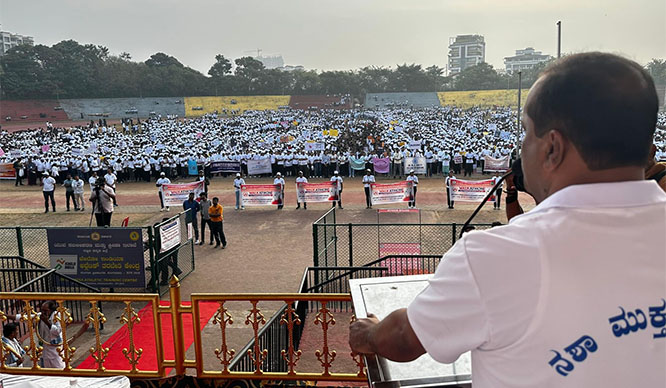
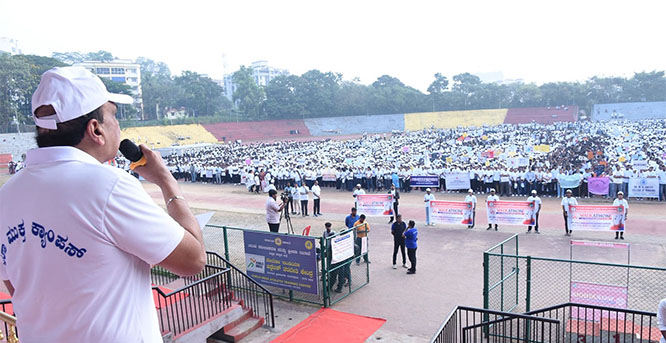
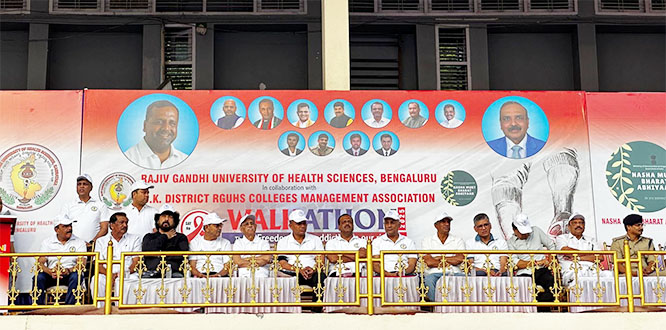
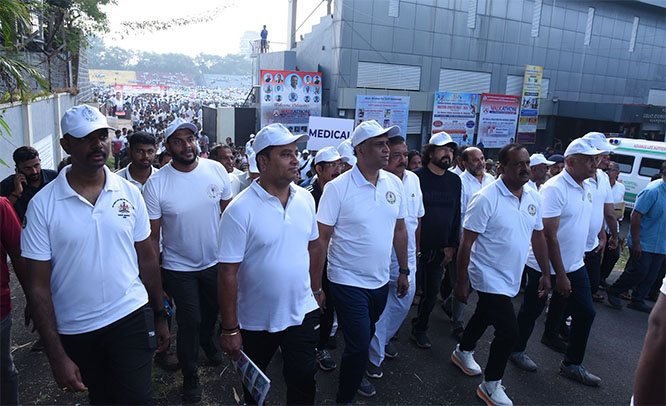
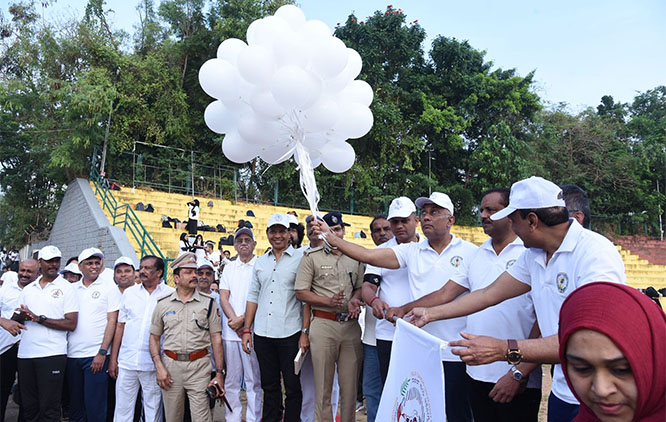
Mangaluru, Nov 29: Around 12,500 healthcare students from Medical, Dental, AYUSH, Pharmacy, Nursing, Physiotherapy and Allied Health Sciences colleges of Dakshina Kannada, affiliated to Rajiv Gandhi University of Health Sciences (RGUHS), took part in a massive walkathon to promote awareness on Organ Donation and Nasha Mukth Bharat.

The inaugural ceremony was held at Mangala Stadium. Dr Bhagavan B C, Hon’ble Vice-Chancellor of RGUHS, delivered the welcome address. The walkathon was flagged off by Shri U T Khader, Hon’ble Speaker of the Karnataka Legislative Assembly, and presided over by Shri Dinesh Gundu Rao, Hon’ble Minister for Health, Family Welfare and Dakshina Kannada District In-charge. Dakshina Kannada MP Shri Brijesh Chowta also addressed the students.

Music director Guru Kiran, MLA Dr Bharat Shetty (Mangalore North), Police Commissioner Shri Sudheer Kumar Reddy, Shri Manjunath Bhandary and Shri Harish Kumar were among those present.

Institution heads including Dr Haji U K Monu (Kanachur Colleges), Dr Shantharam Shetty (Tejaswini College), Dr Bhaskar Shetty (City Group of Colleges), Mr Abdul Rahiman (Kanachur Institute of Medical Sciences), and the District Health Officer, Mangalore, also participated.

The vote of thanks was delivered by Prof U T Ifthikar Fareed, Syndicate Member, RGUHS.

The event was organised by Dr U T Ifthikar Ali and Dr Shiva Sharan (Syndicate Members), Prof Vaishali (Senate Member), Prof Mohammad Suhail (Chairman, BOS Physiotherapy), Dr Sharan Shetty (Former Senate Member), along with principals and faculty of various colleges.

Students marched from Mangala Stadium to Karavali Grounds via MCC and Lalbagh signal. The event set a record as one of the largest gatherings of healthcare students for a social cause in the RGUHS Dakshina Kannada Zone.

health7.jpg

health6.jpg

health5.jpg

health4.jpg

health3.jpg

health2.jpg

Comments

Add new comment

  • Coastaldigest.com reserves the right to delete or block any comments.
  • Coastaldigset.com is not responsible for its readers’ comments.
  • Comments that are abusive, incendiary or irrelevant are strictly prohibited.
  • Please use a genuine email ID and provide your name to avoid reject.
News Network
December 2,2025

DKSsiddu.jpg

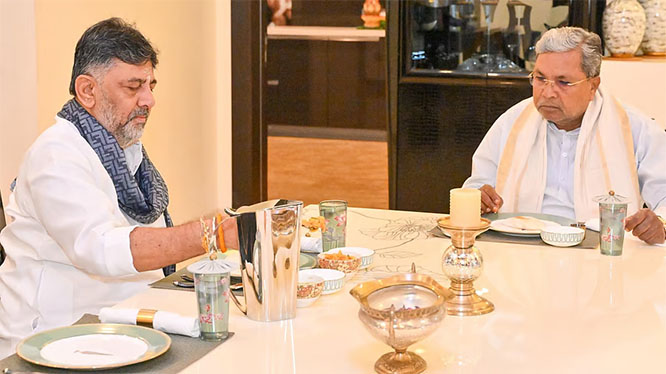
Bengaluru: 'Nati koli saaru' (country chicken curry) considered one of Chief Minister Siddaramaiah’s favourites along with steaming hot idlis was on the breakfast menu at Deputy CM D K Shivakumar’s residence on Tuesday, according to official sources.

The spread also included 'nati koli' fry, vada and pongal, among other items, they said.

In an apparent show of unity, Siddaramaiah visited Shivakumar’s residence for breakfast, just days after the two leaders shared a meal amid a simmering power tussle in the state Congress.

Siddaramaiah drove to the Deputy CM’s residence in Sadashivanagar, where he was received by Shivakumar and his brother D K Suresh, who is a former Congress MP.

Suresh and Kunigal MLA H D Ranganath, a relative of Shivakumar, joined them for breakfast, which featured a mix of vegetarian and non-vegetarian dishes.

Speaking to reporters later, Siddaramaiah said Shivakumar had invited him during his visit to the CM’s residence for breakfast on Saturday.

Asked about the difference between the two meals, the chief minister said, "At his (Shivakumar’s) house it was non-veg, while at my house it was veg. He is a vegetarian, I am a non-vegetarian. I had not prepared non-veg. I told DK to get chicken from the village as you won’t get the original in Bengaluru."

Shivakumar said he had initially invited Siddaramaiah to his residence, but the CM had suggested visiting his place first and reciprocating later. "It was a vegetarian breakfast at the CM’s house on Saturday," he noted.

"Today, I invited him (the CM) to my house. He enjoyed the breakfast, which had his Mysuru taste," Shivakumar added. At this point, Siddaramaiah remarked that Shivakumar’s wife is also from Mysuru.

Saturday’s breakfast at Siddaramaiah’s official residence, held as part of efforts by the Congress high command to ease tensions in the leadership dispute between the two, reportedly included idlis and sambar, according to official sources.

Comments

Add new comment

  • Coastaldigest.com reserves the right to delete or block any comments.
  • Coastaldigset.com is not responsible for its readers’ comments.
  • Comments that are abusive, incendiary or irrelevant are strictly prohibited.
  • Please use a genuine email ID and provide your name to avoid reject.