PM-CARES not a fund of Govt of India; can't be brought under RTI: PMO

News Network
September 23, 2021

The Prime Minister’s Office (PMO) has told Delhi High Court that Prime Minister's Citizen Assistance and Relief In Emergency Fund, or the PM-CARES Fund, which was created in the wake of the Covid-19 pandemic, does not come under the Government of India and it cannot be brought under the ambit of Right to Information (RTI) Act. Also, the amount collected by it does not go to the Consolidated Fund of India, the Delhi High Court has been informed.

The Centre, in an affidavit, said that the Fund can neither be listed as "State" nor "public authority" under the Right to Information as it received funds from private sources.

An affidavit filed by an Under Secretary at the Prime Minister’s Office (PMO) who is discharging his functions in the PM Cares Trust on honorary basis, has said the trust functions with transparency and its funds are audited by an auditor -- a chartered accountant drawn from the panel prepared by the Comptroller and Auditor General of India.

The affidavit was filed in response to a petition seeking a direction to declare the PM-CARES Fund a 'State' under the Constitution to ensure transparency in its functioning.

A bench of Chief Justice D N Patel and Justice Amit Bansal has fixed the matter for further hearing on September 27.

"To ensure transparency, the audited report is put on the official website of the trust along with the details of utilisation of funds received by the trust,” says the affidavit filed by Pradeep Kumar Srivastava, Under Secretary at the PMO.

“I state that when the petitioner is claiming to be a public-spirited person and seeking to pray for various reliefs only for transparency, it does not matter whether PM-CARES is a ‘State’ within the meaning of Article 12 of the Constitution of India,” the officer said in the affidavit.

Irrespective of whether the trust is a ‘State’ or other authority within the meaning of Article 12 of the Constitution or whether it is a ‘public authority’ within the meaning of provisions of the Right to Information Act (RTI), it is not permissible to disclose third party information.It said that all donations received by the trust are received via online payments, cheques or Demand Drafts and the amount received is audited with the audited report and the expenditure of trust fund displayed on the website.

“The trust functions on the principles of transparency and public good in larger public interest like any other charitable trust and, therefore, cannot have any objection in uploading all its resolutions on its website to ensure transparency,” it said, while reiterating that “the trust’s fund is not a fund of Government of India and the amount does not go in the Consolidated Fund of India.”

The officer said he is discharging his functions in the PM-CARES Trust on honorary basis, which is a charitable trust not created by or under the Constitution or by any law made by the Parliament or by any State legislature. “Despite being an officer of the Central government, I am permitted to discharge my functions in PM-CARES Trust on an honorary basis,” he said.

The court was hearing a petition filed by Samyak Gangwal who has said that the PM-CARES Fund is a 'State' as it was formed by the Prime Minister on March 27, 2020 to extend assistance to the citizens of India in the wake of the public health emergency -- the ongoing Covid-19 Pandemic. His counsel had told the court that if it is found that the PM-CARES Fund is not 'State' under the Constitution, usage of the domain name '.gov.in', the Prime Minister's photograph, state emblem etc has to be stopped.

The petition said that the Trustees of the fund are the Prime Minister, Defence Minister, Home Minister and the Finance Minister and immediately after the formation of the fund, the Centre through its high government functionaries represented that the fund was set up and operated by the Government of India.

To ensure transparency and accountability, the plea has sought a direction for periodic auditing of PM-CARES website and disclosure of the details of donations received by it.

In his alterative prayers, Gangwal has sought to direct the Centre to publicise that the PM-CARES Fund is not a fund of the Government of India and to restrain PM-CARES from using 'Prime Minister of India' or 'Prime Minister', including its abbreviations its name, on its website, Trust Deed and other official or unofficial communications and advertisements.

On March 9, the court had said it was not inclined to issue notice on the plea as the Centre was already represented through counsel who may file their written submissions.

The petitioner has also filed another petition to declare PM-CARES as a 'public authority' under the Right to Information (RTI) Act, which is being heard together with the first plea.

This petition challenges a June 2, 2020 order of the Central Public Information Officer (CPIO), PMO, refusing to provide documents sought by him on the ground that PM-CARES Fund is not a public authority under the RTI Act.

Solicitor General Tushar Mehta, who represented PMO, had opposed the petition, stating that it was not maintainable and that he would file a response explaining why it should not be entertained. 

Comments

Add new comment

  • Coastaldigest.com reserves the right to delete or block any comments.
  • Coastaldigset.com is not responsible for its readers’ comments.
  • Comments that are abusive, incendiary or irrelevant are strictly prohibited.
  • Please use a genuine email ID and provide your name to avoid reject.
News Network
December 6,2025

pilot.jpg

New Delhi: IndiGo, India’s largest airline, faced major operational turbulence this week after failing to prepare for new pilot-fatigue regulations issued by the Directorate General of Civil Aviation (DGCA). The stricter rules—designed to improve flight safety—took effect in phases through 2024, with the latest implementation on November 1. IndiGo has acknowledged that inadequate roster planning led to widespread cancellations and delays.

Below are the key DGCA rules that affected IndiGo’s operations:

1. Longer Mandatory Weekly Rest

Weekly rest for pilots has been increased from 36 hours to 48 hours.

The government says the extended break is essential to curb cumulative fatigue. This rule remains in force despite the current crisis.

2. Cap on Night Landings

Pilots can now perform only two night landings per week—a steep reduction from the earlier limit of six.

Night hours, defined as midnight to early morning, are considered the least alert period for pilots.

Given the disruptions, this rule has been temporarily relaxed for IndiGo until February 10.

3. Reduced Maximum Night Flight Duty

Flight duty that stretches into the night is now capped at 10 hours.

This measure has also been kept on hold for IndiGo until February 10 to stabilize operations.

4. Weekly Rest Cannot Be Replaced With Personal Leave

Airlines can no longer count a pilot’s personal leave as part of the mandatory 48-hour rest.

Pilots say this closes a loophole that previously reduced actual rest time.

Currently, all airlines are exempt from this rule to normalise travel.

5. Mandatory Fatigue Monitoring

Airlines must submit quarterly fatigue reports along with corrective actions to DGCA.

This system aims to create a transparent fatigue-tracking framework across the industry.

The DGCA has stressed that these rules were crafted to strengthen flight safety and align India with global fatigue-management standards. The temporary relaxations are expected to remain until February 2025, giving IndiGo time to stabilise its schedules and restore normal air travel.

Comments

Add new comment

  • Coastaldigest.com reserves the right to delete or block any comments.
  • Coastaldigset.com is not responsible for its readers’ comments.
  • Comments that are abusive, incendiary or irrelevant are strictly prohibited.
  • Please use a genuine email ID and provide your name to avoid reject.
P A Hameed Padubidri
November 26,2025

CD.jpg

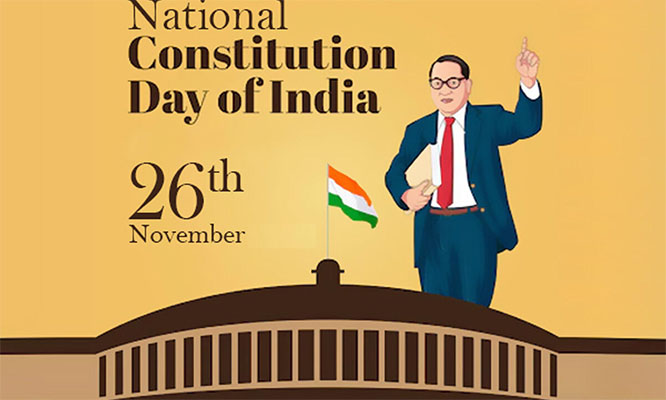
Constitution Day, also known as Samvidhan Divas, is observed every year on November 26 to honor the adoption of the Constitution of India and to recognize the visionary effort that shaped the world’s largest democracy.

Historical Background

It’s on November 26, 1949, the Constituent Assembly of India formally adopted the Constitution.This date is commemorated to acknowledge the completion of nearly three years of drafting, debate, and refinement.

On January 26, 1950, the Constitution came into force, marking India’s transition from a dominion to a sovereign republic.

The date 26 January was chosen to honor the “Purna Swaraj” declaration made in 1930 that marked the relentless efforts & sacrifices of the many. 

Why Constitution Day is Celebrated

* To honor & remember the framers of the Constitution, especially Dr. B. R. Ambedkar, the Chairman of the Drafting Committee, & many others. 

* To remind the citizens of the values, responsibilities, and rights enshrined in the Constitution.

* To promote constitutional values & literacy among students, institutions, and the general public.

* To reaffirm the nation’s commitment to justice, equality, liberty, fraternity and secular values. 

Vision and Significance of the Constitution

It establishes the fundamental political and legal framework for the nation.

Defines the structure, powers and functions of:
    •    The Executive
    •    The Legislature
    •    The Judiciary
    •    Guarantees a comprehensive set of Fundamental Rights, including:

-Equality before law
-Freedom of speech & expression
-Protection of life and personal liberty
-Freedom of religion
-Embeds Directive Principles of State Policy, guiding governance toward social justice and welfare.
-Introduces Fundamental Duties to ensure civic responsibility among citizens.

Key Features Celebrated on Constitution Day

-The Indian constitution is considered one of the longest written constitutions of the world. It’s systematically drafted considering almost all aspects that properly fits to the country. 

-Blend of multiple global constitutional principles while staying rooted in Indian values and realities.

-Framework that balances Federalism, Secularism, Democracy and Rule of Law. This makes everyone-from President to common man-below the law & are equal in the sight of law. 

-Another feature is that it’s based on built-in mechanisms for amendments, ensuring the Constitution grows with changing needs.

Message of the Day

The core ethos of this  Constitution Day is not merely about looking back at history-it’s a reminder of the continuous duty to protect democratic values, respect diversity and uphold the principles that define India as a sovereign, socialist, secular and democratic republic.

Happy Constitution Day to all my compatriots

Comments

Add new comment

  • Coastaldigest.com reserves the right to delete or block any comments.
  • Coastaldigset.com is not responsible for its readers’ comments.
  • Comments that are abusive, incendiary or irrelevant are strictly prohibited.
  • Please use a genuine email ID and provide your name to avoid reject.
News Network
December 3,2025

indigo.jpg

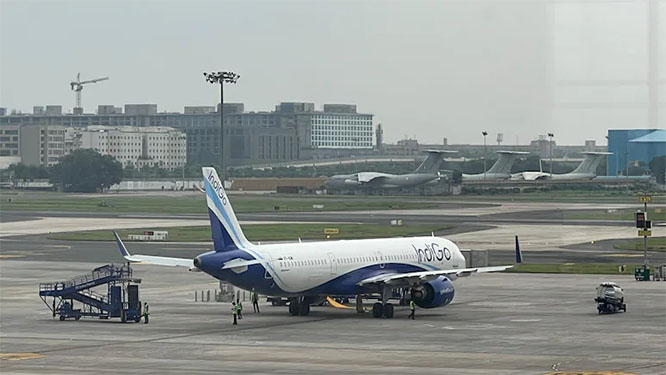
IndiGo, India’s largest airline, is battling one of its worst operational disruptions in recent years, with hundreds of delays and cancellations throwing domestic travel into chaos.

Government data on Tuesday showed its on-time performance plunging to 35%, an unusual dip for a carrier long associated with punctuality.

By Wednesday afternoon, airports in Delhi, Mumbai, Bengaluru and Hyderabad had collectively reported close to 200 cancellations, stranding travellers across the country.

Crew Shortage After New Duty Norms

A major trigger behind the meltdown is a severe crew shortage, especially among pilots, following the rollout of revised Flight Duty Time Limitation (FDTL) norms last month.

The rules mandate longer rest hours and more humane rosters — a shift IndiGo has struggled to incorporate across its vast network.

Sources said several flights were grounded due to lack of cabin crew, while some delays stretched upwards of eight hours.

With IndiGo controlling over 60% of India’s domestic aviation market, the ripple effect has impacted airports nationwide.

IndiGo Issues Apology, Lists “Compounding Factors”

In a statement, IndiGo acknowledged the large-scale disruption:

“We sincerely apologise to customers. A series of unforeseen operational challenges — technology glitches, winter schedule changes, adverse weather, system congestion and updated FDTL norms — created a compounding impact that could not have been anticipated.”

To stabilise operations, the airline has begun calibrated schedule adjustments for the next 48 hours, aiming to restore punctuality. Affected passengers are being offered refunds or alternate travel arrangements, IndiGo said.

What the FDTL Rules Require

The FDTL norms, designed to reduce pilot fatigue, cap duty and flying hours as follows:
•    Maximum 8 hours of flying per day
•    35 hours per week
•    125 hours per month
•    1,000 hours per year

Crew must also receive rest equalling twice the flight duration, with a minimum 10-hour rest period in any 24-hour window.

The DGCA introduced these limits to enhance flight safety.

Hyderabad: 33 Flights Cancelled, Long Queues Reported

Hyderabad’s Rajiv Gandhi International Airport saw heavy early-morning crowds as 33 IndiGo flights (arrivals and departures) were cancelled.

The airport clarified on X that operations were normal, advising passengers to contact IndiGo directly for latest flight status.

Cancellations included flights to and from Visakhapatnam, Goa, Ahmedabad, Delhi, Bengaluru, Chennai, Madurai, Hubli, Bhopal and Bhubaneswar.

Bengaluru: 42 Flights Disrupted

Bengaluru’s Kempegowda International Airport recorded 42 cancellations — 22 arrivals and 20 departures — affecting routes to Delhi, Mumbai, Chennai, Hyderabad, Goa, Kolkata and Lucknow.

Passengers Vent on Social Media

Irate travellers took to X to share their experiences. One passenger stranded in Hyderabad wrote: “I have been here since 3 a.m. and missed an important meeting.”

Another said: “My flight was pushed from 1:55 PM to 2:55 PM and now 4:35 PM. I was informed only three minutes before entering the airport.”

Delhi Airport Hit by Tech Glitch

At Delhi Airport, the disruption deepened due to a slowdown in the Amadeus system — used for reservations, check-ins and departure control.

The technical issue led to longer queues and sluggish processing, adding to delays already worsened by staff shortages.

Comments

Add new comment

  • Coastaldigest.com reserves the right to delete or block any comments.
  • Coastaldigset.com is not responsible for its readers’ comments.
  • Comments that are abusive, incendiary or irrelevant are strictly prohibited.
  • Please use a genuine email ID and provide your name to avoid reject.