



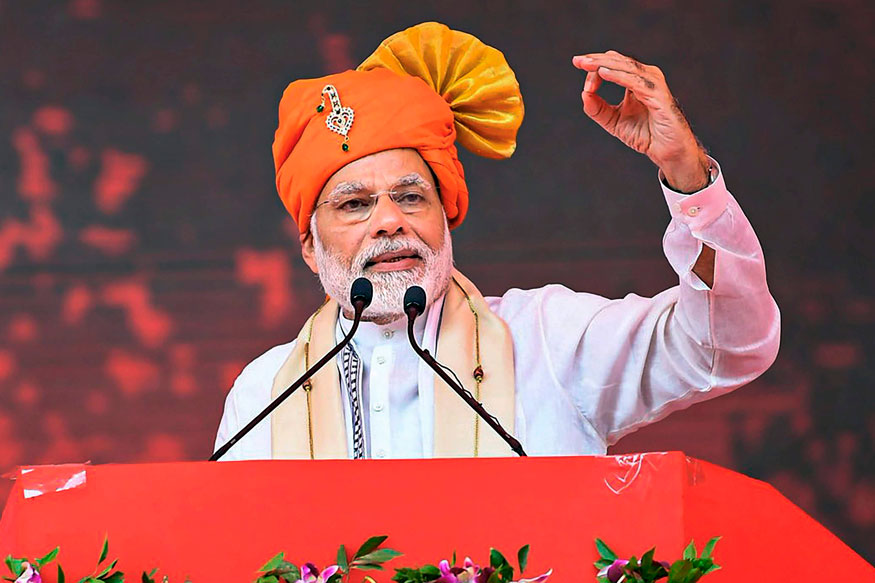
PM Modi's plan to make a Singapore in Gujarat falls flat

Agencies
February 21, 2021

Image result for PM Narendra Modi

When Singapore set up an international financial hub in the late 1960s, the city-state was thinking both fast and slow — seizing an immediate opportunity and opening a path to long-term economic development. Half a century later, India is attempting something similar in Prime Minister Narendra Modi’s home state of Gujarat. But without much thought going into what exactly it’s building, for whom and for what purpose, all it may get is a casino for the local rich. 

For Singapore, the British pound’s 1967 devaluation was the moment of reckoning. For one thing, it raised the profile of Dick van Oenen, a Dutch trader who had made a “significant windfall” for both his employer — Bank of America — and for the newly independent city-state from that abrupt 14% change. But beyond the immediate cash, Singapore saw a broader canvas.

The pound’s tumble had made countries in the Sterling Area, mostly former British colonies, painfully aware that the sun had finally set on the empire’s currency: They needed to switch to the dollar to lend and borrow. The kind of rapid growth East Asia then imagined for itself could be more easily financed by inviting the rich overseas Chinese in Hong Kong, Taiwan, Manila and Jakarta to deposit their funds in dollars. Many of them had become extremely wealthy on assured cash flows from post-colonial monopolies and cartels in everything from gaming and racetrack-betting to flour-making and coconut-milling. 

Channelling these regional savings into local investments and diversifying the Singapore economy was the longer-term impetus for starting a dollar-denominated banking hub, according to Oxford University historian Catherine Schenk. Bank of America’s local branch was the first to get permission to open a separate set of books purely for international business.

India embarked on the project in 2007 with the ambitious goal of turning Mumbai, the country’s domestic financial capital, into an international hub after making the rupee fully convertible “by no later than the end of calendar 2008.” However, after a 14-year interlude that encompassed both the 2008 subprime crisis and a pandemic, there’s little enthusiasm left for financial globalization. Even trade liberalization, which looked irreversible in 2007, is being undermined by a misguided yearning for self-sufficiency. The venture was yanked away from Mumbai and taken to a patch of wilderness in Gujarat. Somewhere along the way, the original purpose was also lost.

All new stores need their early patrons. Had India pursued Singapore’s strategy, it would have begun by targeting nonresident Indians to keep some of their wealth with their banks’ branches in the Gujarat International Finance Tec-City — more popularly known as Gift City — luring them with simple products not available commercially in global markets, such as dollar-denominated sovereign Indian bonds. Corporate issuers would have followed. But banks are run by bankers, who need good schools and better pubs. Three high-rise buildings situated 10 kilometers (6.2 miles) from Gandhinagar — the capital of a state where alcohol is prohibited — offer neither.

Since a bank-led approach wasn’t feasible, minders of Modi’s favourite project turned toward capital markets, in the hope that with sufficient inducement brokers would book trades in Gift City without having to set foot there. As a result, the joyless place has spent years trying to become a marketplace for foreign currency-denominated contracts, hoping to capture some of the financial intermediation that now takes place in London, Singapore, Hong Kong or Dubai, but where the ultimate risk resides in India.

The Gujarat market offers a slew of tax breaks, but has very little customer liquidity. India’s two domestic exchanges — the National Stock Exchange of India Ltd. and BSE Ltd. — are providing costly incentives to intermediaries to trade with one another there. At least 85%-90% of trades at Gift exchanges are proprietary trades, the news website Morning Context recently reported.

Hedge funds aren’t coming. Everything they want for risk mitigation or speculation is available within a one-mile radius in Singapore. To arm-twist investors to come, India’s No. 1 stock exchange even picked a hissy fight with its long-term partner, the Singapore Exchange Ltd. The conflict has since died down, and there’s an agreement on setting up a pipe connecting NSE in Gift City with SGX after ensuring “member readiness.” Meanwhile, the city-state is still trading derivatives linked to Indian indexes and stocks with gusto.

Now comes another strategic wrong turn. Just last week, the central bank allowed resident individuals to open foreign-currency accounts in Gift City to invest in securities issued by overseas firms. This isn’t a step toward the original goal of capital-account convertibility. India already permits all adults and minors an annual $250,000 quota for overseas remittances. Worse, if the money placed in Gift isn’t invested in 15 days, it returns home to a rupee account. Loose change of retail Indian cash parked temporarily in Gujarat is hardly going to entice a pedigreed global issuer to hawk equities or bonds there.

So who’s this for? Gift allows brokers to pool foreign customers’ money under omnibus accounts. Investors don’t need to register, only the brokers need to be satisfied that they’re legitimate. Even the US Securities and Exchange Commission recently ticked off broker-dealers for not doing enough due diligence on omnibus-account customers to prevent money laundering. The project’s regulator, which isn’t even one year old yet, will have to be on a serious watch against  “round-tripping,” or local money escaping to evade taxes and then reentering as overseas investment.

Another plan is to bring trading in non-deliverable forwards — bets on the rupee that aren’t constrained by India’s capital controls because they’re settled in dollars — to Gift by luring overseas investors with tax breaks. This, too, puts the cart before the horse. Among emerging-market NDFs, rupee contracts are the second-most-popular after the South Korean won, with a 19% share of the $250 billion-a-day market, according to a 2019 Bank for International Settlements survey.

The price signals these offshore derivatives emit tend to become a headache for a central bank trying to manage a controlled home currency in times of balance-of-payment stress, like during the 2013 taper tantrum. Rather than wanting these potentially destabilizing flows to come closer home, India ought to be deepening the onshore rupee market in Mumbai instead. It should also be paying more attention to interest-rate derivatives, like Mexico and South Africa have.

In hosting an international financial center, Singapore stole a march over rival Hong Kong, where the bankers were initially against more competition. But it wasn’t tall buildings that made the experiment a success. A freely convertible currency, pragmatic regulation, a stable tax regime, rule of law and speedy dispute resolution played a huge role. (Good schools and pubs helped, too.)

Opening up after the pandemic, the Indian economy is awash in central bank-sponsored liquidity. What it lacks is capital, and the preconditions to establish a truly international financial center. Gujarat was never the right place to build a global mart. Bereft of any economic logic, Gift may only appeal to the local wealthy shopping for a bit of tax-free dollar riches.

Comments

Add new comment

  • Coastaldigest.com reserves the right to delete or block any comments.
  • Coastaldigset.com is not responsible for its readers’ comments.
  • Comments that are abusive, incendiary or irrelevant are strictly prohibited.
  • Please use a genuine email ID and provide your name to avoid reject.
News Network
December 2,2025

A major upgrade in safety and monitoring is planned for Haj 2026, with every Indian pilgrim set to receive a Haj Suvidha smart wristband linked to the official Haj Suvidha mobile app. The initiative aims to support pilgrims—especially senior citizens—who may struggle with smartphones during the 45-day journey.

What the Smart Wristband Will Do

Officials said the device will come with:
•    Location tracking
•    Pedometer
•    SOS emergency button
•    Qibla compass
•    Prayer timings
•    Basic health monitoring

SP Tiwari, secretary of the UP State Haj Committee, said the goal is to make the pilgrimage safer and more comfortable.

“Most Hajis are elderly and not comfortable with mobile apps,” he said. “The smartwatch will help locate pilgrims who forget their way or cannot communicate their location.”

The wristbands will be monitored by the Consulate General of India in Saudi Arabia, similar to mobile tracking via the Haj Suvidha App.

Free Distribution and Training

•    Smart wristbands will be given free of cost.
•    Training for pilgrims will be conducted between January and February 2026.
•    Sample units will reach state Haj committees soon.
•    Final devices will be distributed as pilgrims begin their journey.

New Rules for Accommodation

Two major decisions have also been finalised for Haj 2026:
1.    Separate rooms for men and women – including married couples. They may stay on the same floor but must occupy different rooms, following stricter Saudi guidelines.
2.    Cooking banned – gas cylinders will not be allowed; all meals will be provided through official catering services arranged by the Haj Committee of India.

These decisions were finalised during a meeting of the Haj Committee of India and state representatives in Mumbai.

Haj Suvidha App Launched Earlier

The government launched the Haj Suvidha App in 2024, offering:

•    Training modules
•    Accommodation and flight details
•    Baggage information
•    SOS and translation tools
•    Grievance redressal

Haj 2026 Quota and Key States

•    India’s total Haj quota for 2026: 1,75,025 pilgrims
•    70% (1,25,000) allotted to the Haj Committee of India
•    30% (around 50,000) reserved for Haj Group Organisers

Uttar Pradesh has the largest allocation (around 30,000 seats), though approximately 18,000 pilgrims are expected to go this year. States with high pilgrim numbers include Kerala, Maharashtra and Gujarat.

Dates of Haj 2026

The pilgrimage is scheduled to take place from 24 May to 29 May, 2026 (tentative).
Haj is one of the five pillars of Islam and is mandatory for Muslims who meet the required conditions.

Comments

Add new comment

  • Coastaldigest.com reserves the right to delete or block any comments.
  • Coastaldigset.com is not responsible for its readers’ comments.
  • Comments that are abusive, incendiary or irrelevant are strictly prohibited.
  • Please use a genuine email ID and provide your name to avoid reject.
P A Hameed Padubidri
November 26,2025

CD.jpg

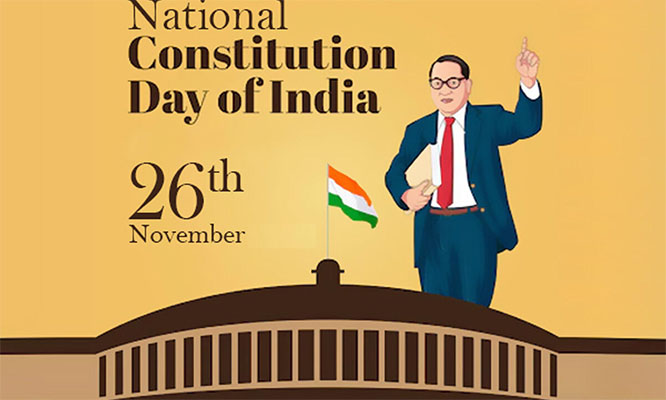
Constitution Day, also known as Samvidhan Divas, is observed every year on November 26 to honor the adoption of the Constitution of India and to recognize the visionary effort that shaped the world’s largest democracy.

Historical Background

It’s on November 26, 1949, the Constituent Assembly of India formally adopted the Constitution.This date is commemorated to acknowledge the completion of nearly three years of drafting, debate, and refinement.

On January 26, 1950, the Constitution came into force, marking India’s transition from a dominion to a sovereign republic.

The date 26 January was chosen to honor the “Purna Swaraj” declaration made in 1930 that marked the relentless efforts & sacrifices of the many. 

Why Constitution Day is Celebrated

* To honor & remember the framers of the Constitution, especially Dr. B. R. Ambedkar, the Chairman of the Drafting Committee, & many others. 

* To remind the citizens of the values, responsibilities, and rights enshrined in the Constitution.

* To promote constitutional values & literacy among students, institutions, and the general public.

* To reaffirm the nation’s commitment to justice, equality, liberty, fraternity and secular values. 

Vision and Significance of the Constitution

It establishes the fundamental political and legal framework for the nation.

Defines the structure, powers and functions of:
    •    The Executive
    •    The Legislature
    •    The Judiciary
    •    Guarantees a comprehensive set of Fundamental Rights, including:

-Equality before law
-Freedom of speech & expression
-Protection of life and personal liberty
-Freedom of religion
-Embeds Directive Principles of State Policy, guiding governance toward social justice and welfare.
-Introduces Fundamental Duties to ensure civic responsibility among citizens.

Key Features Celebrated on Constitution Day

-The Indian constitution is considered one of the longest written constitutions of the world. It’s systematically drafted considering almost all aspects that properly fits to the country. 

-Blend of multiple global constitutional principles while staying rooted in Indian values and realities.

-Framework that balances Federalism, Secularism, Democracy and Rule of Law. This makes everyone-from President to common man-below the law & are equal in the sight of law. 

-Another feature is that it’s based on built-in mechanisms for amendments, ensuring the Constitution grows with changing needs.

Message of the Day

The core ethos of this  Constitution Day is not merely about looking back at history-it’s a reminder of the continuous duty to protect democratic values, respect diversity and uphold the principles that define India as a sovereign, socialist, secular and democratic republic.

Happy Constitution Day to all my compatriots

Comments

Add new comment

  • Coastaldigest.com reserves the right to delete or block any comments.
  • Coastaldigset.com is not responsible for its readers’ comments.
  • Comments that are abusive, incendiary or irrelevant are strictly prohibited.
  • Please use a genuine email ID and provide your name to avoid reject.
News Network
November 30,2025

The United Nations Committee against Torture (CAT) has condemned the Israeli regime for enforcing a policy of “organized torture” against Palestinians.

In a report published on Friday, CAT stated that the occupying regime enforces a deliberate policy of “organized and widespread torture and ill-treatment” against Palestinian abductees, particularly since October 7, 2023, when Israel launched its genocidal war on Gaza.

The committee expressed “deep concern over repeated severe beatings, dog attacks, electrocution, water-boarding, use of prolonged stress positions [and] sexual violence” inflicted on Palestinians.

Palestinian prisoners were degraded by “being made to act like animals or being urinated on,” systematically denied medical care, and subjected to excessive restraints, “in some cases resulting in amputation,” the report added.

CAT also condemned the routine application of “unlawful combatants law” to justify the prolonged detention without trial of thousands of Palestinian men, women, and children.

More than 10,000 Palestinians, including women and children, are currently held in Israeli prisons, according to Palestinian and international human rights groups, with 3,474 Palestinians in “administrative detention,” meaning they are imprisoned without trial for indefinite periods.

The report highlighted the “high proportion of children who are currently detained without charge or on remand,” noting that while Israel sets the age of criminal responsibility at 12, even younger children have been abducted.

Children designated as security prisoners face severe restrictions on family contact, may be subjected to solitary confinement, and are denied access to education, in clear violation of international law.

The committee further suggested that Israel’s policies across the Occupied Territories constitute collective torture against the Palestinian population.

“A range of policies adopted by Israel in the course of its continued unlawful presence in the Occupied Palestinian Territory amounts to cruel, inhuman or degrading living conditions for the Palestinian population,” the report said.

On Thursday, the Palestinian resistance movement Hamas condemned the systematic killing and torture of Palestinian abductees in Israeli prisons, urging international action to halt these abuses.

Citing human rights data, Hamas stated that 94 Palestinians have been killed in Israeli prisons since the start of Tel Aviv’s genocidal war on Gaza.

“This reflects an organized criminal approach that has turned these prisons into direct killing grounds to eliminate our people,” the resistance movement said.

Hamas called on the international community, the UN, and human rights organizations to immediately pressure Israel to end crimes against prisoners and uphold their rights as guaranteed by all international conventions and norms.

Comments

Add new comment

  • Coastaldigest.com reserves the right to delete or block any comments.
  • Coastaldigset.com is not responsible for its readers’ comments.
  • Comments that are abusive, incendiary or irrelevant are strictly prohibited.
  • Please use a genuine email ID and provide your name to avoid reject.