President reaches out to small and marginal farmers

Agencies
January 29, 2021

president.jpg

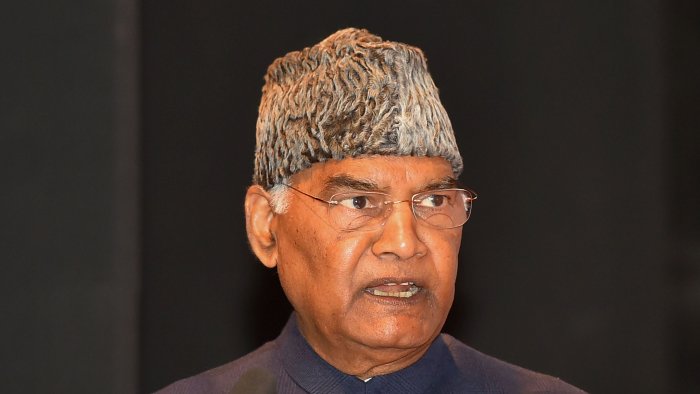
With farmers' agitation showing signs firming up further despite the police crackdown after the violence during the Republic Day tractor rally by farmer unions, the Government on Friday reached out to numerically dominating small and marginal farmers through President Ram Nath Kovind's address to the joint sitting of Budget Session beginning Friday.

Kovind assured farmers that the new farm laws have added new rights and facilities to them instead of taking away any of the rights existing previously.

The President flagged his strong disapproval of the act of a group of farmers storming the Red Fort and hoisting a religious flag there as well as the violence in the streets on Republic Day during the farmer protest.

"The insult of the tricolour and the pious Republic Day a few days ago is very unfortunate. The Constitution gives us the right to freedom of expression and also teaches us that law and rules should also be followed with the same earnestness," he said.

At the same time, Kovind also chose to flag that the government will go by the decision of the Supreme Court, which has put on hold the implementation of three farm laws.

"According full respect to the decision of the Supreme Court, my government will implement that," he said even as sought to make it clear that there has been no deduction in the rights and facilities that were available before the passage of these three farm laws. Rather the government has provided new rights along with providing new facilities to the farmers through these farm reforms," Kovind said.

Addressing the joint sitting, which was boycotted by nearly 20 Opposition parties, Kovind said that over 10 crore small farmers immediately started getting benefits of the three farm reform laws and recalled that many political parties had, from time to time, have given full support to these reforms taking into account the benefits accruing to small farmers. 

Stressing that Parliament passed these three laws after comprehensive deliberations, Kovind said these small and marginal farmers are in the priority list of the government.

He said in order to support such farmers in meeting their small expenses, the government has directly transferred around Rs 1,13,000 crores in their accounts under the PM-Kisan Samman Nidhi scheme.

The focus on the government's initiatives for small and marginal farmers. which constitute 82 percent of total number of farmers, in the President's speech during the Budget session — through which the government of the day lays out its vision and priority — is significant.

This is especially so as it comes at the backdrop of Opposition's attempt to paint the government anti-farmer and lend its full support to the farmers' stir, who have gathered on the outskirts of the national capital to protest against the farm laws.

"It is the demand of the time to pay special attention to small and marginal farmers in our agriculture sector, who have only one or two hectares of land. Of all the farmers in the country, more than 80 percent are these small farmers and they are more than 10 crore," Kovind said.

One of the criticisms of the ongoing farm agitation was that it was mainly led by relatively well-off farmers from Punjab, Haryana and Western UP, at least when it started two months back. The gathering later swelled with farmers from other states and other sections also joining it.

The President's address highlighting the achievements of "my government" talked at length about the measures taken by the Centre in the last six years since Prime Minister Narendra Modi-led BJP government was formed first in mid 2014.

"In the last six years the government has tried to bring positive change in all sectors from seed to marketing (beej se bazaar tak). My government has also taken the decision to implement the recommendations of M S Swaminathan Commission and provide farmers Minimum Support Price (MSP) of one and half times the production cost of foodgrains."

The President also flagged the rise in production of vegetables and foodgrain and the rise in the area of micro irrigation from 42 lakh hectare to 56 lakh hectare land in this period.

He said the Kisan Rail facility started by the government is writing a new chapter in providing markets to farmers as more than 38 thousand tonnes of foodgrain, fruit and vegetables have been transported by farmers from one region to another through more than 100 Kisan trains run so far.

"My government is giving special attention to modernising agriculture infrastructure to make agriculture more lucrative and for this an Agriculture Infrastructure Fund of  Rs 1,00,000 crore has been started. In order to create the foundational structure in the dairy sector and promote investment ther, the government has also set up a Dairy Infrastructure Development Fund (DIDF) worth 15,000 crore," the President said.

He also listed other measures like distribution of 20 lakh solar pumps under Pradhanmantri Kusum Yojan and the five-time rise in Ethanol production in last years as examples of the government's commitment to promote the agriculture sector and support farmers.

Comments

Add new comment

  • Coastaldigest.com reserves the right to delete or block any comments.
  • Coastaldigset.com is not responsible for its readers’ comments.
  • Comments that are abusive, incendiary or irrelevant are strictly prohibited.
  • Please use a genuine email ID and provide your name to avoid reject.
News Network
December 4,2025

indigoflight.jpg

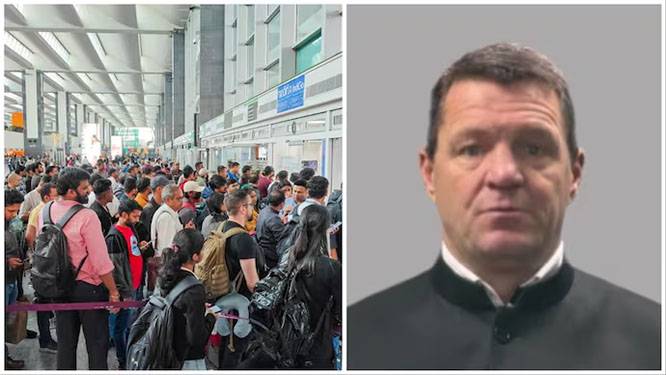
Domestic carrier IndiGo has cancelled over 180 flights from three major airports — Mumbai, Delhi and Bengaluru — on Thursday, December 4, as the airline struggles to secure the required crew to operate its flights in the wake of new flight-duty and rest-period norms for pilots.

While the number of cancellations at Mumbai airport stands at 86 (41 arrivals and 45 departures) for the day, at Bengaluru, 73 flights have been cancelled, including 41 arrivals, according to a PTI report that quoted sources.

"IndiGo cancelled over 180 flights on Thursday at three airports-Mumbai, Delhi and Bengaluru," the source told the news agency.

Besides, it had cancelled as many as 33 flights at Delhi airport for Thursday, the source said, adding, "The number of cancellations is expected to be higher by the end of the day."

The Gurugram-based airline's On-Time Performance (OTP) nosedived to 19.7 per cent at six key airports — Delhi, Mumbai, Chennai, Kolkata, Bengaluru and Hyderabad — on December 3, as it struggled to get the required crew to operate its services, down from almost half of December 2, when it was 35 per cent.

"IndiGo has been facing acute crew shortage since the implementation of the second phase of the FDTL (Flight Duty Time Limitations) norms, leading to cancellations and huge delays in its operations across the airports," a source had told PTI on Wednesday.

Chaos continued at several major airports for the third day on Thursday because of the cancellations.

A spokesperson for the Kempegowda International Airport (KIA) in Bengaluru said that 73 IndiGo flights had been cancelled on Thursday.

At least 150 flights were cancelled and dozens of others delayed on Wednesday, airport sources said, leaving thousands of travellers stranded, according to news agency Reuters.

The Directorate General of Civil Aviation (DGCA) has said it is investigating IndiGo flight disruptions and has asked the airline to submit the reasons for the current situation, as well as its plans to reduce flight cancellations and delays.

It may be mentioned here that the pilots' body, Federation of Indian Pilots (FIP), has alleged that IndiGo, despite getting a two-year preparatory window before the full implementation of new flight duty and rest period norms for cockpit crew, "inexplicably" adopted a "hiring freeze".

The FIP said it has urged the safety regulator, the DGCA, not to approve airlines' seasonal flight schedules unless they have adequate staff to operate their services "safely and reliably" in accordance with the New Flight Duty Time Limitations (FDTL) norms.

In a letter to the DGCA late on Wednesday, the FIP urged the DGCA to consider re-evaluating and reallocating slots to other airlines, which have the capacity to operate them without disruption during the peak holiday and fog season if IndiGo continues to "fail in delivering on its commitments to passengers due to its own avoidable staffing shortages."

Comments

Add new comment

  • Coastaldigest.com reserves the right to delete or block any comments.
  • Coastaldigset.com is not responsible for its readers’ comments.
  • Comments that are abusive, incendiary or irrelevant are strictly prohibited.
  • Please use a genuine email ID and provide your name to avoid reject.
News Network
December 6,2025

pilot.jpg

New Delhi: IndiGo, India’s largest airline, faced major operational turbulence this week after failing to prepare for new pilot-fatigue regulations issued by the Directorate General of Civil Aviation (DGCA). The stricter rules—designed to improve flight safety—took effect in phases through 2024, with the latest implementation on November 1. IndiGo has acknowledged that inadequate roster planning led to widespread cancellations and delays.

Below are the key DGCA rules that affected IndiGo’s operations:

1. Longer Mandatory Weekly Rest

Weekly rest for pilots has been increased from 36 hours to 48 hours.

The government says the extended break is essential to curb cumulative fatigue. This rule remains in force despite the current crisis.

2. Cap on Night Landings

Pilots can now perform only two night landings per week—a steep reduction from the earlier limit of six.

Night hours, defined as midnight to early morning, are considered the least alert period for pilots.

Given the disruptions, this rule has been temporarily relaxed for IndiGo until February 10.

3. Reduced Maximum Night Flight Duty

Flight duty that stretches into the night is now capped at 10 hours.

This measure has also been kept on hold for IndiGo until February 10 to stabilize operations.

4. Weekly Rest Cannot Be Replaced With Personal Leave

Airlines can no longer count a pilot’s personal leave as part of the mandatory 48-hour rest.

Pilots say this closes a loophole that previously reduced actual rest time.

Currently, all airlines are exempt from this rule to normalise travel.

5. Mandatory Fatigue Monitoring

Airlines must submit quarterly fatigue reports along with corrective actions to DGCA.

This system aims to create a transparent fatigue-tracking framework across the industry.

The DGCA has stressed that these rules were crafted to strengthen flight safety and align India with global fatigue-management standards. The temporary relaxations are expected to remain until February 2025, giving IndiGo time to stabilise its schedules and restore normal air travel.

Comments

Add new comment

  • Coastaldigest.com reserves the right to delete or block any comments.
  • Coastaldigset.com is not responsible for its readers’ comments.
  • Comments that are abusive, incendiary or irrelevant are strictly prohibited.
  • Please use a genuine email ID and provide your name to avoid reject.
News Network
December 5,2025

indigoCEO.jpg

New Delhi, Dec 5: IndiGo CEO Pieter Elbers issued a public apology this evening after more than a thousand flights were cancelled today, making it the "most severely impacted day" in terms of cancellations. The biggest airline of the country cancelled "more than half" of its daily number of flights on Friday, said Elbers. He also said that even though the crisis will persist on Saturday, the airline anticipates fewer than 1,000 flight cancellations.

"Full normalisation is expected between December 10 and 15, though IndiGo cautions that recovery will take time due to the scale of operations," the IndiGo CEO said. 

IndiGo operates around 2,300 domestic and international flights daily.

Pieter Elbers, while apologising for the major inconvenience due to delays and cancellations, said the situation is a result of various causes.

The crisis at IndiGo stems from new regulations that boost pilots' weekly rest requirements by 12 hours to 48 and allow only two night-time landings per week, down from six. IndiGo has attributed the mass cancellations to "misjudgment and planning gaps".

Elbers also listed three lines of action that the airline will adopt to address the issue.

"Firstly, customer communication and addressing your needs, for this, messages have been sent on social media. And just now, a more detailed communication with information, refunds, cancellations and other customer support measures was sent," he said.

The airline has also stepped up its call centre capacity.

"Secondly, due to yesterday's situation, we had customers stranded mostly at the nation's largest airports. Our focus was for all of them to be able to travel today itself, which will be achieved. For this, we also ask customers whose flights are cancelled not to come to the airports as notifications are sent," the CEO said.

"Thirdly, cancellations were made for today to align our crew and planes to be where they need to start tomorrow morning afresh. Earlier measures of the last few days, regrettable, have proven not to be enough, but we have decided today to reboot all our systems and schedules, resulting in the highest numbers of cancellations so far, but imperative for progressive improvements starting from tomorrow," he added.

As airports witnessed chaotic scenes, the Directorate General of Civil Aviation (DGCA) stepped in to grant IndiGo a temporary exemption from stricter night duty rules for pilots. It also allowed substitution of leaves with a weekly rest period. 

Civil Aviation Minister Ram Mohan Naidu has said a high-level inquiry will be ordered and accountability will be fixed.

Comments

Add new comment

  • Coastaldigest.com reserves the right to delete or block any comments.
  • Coastaldigset.com is not responsible for its readers’ comments.
  • Comments that are abusive, incendiary or irrelevant are strictly prohibited.
  • Please use a genuine email ID and provide your name to avoid reject.