RBI Governor backs PM Modi’s pitch for states to reduce VAT on on petrol, diesel

News Network
June 8, 2022

New Delhi, June 8: Lending support to the Prime Minister Narendra Modi–led union government's pitch for states to reduce sales tax (VAT) on petrol and diesel, Reserve Bank of India (RBI) Governor Shaktikanta Das on Wednesday said a cut in VAT on fuel will help soften inflationary pressures as well as expectations.

The central government had on May 21 cut excise duty on petrol by a record Rs 8 per litre and that on diesel by Rs 6 to after repeated hikes. At that time, it asked states to lower VAT to further provide relief. Almost no state reduced VAT.

Announcing the bi-monthly monetary policy, Das said a quick survey of urban households undertaken after the excise duty cuts on petrol and diesel on May 21 showed a significant moderation in their inflation expectations.

"In such a scenario, further reduction of State VATs on petrol and diesel across the country can certainly contribute to softening of the inflationary pressures as well as expectations," Das said.

Finance Minister Nirmala Sitharaman, at the time of announcing a reduction in excise duty, had urged states to reduce VAT. Her other cabinet colleagues including Oil Minister Hardeep Singh Puri made similar pleas.

But hardly any state reduced VAT after the May 21 excise duty cut announcement.

In April, Prime Minister Narendra Modi too had asked the states to lower their taxes to enable users to get the full benefit of the previous excise duty cuts of November 2021. Non-NDA party ruled states had not reduced VAT.

Post-November 2021 reduction in excise duty on petrol by Rs 5 per litre and that on diesel by Rs 10 a litre, 25 states and UTs had cut VAT to give further reprieve to consumers battered by record-high retail prices.

However, states ruled by non-NDA parties like Maharashtra, Andhra Pradesh, West Bengal, Kerala and Tamil Nadu had not reduced VAT.

"Many states like Maharashtra, West Bengal, Telangana, Andhra Pradesh, Tamil Nadu, Kerala, and Jharkhand did not agree to our request for some reason or the other, and the burden on the people of these states continued," Modi had said on April 27.

"I am urging you that in the interest of the nation, please undertake what should have been done six months back in November. Give consumers in your state the benefit by lowering the VAT."

For a nation 85 per cent dependent on imports to meet its oil needs, the surge in international crude oil prices following Russia's invasion of Ukraine, together with food and commodities, has contributed to pushing the inflation rate to 7.8 per cent in April.

To control the spiralling prices, the Union Government reduced excise duty.

The two reductions - first in November 2021 and then in May 2022, roll back the Rs 13 and Rs 16 per litre increase in taxes on petrol and diesel effected between March 2020 and May 2020 to avoid passing on to consumers the sharp fall in international oil prices.

The excise duty hikes of 2020 had taken central taxes on petrol to their highest level of Rs 32.9 per litre and that on diesel to Rs 31.8 a litre.

After the latest excise cut, the incidence of central tax on petrol came down to Rs 19.9 a litre and that on diesel to Rs 15.8 per litre.

Central excise duty makes up for 20 per cent of the price of petrol, down from 26 per cent earlier. It now makes up 17.6 per cent of diesel price. After considering local sales tax or VAT, the total tax incidence on the price of petrol is 37 per cent and that on diesel is 32 per cent, down from 40-42 per cent earlier.

The excise tax on petrol was Rs 9.48 per litre when the Modi government took office in 2014 and that on diesel was Rs 3.56 a litre.

The government had, between November 2014 and January 2016, raised excise duty on petrol and diesel on nine occasions to take away gains arising from plummeting global oil prices.

In all, duty on petrol rate was hiked by Rs 11.77 per litre and that on diesel by 13.47 a litre in those 15 months that helped government's excise mop up more than double to Rs 2,42,000 crore in 2016-17 from Rs 99,000 crore in 2014-15.

It cut excise duty by Rs 2 in October 2017 and by Rs 1.50 a year later. But it raised excise duty by Rs 2 per litre in July 2019.

It again raised excise duty on March 14, 2020, by Rs 3 per litre each. The government on May 6, 2020, again raised excise duties by Rs 10 per litre on petrol and Rs 13 per litre on diesel.

Comments

Add new comment

  • Coastaldigest.com reserves the right to delete or block any comments.
  • Coastaldigset.com is not responsible for its readers’ comments.
  • Comments that are abusive, incendiary or irrelevant are strictly prohibited.
  • Please use a genuine email ID and provide your name to avoid reject.
News Network
December 2,2025

DKSsiddu.jpg

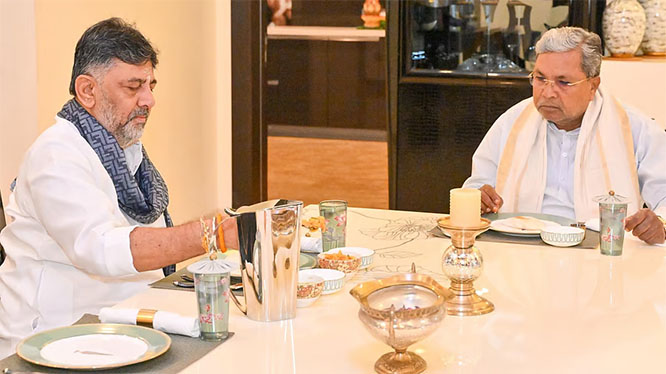
Bengaluru: 'Nati koli saaru' (country chicken curry) considered one of Chief Minister Siddaramaiah’s favourites along with steaming hot idlis was on the breakfast menu at Deputy CM D K Shivakumar’s residence on Tuesday, according to official sources.

The spread also included 'nati koli' fry, vada and pongal, among other items, they said.

In an apparent show of unity, Siddaramaiah visited Shivakumar’s residence for breakfast, just days after the two leaders shared a meal amid a simmering power tussle in the state Congress.

Siddaramaiah drove to the Deputy CM’s residence in Sadashivanagar, where he was received by Shivakumar and his brother D K Suresh, who is a former Congress MP.

Suresh and Kunigal MLA H D Ranganath, a relative of Shivakumar, joined them for breakfast, which featured a mix of vegetarian and non-vegetarian dishes.

Speaking to reporters later, Siddaramaiah said Shivakumar had invited him during his visit to the CM’s residence for breakfast on Saturday.

Asked about the difference between the two meals, the chief minister said, "At his (Shivakumar’s) house it was non-veg, while at my house it was veg. He is a vegetarian, I am a non-vegetarian. I had not prepared non-veg. I told DK to get chicken from the village as you won’t get the original in Bengaluru."

Shivakumar said he had initially invited Siddaramaiah to his residence, but the CM had suggested visiting his place first and reciprocating later. "It was a vegetarian breakfast at the CM’s house on Saturday," he noted.

"Today, I invited him (the CM) to my house. He enjoyed the breakfast, which had his Mysuru taste," Shivakumar added. At this point, Siddaramaiah remarked that Shivakumar’s wife is also from Mysuru.

Saturday’s breakfast at Siddaramaiah’s official residence, held as part of efforts by the Congress high command to ease tensions in the leadership dispute between the two, reportedly included idlis and sambar, according to official sources.

Comments

Add new comment

  • Coastaldigest.com reserves the right to delete or block any comments.
  • Coastaldigset.com is not responsible for its readers’ comments.
  • Comments that are abusive, incendiary or irrelevant are strictly prohibited.
  • Please use a genuine email ID and provide your name to avoid reject.
News Network
December 6,2025

pilot.jpg

New Delhi: IndiGo, India’s largest airline, faced major operational turbulence this week after failing to prepare for new pilot-fatigue regulations issued by the Directorate General of Civil Aviation (DGCA). The stricter rules—designed to improve flight safety—took effect in phases through 2024, with the latest implementation on November 1. IndiGo has acknowledged that inadequate roster planning led to widespread cancellations and delays.

Below are the key DGCA rules that affected IndiGo’s operations:

1. Longer Mandatory Weekly Rest

Weekly rest for pilots has been increased from 36 hours to 48 hours.

The government says the extended break is essential to curb cumulative fatigue. This rule remains in force despite the current crisis.

2. Cap on Night Landings

Pilots can now perform only two night landings per week—a steep reduction from the earlier limit of six.

Night hours, defined as midnight to early morning, are considered the least alert period for pilots.

Given the disruptions, this rule has been temporarily relaxed for IndiGo until February 10.

3. Reduced Maximum Night Flight Duty

Flight duty that stretches into the night is now capped at 10 hours.

This measure has also been kept on hold for IndiGo until February 10 to stabilize operations.

4. Weekly Rest Cannot Be Replaced With Personal Leave

Airlines can no longer count a pilot’s personal leave as part of the mandatory 48-hour rest.

Pilots say this closes a loophole that previously reduced actual rest time.

Currently, all airlines are exempt from this rule to normalise travel.

5. Mandatory Fatigue Monitoring

Airlines must submit quarterly fatigue reports along with corrective actions to DGCA.

This system aims to create a transparent fatigue-tracking framework across the industry.

The DGCA has stressed that these rules were crafted to strengthen flight safety and align India with global fatigue-management standards. The temporary relaxations are expected to remain until February 2025, giving IndiGo time to stabilise its schedules and restore normal air travel.

Comments

Add new comment

  • Coastaldigest.com reserves the right to delete or block any comments.
  • Coastaldigset.com is not responsible for its readers’ comments.
  • Comments that are abusive, incendiary or irrelevant are strictly prohibited.
  • Please use a genuine email ID and provide your name to avoid reject.
News Network
December 3,2025

arrival.jpg

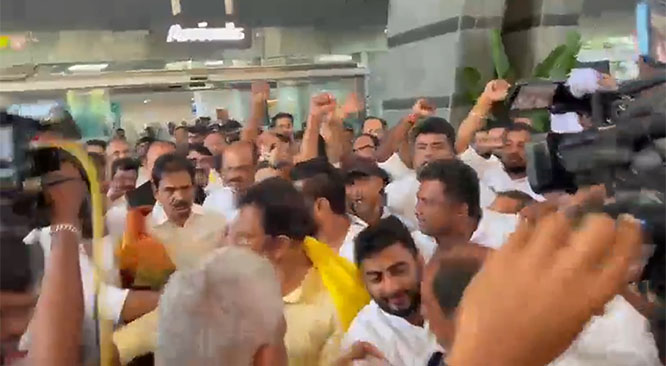
Mangaluru, Dec 3: A group of Congress workers gathered at the Mangaluru International Airport on Wednesday to welcome AICC general secretary K C Venugopal, but the reception quickly turned into a display of support for Deputy Chief Minister D K Shivakumar.

Venugopal arrived in the city to participate in the centenary commemoration of the historic dialogue between Mahatma Gandhi and Narayana Guru. The event, organised by the Sivagiri Mutt, Varkala, in association with the Mangalore University Sri Narayana Guru Study Chair, is being held on the university’s Konaje campus.

KPCC general secretary Mithun Rai and several party workers had assembled at the airport to receive Venugopal. However, the moment he stepped out, workers began raising slogans backing Shivakumar.

The university programme will be inaugurated by Chief Minister Siddaramaiah.

This show of support comes just a day after Siddaramaiah remarked that Shivakumar would lead the government “when the high command decides.” The chief minister made the comment after a breakfast meeting at Shivakumar’s residence—another public display of camaraderie between the two leaders amid ongoing attempts by the party high command to downplay their leadership rivalry.

Comments

Add new comment

  • Coastaldigest.com reserves the right to delete or block any comments.
  • Coastaldigset.com is not responsible for its readers’ comments.
  • Comments that are abusive, incendiary or irrelevant are strictly prohibited.
  • Please use a genuine email ID and provide your name to avoid reject.