Rs 35-lakh cr Union Budget to spur growth leaves little for the poor

Agencies
February 2, 2021

India's $500 billion budget to spur growth leaves little for the poor - The  Economic Times

Feb 2: A mammoth spending plan of almost $500 billion announced by Prime Minister Narendra Modi’s government is expected to jump-start growth in an economy battered by the coronavirus pandemic, but may not be enough to make a dent in the rising unemployment and poverty India has battled.

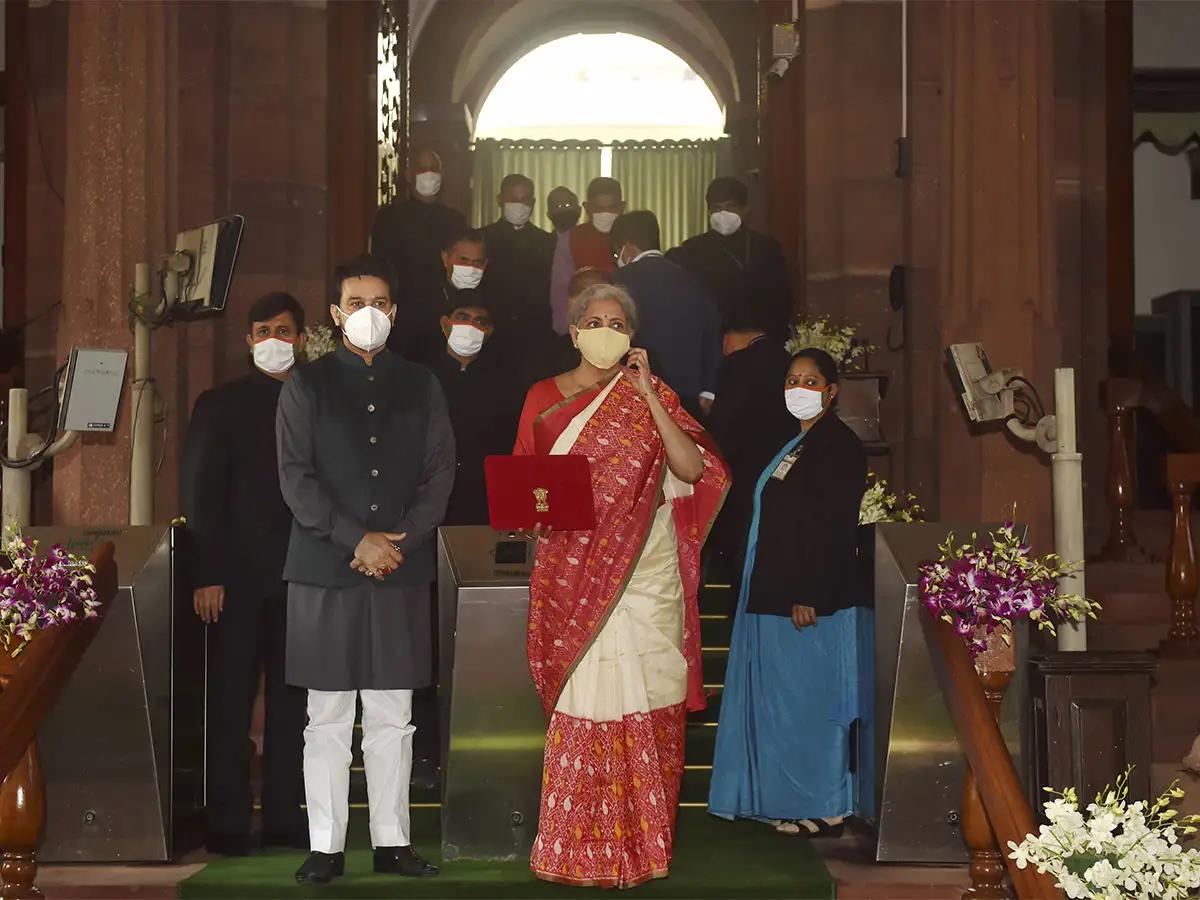
Finance Minister Nirmala Sitharaman on Monday unveiled a national budget that will cause the fiscal deficit to balloon to a much higher-than-expected 9.5% in the current year ending March on the added expenditures. Stock market investors cheered the plan, hoping for an economic resurgence and celebrating the absence of new taxes on the wealthy and corporations, while bonds tumbled on worries about the record deficit.

Still, the budget -- among India’s most highly anticipated and closely watched annual events -- didn’t have major proposals to address the job losses, hunger and rising pressures on the farming and rural sectors. In fact, the ballooning deficit will force the Modi government to curb spending on some rural programs in the coming fiscal year.

Modi cut back the budgetary allocation for rural development, which includes a jobs guarantee program, spending for rural roads and pension for widows, by 10% to Rs 1.95 lakh crore in the year starting April. That will help him boost investments in creating assets by 26% and keep the overall spending little changed at nearly Rs 35 lakh crore ($480 billion) from a year ago.

“The central intent has been to use expansionary fiscal policy to support growth, sidestepping concerns over debt sustainability and sovereign rating,” said Abheek Barua, chief economist at HDFC Bank Ltd. “That said, the budget does not adequately address concerns over inequitable growth which has been a worry across the globe due to the pandemic.”

India’s budget offers a look at the new challenges emerging nations must now contend with after coronavirus lockdowns upended the lives of daily wage earners worldwide. Unemployment in India reached 9.1% in December and 85 million people are estimated to have fallen into the ranks of the newly poor, particularly migrant workers who returned to villages.

While the government didn’t make major changes to personal income taxes it also didn’t give much to the middle class and the poor, who were expecting some relief from the budget, Barua said.

The government has “stretched its resources to deliver for the most vulnerable sections of our society – the poorest of the poor,” Sitharaman said in her budget speech. Spending on infrastructure development will again generate employment, she said.

What Bloomberg Economics Says...

“The budget plans should deliver a strong fiscal boost that is likely to further strengthen the recovery. The favourable shift in the composition of spending toward capital expenditure raises the chances of virtuous cycle of high growth, enhanced tax buoyancy and a reduction in fiscal deficits taking hold over the medium term,” said Abhishek Gupta, India economist.

The new proposals also come as the government faces widespread anger from farmers, whose protests against market reforms overwhelmed parts of the capital New Delhi last week. Despite that there were no measures announced for them in the government’s plan.

The proposed increase in capital expenditure is coming at the expense of non-capital expenditure, keeping aggregate spending the same, Amit Basole, who teaches at the privately run Azim Premji University, said. This shift is desirable in normal times, but in these times, leaves a massive livelihoods crisis unaddressed, he said.

Bad Bank

Meanwhile, the government sought to bolster the nation’s financial stability, with plans to set up a company to manage a growing pile of bad loans. The idea has been debated by policy makers for more than three years and is aimed at culling out soured debt off lenders’ balance sheets and creating room for faster lending.

The bad bank will include such soured assets and will be sold on to investors at a reduced price at a time Indian lenders are struggling with one of the world’s worst bad-loan ratios. Still, the budget offered few further details on how some of these steps would be achieved.

The budget will be followed by the Reserve Bank of India’s rate decision Friday, with expectations for policy makers to possibly resume interest rate cuts as inflation cools.

“The government is fully prepared to support and facilitate the economy’s reset,” Sitharaman said. “This budget provides every opportunity for our economy to rise and capture the pace it needs for a sustainable growth.”

Among other spending increases, India said it would hike its health expenditure by a massive 137%, attempting to improve an under-resourced public system that has struggled to manage the world’s second-largest Covid-19 outbreak.

The fiscal deficit next year is expected at 6.8% of gross domestic product, Sitharaman said. That’s wider than the 5.5% forecast in a Bloomberg survey. The administration will borrow about Rs 12 lakh crore to meet the shortfall.

Sitharaman had pledged before Monday that the government would look beyond fiscal deficits in its aim to revive Asia’s third-largest economy, which is expected to outpace the global recovery.

The government’s annual economic report card, released Friday, forecast an 11% rebound in the coming fiscal, following an estimated 7.7% contraction in the current year.

“This is not a populist budget, there is no major attempt to redistribute incomes by increasing taxes on high income groups,” said Prabhat Awasthi, managing director and country head of India at Nomura Holdings Inc. “It prioritized growth over fiscal prudence. Equity markets have loved it and bonds have sold off.”

Comments

Add new comment

  • Coastaldigest.com reserves the right to delete or block any comments.
  • Coastaldigset.com is not responsible for its readers’ comments.
  • Comments that are abusive, incendiary or irrelevant are strictly prohibited.
  • Please use a genuine email ID and provide your name to avoid reject.
News Network
December 3,2025

indigo.jpg

IndiGo, India’s largest airline, is battling one of its worst operational disruptions in recent years, with hundreds of delays and cancellations throwing domestic travel into chaos.

Government data on Tuesday showed its on-time performance plunging to 35%, an unusual dip for a carrier long associated with punctuality.

By Wednesday afternoon, airports in Delhi, Mumbai, Bengaluru and Hyderabad had collectively reported close to 200 cancellations, stranding travellers across the country.

Crew Shortage After New Duty Norms

A major trigger behind the meltdown is a severe crew shortage, especially among pilots, following the rollout of revised Flight Duty Time Limitation (FDTL) norms last month.

The rules mandate longer rest hours and more humane rosters — a shift IndiGo has struggled to incorporate across its vast network.

Sources said several flights were grounded due to lack of cabin crew, while some delays stretched upwards of eight hours.

With IndiGo controlling over 60% of India’s domestic aviation market, the ripple effect has impacted airports nationwide.

IndiGo Issues Apology, Lists “Compounding Factors”

In a statement, IndiGo acknowledged the large-scale disruption:

“We sincerely apologise to customers. A series of unforeseen operational challenges — technology glitches, winter schedule changes, adverse weather, system congestion and updated FDTL norms — created a compounding impact that could not have been anticipated.”

To stabilise operations, the airline has begun calibrated schedule adjustments for the next 48 hours, aiming to restore punctuality. Affected passengers are being offered refunds or alternate travel arrangements, IndiGo said.

What the FDTL Rules Require

The FDTL norms, designed to reduce pilot fatigue, cap duty and flying hours as follows:
•    Maximum 8 hours of flying per day
•    35 hours per week
•    125 hours per month
•    1,000 hours per year

Crew must also receive rest equalling twice the flight duration, with a minimum 10-hour rest period in any 24-hour window.

The DGCA introduced these limits to enhance flight safety.

Hyderabad: 33 Flights Cancelled, Long Queues Reported

Hyderabad’s Rajiv Gandhi International Airport saw heavy early-morning crowds as 33 IndiGo flights (arrivals and departures) were cancelled.

The airport clarified on X that operations were normal, advising passengers to contact IndiGo directly for latest flight status.

Cancellations included flights to and from Visakhapatnam, Goa, Ahmedabad, Delhi, Bengaluru, Chennai, Madurai, Hubli, Bhopal and Bhubaneswar.

Bengaluru: 42 Flights Disrupted

Bengaluru’s Kempegowda International Airport recorded 42 cancellations — 22 arrivals and 20 departures — affecting routes to Delhi, Mumbai, Chennai, Hyderabad, Goa, Kolkata and Lucknow.

Passengers Vent on Social Media

Irate travellers took to X to share their experiences. One passenger stranded in Hyderabad wrote: “I have been here since 3 a.m. and missed an important meeting.”

Another said: “My flight was pushed from 1:55 PM to 2:55 PM and now 4:35 PM. I was informed only three minutes before entering the airport.”

Delhi Airport Hit by Tech Glitch

At Delhi Airport, the disruption deepened due to a slowdown in the Amadeus system — used for reservations, check-ins and departure control.

The technical issue led to longer queues and sluggish processing, adding to delays already worsened by staff shortages.

Comments

Add new comment

  • Coastaldigest.com reserves the right to delete or block any comments.
  • Coastaldigset.com is not responsible for its readers’ comments.
  • Comments that are abusive, incendiary or irrelevant are strictly prohibited.
  • Please use a genuine email ID and provide your name to avoid reject.
News Network
December 2,2025

A major upgrade in safety and monitoring is planned for Haj 2026, with every Indian pilgrim set to receive a Haj Suvidha smart wristband linked to the official Haj Suvidha mobile app. The initiative aims to support pilgrims—especially senior citizens—who may struggle with smartphones during the 45-day journey.

What the Smart Wristband Will Do

Officials said the device will come with:
•    Location tracking
•    Pedometer
•    SOS emergency button
•    Qibla compass
•    Prayer timings
•    Basic health monitoring

SP Tiwari, secretary of the UP State Haj Committee, said the goal is to make the pilgrimage safer and more comfortable.

“Most Hajis are elderly and not comfortable with mobile apps,” he said. “The smartwatch will help locate pilgrims who forget their way or cannot communicate their location.”

The wristbands will be monitored by the Consulate General of India in Saudi Arabia, similar to mobile tracking via the Haj Suvidha App.

Free Distribution and Training

•    Smart wristbands will be given free of cost.
•    Training for pilgrims will be conducted between January and February 2026.
•    Sample units will reach state Haj committees soon.
•    Final devices will be distributed as pilgrims begin their journey.

New Rules for Accommodation

Two major decisions have also been finalised for Haj 2026:
1.    Separate rooms for men and women – including married couples. They may stay on the same floor but must occupy different rooms, following stricter Saudi guidelines.
2.    Cooking banned – gas cylinders will not be allowed; all meals will be provided through official catering services arranged by the Haj Committee of India.

These decisions were finalised during a meeting of the Haj Committee of India and state representatives in Mumbai.

Haj Suvidha App Launched Earlier

The government launched the Haj Suvidha App in 2024, offering:

•    Training modules
•    Accommodation and flight details
•    Baggage information
•    SOS and translation tools
•    Grievance redressal

Haj 2026 Quota and Key States

•    India’s total Haj quota for 2026: 1,75,025 pilgrims
•    70% (1,25,000) allotted to the Haj Committee of India
•    30% (around 50,000) reserved for Haj Group Organisers

Uttar Pradesh has the largest allocation (around 30,000 seats), though approximately 18,000 pilgrims are expected to go this year. States with high pilgrim numbers include Kerala, Maharashtra and Gujarat.

Dates of Haj 2026

The pilgrimage is scheduled to take place from 24 May to 29 May, 2026 (tentative).
Haj is one of the five pillars of Islam and is mandatory for Muslims who meet the required conditions.

Comments

Add new comment

  • Coastaldigest.com reserves the right to delete or block any comments.
  • Coastaldigset.com is not responsible for its readers’ comments.
  • Comments that are abusive, incendiary or irrelevant are strictly prohibited.
  • Please use a genuine email ID and provide your name to avoid reject.
coastaldigest.com news network
November 29,2025

health1.jpg

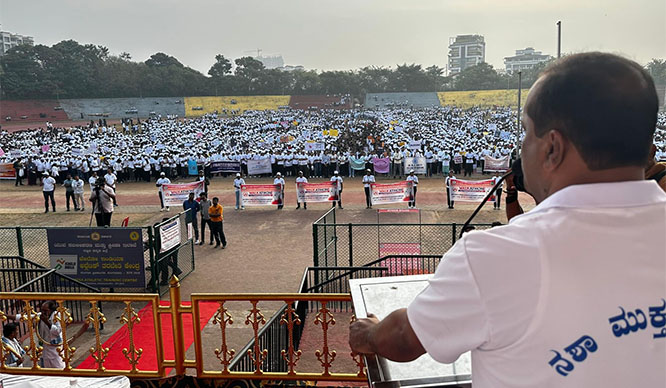
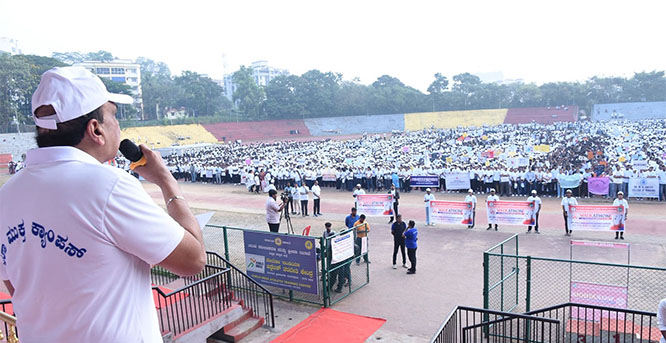
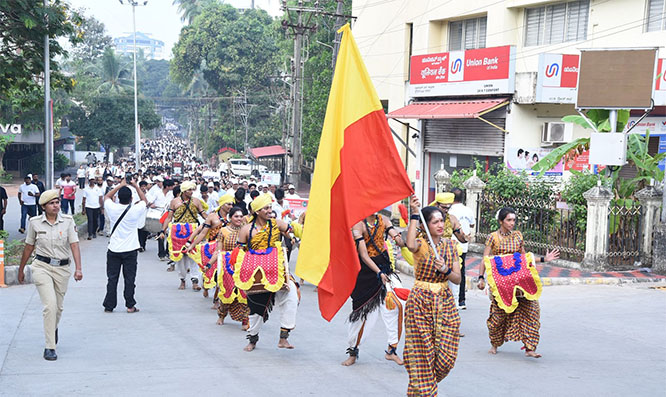
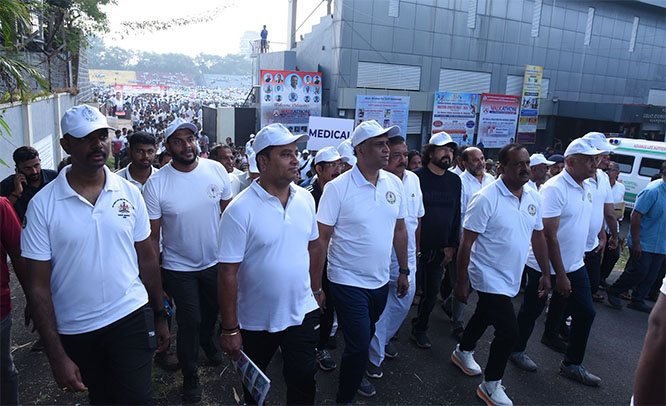
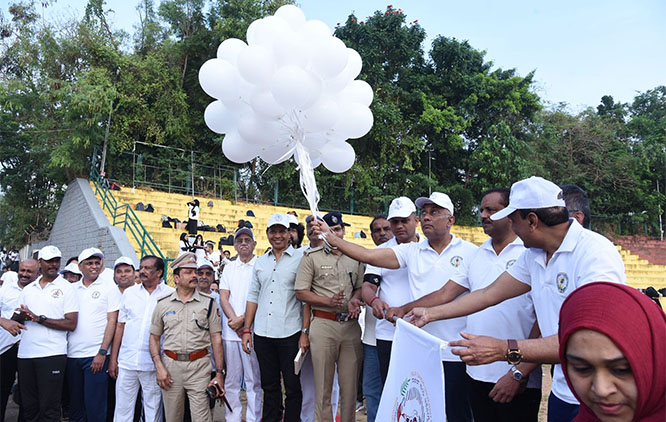
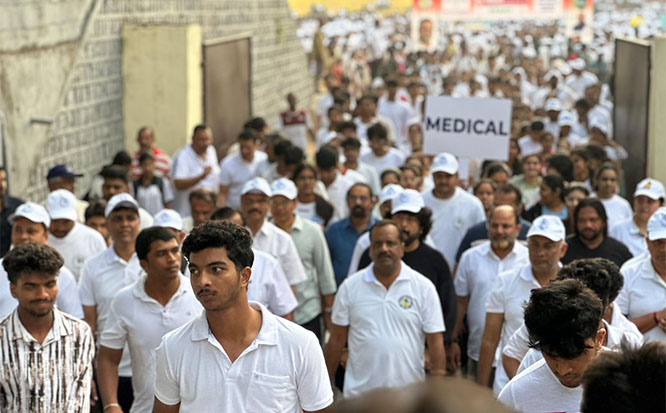
Mangaluru, Nov 29: Around 12,500 healthcare students from Medical, Dental, AYUSH, Pharmacy, Nursing, Physiotherapy and Allied Health Sciences colleges of Dakshina Kannada, affiliated to Rajiv Gandhi University of Health Sciences (RGUHS), took part in a massive walkathon to promote awareness on Organ Donation and Nasha Mukth Bharat.

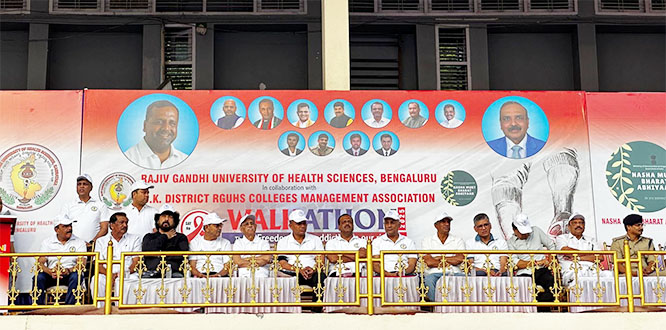
The inaugural ceremony was held at Mangala Stadium. Dr Bhagavan B C, Hon’ble Vice-Chancellor of RGUHS, delivered the welcome address. The walkathon was flagged off by Shri U T Khader, Hon’ble Speaker of the Karnataka Legislative Assembly, and presided over by Shri Dinesh Gundu Rao, Hon’ble Minister for Health, Family Welfare and Dakshina Kannada District In-charge. Dakshina Kannada MP Shri Brijesh Chowta also addressed the students.

Music director Guru Kiran, MLA Dr Bharat Shetty (Mangalore North), Police Commissioner Shri Sudheer Kumar Reddy, Shri Manjunath Bhandary and Shri Harish Kumar were among those present.

Institution heads including Dr Haji U K Monu (Kanachur Colleges), Dr Shantharam Shetty (Tejaswini College), Dr Bhaskar Shetty (City Group of Colleges), Mr Abdul Rahiman (Kanachur Institute of Medical Sciences), and the District Health Officer, Mangalore, also participated.

The vote of thanks was delivered by Prof U T Ifthikar Fareed, Syndicate Member, RGUHS.

The event was organised by Dr U T Ifthikar Ali and Dr Shiva Sharan (Syndicate Members), Prof Vaishali (Senate Member), Prof Mohammad Suhail (Chairman, BOS Physiotherapy), Dr Sharan Shetty (Former Senate Member), along with principals and faculty of various colleges.

Students marched from Mangala Stadium to Karavali Grounds via MCC and Lalbagh signal. The event set a record as one of the largest gatherings of healthcare students for a social cause in the RGUHS Dakshina Kannada Zone.

health7.jpg

health6.jpg

health5.jpg

health4.jpg

health3.jpg

health2.jpg

Comments

Add new comment

  • Coastaldigest.com reserves the right to delete or block any comments.
  • Coastaldigset.com is not responsible for its readers’ comments.
  • Comments that are abusive, incendiary or irrelevant are strictly prohibited.
  • Please use a genuine email ID and provide your name to avoid reject.