SC transfers Gyanvapi Masjid case from Varanasi civil court to ‘experienced’ district judge

News Network
May 20, 2022

The Supreme Court on Friday, 20 May directed that the Gyanvapi mosque case should be transferred from the civil judge in Varanasi, where it is currently being heard, to the court of the district judge Varanasi – who is "more senior and experienced" and will be better placed to address the complex issues in the matter.

The bench of the apex court headed by Justice DY Chandrachud also ordered that:

•    The application filed by the masjid committee under Order 7 Rule 11 of the Code of Civil Procedure – arguing the suit by "Hindu" devotees is barred by the Places of Worship Act – will be decided on priority by district judge

•    The Supreme Court's Interim order dated 17 May shall continue to remain in operation pending the disposal of the Order 7 Rule 11 application, and for a further period of 8 weeks, to allow any party to take necessary steps.

•    If adequate arrangements for wazu (ritual washing) have not been made, then district magistrate in consultation with masjid committee should make proper arrangements.

•    The order of civil judge dated 16 May (for sealing) stands subsumed by the Supreme Court's order of 17 May, which clarified that while the area where an alleged 'Shivling' was stated to be found

The bench of Justices DY Chandrachud, Surya Kant and PS Narasimha was hearing the pleas by the masjid committee against the orders of the Varanasi court, including the original order allowing a video survey of the Gyanvapi mosque as well as the order to seal part of the mosque where a 'Shivling' was allegedly found.

The masjid committee argues that the entire case is barred because of the Places of Worship Act 1991, which says that there can be no conversion of, or change to the character of, a place of worship which has been in existence since before 15 August 1947.

The masjid committee has challenged the maintainability of the case in the Varanasi court under Order 7 Rule 11 of the Code of Civil Procedure, which bars any suit where there is no cause of action. The Varanasi court instead of considering this issue at the outset, had allowed the video survey and passed several other orders.

The apex court on 19 May had directed the Varanasi civil court to "desist from taking any further action" till it completed its hearings.

Senior advocate Huzefa Ahmadi, representing the masjid committee, argued that things "need to be nipped in the bud." He argued that the orders of the Varanasi court has led to an alteration of a status quo at the Gyanvapi mosque which has been in place for the last 500 years.

Ahmadi pointed to the way in which the report of the survey commission was leaked by lawyers for the Hindu plaintiffs on Thursday evening to argue that there was "a design" to change the status quo which had been in place previously.

Ahmadi noted that Section 3 of the Places of Worship Act – which bars the conversion of "any place of worship of any religious denomination or any section thereof into a place of worship of a different section of the same religious denomination or of a different religious denomination or any section thereof" – has no exceptions provided to it.

Justice Chandrachud suggested that a survey to assess the religious character of a particular site would not contravene Sections 3 and 4 of the Places of Worship Act.

Ahmadi contended that if such surveys were allowed to be conducted, then this would defeat the very purpose of the 1991 Act.

The bench did not go further into this issue, saying it would need to be taken up by the district judge when considering the Order 7 Rule 11 issue, and could be revisited in the Supreme Court when it takes the matter up again after its vacations.

Ahmadi also asked the court to allow worshippers in the mosque access to the taps in the area sealed because a 'Shivling' was allegedly found there, so that they could perform wazu, ie ritual washing. Solicitor General Tushar Mehta, on behalf of the State of Uttar Pradesh, objected to this saying that it could lead to a law and order problem.

The judges sought to arrive at a solution for the problem by including the direction in their order that arrangements for wazu would have to be made by the district magistrate.

What is This Case About?

Five Hindu women have sought round-the-year access to pray at “a shrine behind the western wall of the mosque complex”. The site is currently made open for Hindu prayers once a year.

A Varanasi court had in April ordered a video inspection of the site, but the survey could not take place as the mosque committee opposed the videography inside the mosque, and accused Advocate Commissioner Ajay Kumar Mishra of bias and demanded his replacement.

The local court, however, on Thursday, 12 May, ordered that the survey work will continue, and instead of replacing Mishra, appointed two more lawyers — Vishal Kumar Singh and Ajay Singh — to accompany him.

The Allahabad High Court refused to stay this order despite it being argued by the masjid committee that the mosque was protected by the Places of Worship Act 1991, resulting in the pleas at the Supreme Court.

On Monday, 16 May, the Varanasi court ordered the sealing of part of the mosque on the basis that a 'Shivling' had been found on the premises. This order was also challenged by the masjid committee on Tuesday.

The Supreme Court on Tuesday, 17 May, issued notice on pleas challenging the orders of a district court regarding the Gyanvapi Mosque in Varanasi, and passed an interim order that while the area within the mosque where an alleged 'Shivling' was said to be found should be protected, Muslims must not be restricted from entering and praying in the mosque.

Following this interim order, the Hindu plaintiffs, through their advocate Vishnu Shankar Jain, filed an application in the Varanasi court have sought the razing of the wall and the removal of the resulting debris, in order for a further survey of the area where the alleged 'Shivling' was found.

The report submitted by the Varanasi court-appointed commissioners was released by the Hindu devotees' lawyers on 19 May.

The key findings from the survey – including the alleged discovery of Hindu symbols on the architecture as well as the structure in a pool in the mosque termed a Shivling by the plaintiffs and a fountain by the defendants – can be found here.

Hindu Sena president Vishnu Gupta has approached the Supreme Court as an intervenor in the masjid committee's case, saying that the Gyanvapi Mosque is not protected by the Places of Worship Act, under Section 4(3) of the Act.


Comments

Add new comment

  • Coastaldigest.com reserves the right to delete or block any comments.
  • Coastaldigset.com is not responsible for its readers’ comments.
  • Comments that are abusive, incendiary or irrelevant are strictly prohibited.
  • Please use a genuine email ID and provide your name to avoid reject.
News Network
December 6,2025

pilot.jpg

New Delhi: IndiGo, India’s largest airline, faced major operational turbulence this week after failing to prepare for new pilot-fatigue regulations issued by the Directorate General of Civil Aviation (DGCA). The stricter rules—designed to improve flight safety—took effect in phases through 2024, with the latest implementation on November 1. IndiGo has acknowledged that inadequate roster planning led to widespread cancellations and delays.

Below are the key DGCA rules that affected IndiGo’s operations:

1. Longer Mandatory Weekly Rest

Weekly rest for pilots has been increased from 36 hours to 48 hours.

The government says the extended break is essential to curb cumulative fatigue. This rule remains in force despite the current crisis.

2. Cap on Night Landings

Pilots can now perform only two night landings per week—a steep reduction from the earlier limit of six.

Night hours, defined as midnight to early morning, are considered the least alert period for pilots.

Given the disruptions, this rule has been temporarily relaxed for IndiGo until February 10.

3. Reduced Maximum Night Flight Duty

Flight duty that stretches into the night is now capped at 10 hours.

This measure has also been kept on hold for IndiGo until February 10 to stabilize operations.

4. Weekly Rest Cannot Be Replaced With Personal Leave

Airlines can no longer count a pilot’s personal leave as part of the mandatory 48-hour rest.

Pilots say this closes a loophole that previously reduced actual rest time.

Currently, all airlines are exempt from this rule to normalise travel.

5. Mandatory Fatigue Monitoring

Airlines must submit quarterly fatigue reports along with corrective actions to DGCA.

This system aims to create a transparent fatigue-tracking framework across the industry.

The DGCA has stressed that these rules were crafted to strengthen flight safety and align India with global fatigue-management standards. The temporary relaxations are expected to remain until February 2025, giving IndiGo time to stabilise its schedules and restore normal air travel.

Comments

Add new comment

  • Coastaldigest.com reserves the right to delete or block any comments.
  • Coastaldigset.com is not responsible for its readers’ comments.
  • Comments that are abusive, incendiary or irrelevant are strictly prohibited.
  • Please use a genuine email ID and provide your name to avoid reject.
News Network
December 6,2025

pilot.jpg

New Delhi: IndiGo, India’s largest airline, faced major operational turbulence this week after failing to prepare for new pilot-fatigue regulations issued by the Directorate General of Civil Aviation (DGCA). The stricter rules—designed to improve flight safety—took effect in phases through 2024, with the latest implementation on November 1. IndiGo has acknowledged that inadequate roster planning led to widespread cancellations and delays.

Below are the key DGCA rules that affected IndiGo’s operations:

1. Longer Mandatory Weekly Rest

Weekly rest for pilots has been increased from 36 hours to 48 hours.

The government says the extended break is essential to curb cumulative fatigue. This rule remains in force despite the current crisis.

2. Cap on Night Landings

Pilots can now perform only two night landings per week—a steep reduction from the earlier limit of six.

Night hours, defined as midnight to early morning, are considered the least alert period for pilots.

Given the disruptions, this rule has been temporarily relaxed for IndiGo until February 10.

3. Reduced Maximum Night Flight Duty

Flight duty that stretches into the night is now capped at 10 hours.

This measure has also been kept on hold for IndiGo until February 10 to stabilize operations.

4. Weekly Rest Cannot Be Replaced With Personal Leave

Airlines can no longer count a pilot’s personal leave as part of the mandatory 48-hour rest.

Pilots say this closes a loophole that previously reduced actual rest time.

Currently, all airlines are exempt from this rule to normalise travel.

5. Mandatory Fatigue Monitoring

Airlines must submit quarterly fatigue reports along with corrective actions to DGCA.

This system aims to create a transparent fatigue-tracking framework across the industry.

The DGCA has stressed that these rules were crafted to strengthen flight safety and align India with global fatigue-management standards. The temporary relaxations are expected to remain until February 2025, giving IndiGo time to stabilise its schedules and restore normal air travel.

Comments

Add new comment

  • Coastaldigest.com reserves the right to delete or block any comments.
  • Coastaldigset.com is not responsible for its readers’ comments.
  • Comments that are abusive, incendiary or irrelevant are strictly prohibited.
  • Please use a genuine email ID and provide your name to avoid reject.
News Network
December 3,2025

arrival.jpg

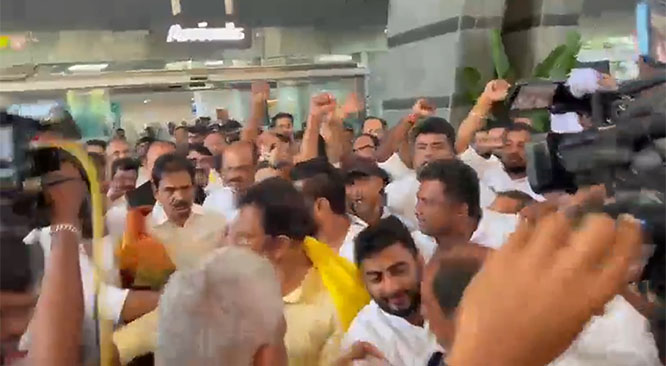
Mangaluru, Dec 3: A group of Congress workers gathered at the Mangaluru International Airport on Wednesday to welcome AICC general secretary K C Venugopal, but the reception quickly turned into a display of support for Deputy Chief Minister D K Shivakumar.

Venugopal arrived in the city to participate in the centenary commemoration of the historic dialogue between Mahatma Gandhi and Narayana Guru. The event, organised by the Sivagiri Mutt, Varkala, in association with the Mangalore University Sri Narayana Guru Study Chair, is being held on the university’s Konaje campus.

KPCC general secretary Mithun Rai and several party workers had assembled at the airport to receive Venugopal. However, the moment he stepped out, workers began raising slogans backing Shivakumar.

The university programme will be inaugurated by Chief Minister Siddaramaiah.

This show of support comes just a day after Siddaramaiah remarked that Shivakumar would lead the government “when the high command decides.” The chief minister made the comment after a breakfast meeting at Shivakumar’s residence—another public display of camaraderie between the two leaders amid ongoing attempts by the party high command to downplay their leadership rivalry.

Comments

Add new comment

  • Coastaldigest.com reserves the right to delete or block any comments.
  • Coastaldigset.com is not responsible for its readers’ comments.
  • Comments that are abusive, incendiary or irrelevant are strictly prohibited.
  • Please use a genuine email ID and provide your name to avoid reject.