Is second Covid wave over? Positivity rate below 5% for two weeks but experts say end still far

News Network
June 21, 2021

New Delhi, June 21: India on Monday crossed the important milestone of a Covid positivity rate of less than 5 per cent for 14 consecutive days, conforming to the WHO’s recommended requirement for a region to reopen, but experts were wary of declaring the devastating second wave over.

With 53,256 new coronavirus infections, the lowest in 88 days, and a positivity rate of 3.83 per cent, it would seem the present phase of the Covid-19 crisis is over and it is a good time to lift instructions.

This optimistic picture, however, must be edged with abundant caution, said several scientists, citing the emergence of new variants, the still high absolute number of cases, the many districts where positivity rate remains over 5 per cent and concerns over the reliability of data.  

“With the current positivity rate at less than 5 per cent, India’s Covid-19 second wave is on the wane as quickly as it rushed to its peak, but the end of it may yet be far away as more transmissible new variants such as Delta plus variant are emerging,” said Naga Suresh Veerapu, associate professor at the School of Natural Sciences (SoNS), Shiv Nadar University, Delhi NCR. 

The Delta plus variant has been formed due to a mutation in the Delta or B.1.617.2 variant, first identified in India and considered one of the drivers of the second wave in the country and also in several others including the UK.  

The test positivity rate or TPR -- the percentage of all coronavirus tests performed that turn out to be positive -- is an important metric through which the public health system keeps tabs on the level of Covid transmission.  

The WHO recommends that test positivity should remain at 5 per cent or lower for 14 days before countries or regions reopen.

In February this year, the country was celebrating the end of the first wave and conveniently ignored an imminent second wave, Veerapu said.  

“The Delta variant that emerged in March spread across the different parts of India, then cases surged to the peak yielding a second wave. The second wave conjoined with the first when the latter was at 1 per cent positivity rate,” he told PTI.    

Public policy expert Chandrakant Lahariya added that while the cases are on the decline, the absolute number of cases are still very high.  

 “While the national level test positivity rate has come down, there are still many districts where TPR is above 5 per cent,” the Delhi-based physician-epidemiologist and health systems expert told PTI.

“Therefore, before saying that the second wave is over, I would like to wait for the TPR to come down below 5 per cent everywhere and sustain for two weeks or longer,” he said.

Scientist Gautam Menon agreed with Lahariya, noting that some states such as Kerala are still seeing positivity rates over 5 per cent. He added that it is unclear whether this reflects just better testing than other states or if the situation is still to improve there.  

Positivity rate was 10.84 per cent in Kerala on Sunday.   

According to Health Ministry data on Monday, India’s total tally of Covid-19 cases is 2,99,35,221 (2.99 crore/29.9 million) while active cases have reduced to 7,02,887.  

The second wave of the pandemic overwhelmed the healthcare system of the country, leaving hospitals struggling to cope with the surge in cases and critical drugs and oxygen in short supply. Infections have now slowed down and restrictions have been relaxed in most states. 

Agreeing that the drop in India’s cases has been quite dramatic, Menon noted, “From all we know, this is a genuine decline, both in urban and rural India.”  

“There is no strict definition of a ‘wave’, let alone of how and when it might be ending, but this is a good time as any to consider opening up, although with caution,” Menon, professor, Departments of Physics and Biology, Ashoka University in Haryana, told PTI.  

The experts also believe test positivity rates provide valuable information only if testing is broadly accessible across all regions.  

“Test positivity, when these tests are carried out on a random sample of the population and in sufficient quantity, is likely the best metric to dictate opening up, although we must be careful about local pockets where the level of infections have been lower than average and where the disease could still take off,” said Menon.  

“What we need to remember is that for a country the size of India, we need to have enough attention on the local level,” Lahariya added.  

He explained that Covid-19 is not just any other respiratory illness and decision-making parameters cannot be simple.  

“We know that there are new variants which are more transmissible. We know that human behaviour determines the spread of this virus. Therefore, it is not very relevant if we declare whether the second wave is over or not,” the public policy expert explained.  

“Key is, are we prepared to respond to the rise in cases? That's where the attention has to be,” Lahariya said.  

Widespread concerns about the accuracy of data, relating to both deaths and cases, also need to be factored in, said Menon. 

Though anecdotally, decline in cases appears to be true, media and other reports “suggest that deaths have been severely undercounted, sometimes by a factor of 10”.

“I hope these reports will spur states to be transparent with their numbers,” he said.  

Lahariya said India has sub-optimally performing mechanisms for medical certification of causes of deaths (MCCD). Even before the pandemic, the causes of deaths used to be certified in only one-fourth of registered deaths.  

“Therefore, it is not unthinkable that even in some cases of Covid-19 deaths; deaths have not been certified correctly,” the scientist added.   

Veerapu said asymptomatic people and some with mild symptoms may not even turn up for testing, therefore leading to the underestimation of cases.  

However, he said the waning second wave provides enough opportunities to minimise the spread of the disease.

“We should ramp up the vaccination drive, consolidate the health infrastructure to minimise the impact of the much anticipated third wave, and hone the public health strategies to prevent, control and respond to the third wave,” he added.


Comments

Add new comment

  • Coastaldigest.com reserves the right to delete or block any comments.
  • Coastaldigset.com is not responsible for its readers’ comments.
  • Comments that are abusive, incendiary or irrelevant are strictly prohibited.
  • Please use a genuine email ID and provide your name to avoid reject.
News Network
December 6,2025

pilot.jpg

New Delhi: IndiGo, India’s largest airline, faced major operational turbulence this week after failing to prepare for new pilot-fatigue regulations issued by the Directorate General of Civil Aviation (DGCA). The stricter rules—designed to improve flight safety—took effect in phases through 2024, with the latest implementation on November 1. IndiGo has acknowledged that inadequate roster planning led to widespread cancellations and delays.

Below are the key DGCA rules that affected IndiGo’s operations:

1. Longer Mandatory Weekly Rest

Weekly rest for pilots has been increased from 36 hours to 48 hours.

The government says the extended break is essential to curb cumulative fatigue. This rule remains in force despite the current crisis.

2. Cap on Night Landings

Pilots can now perform only two night landings per week—a steep reduction from the earlier limit of six.

Night hours, defined as midnight to early morning, are considered the least alert period for pilots.

Given the disruptions, this rule has been temporarily relaxed for IndiGo until February 10.

3. Reduced Maximum Night Flight Duty

Flight duty that stretches into the night is now capped at 10 hours.

This measure has also been kept on hold for IndiGo until February 10 to stabilize operations.

4. Weekly Rest Cannot Be Replaced With Personal Leave

Airlines can no longer count a pilot’s personal leave as part of the mandatory 48-hour rest.

Pilots say this closes a loophole that previously reduced actual rest time.

Currently, all airlines are exempt from this rule to normalise travel.

5. Mandatory Fatigue Monitoring

Airlines must submit quarterly fatigue reports along with corrective actions to DGCA.

This system aims to create a transparent fatigue-tracking framework across the industry.

The DGCA has stressed that these rules were crafted to strengthen flight safety and align India with global fatigue-management standards. The temporary relaxations are expected to remain until February 2025, giving IndiGo time to stabilise its schedules and restore normal air travel.

Comments

Add new comment

  • Coastaldigest.com reserves the right to delete or block any comments.
  • Coastaldigset.com is not responsible for its readers’ comments.
  • Comments that are abusive, incendiary or irrelevant are strictly prohibited.
  • Please use a genuine email ID and provide your name to avoid reject.
P A Hameed Padubidri
November 26,2025

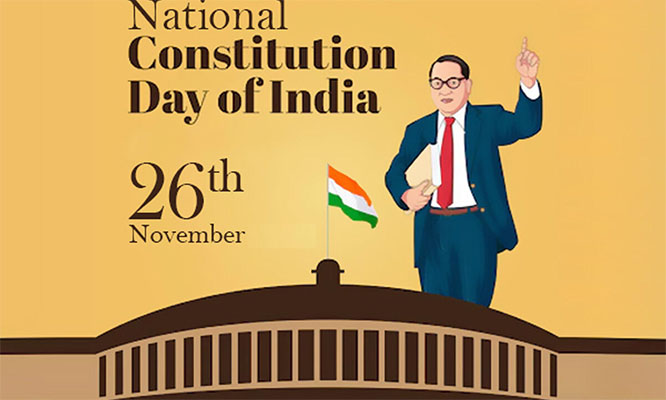
CD.jpg

Constitution Day, also known as Samvidhan Divas, is observed every year on November 26 to honor the adoption of the Constitution of India and to recognize the visionary effort that shaped the world’s largest democracy.

Historical Background

It’s on November 26, 1949, the Constituent Assembly of India formally adopted the Constitution.This date is commemorated to acknowledge the completion of nearly three years of drafting, debate, and refinement.

On January 26, 1950, the Constitution came into force, marking India’s transition from a dominion to a sovereign republic.

The date 26 January was chosen to honor the “Purna Swaraj” declaration made in 1930 that marked the relentless efforts & sacrifices of the many. 

Why Constitution Day is Celebrated

* To honor & remember the framers of the Constitution, especially Dr. B. R. Ambedkar, the Chairman of the Drafting Committee, & many others. 

* To remind the citizens of the values, responsibilities, and rights enshrined in the Constitution.

* To promote constitutional values & literacy among students, institutions, and the general public.

* To reaffirm the nation’s commitment to justice, equality, liberty, fraternity and secular values. 

Vision and Significance of the Constitution

It establishes the fundamental political and legal framework for the nation.

Defines the structure, powers and functions of:
    •    The Executive
    •    The Legislature
    •    The Judiciary
    •    Guarantees a comprehensive set of Fundamental Rights, including:

-Equality before law
-Freedom of speech & expression
-Protection of life and personal liberty
-Freedom of religion
-Embeds Directive Principles of State Policy, guiding governance toward social justice and welfare.
-Introduces Fundamental Duties to ensure civic responsibility among citizens.

Key Features Celebrated on Constitution Day

-The Indian constitution is considered one of the longest written constitutions of the world. It’s systematically drafted considering almost all aspects that properly fits to the country. 

-Blend of multiple global constitutional principles while staying rooted in Indian values and realities.

-Framework that balances Federalism, Secularism, Democracy and Rule of Law. This makes everyone-from President to common man-below the law & are equal in the sight of law. 

-Another feature is that it’s based on built-in mechanisms for amendments, ensuring the Constitution grows with changing needs.

Message of the Day

The core ethos of this  Constitution Day is not merely about looking back at history-it’s a reminder of the continuous duty to protect democratic values, respect diversity and uphold the principles that define India as a sovereign, socialist, secular and democratic republic.

Happy Constitution Day to all my compatriots

Comments

Add new comment

  • Coastaldigest.com reserves the right to delete or block any comments.
  • Coastaldigset.com is not responsible for its readers’ comments.
  • Comments that are abusive, incendiary or irrelevant are strictly prohibited.
  • Please use a genuine email ID and provide your name to avoid reject.
News Network
December 2,2025

A major upgrade in safety and monitoring is planned for Haj 2026, with every Indian pilgrim set to receive a Haj Suvidha smart wristband linked to the official Haj Suvidha mobile app. The initiative aims to support pilgrims—especially senior citizens—who may struggle with smartphones during the 45-day journey.

What the Smart Wristband Will Do

Officials said the device will come with:
•    Location tracking
•    Pedometer
•    SOS emergency button
•    Qibla compass
•    Prayer timings
•    Basic health monitoring

SP Tiwari, secretary of the UP State Haj Committee, said the goal is to make the pilgrimage safer and more comfortable.

“Most Hajis are elderly and not comfortable with mobile apps,” he said. “The smartwatch will help locate pilgrims who forget their way or cannot communicate their location.”

The wristbands will be monitored by the Consulate General of India in Saudi Arabia, similar to mobile tracking via the Haj Suvidha App.

Free Distribution and Training

•    Smart wristbands will be given free of cost.
•    Training for pilgrims will be conducted between January and February 2026.
•    Sample units will reach state Haj committees soon.
•    Final devices will be distributed as pilgrims begin their journey.

New Rules for Accommodation

Two major decisions have also been finalised for Haj 2026:
1.    Separate rooms for men and women – including married couples. They may stay on the same floor but must occupy different rooms, following stricter Saudi guidelines.
2.    Cooking banned – gas cylinders will not be allowed; all meals will be provided through official catering services arranged by the Haj Committee of India.

These decisions were finalised during a meeting of the Haj Committee of India and state representatives in Mumbai.

Haj Suvidha App Launched Earlier

The government launched the Haj Suvidha App in 2024, offering:

•    Training modules
•    Accommodation and flight details
•    Baggage information
•    SOS and translation tools
•    Grievance redressal

Haj 2026 Quota and Key States

•    India’s total Haj quota for 2026: 1,75,025 pilgrims
•    70% (1,25,000) allotted to the Haj Committee of India
•    30% (around 50,000) reserved for Haj Group Organisers

Uttar Pradesh has the largest allocation (around 30,000 seats), though approximately 18,000 pilgrims are expected to go this year. States with high pilgrim numbers include Kerala, Maharashtra and Gujarat.

Dates of Haj 2026

The pilgrimage is scheduled to take place from 24 May to 29 May, 2026 (tentative).
Haj is one of the five pillars of Islam and is mandatory for Muslims who meet the required conditions.

Comments

Add new comment

  • Coastaldigest.com reserves the right to delete or block any comments.
  • Coastaldigset.com is not responsible for its readers’ comments.
  • Comments that are abusive, incendiary or irrelevant are strictly prohibited.
  • Please use a genuine email ID and provide your name to avoid reject.