



Secret India-Pak peace roadmap brokered by top UAE royals

Agencies
March 23, 2021

indopak.jpg

About 24 hours after military chiefs from India and Pakistan surprised the world last month with a rare joint commitment to respect a 2003 cease-fire agreement, the top diplomat of the United Arab Emirates popped over to New Delhi for a quick one-day visit.

The official UAE readout of the Feb. 26 meeting gave few clues of what Foreign Minister Sheikh Abdullah bin Zayed spoke about with Indian counterpart Subrahmanyam Jaishankar, noting they “discussed all regional and international issues of common interest and exchanged views on them.”

Yet behind closed doors, the India-Pakistan cease-fire marked a milestone in secret talks brokered by the UAE that began months earlier, according to officials aware of the situation who asked not to be identified. The cease-fire, one said, is only the beginning of a larger roadmap to forge a lasting peace between the neighbors, both of which have nuclear weapons and spar regularly over a decades-old territory dispute.

The next step in the process, the official said, involves both sides reinstating envoys in New Delhi and Islamabad, who were pulled in 2019 after Pakistan protested India’s move to revoke seven decades of autonomy for the disputed Muslim-majority state of Jammu and Kashmir. Then comes the hard part: Talks on resuming trade and a lasting resolution on Kashmir, the subject of three wars since India and Pakistan became independent from Britain in 1947.

Over the years, India and Pakistan have routinely made peace overtures only to have them quickly fall through, particularly as both sides frequently use the issue to stir up emotions around election time. Officials said expectations were low that the current detente would achieve much beyond the return of envoys and a resumption of trade through their Punjab land border.

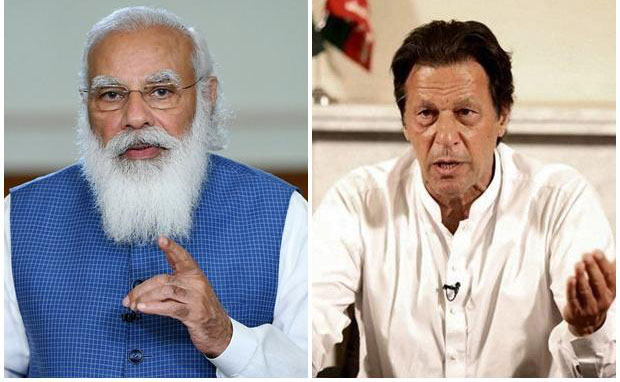
But this process appears to be the most concerted effort in years, and comes as the Biden administration is seeking wider peace talks on Afghanistan -- a place both countries for years have battled for influence. Indian Prime Minister Narendra Modi wants to shore up growth and focus military resources on the border with China, while Pakistan’s leaders are also facing economic woes and looking to make a good impression with the U.S. and other powers.

Pakistan’s Foreign Ministry didn’t comment on the talks or the role of the UAE, while the foreign ministries of India and the UAE had no immediate comment.

Last week Pakistan army chief General Qamar Javed Bajwa asked India “to bury the past and move forward” while saying the military was ready to enter talks to resolve “all our outstanding issues.” The comments came a day after Prime Minister Imran Khan after called for a resolution on Kashmir, which he described as “the one issue that holds us back.”

On Saturday, Modi sent a tweet wishing Khan well after he was diagnosed with Covid-19 -- another sign that relations between the countries are getting warmer.

The UAE, which has historic trade and diplomatic links with India and Pakistan, has taken a more assertive international role under de facto ruler Sheikh Mohammed bin Zayed Al Nahyan. The biggest shift has been in the Middle East where the Gulf Arab state has intervened in conflicts and backed groups and regional leaders. But it has also looked to Asia as it strengthens political alliances beyond its role as a global trade and logistics hub.

India-Pakistan ties were effectively cut off two years ago after a suicide attack in India-controlled Kashmir killed 40 Indian soldiers, prompting Modi’s government to authorize air strikes on alleged terror facilities inside Pakistan. The joint statement last month said the two sides “agreed to address each other’s core issues,” signaling a wider discussion on Kashmir and terrorism.

Several clues over the past few months pointed at the UAE’s role. In November, Jaishankar met bin Zayed and the crown prince on a two-day visit to Abu Dhabi, followed by Pakistan Foreign Minister Shah Mahmood Qureshi the following month. Roughly two weeks before the Feb. 25 announcement, the UAE foreign minister held a phone call with Pakistan Prime Minister Imran Khan “wherein they discussed regional and international issues of interest.” And just days before, India allowed Khan’s aircraft to fly over Indian airspace as he headed to Sri Lanka for a state visit -- a practice suspended since the 2019 hostilities.

After the cease-fire, the UAE was one of a handful of countries to issue a statement welcoming the cease-fire announcement, highlighting the “close historical ties” it has with both India and Pakistan and hailing “the efforts made by both countries to come to this agreement.” In Washington, State Department spokesman Ned Price dodged a question on what role the U.S. played in bringing the two sides together while urging Pakistan to play a constructive role in Afghanistan, Kashmir and other places.

“Obviously Pakistan has an important role to play when it comes to Afghanistan and what takes place across its other border,” Price said on Feb. 25. “So clearly, we will be paying close attention.”

Comments

Add new comment

  • Coastaldigest.com reserves the right to delete or block any comments.
  • Coastaldigset.com is not responsible for its readers’ comments.
  • Comments that are abusive, incendiary or irrelevant are strictly prohibited.
  • Please use a genuine email ID and provide your name to avoid reject.
News Network
December 5,2025

indigoCEO.jpg

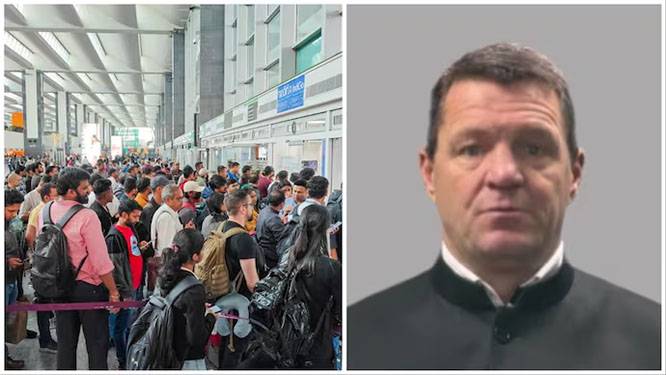
New Delhi, Dec 5: IndiGo CEO Pieter Elbers issued a public apology this evening after more than a thousand flights were cancelled today, making it the "most severely impacted day" in terms of cancellations. The biggest airline of the country cancelled "more than half" of its daily number of flights on Friday, said Elbers. He also said that even though the crisis will persist on Saturday, the airline anticipates fewer than 1,000 flight cancellations.

"Full normalisation is expected between December 10 and 15, though IndiGo cautions that recovery will take time due to the scale of operations," the IndiGo CEO said. 

IndiGo operates around 2,300 domestic and international flights daily.

Pieter Elbers, while apologising for the major inconvenience due to delays and cancellations, said the situation is a result of various causes.

The crisis at IndiGo stems from new regulations that boost pilots' weekly rest requirements by 12 hours to 48 and allow only two night-time landings per week, down from six. IndiGo has attributed the mass cancellations to "misjudgment and planning gaps".

Elbers also listed three lines of action that the airline will adopt to address the issue.

"Firstly, customer communication and addressing your needs, for this, messages have been sent on social media. And just now, a more detailed communication with information, refunds, cancellations and other customer support measures was sent," he said.

The airline has also stepped up its call centre capacity.

"Secondly, due to yesterday's situation, we had customers stranded mostly at the nation's largest airports. Our focus was for all of them to be able to travel today itself, which will be achieved. For this, we also ask customers whose flights are cancelled not to come to the airports as notifications are sent," the CEO said.

"Thirdly, cancellations were made for today to align our crew and planes to be where they need to start tomorrow morning afresh. Earlier measures of the last few days, regrettable, have proven not to be enough, but we have decided today to reboot all our systems and schedules, resulting in the highest numbers of cancellations so far, but imperative for progressive improvements starting from tomorrow," he added.

As airports witnessed chaotic scenes, the Directorate General of Civil Aviation (DGCA) stepped in to grant IndiGo a temporary exemption from stricter night duty rules for pilots. It also allowed substitution of leaves with a weekly rest period. 

Civil Aviation Minister Ram Mohan Naidu has said a high-level inquiry will be ordered and accountability will be fixed.

Comments

Add new comment

  • Coastaldigest.com reserves the right to delete or block any comments.
  • Coastaldigset.com is not responsible for its readers’ comments.
  • Comments that are abusive, incendiary or irrelevant are strictly prohibited.
  • Please use a genuine email ID and provide your name to avoid reject.
News Network
December 6,2025

pilot.jpg

New Delhi: IndiGo, India’s largest airline, faced major operational turbulence this week after failing to prepare for new pilot-fatigue regulations issued by the Directorate General of Civil Aviation (DGCA). The stricter rules—designed to improve flight safety—took effect in phases through 2024, with the latest implementation on November 1. IndiGo has acknowledged that inadequate roster planning led to widespread cancellations and delays.

Below are the key DGCA rules that affected IndiGo’s operations:

1. Longer Mandatory Weekly Rest

Weekly rest for pilots has been increased from 36 hours to 48 hours.

The government says the extended break is essential to curb cumulative fatigue. This rule remains in force despite the current crisis.

2. Cap on Night Landings

Pilots can now perform only two night landings per week—a steep reduction from the earlier limit of six.

Night hours, defined as midnight to early morning, are considered the least alert period for pilots.

Given the disruptions, this rule has been temporarily relaxed for IndiGo until February 10.

3. Reduced Maximum Night Flight Duty

Flight duty that stretches into the night is now capped at 10 hours.

This measure has also been kept on hold for IndiGo until February 10 to stabilize operations.

4. Weekly Rest Cannot Be Replaced With Personal Leave

Airlines can no longer count a pilot’s personal leave as part of the mandatory 48-hour rest.

Pilots say this closes a loophole that previously reduced actual rest time.

Currently, all airlines are exempt from this rule to normalise travel.

5. Mandatory Fatigue Monitoring

Airlines must submit quarterly fatigue reports along with corrective actions to DGCA.

This system aims to create a transparent fatigue-tracking framework across the industry.

The DGCA has stressed that these rules were crafted to strengthen flight safety and align India with global fatigue-management standards. The temporary relaxations are expected to remain until February 2025, giving IndiGo time to stabilise its schedules and restore normal air travel.

Comments

Add new comment

  • Coastaldigest.com reserves the right to delete or block any comments.
  • Coastaldigset.com is not responsible for its readers’ comments.
  • Comments that are abusive, incendiary or irrelevant are strictly prohibited.
  • Please use a genuine email ID and provide your name to avoid reject.
News Network
December 4,2025

indigoflight.jpg

Domestic carrier IndiGo has cancelled over 180 flights from three major airports — Mumbai, Delhi and Bengaluru — on Thursday, December 4, as the airline struggles to secure the required crew to operate its flights in the wake of new flight-duty and rest-period norms for pilots.

While the number of cancellations at Mumbai airport stands at 86 (41 arrivals and 45 departures) for the day, at Bengaluru, 73 flights have been cancelled, including 41 arrivals, according to a PTI report that quoted sources.

"IndiGo cancelled over 180 flights on Thursday at three airports-Mumbai, Delhi and Bengaluru," the source told the news agency.

Besides, it had cancelled as many as 33 flights at Delhi airport for Thursday, the source said, adding, "The number of cancellations is expected to be higher by the end of the day."

The Gurugram-based airline's On-Time Performance (OTP) nosedived to 19.7 per cent at six key airports — Delhi, Mumbai, Chennai, Kolkata, Bengaluru and Hyderabad — on December 3, as it struggled to get the required crew to operate its services, down from almost half of December 2, when it was 35 per cent.

"IndiGo has been facing acute crew shortage since the implementation of the second phase of the FDTL (Flight Duty Time Limitations) norms, leading to cancellations and huge delays in its operations across the airports," a source had told PTI on Wednesday.

Chaos continued at several major airports for the third day on Thursday because of the cancellations.

A spokesperson for the Kempegowda International Airport (KIA) in Bengaluru said that 73 IndiGo flights had been cancelled on Thursday.

At least 150 flights were cancelled and dozens of others delayed on Wednesday, airport sources said, leaving thousands of travellers stranded, according to news agency Reuters.

The Directorate General of Civil Aviation (DGCA) has said it is investigating IndiGo flight disruptions and has asked the airline to submit the reasons for the current situation, as well as its plans to reduce flight cancellations and delays.

It may be mentioned here that the pilots' body, Federation of Indian Pilots (FIP), has alleged that IndiGo, despite getting a two-year preparatory window before the full implementation of new flight duty and rest period norms for cockpit crew, "inexplicably" adopted a "hiring freeze".

The FIP said it has urged the safety regulator, the DGCA, not to approve airlines' seasonal flight schedules unless they have adequate staff to operate their services "safely and reliably" in accordance with the New Flight Duty Time Limitations (FDTL) norms.

In a letter to the DGCA late on Wednesday, the FIP urged the DGCA to consider re-evaluating and reallocating slots to other airlines, which have the capacity to operate them without disruption during the peak holiday and fog season if IndiGo continues to "fail in delivering on its commitments to passengers due to its own avoidable staffing shortages."

Comments

Add new comment

  • Coastaldigest.com reserves the right to delete or block any comments.
  • Coastaldigset.com is not responsible for its readers’ comments.
  • Comments that are abusive, incendiary or irrelevant are strictly prohibited.
  • Please use a genuine email ID and provide your name to avoid reject.
