Secret India-Pak peace roadmap brokered by top UAE royals

Agencies
March 23, 2021

indopak.jpg

About 24 hours after military chiefs from India and Pakistan surprised the world last month with a rare joint commitment to respect a 2003 cease-fire agreement, the top diplomat of the United Arab Emirates popped over to New Delhi for a quick one-day visit.

The official UAE readout of the Feb. 26 meeting gave few clues of what Foreign Minister Sheikh Abdullah bin Zayed spoke about with Indian counterpart Subrahmanyam Jaishankar, noting they “discussed all regional and international issues of common interest and exchanged views on them.”

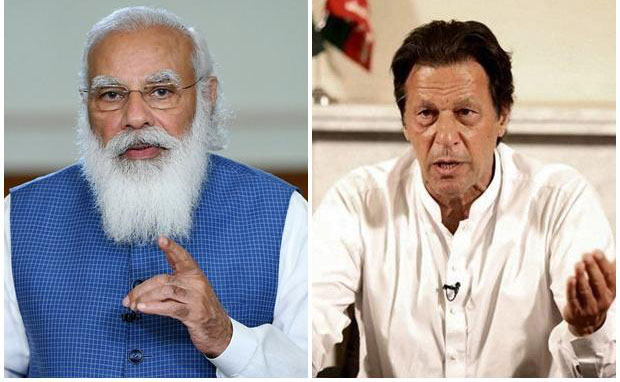
Yet behind closed doors, the India-Pakistan cease-fire marked a milestone in secret talks brokered by the UAE that began months earlier, according to officials aware of the situation who asked not to be identified. The cease-fire, one said, is only the beginning of a larger roadmap to forge a lasting peace between the neighbors, both of which have nuclear weapons and spar regularly over a decades-old territory dispute.

The next step in the process, the official said, involves both sides reinstating envoys in New Delhi and Islamabad, who were pulled in 2019 after Pakistan protested India’s move to revoke seven decades of autonomy for the disputed Muslim-majority state of Jammu and Kashmir. Then comes the hard part: Talks on resuming trade and a lasting resolution on Kashmir, the subject of three wars since India and Pakistan became independent from Britain in 1947.

Over the years, India and Pakistan have routinely made peace overtures only to have them quickly fall through, particularly as both sides frequently use the issue to stir up emotions around election time. Officials said expectations were low that the current detente would achieve much beyond the return of envoys and a resumption of trade through their Punjab land border.

But this process appears to be the most concerted effort in years, and comes as the Biden administration is seeking wider peace talks on Afghanistan -- a place both countries for years have battled for influence. Indian Prime Minister Narendra Modi wants to shore up growth and focus military resources on the border with China, while Pakistan’s leaders are also facing economic woes and looking to make a good impression with the U.S. and other powers.

Pakistan’s Foreign Ministry didn’t comment on the talks or the role of the UAE, while the foreign ministries of India and the UAE had no immediate comment.

Last week Pakistan army chief General Qamar Javed Bajwa asked India “to bury the past and move forward” while saying the military was ready to enter talks to resolve “all our outstanding issues.” The comments came a day after Prime Minister Imran Khan after called for a resolution on Kashmir, which he described as “the one issue that holds us back.”

On Saturday, Modi sent a tweet wishing Khan well after he was diagnosed with Covid-19 -- another sign that relations between the countries are getting warmer.

The UAE, which has historic trade and diplomatic links with India and Pakistan, has taken a more assertive international role under de facto ruler Sheikh Mohammed bin Zayed Al Nahyan. The biggest shift has been in the Middle East where the Gulf Arab state has intervened in conflicts and backed groups and regional leaders. But it has also looked to Asia as it strengthens political alliances beyond its role as a global trade and logistics hub.

India-Pakistan ties were effectively cut off two years ago after a suicide attack in India-controlled Kashmir killed 40 Indian soldiers, prompting Modi’s government to authorize air strikes on alleged terror facilities inside Pakistan. The joint statement last month said the two sides “agreed to address each other’s core issues,” signaling a wider discussion on Kashmir and terrorism.

Several clues over the past few months pointed at the UAE’s role. In November, Jaishankar met bin Zayed and the crown prince on a two-day visit to Abu Dhabi, followed by Pakistan Foreign Minister Shah Mahmood Qureshi the following month. Roughly two weeks before the Feb. 25 announcement, the UAE foreign minister held a phone call with Pakistan Prime Minister Imran Khan “wherein they discussed regional and international issues of interest.” And just days before, India allowed Khan’s aircraft to fly over Indian airspace as he headed to Sri Lanka for a state visit -- a practice suspended since the 2019 hostilities.

After the cease-fire, the UAE was one of a handful of countries to issue a statement welcoming the cease-fire announcement, highlighting the “close historical ties” it has with both India and Pakistan and hailing “the efforts made by both countries to come to this agreement.” In Washington, State Department spokesman Ned Price dodged a question on what role the U.S. played in bringing the two sides together while urging Pakistan to play a constructive role in Afghanistan, Kashmir and other places.

“Obviously Pakistan has an important role to play when it comes to Afghanistan and what takes place across its other border,” Price said on Feb. 25. “So clearly, we will be paying close attention.”


Comments

Add new comment

  • Coastaldigest.com reserves the right to delete or block any comments.
  • Coastaldigset.com is not responsible for its readers’ comments.
  • Comments that are abusive, incendiary or irrelevant are strictly prohibited.
  • Please use a genuine email ID and provide your name to avoid reject.
News Network
November 30,2025

airportmetro.jpg

Udupi: The pontiffs of Sri Paryaya Puttige Mutt, the sacred seat of Jagadguru Shrimad Madhvacharya Moola Samsthanam, have submitted a proposal to the Prime Minister seeking comprehensive development for Udupi district. 

Proposal for International Airport

A key request is the establishment of an international airport. Highlighting that around 1,000 acres of land are available and suitable, the pontiffs noted that the existing Mangalore Airport provides limited international connectivity. They suggested the airport be developed under a Public-Private Partnership (PPP) or as a Greenfield Airport to boost trade, education, healthcare, and spiritual tourism.

Metro and Rapid Transit Connectivity

The proposal also calls for Metro Rail or Rapid Transit between Mangaluru and Udupi. The 55 km coastal stretch experiences heavy daily commuter traffic, causing congestion. The district administration is ready to prepare an initial project report for a Mass Rapid Transit corridor and requested inclusion under national urban mobility programmes to ensure safe, green, and time-efficient regional transport.

Port and Coastal Development

The pontiffs urged the development of an international-standard port with a cruise terminal along Udupi’s coast. They also requested fast-tracking of pending coastal tourism projects and revising Coastal Regulation Zone (CRZ) norms to encourage sustainable infrastructure and hospitality investment.

IT, AI and Technological Infrastructure

Support was sought for an IT and AI Innovation Park with incubation facilities under Digital India and Startup India initiatives. The proposal also emphasized the need for strengthened data security and cloud computing infrastructure to boost India’s technological independence.

Sports and Education Initiatives

The pontiffs requested national sports status for Kambala, along with financial and infrastructure support. They also sought the establishment of an AIIMS in Udupi, a new IIT campus, and approval for an IIM to promote higher education in the district.

Representation to the Prime Minister

Sri Sugunendra Tirtha Pontiff and Sri Sushrendra Tirtha Swamiji represented the pontiffs in submitting the comprehensive development proposal to the Prime Minister during his recent visit.

Comments

Add new comment

  • Coastaldigest.com reserves the right to delete or block any comments.
  • Coastaldigset.com is not responsible for its readers’ comments.
  • Comments that are abusive, incendiary or irrelevant are strictly prohibited.
  • Please use a genuine email ID and provide your name to avoid reject.
News Network
December 2,2025

A major upgrade in safety and monitoring is planned for Haj 2026, with every Indian pilgrim set to receive a Haj Suvidha smart wristband linked to the official Haj Suvidha mobile app. The initiative aims to support pilgrims—especially senior citizens—who may struggle with smartphones during the 45-day journey.

What the Smart Wristband Will Do

Officials said the device will come with:
•    Location tracking
•    Pedometer
•    SOS emergency button
•    Qibla compass
•    Prayer timings
•    Basic health monitoring

SP Tiwari, secretary of the UP State Haj Committee, said the goal is to make the pilgrimage safer and more comfortable.

“Most Hajis are elderly and not comfortable with mobile apps,” he said. “The smartwatch will help locate pilgrims who forget their way or cannot communicate their location.”

The wristbands will be monitored by the Consulate General of India in Saudi Arabia, similar to mobile tracking via the Haj Suvidha App.

Free Distribution and Training

•    Smart wristbands will be given free of cost.
•    Training for pilgrims will be conducted between January and February 2026.
•    Sample units will reach state Haj committees soon.
•    Final devices will be distributed as pilgrims begin their journey.

New Rules for Accommodation

Two major decisions have also been finalised for Haj 2026:
1.    Separate rooms for men and women – including married couples. They may stay on the same floor but must occupy different rooms, following stricter Saudi guidelines.
2.    Cooking banned – gas cylinders will not be allowed; all meals will be provided through official catering services arranged by the Haj Committee of India.

These decisions were finalised during a meeting of the Haj Committee of India and state representatives in Mumbai.

Haj Suvidha App Launched Earlier

The government launched the Haj Suvidha App in 2024, offering:

•    Training modules
•    Accommodation and flight details
•    Baggage information
•    SOS and translation tools
•    Grievance redressal

Haj 2026 Quota and Key States

•    India’s total Haj quota for 2026: 1,75,025 pilgrims
•    70% (1,25,000) allotted to the Haj Committee of India
•    30% (around 50,000) reserved for Haj Group Organisers

Uttar Pradesh has the largest allocation (around 30,000 seats), though approximately 18,000 pilgrims are expected to go this year. States with high pilgrim numbers include Kerala, Maharashtra and Gujarat.

Dates of Haj 2026

The pilgrimage is scheduled to take place from 24 May to 29 May, 2026 (tentative).
Haj is one of the five pillars of Islam and is mandatory for Muslims who meet the required conditions.

Comments

Add new comment

  • Coastaldigest.com reserves the right to delete or block any comments.
  • Coastaldigset.com is not responsible for its readers’ comments.
  • Comments that are abusive, incendiary or irrelevant are strictly prohibited.
  • Please use a genuine email ID and provide your name to avoid reject.
News Network
December 3,2025

indigo.jpg

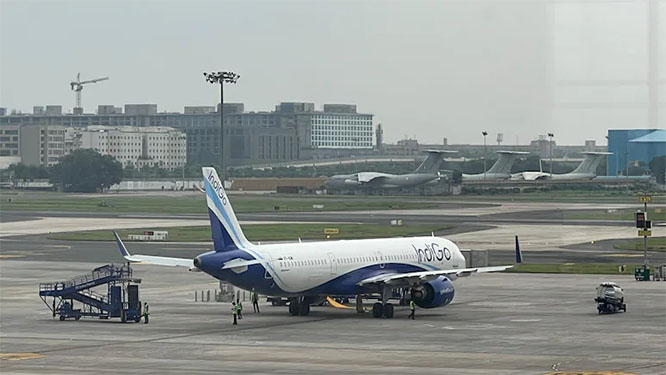
IndiGo, India’s largest airline, is battling one of its worst operational disruptions in recent years, with hundreds of delays and cancellations throwing domestic travel into chaos.

Government data on Tuesday showed its on-time performance plunging to 35%, an unusual dip for a carrier long associated with punctuality.

By Wednesday afternoon, airports in Delhi, Mumbai, Bengaluru and Hyderabad had collectively reported close to 200 cancellations, stranding travellers across the country.

Crew Shortage After New Duty Norms

A major trigger behind the meltdown is a severe crew shortage, especially among pilots, following the rollout of revised Flight Duty Time Limitation (FDTL) norms last month.

The rules mandate longer rest hours and more humane rosters — a shift IndiGo has struggled to incorporate across its vast network.

Sources said several flights were grounded due to lack of cabin crew, while some delays stretched upwards of eight hours.

With IndiGo controlling over 60% of India’s domestic aviation market, the ripple effect has impacted airports nationwide.

IndiGo Issues Apology, Lists “Compounding Factors”

In a statement, IndiGo acknowledged the large-scale disruption:

“We sincerely apologise to customers. A series of unforeseen operational challenges — technology glitches, winter schedule changes, adverse weather, system congestion and updated FDTL norms — created a compounding impact that could not have been anticipated.”

To stabilise operations, the airline has begun calibrated schedule adjustments for the next 48 hours, aiming to restore punctuality. Affected passengers are being offered refunds or alternate travel arrangements, IndiGo said.

What the FDTL Rules Require

The FDTL norms, designed to reduce pilot fatigue, cap duty and flying hours as follows:
•    Maximum 8 hours of flying per day
•    35 hours per week
•    125 hours per month
•    1,000 hours per year

Crew must also receive rest equalling twice the flight duration, with a minimum 10-hour rest period in any 24-hour window.

The DGCA introduced these limits to enhance flight safety.

Hyderabad: 33 Flights Cancelled, Long Queues Reported

Hyderabad’s Rajiv Gandhi International Airport saw heavy early-morning crowds as 33 IndiGo flights (arrivals and departures) were cancelled.

The airport clarified on X that operations were normal, advising passengers to contact IndiGo directly for latest flight status.

Cancellations included flights to and from Visakhapatnam, Goa, Ahmedabad, Delhi, Bengaluru, Chennai, Madurai, Hubli, Bhopal and Bhubaneswar.

Bengaluru: 42 Flights Disrupted

Bengaluru’s Kempegowda International Airport recorded 42 cancellations — 22 arrivals and 20 departures — affecting routes to Delhi, Mumbai, Chennai, Hyderabad, Goa, Kolkata and Lucknow.

Passengers Vent on Social Media

Irate travellers took to X to share their experiences. One passenger stranded in Hyderabad wrote: “I have been here since 3 a.m. and missed an important meeting.”

Another said: “My flight was pushed from 1:55 PM to 2:55 PM and now 4:35 PM. I was informed only three minutes before entering the airport.”

Delhi Airport Hit by Tech Glitch

At Delhi Airport, the disruption deepened due to a slowdown in the Amadeus system — used for reservations, check-ins and departure control.

The technical issue led to longer queues and sluggish processing, adding to delays already worsened by staff shortages.

Comments

Add new comment

  • Coastaldigest.com reserves the right to delete or block any comments.
  • Coastaldigset.com is not responsible for its readers’ comments.
  • Comments that are abusive, incendiary or irrelevant are strictly prohibited.
  • Please use a genuine email ID and provide your name to avoid reject.