From small businesses to farmers, middle India is driving demand

News Network
November 29, 2020

farmers.jpg

New Delhi/Mumbai, Nov 29: Manish Mehra, owner of Washex Hospitality, an industrial laundry service, recently flew from Delhi to Jodhpur, a city in north-western India, to win a contract to service a large, government-run hospital - a move essential to kickstarting his business.

"For a new relationship it is essential to know each other before you can establish the trust and confidence to work online and that need is higher in case of government departments," said Mehra, who had to stay for a week in a Jodhpur hotel.

Increased demand for air travel and hotel stays by small business owners like Mehra, accompanied by a rise in rural incomes and spending after two good monsoons, is helping the pandemic-hit Indian economy slowly recover.

Government data released on Friday showed the economy shrank 7.5% in the July-September quarter, performing better than analysts' expectation of an 8.8% contraction as lockdowns were eased and some pent-up demand was met. In the April-June period, the economy shrank 23.9%.

Annual growth of 3.4% in farm sector and 0.6% in manufacturing during the September quarter has raised hopes of an early recovery and some service sectors such as trade, hotels and transport contracted at a much slower pace compared with the April-June period.

Farmers, benefiting from a bumper crop, are lapping up tractors while demand for personal vehicles, due to a lack of public transport and the need for safer travel options, has boosted sales of cars and motorcycles.

There has also been an uptick in goods and services, tax collections and higher energy consumption.

A recovery is taking shape and it has been led by the manufacturing sector which has moved from near annihilation in the July quarter to rebound mode, said Yuvika Singhal, an economist at QuantEco Research.

"Until there is a stronger recovery in high contact service sectors, which make up 60% of the GDP, agriculture and manufacturing are expected to carry the growth," said Singhal, adding that India is still growing on a lower GDP base and it will take more than a year to recover lost output.

Slow start for hotels and airlines

A string of Marriot hotels in industrial towns like Sriperumbudur, Visakhapatnam and Nasik are operating at 50% to 60% occupancy with the bulk of guests working with domestic manufacturing companies, said Ashish Jakhanwala, CEO of hospitality firm SAMHI which owns the properties.

Meanwhile SAMHI's hotel in the tech-city of Bengaluru, that mainly depends on large corporates, is filling only 20% to 30% of rooms.

"Demand from large corporates and international travel will take longer to recover. Hotels catering to public sector and infrastructure companies are doing better," said Jakhanwala.

Since the end of May, when the government lifted a ban on flights, monthly domestic passenger traffic has more than doubled from 2 million in June to over 5 million in October. But that is still down from about 12 million a year ago.

India's biggest carrier IndiGo and rival Vistara are seeing an uptick in business travel but to a much smaller extent than before.

"Much of it is from small and medium enterprises (SMEs) or small business owners who cannot afford to sit at home," said Vinod Kannan, chief commercial officer at Vistara, a joint venture between Singapore Airlines and Tata Group.

SMEs have contributed to a 35% to 40% recovery in hotel bookings compared with pre-Covid times and between 27% and 32% recovery in flights, according to online travel agency MakeMyTrip.

Rural revival robust

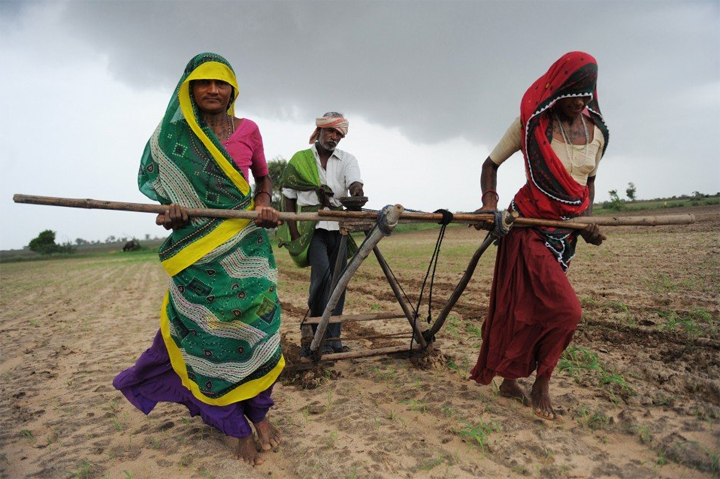
In the hinterlands, the impact of Covid-19 has not been as severe as in the big cities and farmers have benefited from good rainfall for two consecutive years leading to a bumper harvest and adequate conditions for winter-sown crops. This is driving up sales for tractor makers like Mahindra & Mahindra.

Lack of adequate and safe public transport in small towns and villages has also pushed up demand for cars and motorcycles.

Maruti Suzuki, India's biggest carmaker, had a 10% growth in rural sales between July and September versus a 4% rise overall, led by small, entry-level models, said Shashank Srivastava, executive director, marketing and sales.

"While Bharat (rural India) is leading India in terms of a recovery, it cannot carry India," he said, adding that steady, long-term demand will depend on improving economic factors, growing incomes and a rebound in urban markets.

Comments

Add new comment

  • Coastaldigest.com reserves the right to delete or block any comments.
  • Coastaldigset.com is not responsible for its readers’ comments.
  • Comments that are abusive, incendiary or irrelevant are strictly prohibited.
  • Please use a genuine email ID and provide your name to avoid reject.
News Network
December 1,2025

hindutvaboy.jpg

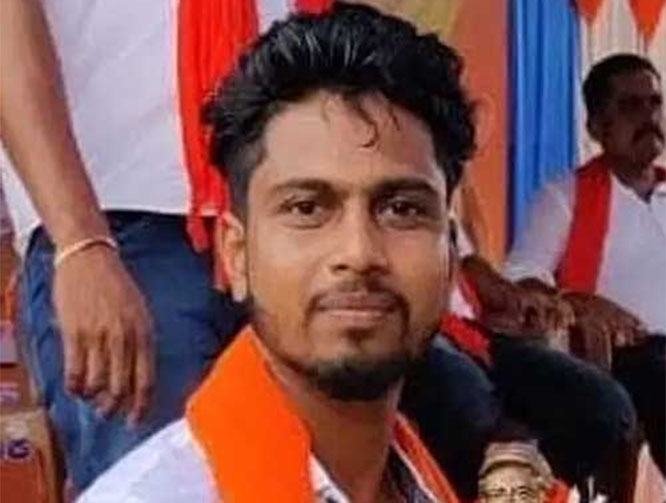
Udupi, Dec 1: A horrific case of alleged rape has unfolded in Udupi, where a worker from a Hindutva organisation, previously arrested and released on bail for harassing a young woman, is now accused of waylaying and sexually assaulting her.

The arrested individual has been identified as Pradeep Poojary (26), a member of the Hindu Jagarana Vedike's Nairkode unit in Perdur.

Poojary had allegedly been relentlessly harassing the young woman, pressuring her to marry him. When she bravely stood up to him and refused his demands, she filed a formal complaint at the Hiriyadka police station. He was subsequently arrested in that initial harassment case but was later granted bail.

According to police reports, driven by the same malicious grudge, Poojary allegedly intercepted the woman again on November 29. While she was walking through a deserted area, the accused is claimed to have threatened her by grabbing her neck. When she again refused to marry him, he allegedly proceeded to rape her.

The survivor immediately informed her family about the traumatic assault. Following this, her parents lodged a complaint at the Udupi women’s police station.

Police arrested Poojary again and produced him before the court. He has since been remanded to judicial custody.

Comments

Add new comment

  • Coastaldigest.com reserves the right to delete or block any comments.
  • Coastaldigset.com is not responsible for its readers’ comments.
  • Comments that are abusive, incendiary or irrelevant are strictly prohibited.
  • Please use a genuine email ID and provide your name to avoid reject.
News Network
December 6,2025

pilot.jpg

New Delhi: IndiGo, India’s largest airline, faced major operational turbulence this week after failing to prepare for new pilot-fatigue regulations issued by the Directorate General of Civil Aviation (DGCA). The stricter rules—designed to improve flight safety—took effect in phases through 2024, with the latest implementation on November 1. IndiGo has acknowledged that inadequate roster planning led to widespread cancellations and delays.

Below are the key DGCA rules that affected IndiGo’s operations:

1. Longer Mandatory Weekly Rest

Weekly rest for pilots has been increased from 36 hours to 48 hours.

The government says the extended break is essential to curb cumulative fatigue. This rule remains in force despite the current crisis.

2. Cap on Night Landings

Pilots can now perform only two night landings per week—a steep reduction from the earlier limit of six.

Night hours, defined as midnight to early morning, are considered the least alert period for pilots.

Given the disruptions, this rule has been temporarily relaxed for IndiGo until February 10.

3. Reduced Maximum Night Flight Duty

Flight duty that stretches into the night is now capped at 10 hours.

This measure has also been kept on hold for IndiGo until February 10 to stabilize operations.

4. Weekly Rest Cannot Be Replaced With Personal Leave

Airlines can no longer count a pilot’s personal leave as part of the mandatory 48-hour rest.

Pilots say this closes a loophole that previously reduced actual rest time.

Currently, all airlines are exempt from this rule to normalise travel.

5. Mandatory Fatigue Monitoring

Airlines must submit quarterly fatigue reports along with corrective actions to DGCA.

This system aims to create a transparent fatigue-tracking framework across the industry.

The DGCA has stressed that these rules were crafted to strengthen flight safety and align India with global fatigue-management standards. The temporary relaxations are expected to remain until February 2025, giving IndiGo time to stabilise its schedules and restore normal air travel.

Comments

Add new comment

  • Coastaldigest.com reserves the right to delete or block any comments.
  • Coastaldigset.com is not responsible for its readers’ comments.
  • Comments that are abusive, incendiary or irrelevant are strictly prohibited.
  • Please use a genuine email ID and provide your name to avoid reject.
News Network
November 30,2025

airportmetro.jpg

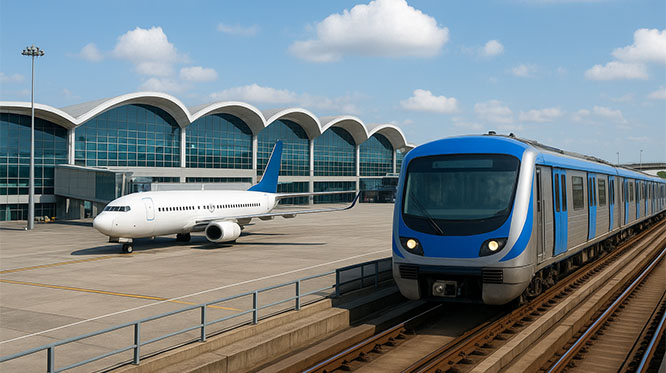
Udupi: The pontiffs of Sri Paryaya Puttige Mutt, the sacred seat of Jagadguru Shrimad Madhvacharya Moola Samsthanam, have submitted a proposal to the Prime Minister seeking comprehensive development for Udupi district. 

Proposal for International Airport

A key request is the establishment of an international airport. Highlighting that around 1,000 acres of land are available and suitable, the pontiffs noted that the existing Mangalore Airport provides limited international connectivity. They suggested the airport be developed under a Public-Private Partnership (PPP) or as a Greenfield Airport to boost trade, education, healthcare, and spiritual tourism.

Metro and Rapid Transit Connectivity

The proposal also calls for Metro Rail or Rapid Transit between Mangaluru and Udupi. The 55 km coastal stretch experiences heavy daily commuter traffic, causing congestion. The district administration is ready to prepare an initial project report for a Mass Rapid Transit corridor and requested inclusion under national urban mobility programmes to ensure safe, green, and time-efficient regional transport.

Port and Coastal Development

The pontiffs urged the development of an international-standard port with a cruise terminal along Udupi’s coast. They also requested fast-tracking of pending coastal tourism projects and revising Coastal Regulation Zone (CRZ) norms to encourage sustainable infrastructure and hospitality investment.

IT, AI and Technological Infrastructure

Support was sought for an IT and AI Innovation Park with incubation facilities under Digital India and Startup India initiatives. The proposal also emphasized the need for strengthened data security and cloud computing infrastructure to boost India’s technological independence.

Sports and Education Initiatives

The pontiffs requested national sports status for Kambala, along with financial and infrastructure support. They also sought the establishment of an AIIMS in Udupi, a new IIT campus, and approval for an IIM to promote higher education in the district.

Representation to the Prime Minister

Sri Sugunendra Tirtha Pontiff and Sri Sushrendra Tirtha Swamiji represented the pontiffs in submitting the comprehensive development proposal to the Prime Minister during his recent visit.

Comments

Add new comment

  • Coastaldigest.com reserves the right to delete or block any comments.
  • Coastaldigset.com is not responsible for its readers’ comments.
  • Comments that are abusive, incendiary or irrelevant are strictly prohibited.
  • Please use a genuine email ID and provide your name to avoid reject.