In surprising poll results, Modi and BJP finally discover hype doesn’t always work

News Network
June 5, 2024

modibjp.jpg

India is unpredictable. This is an incontrovertible fact that Indians themselves seem to have forgotten over the past decade.

Ever since Prime Minister Narendra Modi stormed into office with an unexpected and unprecedented outright legislative majority in 2014, many have assumed the country’s politics had changed forever.

The age of coalitions was over; India seemed to be heading inexorably toward one-party dominance.

To stock traders and pro-government pundits, the country’s trajectory seemed so clear: It was destined to see steady 8 per cent growth, happy voters, and a prime minister going from strength to strength at home and abroad.

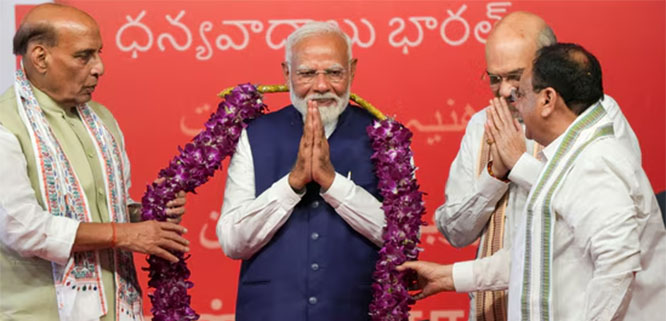
Indian voters chose to disagree. With votes still being counted in the country’s massive general elections and several races still hanging in the balance, Modi’s Bharatiya Janata Party looks almost certain to have fallen short of a parliamentary majority. 
That means it will have to depend, for the first time, on fickle smaller parties to hold onto power.

This was what Indian politics looked like for decades prior to Modi’s emergence. Many thought we were living in a new normal. Instead, the old normal has reasserted itself.

In these surprising elections, Modi and the BJP appear to have discovered the limits of hype. An apparently unified public sphere, solidly pro-government media, and impressive growth numbers had left many assuming that Modi’s performance in power had few holes.

Observers should have paid more attention to contrary indicators. Employment growth under Modi has been marginal at best. Social inclusion has been patchy.

While much of the country looks very different from it did in 2014, even more of it looks largely unchanged.

Small-town India has not seen the sort of revolution in infrastructure that cities of equivalent size in China or Southeast Asia have enjoyed over recent decades.

Big metropolises were transformed during the boom years of the 2000s; they have mostly stagnated since then.

Whatever the GDP growth numbers are, whether they are believable or not, one thing is clear: Voters do not believe enough of that growth has reached their wallets.
It’s not surprising such facts have been overlooked. The Modi government and its allies have completely dominated messaging over the past decade.

They sought to maintain, week in and week out, the frenetic pace and outsize enthusiasm that marked the Prime Minister’s initial march to power.

The government thought that the lesson of its sweeping re-election in 2019 was that social conservatism and welfare delivery was enough to maintain control.

But Modi and the BJP have reached the limits of welfare-first politics and saturation advertising. Without real change on the ground, he or any successor may struggle to retain power over the next five years. They will have to pay more attention to governance than to marketing.

There’s a lot that needs attention. Modi came into power promising manufacturing jobs and private-sector-friendly reforms. In this campaign, he instead argued that loans to small-scale entrepreneurs had gone up, proving that jobs were being created — and that increases in share prices for public-sector companies validated his economic performance.

This is clearly a retreat from the ambitions of a decade ago. Any new government must recapture those ambitions; voters clearly expect it.

If India’s politics have indeed returned to normal, its government must, too. Repression of the opposition does not work, not in a country this large and variegated.

For 10 years, Modi has promised to wipe out his principal rivals in the Indian National Congress party. Yet, in this election, the Congress demonstrated that it is not going anywhere.

The government arguably misused investigative agencies to go after opposition leaders in two states in particular, Maharashtra and West Bengal; both have decisively voted against the BJP.

Modi’s personal popularity is such that he and his government can survive the sort of relatively mild rebuke the electorate has delivered. To retain power for a third term, even if dependent on allies, is an historic achievement.

This result is only startling because the Modi hype had completely detached itself from reality.

We do not live, it appears, in a post-truth world. Even the most adept populists must eventually reckon with reality. None of them are immune to the most fundamental rule of politics: If you don’t perform, you perish.

Comments

Add new comment

  • Coastaldigest.com reserves the right to delete or block any comments.
  • Coastaldigset.com is not responsible for its readers’ comments.
  • Comments that are abusive, incendiary or irrelevant are strictly prohibited.
  • Please use a genuine email ID and provide your name to avoid reject.
News Network
December 3,2025

indigo.jpg

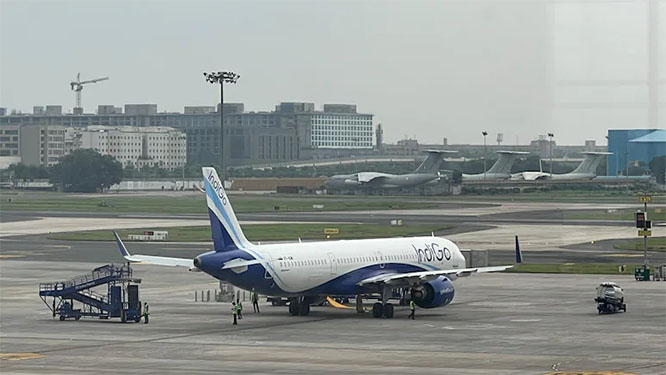
IndiGo, India’s largest airline, is battling one of its worst operational disruptions in recent years, with hundreds of delays and cancellations throwing domestic travel into chaos.

Government data on Tuesday showed its on-time performance plunging to 35%, an unusual dip for a carrier long associated with punctuality.

By Wednesday afternoon, airports in Delhi, Mumbai, Bengaluru and Hyderabad had collectively reported close to 200 cancellations, stranding travellers across the country.

Crew Shortage After New Duty Norms

A major trigger behind the meltdown is a severe crew shortage, especially among pilots, following the rollout of revised Flight Duty Time Limitation (FDTL) norms last month.

The rules mandate longer rest hours and more humane rosters — a shift IndiGo has struggled to incorporate across its vast network.

Sources said several flights were grounded due to lack of cabin crew, while some delays stretched upwards of eight hours.

With IndiGo controlling over 60% of India’s domestic aviation market, the ripple effect has impacted airports nationwide.

IndiGo Issues Apology, Lists “Compounding Factors”

In a statement, IndiGo acknowledged the large-scale disruption:

“We sincerely apologise to customers. A series of unforeseen operational challenges — technology glitches, winter schedule changes, adverse weather, system congestion and updated FDTL norms — created a compounding impact that could not have been anticipated.”

To stabilise operations, the airline has begun calibrated schedule adjustments for the next 48 hours, aiming to restore punctuality. Affected passengers are being offered refunds or alternate travel arrangements, IndiGo said.

What the FDTL Rules Require

The FDTL norms, designed to reduce pilot fatigue, cap duty and flying hours as follows:
•    Maximum 8 hours of flying per day
•    35 hours per week
•    125 hours per month
•    1,000 hours per year

Crew must also receive rest equalling twice the flight duration, with a minimum 10-hour rest period in any 24-hour window.

The DGCA introduced these limits to enhance flight safety.

Hyderabad: 33 Flights Cancelled, Long Queues Reported

Hyderabad’s Rajiv Gandhi International Airport saw heavy early-morning crowds as 33 IndiGo flights (arrivals and departures) were cancelled.

The airport clarified on X that operations were normal, advising passengers to contact IndiGo directly for latest flight status.

Cancellations included flights to and from Visakhapatnam, Goa, Ahmedabad, Delhi, Bengaluru, Chennai, Madurai, Hubli, Bhopal and Bhubaneswar.

Bengaluru: 42 Flights Disrupted

Bengaluru’s Kempegowda International Airport recorded 42 cancellations — 22 arrivals and 20 departures — affecting routes to Delhi, Mumbai, Chennai, Hyderabad, Goa, Kolkata and Lucknow.

Passengers Vent on Social Media

Irate travellers took to X to share their experiences. One passenger stranded in Hyderabad wrote: “I have been here since 3 a.m. and missed an important meeting.”

Another said: “My flight was pushed from 1:55 PM to 2:55 PM and now 4:35 PM. I was informed only three minutes before entering the airport.”

Delhi Airport Hit by Tech Glitch

At Delhi Airport, the disruption deepened due to a slowdown in the Amadeus system — used for reservations, check-ins and departure control.

The technical issue led to longer queues and sluggish processing, adding to delays already worsened by staff shortages.

Comments

Add new comment

  • Coastaldigest.com reserves the right to delete or block any comments.
  • Coastaldigset.com is not responsible for its readers’ comments.
  • Comments that are abusive, incendiary or irrelevant are strictly prohibited.
  • Please use a genuine email ID and provide your name to avoid reject.
News Network
November 22,2025

gaza.jpg

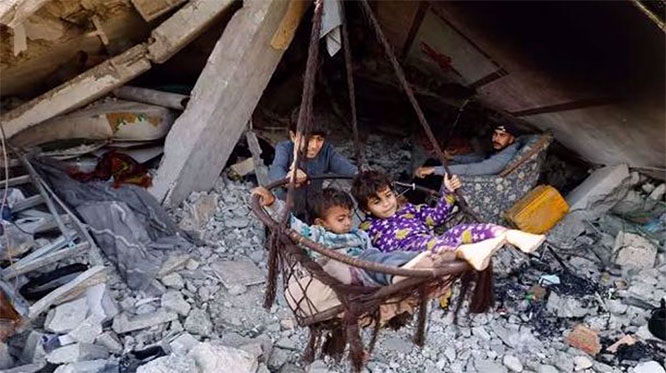
The Israeli regime’s forces have killed two Palestinian children in the Gaza Strip every day since the ceasefire began in early October, UNICEF has warned.

The UN children’s agency said on Friday that Israeli forces continue to attack Palestinians in Gaza even though the agreement was meant to stop the killing.

“Since 11 October, while the ceasefire has been in effect, at least 67 children have been killed in conflict-related incidents in the Gaza Strip. Dozens more have been injured. That is an average of almost two children killed every day since the ceasefire took effect,” UNICEF spokesperson Ricardo Pires said in Geneva, reminding that each number in the statistics represents a child whose life had ended violently.

“These are not statistics,” he said. “Each child had a story, a family, and a future that was stolen from them.”

Data from Palestinian factions, human rights groups, and government bodies recorded since the US-brokered ceasefire deal went into effect on October 10 show that Israeli forces have carried out numerous attacks, each constituting a separate ceasefire violation.

UNICEF teams say they repeatedly continue to witness heart-wrenching scenes of fearful Palestinian children sleeping outdoors with amputated limbs, while others live as orphans in flooded, makeshift shelters.

“I saw this myself in August. There is no safe place for them. The world cannot normalize their suffering,” Pires said, lamenting that the UN could “do a lot more if the aid that is really needed was entering faster.”

The UNICEF spokesperson warned that with the advent of winter, the risks for hundreds of thousands of displaced children will increase.

He warned, “The stakes are incredibly high” for children as winter acts as a threat multiplier, where children have no heating, no insulation, and few blankets. He said respiratory infections rise.

“Too many children have already paid the highest price,” Pires said. “Too many are still paying it, even under a ceasefire. The world promised them it would stop and that we would protect them.”

“Now we must act like it,” the UNICEF spokesperson added.

Since the Israeli regime launched its genocidal war against Palestinians in Gaza in October 2023, it has killed nearly 70,000 people in the territory, most of them women and children, and injured over 170,000 more, while reducing most of the structures in the enclave to rubble.

Comments

Add new comment

  • Coastaldigest.com reserves the right to delete or block any comments.
  • Coastaldigset.com is not responsible for its readers’ comments.
  • Comments that are abusive, incendiary or irrelevant are strictly prohibited.
  • Please use a genuine email ID and provide your name to avoid reject.
News Network
November 26,2025

Mangaluru, Nov 26: Assembly Speaker and local MLA U.T. Khader has initiated a high-level push to resolve one of Mangaluru’s longest-standing traffic headaches: the narrow, high-density stretch of National Highway-66 between Nanthoor and Talapady.

He announced on Tuesday that a formal proposal has been submitted to the Union Ministry of Road Transport and Highways (MoRTH) seeking approval to prepare a Detailed Project Report (DPR) for the widening of this crucial corridor.

The plan specifically aims to expand the existing 45-meter road width to a full 60 meters, coupled with the construction of dedicated service roads. Khader highlighted that land for a 60-meter highway was originally acquired during the initial four-laning project, but only 45 meters were developed, leading to a perpetual bottleneck.

"With vehicle density rising sharply, the expansion has become unavoidable," Khader stated, stressing that the upgrade is essential for ensuring smoother traffic flow and improving safety at the city's main entry and exit points.

The stretch between Nanthoor and Talapady is a vital link on the busy Kochi-Panvel coastal highway and connects to major city junctions. The move to utilize the previously acquired land for the full 60-meter width is seen as a necessary measure to catch up with the region's rapid vehicular growth and prevent further traffic gridlocks.

Comments

Add new comment

  • Coastaldigest.com reserves the right to delete or block any comments.
  • Coastaldigset.com is not responsible for its readers’ comments.
  • Comments that are abusive, incendiary or irrelevant are strictly prohibited.
  • Please use a genuine email ID and provide your name to avoid reject.