US mulls using Indian soil to launch drones on terror infrastructure in Afghan-Pak region

News Network
September 15, 2021

New Delhi, Sept 15: After its recent withdrawal from the Afghanistan, the United States has hinted that it has been in talks with the government of India for using airfields in India as “staging areas” for carrying out aerial surveillance and launching attacks on terrorists in Pak-Afghan region.

President Joe Biden’s administration is “deeply engaged” with New Delhi, the US Secretary of State, Antony Blinken, said, testifying before the Foreign Affairs Committee of the House of Representatives – the lower house of the American Congress.

He was responding to Republican Party’s Representative Mark E Green, who asked if the Biden Administration had reached out to New Delhi for using “over-the-horizon” capabilities from “staging areas” in north-west India for neutralising potential threats to the United States in and around Afghanistan, in view of the collusion between the Taliban and the Inter-Services Intelligence (ISI) of Pakistan.

 “We are deeply engaged with India across the board,” Blinken replied to Green.

He, however, did not share the details of the discussion between the two governments on the US launching drones from India for keeping watch on terrorist infrastructures in Afghanistan.

“With regard to any specifics about over-the-horizon capabilities and the plans we put in place or continue to put in place, I would rather take that up in a different setting,” Blinken replied to Green.

The Taliban of late returned to power in Afghanistan through a swift military campaign across the country taking advantage of the withdrawal of the US troops.

Biden and other senior officials of his administration in Washington DC repeatedly stated over the past few weeks that the US had sent troops to Afghanistan in 2001 in response to the 9/11 terrorist attacks and to neutralise the threat posed by Osama Bin Laden and his Al Qaeda – the objectives, which had been achieved over the past two decades.

Though terrorism continued to remain a threat and spread around the world, the US no longer required to deploy a large number of soldiers overseas to combat the menace as it had now developed the “over-the-horizon” capabilities of carrying out aerial surveillance and launch drones to eliminate such threats, they argued, justifying the withdrawal of troops from Afghanistan.

But what may limit the US' capabilities of launching drone attacks on the terrorists and terror infrastructures in the region is the fact that some of the airbases it had earlier used for the purpose are no longer available to it after its withdrawal from Afghanistan.

The nearest airbases the US can use are in Qatar, Kuwait and other countries in the Gulf and far away from the Afghanistan-Pakistan region where the targets may be located – a fact Green pointed out while asking Blinken about the Biden Administration’s discussion with New Delhi.

New Delhi did not officially make any comment on Green’s query or the reply given by Blinken.

The Commander of the US Special Operations Command, General Richard D Clarke, had visited New Delhi in July and held a meeting with the Indian Army chief Gen M M Naravane.

Admiral John C Aquilino, Commander of the United States Indo-Pacific Command, also visited New Delhi and held a meeting with Chief of Defence Staff General Bipin Rawat, just about 10 days after the Taliban’s return to power in Afghanistan.

India is a “major defence partner” of the US and the two nations had inked a Logistics Exchange Memorandum of Agreement (LEMOA) in 2016, creating a framework to support each other's aircraft, ships and personnel with logistics, fuel and spares.

They also signed the Communications Compatibility and Security Agreement (COMCASA) in 2018 and the Basic Exchange and Cooperation Agreement (BECA) in 2020 to enable the exchange of geospatial information between the two countries. 

Comments

Add new comment

  • Coastaldigest.com reserves the right to delete or block any comments.
  • Coastaldigset.com is not responsible for its readers’ comments.
  • Comments that are abusive, incendiary or irrelevant are strictly prohibited.
  • Please use a genuine email ID and provide your name to avoid reject.
News Network
November 26,2025

Mangaluru, Nov 26: Assembly Speaker and local MLA U.T. Khader has initiated a high-level push to resolve one of Mangaluru’s longest-standing traffic headaches: the narrow, high-density stretch of National Highway-66 between Nanthoor and Talapady.

He announced on Tuesday that a formal proposal has been submitted to the Union Ministry of Road Transport and Highways (MoRTH) seeking approval to prepare a Detailed Project Report (DPR) for the widening of this crucial corridor.

The plan specifically aims to expand the existing 45-meter road width to a full 60 meters, coupled with the construction of dedicated service roads. Khader highlighted that land for a 60-meter highway was originally acquired during the initial four-laning project, but only 45 meters were developed, leading to a perpetual bottleneck.

"With vehicle density rising sharply, the expansion has become unavoidable," Khader stated, stressing that the upgrade is essential for ensuring smoother traffic flow and improving safety at the city's main entry and exit points.

The stretch between Nanthoor and Talapady is a vital link on the busy Kochi-Panvel coastal highway and connects to major city junctions. The move to utilize the previously acquired land for the full 60-meter width is seen as a necessary measure to catch up with the region's rapid vehicular growth and prevent further traffic gridlocks.

Comments

Add new comment

  • Coastaldigest.com reserves the right to delete or block any comments.
  • Coastaldigset.com is not responsible for its readers’ comments.
  • Comments that are abusive, incendiary or irrelevant are strictly prohibited.
  • Please use a genuine email ID and provide your name to avoid reject.
coastaldigest.com news network
November 29,2025

health1.jpg

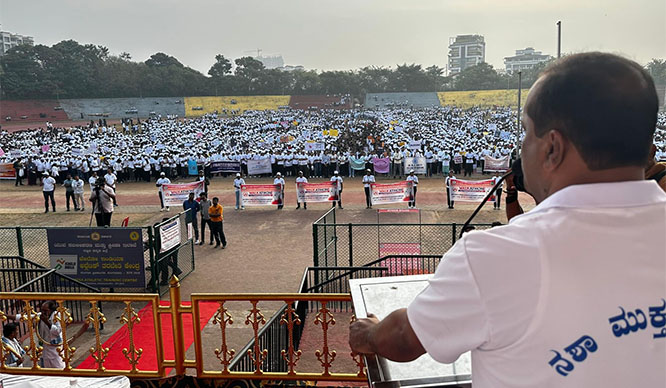
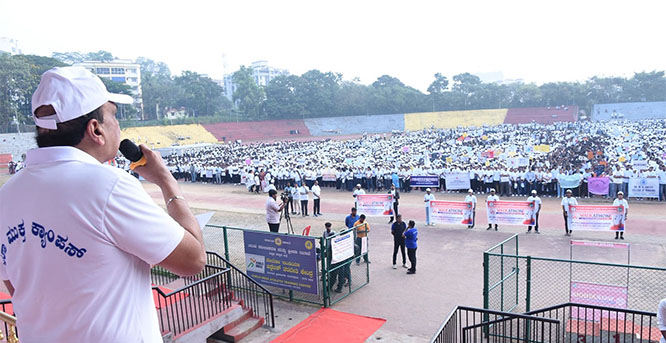
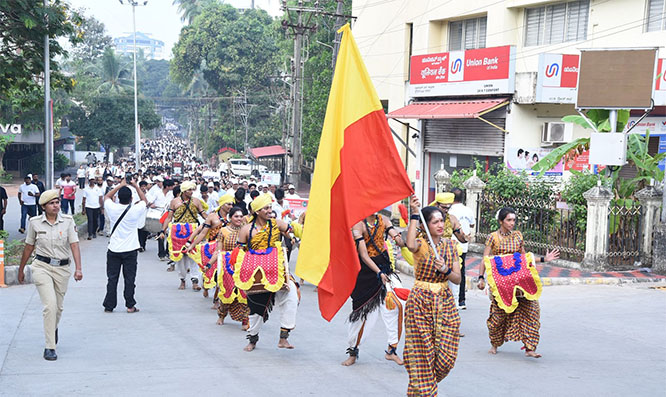
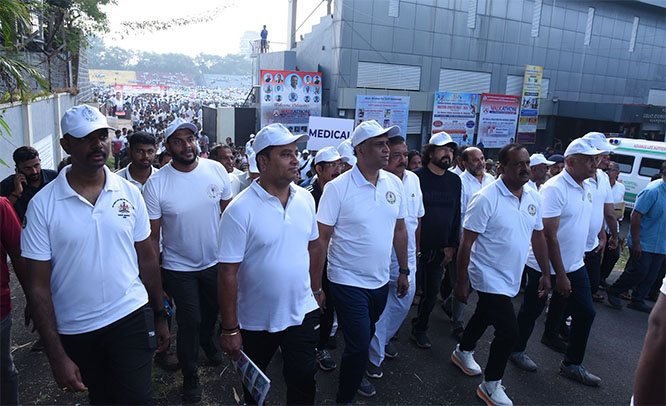
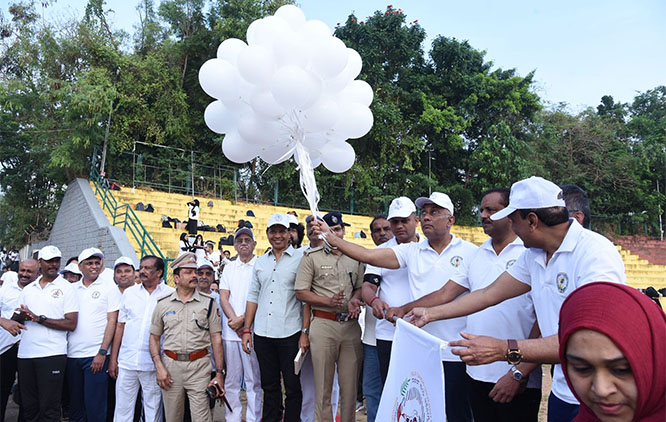
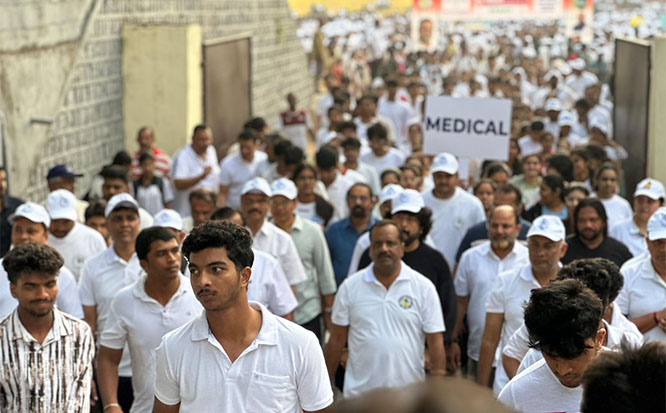
Mangaluru, Nov 29: Around 12,500 healthcare students from Medical, Dental, AYUSH, Pharmacy, Nursing, Physiotherapy and Allied Health Sciences colleges of Dakshina Kannada, affiliated to Rajiv Gandhi University of Health Sciences (RGUHS), took part in a massive walkathon to promote awareness on Organ Donation and Nasha Mukth Bharat.

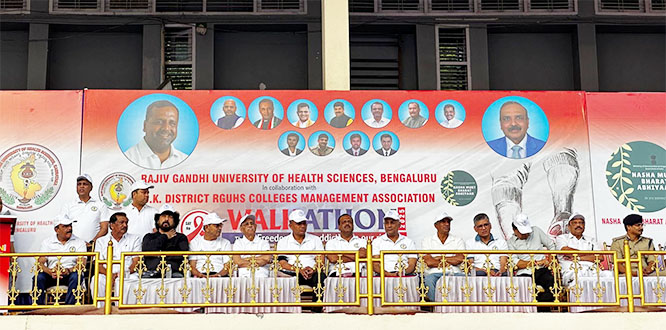
The inaugural ceremony was held at Mangala Stadium. Dr Bhagavan B C, Hon’ble Vice-Chancellor of RGUHS, delivered the welcome address. The walkathon was flagged off by Shri U T Khader, Hon’ble Speaker of the Karnataka Legislative Assembly, and presided over by Shri Dinesh Gundu Rao, Hon’ble Minister for Health, Family Welfare and Dakshina Kannada District In-charge. Dakshina Kannada MP Shri Brijesh Chowta also addressed the students.

Music director Guru Kiran, MLA Dr Bharat Shetty (Mangalore North), Police Commissioner Shri Sudheer Kumar Reddy, Shri Manjunath Bhandary and Shri Harish Kumar were among those present.

Institution heads including Dr Haji U K Monu (Kanachur Colleges), Dr Shantharam Shetty (Tejaswini College), Dr Bhaskar Shetty (City Group of Colleges), Mr Abdul Rahiman (Kanachur Institute of Medical Sciences), and the District Health Officer, Mangalore, also participated.

The vote of thanks was delivered by Prof U T Ifthikar Fareed, Syndicate Member, RGUHS.

The event was organised by Dr U T Ifthikar Ali and Dr Shiva Sharan (Syndicate Members), Prof Vaishali (Senate Member), Prof Mohammad Suhail (Chairman, BOS Physiotherapy), Dr Sharan Shetty (Former Senate Member), along with principals and faculty of various colleges.

Students marched from Mangala Stadium to Karavali Grounds via MCC and Lalbagh signal. The event set a record as one of the largest gatherings of healthcare students for a social cause in the RGUHS Dakshina Kannada Zone.

health7.jpg

health6.jpg

health5.jpg

health4.jpg

health3.jpg

health2.jpg

Comments

Add new comment

  • Coastaldigest.com reserves the right to delete or block any comments.
  • Coastaldigset.com is not responsible for its readers’ comments.
  • Comments that are abusive, incendiary or irrelevant are strictly prohibited.
  • Please use a genuine email ID and provide your name to avoid reject.
News Network
December 6,2025

pilot.jpg

New Delhi: IndiGo, India’s largest airline, faced major operational turbulence this week after failing to prepare for new pilot-fatigue regulations issued by the Directorate General of Civil Aviation (DGCA). The stricter rules—designed to improve flight safety—took effect in phases through 2024, with the latest implementation on November 1. IndiGo has acknowledged that inadequate roster planning led to widespread cancellations and delays.

Below are the key DGCA rules that affected IndiGo’s operations:

1. Longer Mandatory Weekly Rest

Weekly rest for pilots has been increased from 36 hours to 48 hours.

The government says the extended break is essential to curb cumulative fatigue. This rule remains in force despite the current crisis.

2. Cap on Night Landings

Pilots can now perform only two night landings per week—a steep reduction from the earlier limit of six.

Night hours, defined as midnight to early morning, are considered the least alert period for pilots.

Given the disruptions, this rule has been temporarily relaxed for IndiGo until February 10.

3. Reduced Maximum Night Flight Duty

Flight duty that stretches into the night is now capped at 10 hours.

This measure has also been kept on hold for IndiGo until February 10 to stabilize operations.

4. Weekly Rest Cannot Be Replaced With Personal Leave

Airlines can no longer count a pilot’s personal leave as part of the mandatory 48-hour rest.

Pilots say this closes a loophole that previously reduced actual rest time.

Currently, all airlines are exempt from this rule to normalise travel.

5. Mandatory Fatigue Monitoring

Airlines must submit quarterly fatigue reports along with corrective actions to DGCA.

This system aims to create a transparent fatigue-tracking framework across the industry.

The DGCA has stressed that these rules were crafted to strengthen flight safety and align India with global fatigue-management standards. The temporary relaxations are expected to remain until February 2025, giving IndiGo time to stabilise its schedules and restore normal air travel.

Comments

Add new comment

  • Coastaldigest.com reserves the right to delete or block any comments.
  • Coastaldigset.com is not responsible for its readers’ comments.
  • Comments that are abusive, incendiary or irrelevant are strictly prohibited.
  • Please use a genuine email ID and provide your name to avoid reject.