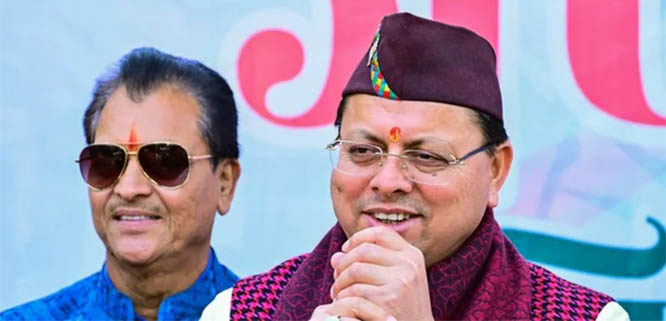
Uttarakhand becomes first state to implement Uniform Civil Code

News Network
January 27, 2025

uccuttarakhand.jpg

The Uniform Civil Code (UCC), a law that has faced long-standing criticism from the Opposition, will officially come into effect in Uttarakhand on January 27, making it the first state in independent India to put into effect such a law.

According to the state’s chief minister Pushkar Singh Dhami, the government has completed all preparations to implement the law, including getting approval of the rules for the implementation of the Act and training of officials concerned. The rationale given for the law is that it will bring about ‘uniformity in the society and ensure equal rights and responsibilities for all citizens.’

"UCC is just an offering made by our state in the great 'yagya' being performed by the Prime Minister to make the country a developed, organised, harmonious and self-reliant nation," PTI quoted Dhami as saying in a statement.

The BJP had made a promise to implement the Uniform Civil Code in Uttarakhand in the run-up to the 2022 assembly polls.These polls saw the party storming to power for a second consecutive term, something never done by any other party in the state since its creation in 2000.

According to CM Dhami, the historic mandate was because of the party's commitment to passing the UCC.

The Uniform Civil Code journey in Uttarakhand

The Uttarakhand state cabinet cleared a proposal to form an expert panel on the Uniform Civil Code in March 2022 in the first cabinet meeting after winning the assembly elections. The panel, headed by retired Supreme Court Judge Ranjana Prakash Desai, was constituted on May 27, 2022 to prepare the draft of the UCC.

The Desai committee submitted a comprehensive draft in four volumes, prepared after one and a half years of dialogue with different sections of the state's population. It was sent to the state on February 2, 2024 and just a few days later, the Uttarakhand assembly passed the UCC bill. President Droupadi Murmu gave it her assent in March 2024, nearly two years after the initial proposal.

Another expert committee was at work after that, headed by former chief secretary Shatrughna Singh. It was formed to frame the rules and regulations for the implementation of the Act. The Sinha committee submitted its report to the state government late last year.

The state cabinet gave its approval recently and authorised the chief minister to decide a date for its implementation. Dhami decided the date to be January 27, 2025, a day after the country celebrated its 76th Republic Day.

What is in the Uttarakhand UCC?

The Uniform Civil Code Act of Uttarakhand will govern and regulate the laws relating to marriage and divorce, succession, live-in relationships and related matters.

It sets equal marriageable age for men and women, grounds of divorce and procedures across all religions, and bans polygamy and 'halala'.

Doon University Vice Chancellor Surekha Dangwal, who was part of the panel that drafted the UCC and was among those who framed the rules for its implementation, described to PTI the provisions aimed at bringing about gender parity in matters of marriage, divorce and succession, treating all children as legitimate including those born of void or voidable marriages, simplifying the process of preparing a will and regulating live-in relationships as the most outstanding in the UCC. She termed gender parity across all religions as the spirit of UCC.

According to Duggal, the UCC makes registration of all marriages and live-in relationships mandatory. She also said that the government has created facilities to help people register their marriages online so that they do not have to run around government offices for it.

"Another remarkable feature of the UCC is that it treats all children as legitimate. We have in fact totally done away with the term illegitimate in the context of children," she said. The UCC also makes a special provision for defence personnel called "privileged will" which can be made both in writing or by word of mouth.

Any soldier or air force personnel engaged in an expedition or actual warfare or a mariner at sea can make a privileged will for which rules have been kept flexible.

UCC criticism

Opposition leaders have criticized the UCC, arguing that it may lead to societal division along religious lines and might be impractical and overly ambitious.
The debate surrounding the UCC extends beyond Uttarakhand, as Article 44 of the Indian Constitution advocates for a uniform civil code across the country. Prime Minister Narendra Modi has referenced the Supreme Court's direction on the need for a common code, stressing that fulfilling the vision of the Constitution's framers remains a national goal.

Uttarakhand's implementation of the UCC is likely to set a precedent, with other states potentially following suit. The success of the law's implementation will depend on its ability to balance individual rights and social harmony.

As Uttarakhand stands at the forefront of this legal revolution, the coming weeks will offer a clearer picture of how the UCC will be received, both in the state and across India. The state's experience with the UCC will undoubtedly shape the future of personal law reform in the country.

What is the implementation process?

Shailesh Bagauli, secretary (home), stated that the government will issue two notifications: one for the implementation of the UCC and another for the rules and regulations, officially launching the UCC in the state.

Dhami had promised to implement the UCC if re-elected during the 2022 state polls. After becoming CM, he appointed a five-member committee led by Justice Ranjana Prakash Desai to draft the code, which received feedback from over 2.3 lakh people, representing nearly 10% of Uttarakhand's families.

The 740-page draft was presented to the chief minister on February 2, 2024, approved by the cabinet on February 4, tabled in the assembly on February 6, and passed the following day. Governor Lt Gen Gurmit Singh (retd) approved the bill on February 28 and President Droupadi Murmu subsequently signed it on March 11.

Comments

Add new comment

  • Coastaldigest.com reserves the right to delete or block any comments.
  • Coastaldigset.com is not responsible for its readers’ comments.
  • Comments that are abusive, incendiary or irrelevant are strictly prohibited.
  • Please use a genuine email ID and provide your name to avoid reject.
News Network
December 4,2025

indigocrisis.jpg

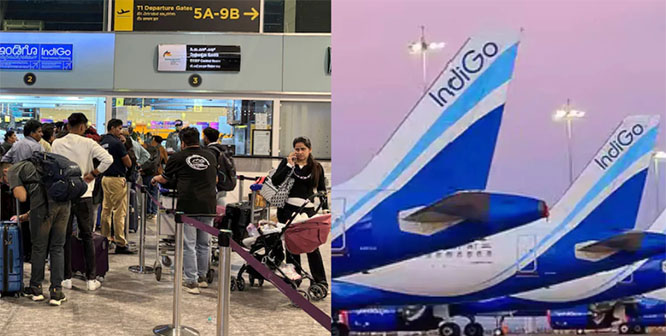
Angry outbursts, long queues, and desperate appeals filled airports across India today as IndiGo grappled with a severe operational breakdown. Hundreds of flights have been cancelled or delayed, leaving thousands of passengers stranded through the night and forcing many to spend long hours at helpdesks.

Social media was flooded with videos of fliers pleading for assistance, accusing the airline of misleading updates, and demanding accommodation after being stuck for 10 to 12 hours at airports such as Hyderabad and Bengaluru.

What Triggered the Meltdown?

IndiGo has attributed the widespread disruption to “a multitude of unforeseen operational challenges.” These include:

•    Minor technology glitches
•    Winter-season schedule adjustments
•    Bad weather
•    Congestion in the aviation network
•    New crew rostering rules (Flight Duty Time Limitations or FDTL)

Among these, the most disruptive has been the implementation of the updated FDTL norms introduced by the Directorate General of Civil Aviation (DGCA) in January 2024.

These rules were designed to reduce pilot fatigue and improve passenger safety. Key changes include:

•    Longer weekly rest periods for flight crew
•    A revised definition of “night,” extending it by an extra hour
•    Tighter caps on flight duty timing and night landings
•    Cutting night shifts for pilots and crew from six per roster cycle to just two

Once these norms became fully enforceable, airlines were required to overhaul rosters well in advance. For IndiGo, this triggered a sudden shortage of crew available for duty, leading to cascading delays and cancellations.

Why IndiGo Was Hit the Hardest

IndiGo is India’s largest airline by a wide margin, operating over 2,200 flights daily. That’s roughly double the number operated by Air India.

When an airline of this size experiences even a 10–20% disruption, it translates to 200–400 flights being delayed or grounded — producing massive spillover effects across the country.

IndiGo also relies heavily on high-frequency overnight operations, a model typical of low-cost carriers that aim to maximise aircraft utilisation and reduce downtime. The stricter FDTL norms clash with these overnight-heavy schedules, forcing the airline to pull back services.

Aviation bodies have also criticised IndiGo’s preparedness. The Airline Pilots' Association of India (ALPA) said airlines were given a two-year window to plan for the new rules but “started preparing rather late.” IndiGo, it said, failed to rebuild crew rosters 15 days in advance as required.

The Federation of Indian Pilots (FIP) went further, calling the crisis the result of IndiGo’s “prolonged and unorthodox lean manpower strategy,” and alleging that the airline adopted a hiring freeze even as it knew the new rules would require more careful staffing.

How Many Flights Are Affected?

In the past 48 hours, over 300 flights have been cancelled. At least 100 more are expected to be cancelled today.

City-wise impact:

•    Hyderabad: 33 expected cancellations; several fliers stranded overnight
•    Bengaluru: over 70 expected cancellations
•    Delhi, Mumbai, Chennai, Kolkata: widespread delays and missed connections

Passengers shared distressing accounts online.

One customer at Hyderabad airport said they waited from 6 PM to 9 AM with “no action taken” regarding their delayed Pune flight. Another said IndiGo repeatedly told them the crew was “arriving soon,” only for the delay to stretch over 12 hours.

IndiGo has apologised for the disruption and promised that operations will stabilise within 48 hours, adding that “calibrated adjustments” are being made to contain the chaos.

What Should Passengers Do Now?

For those flying in the next few days, especially with IndiGo, here are key precautions:

1. Keep Checking Flight Status
Monitor your flight closely before leaving for the airport, as delays may be announced last-minute.

2. Arrive Early
Expect long queues at counters and security due to crowding and rescheduling.

3. Carry Essentials
Pack snacks, water, basic medicines, chargers, and items for children or senior citizens. Extended waiting times should be anticipated.

4. Use Flexible Booking Options
If you booked tickets with a free-date-change or cancellation option, consider using them.
If you haven’t booked yet, prefer refundable or flexible fares, or even consider alternate airlines.

5. Follow IndiGo’s Updates
Keep an eye on IndiGo’s official social media channels and contact customer support for rebooking and refund queries.

What Needs to Change?

Pilot groups have raised concerns not just about staffing but also the planning practices behind it.
The Federation of Indian Pilots accused IndiGo of:

•    Imposing an unexplained hiring freeze despite knowing the FDTL changes were coming
•    Entering non-poaching agreements that limited talent movement
•    Keeping pilot pay frozen
•    Underestimating the need to restructure operations in advance

They have urged DGCA to approve seasonal schedules only after airlines prove they have adequate pilot strength under the new norms.

ALPA also warned that some airlines might be using the delays as an “immature pressure tactic” to push DGCA for relaxations in the new rules — which, if granted, could compromise the very safety standards the norms were meant to protect.

Both pilot bodies stressed that no exemption should dilute safety, and any deviations should be based solely on scientific risk assessment.

Is a Solution in Sight?

While IndiGo says normalcy will return within two days, aviation experts believe that fully stabilising operations could take longer, depending on how quickly the airline can:
•    Re-align rosters
•    Mobilise rested crew
•    Boost staffing
•    Adjust its winter schedule to match regulatory requirements
Passengers are advised to remain prepared for continued delays over the next few days as the airline works through its backlog. 

Comments

Add new comment

  • Coastaldigest.com reserves the right to delete or block any comments.
  • Coastaldigset.com is not responsible for its readers’ comments.
  • Comments that are abusive, incendiary or irrelevant are strictly prohibited.
  • Please use a genuine email ID and provide your name to avoid reject.
P A Hameed Padubidri
November 26,2025

CD.jpg

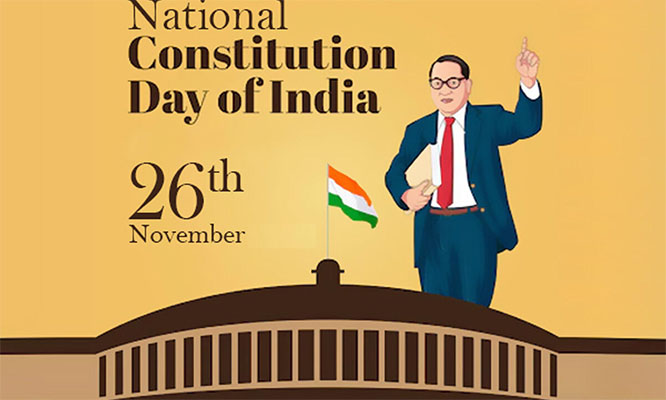
Constitution Day, also known as Samvidhan Divas, is observed every year on November 26 to honor the adoption of the Constitution of India and to recognize the visionary effort that shaped the world’s largest democracy.

Historical Background

It’s on November 26, 1949, the Constituent Assembly of India formally adopted the Constitution.This date is commemorated to acknowledge the completion of nearly three years of drafting, debate, and refinement.

On January 26, 1950, the Constitution came into force, marking India’s transition from a dominion to a sovereign republic.

The date 26 January was chosen to honor the “Purna Swaraj” declaration made in 1930 that marked the relentless efforts & sacrifices of the many. 

Why Constitution Day is Celebrated

* To honor & remember the framers of the Constitution, especially Dr. B. R. Ambedkar, the Chairman of the Drafting Committee, & many others. 

* To remind the citizens of the values, responsibilities, and rights enshrined in the Constitution.

* To promote constitutional values & literacy among students, institutions, and the general public.

* To reaffirm the nation’s commitment to justice, equality, liberty, fraternity and secular values. 

Vision and Significance of the Constitution

It establishes the fundamental political and legal framework for the nation.

Defines the structure, powers and functions of:
    •    The Executive
    •    The Legislature
    •    The Judiciary
    •    Guarantees a comprehensive set of Fundamental Rights, including:

-Equality before law
-Freedom of speech & expression
-Protection of life and personal liberty
-Freedom of religion
-Embeds Directive Principles of State Policy, guiding governance toward social justice and welfare.
-Introduces Fundamental Duties to ensure civic responsibility among citizens.

Key Features Celebrated on Constitution Day

-The Indian constitution is considered one of the longest written constitutions of the world. It’s systematically drafted considering almost all aspects that properly fits to the country. 

-Blend of multiple global constitutional principles while staying rooted in Indian values and realities.

-Framework that balances Federalism, Secularism, Democracy and Rule of Law. This makes everyone-from President to common man-below the law & are equal in the sight of law. 

-Another feature is that it’s based on built-in mechanisms for amendments, ensuring the Constitution grows with changing needs.

Message of the Day

The core ethos of this  Constitution Day is not merely about looking back at history-it’s a reminder of the continuous duty to protect democratic values, respect diversity and uphold the principles that define India as a sovereign, socialist, secular and democratic republic.

Happy Constitution Day to all my compatriots

Comments

Add new comment

  • Coastaldigest.com reserves the right to delete or block any comments.
  • Coastaldigset.com is not responsible for its readers’ comments.
  • Comments that are abusive, incendiary or irrelevant are strictly prohibited.
  • Please use a genuine email ID and provide your name to avoid reject.
coastaldigest.com news network
November 29,2025

health1.jpg

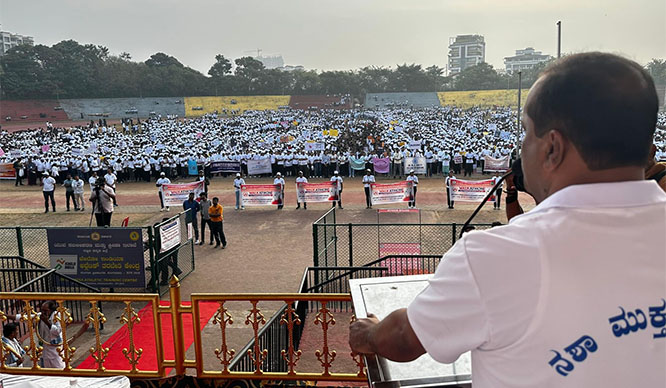
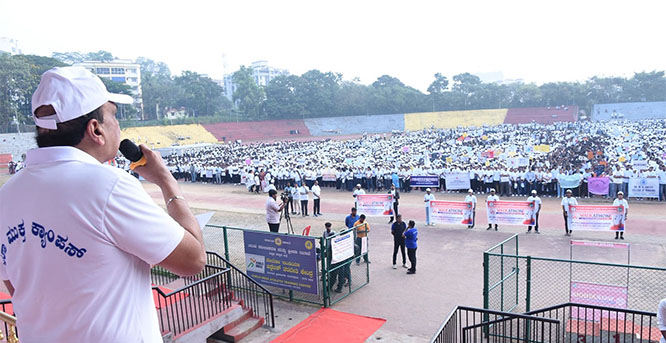
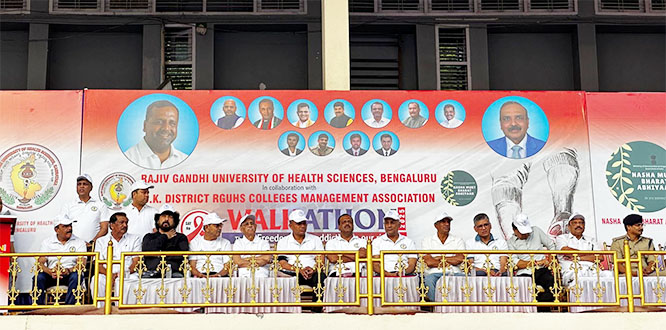
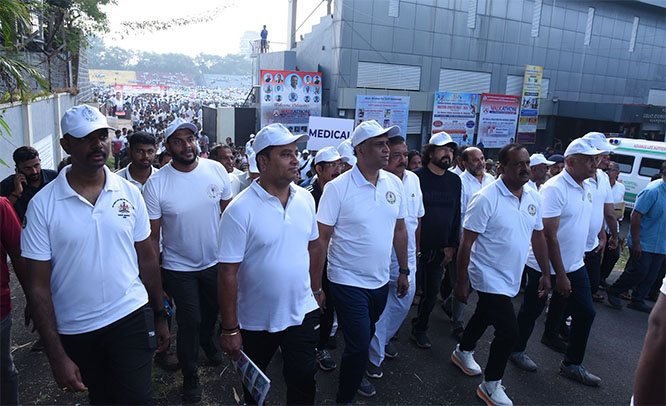
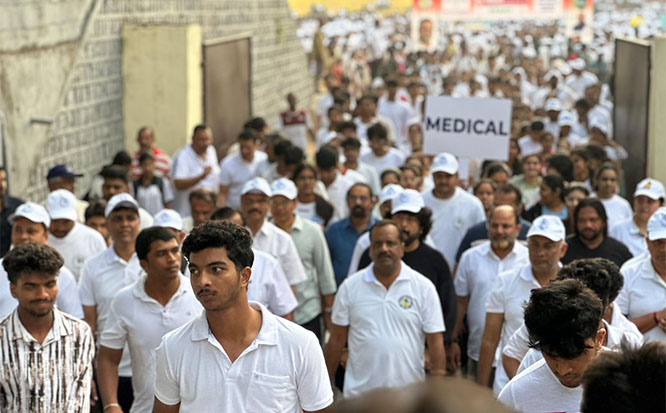
Mangaluru, Nov 29: Around 12,500 healthcare students from Medical, Dental, AYUSH, Pharmacy, Nursing, Physiotherapy and Allied Health Sciences colleges of Dakshina Kannada, affiliated to Rajiv Gandhi University of Health Sciences (RGUHS), took part in a massive walkathon to promote awareness on Organ Donation and Nasha Mukth Bharat.

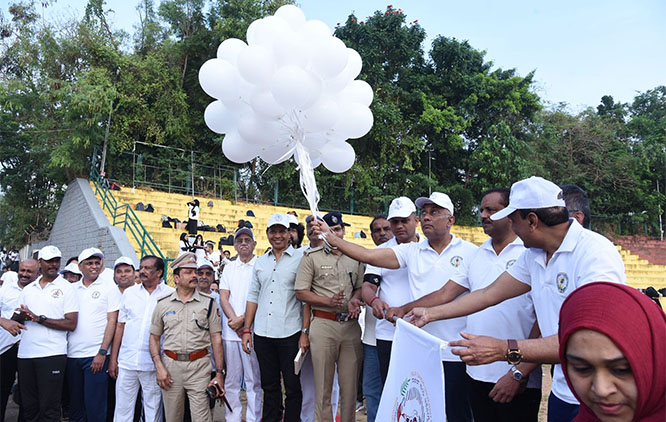
The inaugural ceremony was held at Mangala Stadium. Dr Bhagavan B C, Hon’ble Vice-Chancellor of RGUHS, delivered the welcome address. The walkathon was flagged off by Shri U T Khader, Hon’ble Speaker of the Karnataka Legislative Assembly, and presided over by Shri Dinesh Gundu Rao, Hon’ble Minister for Health, Family Welfare and Dakshina Kannada District In-charge. Dakshina Kannada MP Shri Brijesh Chowta also addressed the students.

Music director Guru Kiran, MLA Dr Bharat Shetty (Mangalore North), Police Commissioner Shri Sudheer Kumar Reddy, Shri Manjunath Bhandary and Shri Harish Kumar were among those present.

Institution heads including Dr Haji U K Monu (Kanachur Colleges), Dr Shantharam Shetty (Tejaswini College), Dr Bhaskar Shetty (City Group of Colleges), Mr Abdul Rahiman (Kanachur Institute of Medical Sciences), and the District Health Officer, Mangalore, also participated.

The vote of thanks was delivered by Prof U T Ifthikar Fareed, Syndicate Member, RGUHS.

The event was organised by Dr U T Ifthikar Ali and Dr Shiva Sharan (Syndicate Members), Prof Vaishali (Senate Member), Prof Mohammad Suhail (Chairman, BOS Physiotherapy), Dr Sharan Shetty (Former Senate Member), along with principals and faculty of various colleges.

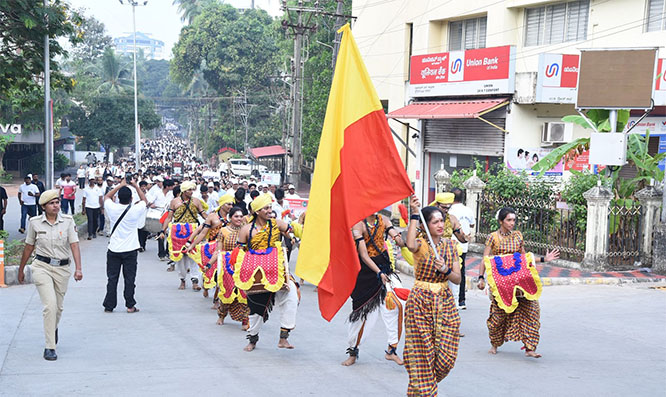
Students marched from Mangala Stadium to Karavali Grounds via MCC and Lalbagh signal. The event set a record as one of the largest gatherings of healthcare students for a social cause in the RGUHS Dakshina Kannada Zone.

health7.jpg

health6.jpg

health5.jpg

health4.jpg

health3.jpg

health2.jpg

Comments

Add new comment

  • Coastaldigest.com reserves the right to delete or block any comments.
  • Coastaldigset.com is not responsible for its readers’ comments.
  • Comments that are abusive, incendiary or irrelevant are strictly prohibited.
  • Please use a genuine email ID and provide your name to avoid reject.