



World worried as 2nd wave of covid shifts India from mass vaccine exporter to importer

Agencies
April 16, 2021

After gifting and selling crores of Covid-19 vaccine doses abroad, India suddenly finds itself short of shots as new infections surge in the world's second-most populous country.

India breached 2,00,000 daily infections for the first time on Thursday, and is trying to inoculate more of its population using domestically produced shots.

Facing soaring cases and overflowing hospitals after lockdown restrictions were eased, it also abruptly changed the rules to allow it to fast-track vaccine imports, having earlier rebuffed foreign drugmakers like Pfizer.

It will import Russia's Sputnik V vaccine starting this month to cover as many as 12.5 crore people.

The reversal in fortunes could hamper not only India's battle to contain the pandemic, but also vaccination campaigns in more than 60 poorer countries, mainly in Africa, for months.

The COVAX programme, backed by the World Health Organization and Gavi vaccine alliance, aims at equitable vaccine access around the world, and is relying heavily on supplies from India, Asia's pharmaceutical powerhouse.

But so far this month India has only exported around 12 lakh vaccine doses. That compares with 6.4 crore doses shipped abroad between late January and March, according to data from the foreign ministry.

An official with knowledge of India's vaccine strategy said that available shots would be used domestically while the country faced an "emergency situation".

"There is no commitment to other countries," he said.

India's foreign ministry, which oversees vaccine deals with other countries, said last week that Indian demand would dictate the level of exports.

Resulting shortages are already being felt in some countries in the COVAX scheme, and a UN health official involved in the vaccine rollout in Africa said: "To be so reliant on one manufacturer is a massive concern."

The director of the Africa Centers for Disease Control and Prevention, John Nkengasong, said earlier this month delays in supplies from India could be "catastrophic".

MISSTEPS

Four sources involved in discussions on vaccine supplies and procurement said factors including delays by India and COVAX in placing firm orders, a lack of investment in production, raw material shortages and underestimating the coronavirus surge at home had contributed to vaccine shortages.

The Serum Institute of India (SII), the world's biggest vaccine manufacturer, had vowed to deliver at least 200 crore Covid-19 shots to low and middle-income countries, with nearly half of that by the end of 2021.

But it has also come under pressure to meet the needs of other governments, including Britain, Canada and Saudi Arabia, amid AstraZeneca's global production problems.

The United States, meanwhile, ring-fenced the supply of key equipment and raw materials for its own vaccine makers, limiting SII's operations and delaying by months its goal of raising monthly output to 10 crore from up to 7 crore now, said one of the sources.

A further initial hurdle to SII's supply ambitions was India's hesitation in placing firm orders, two sources said.

That could have allowed it to boost output of the AstraZeneca vaccine early, even though regulators had yet to approve it.

India spent months discussing the final price per dose, and inked an initial purchase order roughly two weeks after India's drug regulator approved the AstraZeneca shot, according to the sources.

At one point, SII ran out of space to store produced doses.

"That is why I chose not to pack more than 5 crore doses, because I knew if I packed more than that, I would have to store it in my house," SII Chief Executive Adar Poonawalla told media in January.

He said he had spent 2,000 crore rupees ($272 million) on the 5 crore doses that the company started stockpiling since around October.

Even now, the government only makes ad-hoc purchases from SII instead of agreeing a longer-term supply schedule, said one of the sources.

SII has sought more than $400 million from the government to increase capacity, but no commitment has yet been made.

The health department and foreign ministry did not respond to requests for comment on issues of funding, purchasing delays and other aspects of India's vaccination rollout.

COVAX CONUNDRUM

COVAX also did not green-light shipments to participating countries from SII until after the shot received WHO clearance in mid-February, said a source involved in the COVAX initiative.

The source said those delays meant crores of additional doses that the SII could have produced between October and February never materialised.

Gavi defended its decision to wait for proper approvals before going ahead with firm orders. And while it is looking for more suppliers, it conceded that much still depended on India's vaccine makers who account for some 60% of global supplies.

COVAX has a deal to buy 100 crore-plus doses from the SII. But it has received less than a fifth of the 10 crore or so doses of the SII-made AstraZeneca vaccine it had expected by May. SII is also supposed to make a large number of doses of the Novavax shot for COVAX.

Gavi had hoped SII would fully resume vaccine deliveries to COVAX in May, but on Wednesday it said India's Covid-19 crisis could affect that.

"We understand the ferocity of the virus in India at the current time, nevertheless we hope and expect deliveries to resume as soon as possible," it said.

On Thursday India reported 2,00,739 infections over the past 24 hours, a seventh daily record in the last eight days, while 1,038 deaths took its toll to 1,73,123. Its tally of 1.4 crore infections is second only to the United States.

Having originally aimed to cover 30 crore of its highest-risk people by August, or just over a fifth of its 135 crore population, the government has now expanded that by another 10 crore, with the promise to widen it further.

Comments

Add new comment

  • Coastaldigest.com reserves the right to delete or block any comments.
  • Coastaldigset.com is not responsible for its readers’ comments.
  • Comments that are abusive, incendiary or irrelevant are strictly prohibited.
  • Please use a genuine email ID and provide your name to avoid reject.
News Network
December 2,2025

A major upgrade in safety and monitoring is planned for Haj 2026, with every Indian pilgrim set to receive a Haj Suvidha smart wristband linked to the official Haj Suvidha mobile app. The initiative aims to support pilgrims—especially senior citizens—who may struggle with smartphones during the 45-day journey.

What the Smart Wristband Will Do

Officials said the device will come with:
•    Location tracking
•    Pedometer
•    SOS emergency button
•    Qibla compass
•    Prayer timings
•    Basic health monitoring

SP Tiwari, secretary of the UP State Haj Committee, said the goal is to make the pilgrimage safer and more comfortable.

“Most Hajis are elderly and not comfortable with mobile apps,” he said. “The smartwatch will help locate pilgrims who forget their way or cannot communicate their location.”

The wristbands will be monitored by the Consulate General of India in Saudi Arabia, similar to mobile tracking via the Haj Suvidha App.

Free Distribution and Training

•    Smart wristbands will be given free of cost.
•    Training for pilgrims will be conducted between January and February 2026.
•    Sample units will reach state Haj committees soon.
•    Final devices will be distributed as pilgrims begin their journey.

New Rules for Accommodation

Two major decisions have also been finalised for Haj 2026:
1.    Separate rooms for men and women – including married couples. They may stay on the same floor but must occupy different rooms, following stricter Saudi guidelines.
2.    Cooking banned – gas cylinders will not be allowed; all meals will be provided through official catering services arranged by the Haj Committee of India.

These decisions were finalised during a meeting of the Haj Committee of India and state representatives in Mumbai.

Haj Suvidha App Launched Earlier

The government launched the Haj Suvidha App in 2024, offering:

•    Training modules
•    Accommodation and flight details
•    Baggage information
•    SOS and translation tools
•    Grievance redressal

Haj 2026 Quota and Key States

•    India’s total Haj quota for 2026: 1,75,025 pilgrims
•    70% (1,25,000) allotted to the Haj Committee of India
•    30% (around 50,000) reserved for Haj Group Organisers

Uttar Pradesh has the largest allocation (around 30,000 seats), though approximately 18,000 pilgrims are expected to go this year. States with high pilgrim numbers include Kerala, Maharashtra and Gujarat.

Dates of Haj 2026

The pilgrimage is scheduled to take place from 24 May to 29 May, 2026 (tentative).
Haj is one of the five pillars of Islam and is mandatory for Muslims who meet the required conditions.

Comments

Add new comment

  • Coastaldigest.com reserves the right to delete or block any comments.
  • Coastaldigset.com is not responsible for its readers’ comments.
  • Comments that are abusive, incendiary or irrelevant are strictly prohibited.
  • Please use a genuine email ID and provide your name to avoid reject.
News Network
November 26,2025

Mangaluru, Nov 26: Mangaluru East police have registered a case following a sophisticated online fraud where a 57-year-old local resident was allegedly cheated out of ₹13.4 lakh after being targeted on Facebook.

The scam began in February when the complainant, while browsing Facebook reels, was contacted by a woman identifying herself as "Lillian Mary George" from London. After establishing a chat relationship, the woman claimed she would visit India in November and bring a significant sum of money.

The trap was sprung on November 15, when the victim received a call from a woman named "Sonali Gupta," who claimed Lillian had arrived at Mumbai International Airport but was detained by customs. The fraudsters convinced the man that Lillian was carrying £25,000 (about ₹26 lakh) in traveller’s cheques and 1 kg of gold (valued at around ₹30 lakh).

Under the pretense of clearing these items, the victim was asked to make numerous online transfers between November 15 and 18 for various bogus charges, including:

•    "Pounds exchange registration"
•    "Customs declaration issues"
•    "Discount charges"
•    "Money-laundering charges"

Believing the fictitious story, the complainant transferred the cumulative sum of ₹13.4 lakh to various bank accounts provided by the fraudsters. He realised he was cheated when the culprits later promised a refund within two days but stopped answering his calls. The Mangaluru East police are now investigating the case, which highlights the continuing threat of transnational cyber fraud using social engineering and promises of fictitious wealth.

Comments

Add new comment

  • Coastaldigest.com reserves the right to delete or block any comments.
  • Coastaldigset.com is not responsible for its readers’ comments.
  • Comments that are abusive, incendiary or irrelevant are strictly prohibited.
  • Please use a genuine email ID and provide your name to avoid reject.
News Network
November 24,2025

israelsyra.jpg

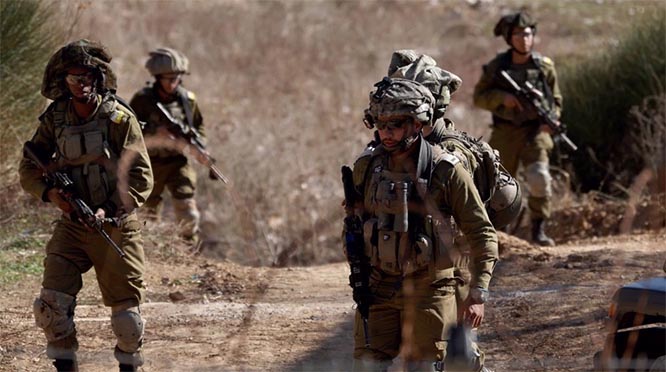
Israeli forces have pushed over the Syrian frontier, erecting a checkpoint and stopping vehicles in the southwestern city of Quneitra, in yet another breach of the Arab country’s sovereignty.

The violation took place on Sunday, when the troops made their way across the border, setting up the outpost near the Ain al-Bayda junction in northern Quneitra, Syrian outlets reported.

According to the al-Ikhbariya paper, an Israeli detachment positioned itself at the junction, halting cars and conducting searches.

The Syrian Arab News Agency (SANA) reported that three Israeli military vehicles then moved further into the northern countryside, deploying between the town of Jubata al-Khashab and the villages of Ofaniya and Ain al-Bayda. The agency added that a separate Israeli unit mounted a new incursion in the central region, approaching the villages of Umm Batina and al-Ajraf.

Residents said such activities have surged in recent months, pointing to Israeli advances onto farmland, leveling of extensive forested areas, arrests, and spread of mobile checkpoints.

The Israeli regime began markedly increasing its military aggression against Syria last year.

The escalation coincided with increasingly ferocious onslaughts throughout the country by the so-called Hay'at Tahrir al-Sham (HTS) Takfiri terrorist group, which the government of President Bashar al-Assad had confined to northwestern Syria. The HTS, however, managed to overthrow the government as the Israeli attacks would pummel the country’s civilian and defensive infrastructure.

Various reports have shown that, during the escalation, the regime conducted more than 1,000 airstrikes on the Syrian territory and over 400 ground raids into the south.

Following the collapse of the Assad government, Tel Aviv also widened its grip over the occupied Golan Heights by taking control of a demilitarized buffer zone, in defiance of a 1974 Disengagement Agreement. Earlier this month, senior Israeli officials, including Prime Minister Benjamin Netanyahu, visited the buffer zone, prompting expressions of alarm on the part of the United Nations.

The United States, the regime’s biggest ally, has, meanwhile, been fraternizing the HTS head Abu Mohammed al-Jolani amid the widely reported prospect of rapprochement with Tel Aviv.

Comments

Add new comment

  • Coastaldigest.com reserves the right to delete or block any comments.
  • Coastaldigset.com is not responsible for its readers’ comments.
  • Comments that are abusive, incendiary or irrelevant are strictly prohibited.
  • Please use a genuine email ID and provide your name to avoid reject.