Homemaker, farmworker and now protester! Women join farmers' agitation

Agencies
December 13, 2020

32123645.jpg

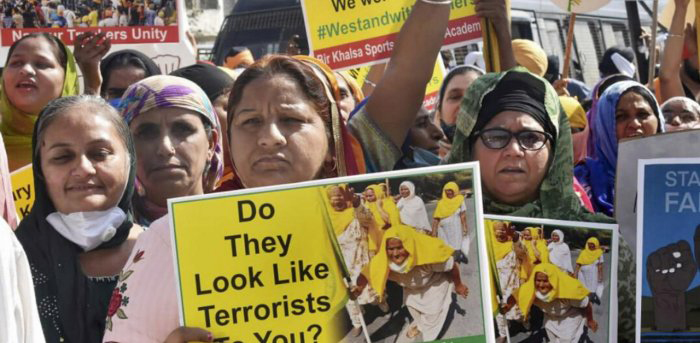
New Delhi, Dec 13: They have long juggled the demands of field and family, making sure both are tended to, and now hundreds of women from Haryana and Punjab have added another dimension to their busy lives – the protest grounds at the various gateways into Delhi.

As their husbands, sons and brothers leave home to demand a rollback of the Centre’s new agri laws, many women are joining them too, making the trip from village towards the national capital even if for only a few days at a time.

For these women, who describe themselves as homemakers, farmworkers and protesters all rolled into one, any suggestion that farmers are about being alpha males because it requires physical labour is met with scorn.

"The profession of farming is not defined by gender. Our fields don’t produce crops differently if tended by women and men. Many male farmers are here protesting. Why should we sit at home?" asked 53-year-old Mandeep Kaur, a farmer from Ludhiana who refuses to be stereotyped into any one role.

Mandeep took a bus to the Singhu border, a major protest site of the farmers’ agitation that has been going for more than two weeks, spent a night and returned home.

“But I will be back,” she said. “We have to look after both our homes as well as our fight. I watered the fields before I came here. It will sustain the land until I return home.”

While the men have been camping at the Tikri and Singhu border, the main access point into the city from Punjab, many of the women have been travelling back and forth, balancing the jobs of taking care of their homes and fields and also participating in the agitation.

Mandeep’s companion on the five-hour bus ride from Ludhiana to Singhu was her neighbour Sukhwinder Kaur. 

The 68-year-old widow said she was tired of sitting at home while the men in her family were out protesting, and decided she needed to come down, even if it was for a short visit.

"I wasn't being able to sleep at night properly. I couldn't sit back at home while my brother and nephew, and all our farmer brothers, are fighting here. I had my first good night of sleep after I came here,” Sukhwinder added.

It wasn’t the epitome of comfort and toilets were a problem but that didn’t matter, said the feisty women. Sukhwinder and Mandeep, with several other women protestors, slept in a water proof tent provided by Khalsa Aid, an international NGO. 

Sukhwinder said she was aware of the fight the farming community had undertaken but didn’t realise what it actually took to keep the fight going until she came here.

"We are 'gharelu' women, don't know much about the world, but after coming here I have realised how big this fight is. We are prepared for it, however long it takes. The kind of help we are getting for the protest shows the entire country is with us. I have heard that people from Australia, Canada and America are also with us,” she said. 

The farmers, with help from various organisations and generous donors, have pulled out all the stops to sustain their agitation.

The site is seeing a constant supply of cooked meals, fruits, dry fruits, and even ‘chaat’. There’s also chai-pakora, cold drinks, kheer and other sweet treats. 

Arrangements for laundry service, and medical facilities, including regular health check ups and a dental camp, have also been taken care of.

Sukhwinder only had one complaint. “The toilet is a little too far,” she said.

Staying on the Haryana side of the border, she said she had to take a bit of a stroll to find a toilet, which was on the Delhi side.

Inadequate sanitation facilities is one reason why many women have to go back and forth, managing to stay at the protest sight only for a few days at a time.

But 75-year-old Daljinder Kaur takes it all in her stride, like many others.

She is Mandeep’s aunt and insisted on accompanying her to Singhu despite her age. Daljinder said she is positive her farmer brothers and sisters will convince the government.

“‘Modi ko mana ke jaenge. Apne haq lene aaye hain, peeche nahi hatenge’ (We will convince Modi. We won’t go back until we get our rights),” she said. “'And if needed, we will die here too, she said.

The farmers have called for a hunger strike on December 14, when they have called for a nationwide protest.

Refusing the government's requests to make amendments to the new farm laws, the farmers are insisting that they should be repealed. On Saturday, farmers picketed highway toll plazas in Haryana, UP, and Rajasthan.

They are apprehensive the new legislations will eventually do away with the Minimum Support Price (MSP) system, leaving them at the mercy of the corporates. 

Comments

Add new comment

  • Coastaldigest.com reserves the right to delete or block any comments.
  • Coastaldigset.com is not responsible for its readers’ comments.
  • Comments that are abusive, incendiary or irrelevant are strictly prohibited.
  • Please use a genuine email ID and provide your name to avoid reject.
News Network
December 2,2025

A major upgrade in safety and monitoring is planned for Haj 2026, with every Indian pilgrim set to receive a Haj Suvidha smart wristband linked to the official Haj Suvidha mobile app. The initiative aims to support pilgrims—especially senior citizens—who may struggle with smartphones during the 45-day journey.

What the Smart Wristband Will Do

Officials said the device will come with:
•    Location tracking
•    Pedometer
•    SOS emergency button
•    Qibla compass
•    Prayer timings
•    Basic health monitoring

SP Tiwari, secretary of the UP State Haj Committee, said the goal is to make the pilgrimage safer and more comfortable.

“Most Hajis are elderly and not comfortable with mobile apps,” he said. “The smartwatch will help locate pilgrims who forget their way or cannot communicate their location.”

The wristbands will be monitored by the Consulate General of India in Saudi Arabia, similar to mobile tracking via the Haj Suvidha App.

Free Distribution and Training

•    Smart wristbands will be given free of cost.
•    Training for pilgrims will be conducted between January and February 2026.
•    Sample units will reach state Haj committees soon.
•    Final devices will be distributed as pilgrims begin their journey.

New Rules for Accommodation

Two major decisions have also been finalised for Haj 2026:
1.    Separate rooms for men and women – including married couples. They may stay on the same floor but must occupy different rooms, following stricter Saudi guidelines.
2.    Cooking banned – gas cylinders will not be allowed; all meals will be provided through official catering services arranged by the Haj Committee of India.

These decisions were finalised during a meeting of the Haj Committee of India and state representatives in Mumbai.

Haj Suvidha App Launched Earlier

The government launched the Haj Suvidha App in 2024, offering:

•    Training modules
•    Accommodation and flight details
•    Baggage information
•    SOS and translation tools
•    Grievance redressal

Haj 2026 Quota and Key States

•    India’s total Haj quota for 2026: 1,75,025 pilgrims
•    70% (1,25,000) allotted to the Haj Committee of India
•    30% (around 50,000) reserved for Haj Group Organisers

Uttar Pradesh has the largest allocation (around 30,000 seats), though approximately 18,000 pilgrims are expected to go this year. States with high pilgrim numbers include Kerala, Maharashtra and Gujarat.

Dates of Haj 2026

The pilgrimage is scheduled to take place from 24 May to 29 May, 2026 (tentative).
Haj is one of the five pillars of Islam and is mandatory for Muslims who meet the required conditions.

Comments

Add new comment

  • Coastaldigest.com reserves the right to delete or block any comments.
  • Coastaldigset.com is not responsible for its readers’ comments.
  • Comments that are abusive, incendiary or irrelevant are strictly prohibited.
  • Please use a genuine email ID and provide your name to avoid reject.
News Network
December 3,2025

indigo.jpg

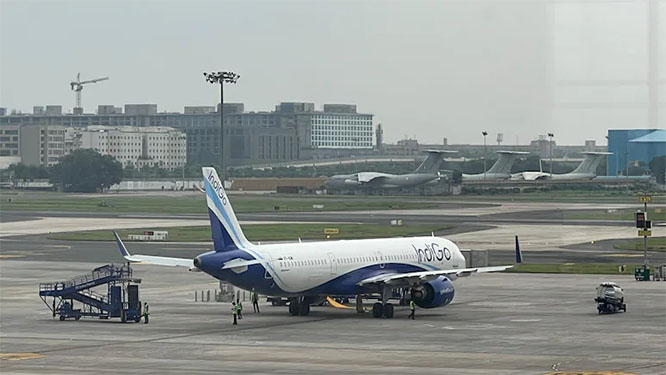
IndiGo, India’s largest airline, is battling one of its worst operational disruptions in recent years, with hundreds of delays and cancellations throwing domestic travel into chaos.

Government data on Tuesday showed its on-time performance plunging to 35%, an unusual dip for a carrier long associated with punctuality.

By Wednesday afternoon, airports in Delhi, Mumbai, Bengaluru and Hyderabad had collectively reported close to 200 cancellations, stranding travellers across the country.

Crew Shortage After New Duty Norms

A major trigger behind the meltdown is a severe crew shortage, especially among pilots, following the rollout of revised Flight Duty Time Limitation (FDTL) norms last month.

The rules mandate longer rest hours and more humane rosters — a shift IndiGo has struggled to incorporate across its vast network.

Sources said several flights were grounded due to lack of cabin crew, while some delays stretched upwards of eight hours.

With IndiGo controlling over 60% of India’s domestic aviation market, the ripple effect has impacted airports nationwide.

IndiGo Issues Apology, Lists “Compounding Factors”

In a statement, IndiGo acknowledged the large-scale disruption:

“We sincerely apologise to customers. A series of unforeseen operational challenges — technology glitches, winter schedule changes, adverse weather, system congestion and updated FDTL norms — created a compounding impact that could not have been anticipated.”

To stabilise operations, the airline has begun calibrated schedule adjustments for the next 48 hours, aiming to restore punctuality. Affected passengers are being offered refunds or alternate travel arrangements, IndiGo said.

What the FDTL Rules Require

The FDTL norms, designed to reduce pilot fatigue, cap duty and flying hours as follows:
•    Maximum 8 hours of flying per day
•    35 hours per week
•    125 hours per month
•    1,000 hours per year

Crew must also receive rest equalling twice the flight duration, with a minimum 10-hour rest period in any 24-hour window.

The DGCA introduced these limits to enhance flight safety.

Hyderabad: 33 Flights Cancelled, Long Queues Reported

Hyderabad’s Rajiv Gandhi International Airport saw heavy early-morning crowds as 33 IndiGo flights (arrivals and departures) were cancelled.

The airport clarified on X that operations were normal, advising passengers to contact IndiGo directly for latest flight status.

Cancellations included flights to and from Visakhapatnam, Goa, Ahmedabad, Delhi, Bengaluru, Chennai, Madurai, Hubli, Bhopal and Bhubaneswar.

Bengaluru: 42 Flights Disrupted

Bengaluru’s Kempegowda International Airport recorded 42 cancellations — 22 arrivals and 20 departures — affecting routes to Delhi, Mumbai, Chennai, Hyderabad, Goa, Kolkata and Lucknow.

Passengers Vent on Social Media

Irate travellers took to X to share their experiences. One passenger stranded in Hyderabad wrote: “I have been here since 3 a.m. and missed an important meeting.”

Another said: “My flight was pushed from 1:55 PM to 2:55 PM and now 4:35 PM. I was informed only three minutes before entering the airport.”

Delhi Airport Hit by Tech Glitch

At Delhi Airport, the disruption deepened due to a slowdown in the Amadeus system — used for reservations, check-ins and departure control.

The technical issue led to longer queues and sluggish processing, adding to delays already worsened by staff shortages.

Comments

Add new comment

  • Coastaldigest.com reserves the right to delete or block any comments.
  • Coastaldigset.com is not responsible for its readers’ comments.
  • Comments that are abusive, incendiary or irrelevant are strictly prohibited.
  • Please use a genuine email ID and provide your name to avoid reject.
News Network
December 6,2025

pilot.jpg

New Delhi: IndiGo, India’s largest airline, faced major operational turbulence this week after failing to prepare for new pilot-fatigue regulations issued by the Directorate General of Civil Aviation (DGCA). The stricter rules—designed to improve flight safety—took effect in phases through 2024, with the latest implementation on November 1. IndiGo has acknowledged that inadequate roster planning led to widespread cancellations and delays.

Below are the key DGCA rules that affected IndiGo’s operations:

1. Longer Mandatory Weekly Rest

Weekly rest for pilots has been increased from 36 hours to 48 hours.

The government says the extended break is essential to curb cumulative fatigue. This rule remains in force despite the current crisis.

2. Cap on Night Landings

Pilots can now perform only two night landings per week—a steep reduction from the earlier limit of six.

Night hours, defined as midnight to early morning, are considered the least alert period for pilots.

Given the disruptions, this rule has been temporarily relaxed for IndiGo until February 10.

3. Reduced Maximum Night Flight Duty

Flight duty that stretches into the night is now capped at 10 hours.

This measure has also been kept on hold for IndiGo until February 10 to stabilize operations.

4. Weekly Rest Cannot Be Replaced With Personal Leave

Airlines can no longer count a pilot’s personal leave as part of the mandatory 48-hour rest.

Pilots say this closes a loophole that previously reduced actual rest time.

Currently, all airlines are exempt from this rule to normalise travel.

5. Mandatory Fatigue Monitoring

Airlines must submit quarterly fatigue reports along with corrective actions to DGCA.

This system aims to create a transparent fatigue-tracking framework across the industry.

The DGCA has stressed that these rules were crafted to strengthen flight safety and align India with global fatigue-management standards. The temporary relaxations are expected to remain until February 2025, giving IndiGo time to stabilise its schedules and restore normal air travel.

Comments

Add new comment

  • Coastaldigest.com reserves the right to delete or block any comments.
  • Coastaldigset.com is not responsible for its readers’ comments.
  • Comments that are abusive, incendiary or irrelevant are strictly prohibited.
  • Please use a genuine email ID and provide your name to avoid reject.