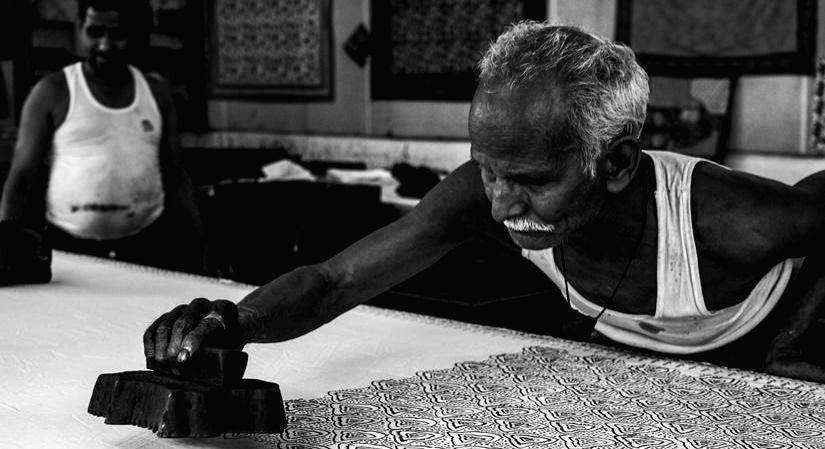
'Pandemic delivered a more severe blow to smaller, individual artisans'

Agencies
February 20, 2021

53293.jpg

A recent survey report brought out by All India Artisans and Craftworkers Welfare Association (AIACA) has detailed cash flow crunches, wage losses, cancellation/withholding of orders, supply disruptions in the raw material value chain and uncertainties regarding shipment (both domestic and export) to be some of the key challenges highlighted by craft enterprises after the COVID-19 lockdown.

Broad recommendations emerging from the survey include expectations of a stimulus from the government for craft based enterprises, including measures like reduction/deferral in GST across categories, soft loans and interest free working capital loans to aid production and the easing of access to raw material supplies.

In an interview, Sreya Mozumdar, ED, AIACA gave some insights into India's $583-billlion handicrafts market, how the pandemic has impacted this largely-unorganised sector and what the survey recommends to aid the crafts sector of India. Excerpts:

Q: Please tell us about AIACA and what it aims to achieve.

A: AIACA is an apex body that has been working on a range of issues, since 2004, to promote market-led growth for the crafts sector; and increased incomes and improved living standards of crafts producers. Over the past decade, AIACA has conducted policy research and advocacy on a range of issues including access to credit for crafts producers and environmental and health and safety standards for the sector; developed a crafts-certification system called the Craftmark; assisted sales and outreach of member producer groups and enterprises through commercial trade catalogues, trade fairs and order fulfillment; and assisted in developing and strengthening back-end production systems through a range of product design and business development services. We have worked with more than 150,000 artisans across 23 states in India.

Q: How, in your personal experience, did the craft sector fare during the lockdown?

A: Even in the face of a health emergency, livelihood and financial issues were the most pressing ones. Rising costs of vegetables, groceries and other essentials were found to be a major concern during the initial phase of lockdown. AIACA itself, with the Akshaya Patra Foundation, had raised a resource amount of Rs 30 lakhs for rations for 3000 artisan families across the country. Widespread cancellation of orders, pending payments, a mounting product inventory, shipments on hold or stuck in transit and a generalized sense of confusion about area-specific government relief activities and measures, were some of the difficulties faced by both artisans and craft enterprises during phases 1 and 2 of the countrywide lockdown. Production for business came to a complete standstill. As regards big craft enterprises, a specific observation was that many were anticipating the shutdown of a few centres. In many cases, the staff salaries had been unpaid. Others were found revisiting production planning, conducting exploratory work, preparing back-up plans, new designs and a strategy for online presence.

Q: The recent survey undertaken by AIACA particularly highlights the financial aftermath faced by the craft sector during these times. What are your thoughts on the findings?

A: Data in the survey revealed that while there has been a unanimous demand for financial support, it is the individual artisans who are in greater distress due to almost complete absence of working capital. 25 per cent enterprises, on the other hand, still had working capital. It was also discovered that individual artisans required more short-term support, while enterprises stressed on the need for support in the long-run (beyond 6 months). Similarly, a big gap was visible in terms of raw material availability to artisans (40 per cent) and enterprises (64 per cent). Here too, a lack of working capital can be blamed. In fact, it seemed that the artisans had exhausted their financial resources in production, as the percentage of dead stock for enterprises and artisans was relatively similar. As artisanal work is comparatively more informal and unstructured, it is possible that there was limited or no financial planning for contingency. It was clear that the pandemic delivered a more severe blow to the business of smaller, individual artisans, who are struggling to cope with drastic changes in the economic environment. As per an initial estimate by the Export Promotion Council for Handicrafts (EPCH), the handicrafts sector could suffer a loss of Rs 80-100 billion post pandemic.

Q: Can you sum up the recommendations the report makes for this sector?

A: Infusion of capital, particularly to cater to the financial needs of individual artisans, through tax relief, subsidized raw materials and easy access to soft loans at minimal interest rates. AIACA has released a White Paper on fiscal recommendations particularly for craft enterprises, in this tenuous environment, keeping in mind the MSME outlays already announced.

Provision for capacity building training, need-based handholding and equipment to empower individual artisans, collectives and enterprises, for smooth transition to e-commerce. AIACA, with extensive experience in outreach, community mobilisation and skill development training, could play an important role as an implementing partner.

Strengthening mechanisms to encourage greater institutional procurement of handmade products, to deal with the problem of a mounting inventory. This would naturally increase cash flow in the sector, helping it kick-start production activity, to bounce back.

Strategize to repurpose products for the changed environment. While tapping into the ready national and international markets for products specific to the pandemic is critical at this point, individuals and enterprises must also re-think their long-term planning. Since the market for luxury goods has collapsed and continues to remain an uncertain investment option, there is a pressing need to develop products on lowered price-points. For smaller artisans and groups, the pivoting to produce essential items during the pandemic (example, face masks, PPEs) has been a challenge, also keeping in mind questions of scale and quality.

Greater exposure for artisans and enterprises to venture into government procurement. For this, they need orientation and handholding to walk through the complex and tiresome processes for tender applications. Such support must also take into account the need for reskilling artisans for quality control and up scaling to meet strict procurement standards.

As the new definition for micro, medium and small enterprises (MSMEs) stands reviewed, it must be noted that the raising of the upper limit of investments has almost completely thrown the handloom and handicrafts community out of this categorisation. If at all, they merely qualify as micro units. Besides, this has allowed the entry of bigger players, increasing competition. Therefore, the government must think of creating a special outlay category exclusive for the crafts sector, to address their needs in a focused manner.

Q: How can the common person contribute towards the post-COVID recovery of crafts?

A: Participate in awareness generation campaigns on the value of Handmade. Support smaller artisans and craft enterprises through purchasing of handmade products. Contribute skills and experience in building an active volunteer base to support artisans' training on e-commerce, photography, catalogue-making, social media management, among others.

Comments

Add new comment

  • Coastaldigest.com reserves the right to delete or block any comments.
  • Coastaldigset.com is not responsible for its readers’ comments.
  • Comments that are abusive, incendiary or irrelevant are strictly prohibited.
  • Please use a genuine email ID and provide your name to avoid reject.
News Network
December 2,2025

A major upgrade in safety and monitoring is planned for Haj 2026, with every Indian pilgrim set to receive a Haj Suvidha smart wristband linked to the official Haj Suvidha mobile app. The initiative aims to support pilgrims—especially senior citizens—who may struggle with smartphones during the 45-day journey.

What the Smart Wristband Will Do

Officials said the device will come with:
•    Location tracking
•    Pedometer
•    SOS emergency button
•    Qibla compass
•    Prayer timings
•    Basic health monitoring

SP Tiwari, secretary of the UP State Haj Committee, said the goal is to make the pilgrimage safer and more comfortable.

“Most Hajis are elderly and not comfortable with mobile apps,” he said. “The smartwatch will help locate pilgrims who forget their way or cannot communicate their location.”

The wristbands will be monitored by the Consulate General of India in Saudi Arabia, similar to mobile tracking via the Haj Suvidha App.

Free Distribution and Training

•    Smart wristbands will be given free of cost.
•    Training for pilgrims will be conducted between January and February 2026.
•    Sample units will reach state Haj committees soon.
•    Final devices will be distributed as pilgrims begin their journey.

New Rules for Accommodation

Two major decisions have also been finalised for Haj 2026:
1.    Separate rooms for men and women – including married couples. They may stay on the same floor but must occupy different rooms, following stricter Saudi guidelines.
2.    Cooking banned – gas cylinders will not be allowed; all meals will be provided through official catering services arranged by the Haj Committee of India.

These decisions were finalised during a meeting of the Haj Committee of India and state representatives in Mumbai.

Haj Suvidha App Launched Earlier

The government launched the Haj Suvidha App in 2024, offering:

•    Training modules
•    Accommodation and flight details
•    Baggage information
•    SOS and translation tools
•    Grievance redressal

Haj 2026 Quota and Key States

•    India’s total Haj quota for 2026: 1,75,025 pilgrims
•    70% (1,25,000) allotted to the Haj Committee of India
•    30% (around 50,000) reserved for Haj Group Organisers

Uttar Pradesh has the largest allocation (around 30,000 seats), though approximately 18,000 pilgrims are expected to go this year. States with high pilgrim numbers include Kerala, Maharashtra and Gujarat.

Dates of Haj 2026

The pilgrimage is scheduled to take place from 24 May to 29 May, 2026 (tentative).
Haj is one of the five pillars of Islam and is mandatory for Muslims who meet the required conditions.

Comments

Add new comment

  • Coastaldigest.com reserves the right to delete or block any comments.
  • Coastaldigset.com is not responsible for its readers’ comments.
  • Comments that are abusive, incendiary or irrelevant are strictly prohibited.
  • Please use a genuine email ID and provide your name to avoid reject.
News Network
December 4,2025

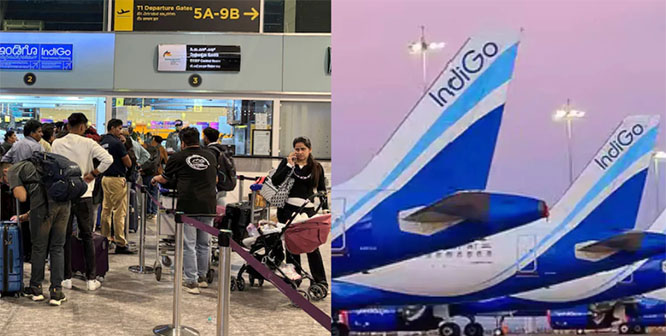
indigoflight.jpg

Domestic carrier IndiGo has cancelled over 180 flights from three major airports — Mumbai, Delhi and Bengaluru — on Thursday, December 4, as the airline struggles to secure the required crew to operate its flights in the wake of new flight-duty and rest-period norms for pilots.

While the number of cancellations at Mumbai airport stands at 86 (41 arrivals and 45 departures) for the day, at Bengaluru, 73 flights have been cancelled, including 41 arrivals, according to a PTI report that quoted sources.

"IndiGo cancelled over 180 flights on Thursday at three airports-Mumbai, Delhi and Bengaluru," the source told the news agency.

Besides, it had cancelled as many as 33 flights at Delhi airport for Thursday, the source said, adding, "The number of cancellations is expected to be higher by the end of the day."

The Gurugram-based airline's On-Time Performance (OTP) nosedived to 19.7 per cent at six key airports — Delhi, Mumbai, Chennai, Kolkata, Bengaluru and Hyderabad — on December 3, as it struggled to get the required crew to operate its services, down from almost half of December 2, when it was 35 per cent.

"IndiGo has been facing acute crew shortage since the implementation of the second phase of the FDTL (Flight Duty Time Limitations) norms, leading to cancellations and huge delays in its operations across the airports," a source had told PTI on Wednesday.

Chaos continued at several major airports for the third day on Thursday because of the cancellations.

A spokesperson for the Kempegowda International Airport (KIA) in Bengaluru said that 73 IndiGo flights had been cancelled on Thursday.

At least 150 flights were cancelled and dozens of others delayed on Wednesday, airport sources said, leaving thousands of travellers stranded, according to news agency Reuters.

The Directorate General of Civil Aviation (DGCA) has said it is investigating IndiGo flight disruptions and has asked the airline to submit the reasons for the current situation, as well as its plans to reduce flight cancellations and delays.

It may be mentioned here that the pilots' body, Federation of Indian Pilots (FIP), has alleged that IndiGo, despite getting a two-year preparatory window before the full implementation of new flight duty and rest period norms for cockpit crew, "inexplicably" adopted a "hiring freeze".

The FIP said it has urged the safety regulator, the DGCA, not to approve airlines' seasonal flight schedules unless they have adequate staff to operate their services "safely and reliably" in accordance with the New Flight Duty Time Limitations (FDTL) norms.

In a letter to the DGCA late on Wednesday, the FIP urged the DGCA to consider re-evaluating and reallocating slots to other airlines, which have the capacity to operate them without disruption during the peak holiday and fog season if IndiGo continues to "fail in delivering on its commitments to passengers due to its own avoidable staffing shortages."

Comments

Add new comment

  • Coastaldigest.com reserves the right to delete or block any comments.
  • Coastaldigset.com is not responsible for its readers’ comments.
  • Comments that are abusive, incendiary or irrelevant are strictly prohibited.
  • Please use a genuine email ID and provide your name to avoid reject.
News Network
December 4,2025

indigocrisis.jpg

Angry outbursts, long queues, and desperate appeals filled airports across India today as IndiGo grappled with a severe operational breakdown. Hundreds of flights have been cancelled or delayed, leaving thousands of passengers stranded through the night and forcing many to spend long hours at helpdesks.

Social media was flooded with videos of fliers pleading for assistance, accusing the airline of misleading updates, and demanding accommodation after being stuck for 10 to 12 hours at airports such as Hyderabad and Bengaluru.

What Triggered the Meltdown?

IndiGo has attributed the widespread disruption to “a multitude of unforeseen operational challenges.” These include:

•    Minor technology glitches
•    Winter-season schedule adjustments
•    Bad weather
•    Congestion in the aviation network
•    New crew rostering rules (Flight Duty Time Limitations or FDTL)

Among these, the most disruptive has been the implementation of the updated FDTL norms introduced by the Directorate General of Civil Aviation (DGCA) in January 2024.

These rules were designed to reduce pilot fatigue and improve passenger safety. Key changes include:

•    Longer weekly rest periods for flight crew
•    A revised definition of “night,” extending it by an extra hour
•    Tighter caps on flight duty timing and night landings
•    Cutting night shifts for pilots and crew from six per roster cycle to just two

Once these norms became fully enforceable, airlines were required to overhaul rosters well in advance. For IndiGo, this triggered a sudden shortage of crew available for duty, leading to cascading delays and cancellations.

Why IndiGo Was Hit the Hardest

IndiGo is India’s largest airline by a wide margin, operating over 2,200 flights daily. That’s roughly double the number operated by Air India.

When an airline of this size experiences even a 10–20% disruption, it translates to 200–400 flights being delayed or grounded — producing massive spillover effects across the country.

IndiGo also relies heavily on high-frequency overnight operations, a model typical of low-cost carriers that aim to maximise aircraft utilisation and reduce downtime. The stricter FDTL norms clash with these overnight-heavy schedules, forcing the airline to pull back services.

Aviation bodies have also criticised IndiGo’s preparedness. The Airline Pilots' Association of India (ALPA) said airlines were given a two-year window to plan for the new rules but “started preparing rather late.” IndiGo, it said, failed to rebuild crew rosters 15 days in advance as required.

The Federation of Indian Pilots (FIP) went further, calling the crisis the result of IndiGo’s “prolonged and unorthodox lean manpower strategy,” and alleging that the airline adopted a hiring freeze even as it knew the new rules would require more careful staffing.

How Many Flights Are Affected?

In the past 48 hours, over 300 flights have been cancelled. At least 100 more are expected to be cancelled today.

City-wise impact:

•    Hyderabad: 33 expected cancellations; several fliers stranded overnight
•    Bengaluru: over 70 expected cancellations
•    Delhi, Mumbai, Chennai, Kolkata: widespread delays and missed connections

Passengers shared distressing accounts online.

One customer at Hyderabad airport said they waited from 6 PM to 9 AM with “no action taken” regarding their delayed Pune flight. Another said IndiGo repeatedly told them the crew was “arriving soon,” only for the delay to stretch over 12 hours.

IndiGo has apologised for the disruption and promised that operations will stabilise within 48 hours, adding that “calibrated adjustments” are being made to contain the chaos.

What Should Passengers Do Now?

For those flying in the next few days, especially with IndiGo, here are key precautions:

1. Keep Checking Flight Status
Monitor your flight closely before leaving for the airport, as delays may be announced last-minute.

2. Arrive Early
Expect long queues at counters and security due to crowding and rescheduling.

3. Carry Essentials
Pack snacks, water, basic medicines, chargers, and items for children or senior citizens. Extended waiting times should be anticipated.

4. Use Flexible Booking Options
If you booked tickets with a free-date-change or cancellation option, consider using them.
If you haven’t booked yet, prefer refundable or flexible fares, or even consider alternate airlines.

5. Follow IndiGo’s Updates
Keep an eye on IndiGo’s official social media channels and contact customer support for rebooking and refund queries.

What Needs to Change?

Pilot groups have raised concerns not just about staffing but also the planning practices behind it.
The Federation of Indian Pilots accused IndiGo of:

•    Imposing an unexplained hiring freeze despite knowing the FDTL changes were coming
•    Entering non-poaching agreements that limited talent movement
•    Keeping pilot pay frozen
•    Underestimating the need to restructure operations in advance

They have urged DGCA to approve seasonal schedules only after airlines prove they have adequate pilot strength under the new norms.

ALPA also warned that some airlines might be using the delays as an “immature pressure tactic” to push DGCA for relaxations in the new rules — which, if granted, could compromise the very safety standards the norms were meant to protect.

Both pilot bodies stressed that no exemption should dilute safety, and any deviations should be based solely on scientific risk assessment.

Is a Solution in Sight?

While IndiGo says normalcy will return within two days, aviation experts believe that fully stabilising operations could take longer, depending on how quickly the airline can:
•    Re-align rosters
•    Mobilise rested crew
•    Boost staffing
•    Adjust its winter schedule to match regulatory requirements
Passengers are advised to remain prepared for continued delays over the next few days as the airline works through its backlog. 

Comments

Add new comment

  • Coastaldigest.com reserves the right to delete or block any comments.
  • Coastaldigset.com is not responsible for its readers’ comments.
  • Comments that are abusive, incendiary or irrelevant are strictly prohibited.
  • Please use a genuine email ID and provide your name to avoid reject.