



Indian media outlets critical of Modi govt faced harassment, says US report

Agencies
April 21, 2018

Washington, Apr 21: The Trump administration on Friday claimed that in India, media outlets critical of the (Narendra Modi-led) government were allegedly pressured or harassed in 2017.

"The Constitution (of India) provides for freedom of speech and expression, but it does not explicitly mention freedom of the press. The government (of India) generally respected these rights, although there were instances in which the government allegedly pressured or harassed media outlets critical of the government," US State Department said in its annual Human Rights Report for the year 2017.

The Congress mandated annual report of the Department of State chronicles situation of human rights in almost all countries of the world. While the situation of human rights in India, as compared to other countries, is much better, the State Department report chronicles major instances of incidents perceived as an attack on the press freedom in India.

This comes at a time when the Trump administration itself is being accused of launching an assault on the freedom of the press. President Donald Trump himself has coined the word "fake media" for those news reports and media outlets that are critical of him.

In its report, the State Department said individuals routinely criticised the government publicly and privately. According to Human Rights Watch, however, sedition and criminal defamation laws were sometimes used to prosecute citizens who criticised government officials or opposed state policies, it said.

According to media watchdog The Hoot's India Freedom Report detailing cases between January 2016 and April 2017, "there was an overall sense of shrinking liberty not experienced in recent years." The report detailed 54 alleged attacks on journalists, at least three cases of television news channels being banned, 45 internet shutdowns, and 45 sedition cases against individuals and groups.

Noting that independent media generally expressed a wide variety of views, it said the law prohibits content that could harm religious sentiments or provoke enmity among groups, and authorities invoked these provisions to restrict print media, broadcast media, and publication or distribution of books.

The report mentioned the CBI raid on NDTV, exit of Bobby Ghosh as the editor of The Hindustan Times and arrest of cartoonist G Bala.

The State Department said in 2017, some journalists and media persons reportedly experienced violence and harassment in response to their reporting. During the year a subcommittee of the Press Council of India issued a report to the government on the protection and preservation of the freedom of the press and integrity of journalists; the report highlighted that at least 80 journalists had been killed since 1990 and only one conviction had been made.

"Online and mobile harassment, particularly of female journalists, was prevalent, with some female activists and journalists reporting that they receive thousands of abusive tweets from 'trolls' every week," it said.

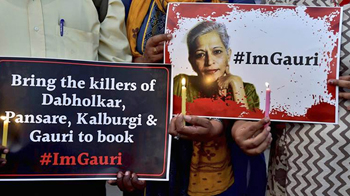
The report noted the killing of senior journalist and activist Gauri Lankesh and attack on television journalist Shantanu Bhowmik.

According to the State Department, the most significant human rights issues included police and security force abuses, such as extrajudicial killings, disappearances, torture, arbitrary arrest and detention, rape, harsh and life-threatening prison conditions, and lengthy pretrial detention.

Widespread corruption; reports of political prisoners in certain states; and instances of censorship and harassment of media outlets, including some critical of the government continued, it said. "There were government restrictions on foreign funding of some nongovernmental organizations (NGOs), including on those with views the government stated were not in the "national interest," thereby curtailing the work of these NGOs," it said.

Legal restrictions on religious conversion in eight states; lack of criminal investigations or accountability for cases related to rape, domestic violence, dowry-related deaths, honour killings, sexual harassment; and discrimination against women and girls remained serious problems, it said.

"A lack of accountability for misconduct at all levels of government persisted, contributing to widespread impunity. Investigations and prosecutions of individual cases took place, but lax enforcement, a shortage of trained police officers, and an overburdened and underresourced court system contributed to a small number of convictions," said the State Department.

Comments

Add new comment

  • Coastaldigest.com reserves the right to delete or block any comments.
  • Coastaldigset.com is not responsible for its readers’ comments.
  • Comments that are abusive, incendiary or irrelevant are strictly prohibited.
  • Please use a genuine email ID and provide your name to avoid reject.
News Network
December 7,2025

SHRIMP.jpg

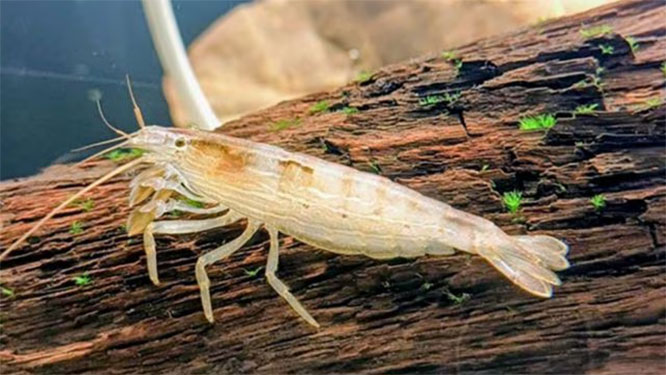
Mangaluru, Dec 7: A rare bamboo shrimp has been rediscovered on mainland India more than 70 years after it was last reported, confirming for the first time the presence of Atyopsis spinipes in the country. The find was made by researchers from the Centre for Climate Change Studies at Sathyabama Institute of Science and Technology, Chennai, during surveys in Karnataka and Odisha.

The team — shrimp expert Dr S Prakash, PhD scholar K Kunjulakshmi, and Mangaluru-based researcher Maclean Antony Santos — combined field surveys, ecological assessments and DNA analysis to identify the elusive species. Their findings, published in Zootaxa, resolve decades of taxonomic confusion stemming from a 1951 report that misidentified the species as Atyopsis moluccensis without strong evidence.

The shrimp has now been confirmed at two locations: the Mulki–Pavanje estuary near Mangaluru and the Kuakhai River in Bhubaneswar. Historical specimens from the Andaman Islands, previously labelled as A. moluccensis, were also found to be misidentified and actually belong to A. spinipes.

The rediscovery began after an aquarium hobbyist in Odisha spotted a shrimp in 2022, prompting systematic surveys across Udupi, Karwar and Mangaluru. Four female specimens were collected in Mulki and one in Odisha, all genetically matching.

Researchers warn the species may exist in very small, vulnerable populations as freshwater habitats face increasing pressure from pollution, sand mining and infrastructure development. All verified specimens have been deposited with the Zoological Survey of India for future reference.

Comments

Add new comment

  • Coastaldigest.com reserves the right to delete or block any comments.
  • Coastaldigset.com is not responsible for its readers’ comments.
  • Comments that are abusive, incendiary or irrelevant are strictly prohibited.
  • Please use a genuine email ID and provide your name to avoid reject.
News Network
December 15,2025

Mangaluru police have arrested a 27-year-old NRI on his return from Saudi Arabia in connection with an Instagram post allegedly containing derogatory and provocative remarks about the Hindu religion, officials said on Monday.

The accused, Abdul Khader Nehad, a resident of Ulaibettu in Mangaluru, was working in Saudi Arabia when the post was uploaded, police said.

A suo motu case was registered at the Bajpe police station on October 11 after an allegedly offensive post circulated from the Instagram account ‘team_sdpi_2025’. Police said the content was flagged for being provocative and derogatory in nature.

During the investigation, technical analysis traced the Instagram post to Nehad, who was residing abroad at the time, a senior police officer said. Based on these findings, a Look Out Circular (LOC) was issued against him.

On December 14, Nehad arrived from Saudi Arabia at Calicut International Airport in Kerala, where he was taken into custody on arrival. Police said further investigation is underway.

Comments

Add new comment

  • Coastaldigest.com reserves the right to delete or block any comments.
  • Coastaldigset.com is not responsible for its readers’ comments.
  • Comments that are abusive, incendiary or irrelevant are strictly prohibited.
  • Please use a genuine email ID and provide your name to avoid reject.
News Network
December 13,2025

New Delhi: School-going children are picking up drug and smoking habits and engaging in consumption of alcohol, with the average age of introduction to such harmful substances found to be around 13 years, suggesting a need for earlier interventions as early as primary school, a multi-city survey by AIIMS-Delhi said.

The findings also showed substance use increased in higher grades, with grade XI/XII students two times more likely to report use of substances when compared with grade VIII students. This emphasised the importance of continued prevention and intervention through middle and high school.

The study led by Dr Anju Dhawan of AIIMS's National Drug Dependence Treatment Centre, published in the National Medical Journal of India this month, looks at adolescent substance use across diverse regions.

The survey included 5,920 students from classes 8, 9, 11 and 12 in urban government, private and rural schools across 10 cities -- Bengaluru, Chandigarh, Delhi, Dibrugarh, Hyderabad, Imphal, Jammu, Lucknow, Mumbai, and Ranchi. The data were collected between May 2018 and June 2019.

The average age of initiation for any substance was 12.9 (2.8) years. It was lowest for inhalants (11.3 years) followed by heroin (12.3 years) and opioid pharmaceuticals (without prescription; 12.5 years).

Overall, 15.1 per cent of participants reported lifetime use, 10.3 per cent reported past year use, and 7.2 per cent reported use in the past month of any substance, the study found.

The most common substances used in the past year, after tobacco (4 per cent) and alcohol (3.8 per cent), were opioids (2.8 per cent), followed by cannabis (2 per cent) and inhalants (1.9 per cent). Use of non-prescribed pharmaceutical opioids was most common among opioid users (90.2 per cent).

On being asked, 'Do you think this substance is easily available for a person of your age' separately for each substance category, nearly half the students (46.3 per cent) endorsed that tobacco products and more than one-third of the students (36.5 per cent) agreed that a person of their age can easily procure alcohol products.

Similarly, for Bhang (21.9 per cent), ganja/charas (16.1 per cent), inhalants (15.2 per cent), sedatives (13.7 per cent), opium and heroin (10 per cent each), the students endorsed that these can be easily procured.

About 95 per cent of the children, irrespective of their grade, agreed with the statement that 'drug use is harmful'.

The rates of substance use (any) among boys were significantly higher than those of girls for substance use (ever), use in the past year and use in the past 30 days. Compared to grade VIII students, grade IX students were more likely, and grade XI/XII students were twice as likely to have used any substance (ever).

The likelihood of past-year use of any substance was also higher for grade IX students and for grade XI/XII students as compared to grade VIII students.

About 40 per cent of students mentioned that they had a family member who used tobacco or alcohol each. The use of cannabis (any product) and opioid (any product) by a family member was reported by 8.2 per cent and 3.9 per cent of students, respectively, while the use of other substances, such as inhalants/sedatives by family was 2-3 per cent, the study found.

A relatively smaller percentage of students reported use of tobacco or alcohol among peers as compared to among family members, while a higher percentage reported inhalants, sedatives, cannabis or opioid use among peers.

Children using substances (past year) compared to non-users reported significantly higher any substance use by their family members and peers.

There were 25.7 per cent students who replied 'yes' to the question 'conflicts/fights often occur in your family'. Most students also replied affirmatively to 'family members are aware of how their time is being spent' and 'damily members are aware of with whom they spend their time'.

Comments

Add new comment

  • Coastaldigest.com reserves the right to delete or block any comments.
  • Coastaldigset.com is not responsible for its readers’ comments.
  • Comments that are abusive, incendiary or irrelevant are strictly prohibited.
  • Please use a genuine email ID and provide your name to avoid reject.