India's growth slowed due to demonetisation, GST: Donald Trump administration

Agencies
February 22, 2018

Washington, Feb 22: America's bilateral trade deficit with four major countries, including India, narrowed in the first three quarters of 2017 as compared to the previous year, the US administration said in a report according to which India's growth has slowed due to the effects of its structural economic reforms.

The Economic Report of the President (ERP) that shows a path for continued growth and paints a rosy picture for the American economy, alleges that countries, including India and Brazil - both GATT signatories since 1948 - have been far less open, preserving high bound rates and avoiding universal binding coverage.

"Growth in India has slowed due to the effects of its structural economic reforms. India's demonetisation of large-denomination notes in November 2016 invalidated 86 per cent of the cash in circulation in an economy where more than 90 per cent of transactions were cash-based," it said.

"The introduction in July 2017 of a single, country-wide sales tax replaced a vast number of different state and local tax rates, and has created short-term uncertainty," the report noted.

The report expressed concern over increasing share of non-performing loans (NPLs) in India's banking sector, which it said poses further risks.

According to country-sourced statistics provided to the IMF, NPLs as a share of all loans (i.E. NPL slippage ratio) in India stood at 9.7 per cent in the third quarter of 2017, compared with 1.7 per cent in China (IMF 2017).

"NPLs have increased at an alarming rate in recent years, with the current NPL slippage ratio in India almost double that in FY 2014/15 (IMF 2017b). Public sector banks, with the State Bank of India as a leading example, account for the lion's share of NPLs in the banking sector," it said.

The Reserve Bank of India predicts that gross NPLs as a proportion of all loans will increase to 10.8 per cent in the first quarter of 2018, and to 11. 1 per cent by September 2018.

"However, the stress of India's banking sector may be ameliorated in the future, given that the government recently announced a USD 32.4 billion package to recapitalise publicly- owned banks," the report said.

Noting that India has been the most frequent user of anti-dumping measures, the White House said delays in the approval of agricultural products derived from biotechnology in China, the EU, India, and other countries result in increased market uncertainty among technology providers, farmers, and traders of US corn, soy, cotton, and alfalfa—leading to reduced exports of these products.

The Trump administration also blamed India for not implementing the WTO ruling on poultry.

"India has failed to revise its requirements for poultry in a manner that would allow for US imports, and the case continues to be litigated in the WTO," it said.

"Since 2007, India has restricted various US agricultural products, including poultry meat, eggs, and live pigs, supposedly to prevent the entry of avian influenza into India," the report said.

The US has maintained that no scientific basis supports the ban.

In March 2012, the US initiated a WTO dispute by requesting consultations with India.

In emerging and developing economies, such as Brazil, China, India, Russia, and certain other countries in Africa, Asia, and Latin America, strengthening the external environment continues to help output growth recover.

"There are, however, certain risks to future growth. As monetary policy normalises with higher interest rates in advanced economies, emerging and developing economies could face an outflow of capital," it said.

"Financial stability risks are also increasing due to the increase in nonperforming loans on the private sector balance sheets of two of the biggest and fastest-growing emerging market economies - China and India. Credit growth in China has arguably also become excessive, as it continues to shift from growth led by exports and investment to an economy led by internal demand," it said.

Comments

Add new comment

  • Coastaldigest.com reserves the right to delete or block any comments.
  • Coastaldigset.com is not responsible for its readers’ comments.
  • Comments that are abusive, incendiary or irrelevant are strictly prohibited.
  • Please use a genuine email ID and provide your name to avoid reject.
News Network
December 7,2025

envoy.jpg

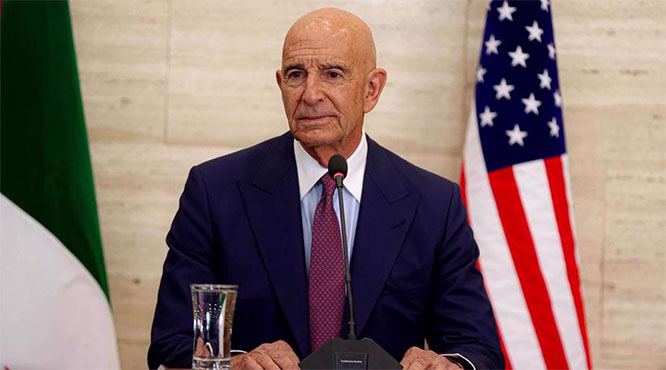
Since 1946, the United States has attempted 93 coups or “regime change” operations across the world — including two in Iran, US Special Envoy for Syria Tom Barrack has admitted.

Speaking to the UAE-based IMI Media Group, in remarks published by The National, Barrack said Washington tried twice to overthrow the Iranian government but failed both times. 

“For (Trump) then to be imputed with regime change — we had two regime changes in Iran already. Neither one worked. So I think wisely leave it to the region to solve,” said Barrack, who also serves as the US ambassador to Turkey.

His comments come six months after the US joined Israel in airstrikes against Iran during ongoing indirect nuclear negotiations between Tehran and Washington.

On June 13, Israel launched an attack on Iran that killed at least 1,064 people and hit civilian infrastructure. Days later, the United States targeted three nuclear facilities — Fordow, Natanz and Isfahan — in what Iran called a clear violation of international law. Iranian retaliation eventually forced a halt to the assault on June 24.

Barrack further claimed that US President Donald Trump and Foreign Secretary Marco Rubio are “not into regime change” and prefer a regional approach driven by Middle Eastern countries themselves. According to him, regional dialogue and non-interference by outside powers offer a more durable path forward.

He added that Washington is still open to an agreement with Tehran if Iranian authorities show “seriousness” and willingness to engage constructively.

However, Iran maintains the US has not shown readiness for meaningful talks. In an interview with Japan’s Kyodo News, Iranian Foreign Minister Abbas Araghchi said negotiations could advance only if Washington acknowledges Iran’s right to peaceful nuclear energy and lifts unilateral sanctions.

Comments

Add new comment

  • Coastaldigest.com reserves the right to delete or block any comments.
  • Coastaldigset.com is not responsible for its readers’ comments.
  • Comments that are abusive, incendiary or irrelevant are strictly prohibited.
  • Please use a genuine email ID and provide your name to avoid reject.
News Network
November 24,2025

israelsyra.jpg

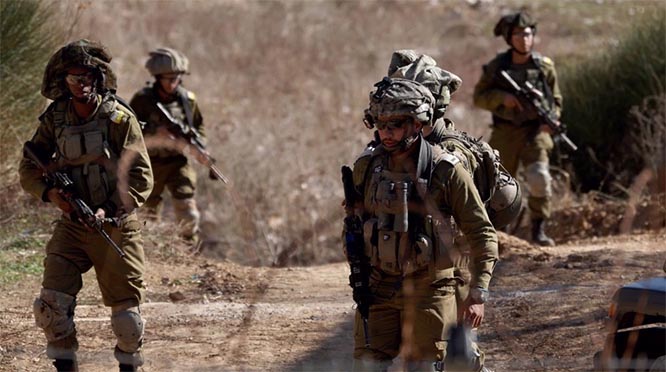
Israeli forces have pushed over the Syrian frontier, erecting a checkpoint and stopping vehicles in the southwestern city of Quneitra, in yet another breach of the Arab country’s sovereignty.

The violation took place on Sunday, when the troops made their way across the border, setting up the outpost near the Ain al-Bayda junction in northern Quneitra, Syrian outlets reported.

According to the al-Ikhbariya paper, an Israeli detachment positioned itself at the junction, halting cars and conducting searches.

The Syrian Arab News Agency (SANA) reported that three Israeli military vehicles then moved further into the northern countryside, deploying between the town of Jubata al-Khashab and the villages of Ofaniya and Ain al-Bayda. The agency added that a separate Israeli unit mounted a new incursion in the central region, approaching the villages of Umm Batina and al-Ajraf.

Residents said such activities have surged in recent months, pointing to Israeli advances onto farmland, leveling of extensive forested areas, arrests, and spread of mobile checkpoints.

The Israeli regime began markedly increasing its military aggression against Syria last year.

The escalation coincided with increasingly ferocious onslaughts throughout the country by the so-called Hay'at Tahrir al-Sham (HTS) Takfiri terrorist group, which the government of President Bashar al-Assad had confined to northwestern Syria. The HTS, however, managed to overthrow the government as the Israeli attacks would pummel the country’s civilian and defensive infrastructure.

Various reports have shown that, during the escalation, the regime conducted more than 1,000 airstrikes on the Syrian territory and over 400 ground raids into the south.

Following the collapse of the Assad government, Tel Aviv also widened its grip over the occupied Golan Heights by taking control of a demilitarized buffer zone, in defiance of a 1974 Disengagement Agreement. Earlier this month, senior Israeli officials, including Prime Minister Benjamin Netanyahu, visited the buffer zone, prompting expressions of alarm on the part of the United Nations.

The United States, the regime’s biggest ally, has, meanwhile, been fraternizing the HTS head Abu Mohammed al-Jolani amid the widely reported prospect of rapprochement with Tel Aviv.

Comments

Add new comment

  • Coastaldigest.com reserves the right to delete or block any comments.
  • Coastaldigset.com is not responsible for its readers’ comments.
  • Comments that are abusive, incendiary or irrelevant are strictly prohibited.
  • Please use a genuine email ID and provide your name to avoid reject.
News Network
December 6,2025

indigoticket.jpg

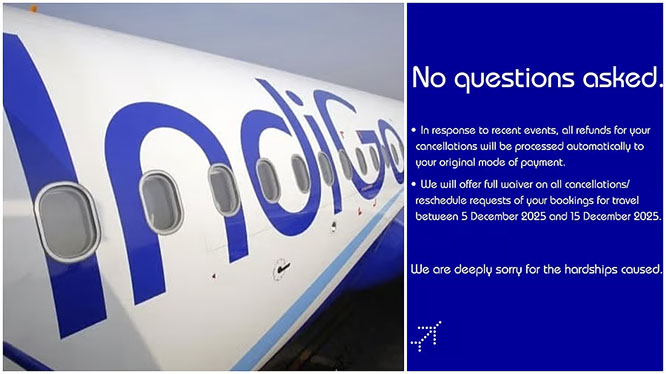
With IndiGo flight disruptions impacting thousands of passengers, the airline on Saturday said that it will offer full waiver on all cancellations/reschedule requests for travel bookings between December 5, 2025 and December 15, 2025.

Earlier in the day, the civil aviation ministry had directed the airline to complete the ticket refund process for the cancelled flights by Sunday evening, as well as ensure baggage separated from the travellers are delivered in the next two days.

In a post on X, titled 'No questions asked', IndiGo wrote, "In response to recent events, all refunds for your cancellations will be processed automatically to your original mode of payment."

"We are deeply sorry for the hardships caused," it further added.

Several passengers, however, complained of not getting full refund as promised by the airline.

Netizens have shared screenchots of getting charged for airline cancellation fee and convenience fee.

"Please tell me why u have did this airline cancellation charges when u say full amount will be refunded (sic)," a user wrote sharing a screenshot of the refund page.

"Well, but you have still debited the convenience charges," wrote another.

Passengers have also raised concerns about the "cancel" option being disabled on the IndiGo app. "First enable the 'Cancel' button on your App & offer full refund on tickets cancelled by customers between the said dates," wrote a user.

A day after the country's largest airline, IndiGo, cancelled more than 1,000 flights and caused disruptions for the fifth day on Saturday, the ministry said that any delay or non-compliance in refund processing will invite immediate regulatory action.

The refund process for all cancelled or disrupted flights must be completed by 8 pm on Sunday, the ministry said in a statement.

"Airlines have also been instructed not to levy any rescheduling charges for passengers whose travel plans were affected by cancellations," it said.

On Saturday, more than 400 flights were cancelled at various airports.

IndiGo has also been instructed to set up dedicated passenger support and refund facilitation cells.

Comments

Add new comment

  • Coastaldigest.com reserves the right to delete or block any comments.
  • Coastaldigset.com is not responsible for its readers’ comments.
  • Comments that are abusive, incendiary or irrelevant are strictly prohibited.
  • Please use a genuine email ID and provide your name to avoid reject.