



Iraq crackdown kills nearly 40 after Iran mission torched

Agencies
November 29, 2019

Nasiriyah, Nov 29: Iraq crackdown kills nearly 40 after Iran mission torched Nasiriyah (Iraq), Nov 29 (AFP) Iraq's protest-hit cities saw one of their bloodiest days yet as a government crackdown killed nearly 40 demonstrators following the dramatic torching of an Iranian consulate.

The country's capital and south have been rocked by the worst street unrest since the 2003 US-led invasion that toppled Saddam Hussein, with a protest movement venting fury at the government and its backers in neighbouring Iran.

Thursday's violence brought the total death toll since early October to more than 390, with more than 15,000 wounded, according to an AFP tally.

The highest toll was in the flashpoint southern city of Nasiriyah, where 25 people were killed when security forces used "excessive force" to break up rallies, according to the Iraqi Human Rights Commission.

Another two protesters were killed in Baghdad and ten died in the Shiite shrine city of Najaf, where demonstrators had torched the Iranian consulate late on Wednesday.

Crowds outraged at Tehran's political influence in Iraq had stormed and burned down the mission, yelling "Victory to Iraq!" and "Iran out!" In response, Prime Minister Adel Abdel Mahdi early on Thursday ordered military chiefs to deploy in several restive provinces to "impose security and restore order", the army said.

But by the afternoon, following the bloody crackdown in the restive southern city of Nasiriyah, the premier had already sacked one commander, General Jamil Shummary.

The governor of Dhi Qar province, of which Nasiriyah is the capital, resigned later on that evening. More than 200 people were also wounded as security forces cleared sit-ins with live fire, medics and security sources said.

Medics in Nasiriyah said they had to carry out more than 80 life-saving surgeries in hospitals crowded with casualties.

Dhi Qar announced three days of mourning as thousands attended funeral processions there in defiance of a curfew announced earlier in the day.

"We're staying until the regime falls and our demand are met!" they chanted.

Demonstrators, dispersed by security forces, regrouped at Nasiriyah's main police station, setting it on fire. They then surrounded its main military headquarters as armed members of the area's powerful tribes deployed along main highways to block military reinforcements trying to reach the city.

"The scenes from Nasiriyah this morning more closely resemble a war zone than city streets and bridges," said Lynn Maalouf of rights group Amnesty International. "This bloodbath must stop now." The new phase of unrest in southern Iraq was unleashed after protesters had late on Wednesday stormed the Iranian consulate in Najaf, apparently evacuated by its staff.

An AFP correspondent saw them setting tyres ablaze around the site, sending flames and thick smoke into the night sky. Demonstrators have blamed powerful eastern neighbour Iran for propping up the Baghdad government which they are seeking to topple.

Tehran has demanded Iraq take decisive action against the protesters, with foreign ministry spokesman Abbas Mousavi condemning the consulate attack.

"Iran has officially communicated its disgust to the Iraq ambassador in Tehran," he told Iran's state news agency IRNA.

Later Thursday, ten protesters were shot dead close to the burnt consulate, medics said.

AFP's correspondent said clashes went on into the night between protesters and armed men in civilian clothes.

Many expected Iraq's highest Shiite authority Grand Ayatollah Ali Sistani, who lives in Najaf, to address the violence in his weekly sermon on Friday. He has backed the protests and repeatedly called for restraint in dealing with them.

Iran's consulate in Iraq's other holy city of Karbala was targeted earlier this month, with security forces shooting four demonstrators dead. The two countries have close but complex ties and Tehran holds significant sway among Iraqi political and military leaders.

Top Iranian commander Qasem Soleimani has held several meetings in Baghdad and Najaf to convince political factions to close ranks around Abdel Mahdi.

Those meetings, sources told AFP, brought firebrand cleric Moqtada Sadr back into the fold after he called on Abdel Mahdi to resign.

But on Thursday, Sadr reverted course, saying it would "be the beginning of the end for Iraq" if the government did not step down.

Sit-ins, road closures and street marches have shuttered public offices and schools for weeks in many southern cities.

On Thursday, clashes flared near Karbala's provincial headquarters between some 200 protesters and riot police using tear gas and flash bangs.

Protesters kept up sit-ins in Kut, Amara and Hilla, all south of the capital, despite an increased security presence.

In the oil-rich port city of Basra, most government offices reopened but schools remained closed as security forces deployed in the streets.

Iraq is OPEC's second-largest crude producer and the oil exported through Basra's offshore terminals makes up more than 90 percent of the government's budget.

Protesters have accused the ruling elite of embezzling state funds, desperately needed to restore failing public services and fix schools.

Corruption is rampant in Iraq, ranked the world's 12th most graft-ridden country by Transparency International. The World Bank says one in five Iraqis lives in poverty and youth unemployment stands at 25 percent.

Comments

Add new comment

  • Coastaldigest.com reserves the right to delete or block any comments.
  • Coastaldigset.com is not responsible for its readers’ comments.
  • Comments that are abusive, incendiary or irrelevant are strictly prohibited.
  • Please use a genuine email ID and provide your name to avoid reject.
News Network
November 30,2025

The United Nations Committee against Torture (CAT) has condemned the Israeli regime for enforcing a policy of “organized torture” against Palestinians.

In a report published on Friday, CAT stated that the occupying regime enforces a deliberate policy of “organized and widespread torture and ill-treatment” against Palestinian abductees, particularly since October 7, 2023, when Israel launched its genocidal war on Gaza.

The committee expressed “deep concern over repeated severe beatings, dog attacks, electrocution, water-boarding, use of prolonged stress positions [and] sexual violence” inflicted on Palestinians.

Palestinian prisoners were degraded by “being made to act like animals or being urinated on,” systematically denied medical care, and subjected to excessive restraints, “in some cases resulting in amputation,” the report added.

CAT also condemned the routine application of “unlawful combatants law” to justify the prolonged detention without trial of thousands of Palestinian men, women, and children.

More than 10,000 Palestinians, including women and children, are currently held in Israeli prisons, according to Palestinian and international human rights groups, with 3,474 Palestinians in “administrative detention,” meaning they are imprisoned without trial for indefinite periods.

The report highlighted the “high proportion of children who are currently detained without charge or on remand,” noting that while Israel sets the age of criminal responsibility at 12, even younger children have been abducted.

Children designated as security prisoners face severe restrictions on family contact, may be subjected to solitary confinement, and are denied access to education, in clear violation of international law.

The committee further suggested that Israel’s policies across the Occupied Territories constitute collective torture against the Palestinian population.

“A range of policies adopted by Israel in the course of its continued unlawful presence in the Occupied Palestinian Territory amounts to cruel, inhuman or degrading living conditions for the Palestinian population,” the report said.

On Thursday, the Palestinian resistance movement Hamas condemned the systematic killing and torture of Palestinian abductees in Israeli prisons, urging international action to halt these abuses.

Citing human rights data, Hamas stated that 94 Palestinians have been killed in Israeli prisons since the start of Tel Aviv’s genocidal war on Gaza.

“This reflects an organized criminal approach that has turned these prisons into direct killing grounds to eliminate our people,” the resistance movement said.

Hamas called on the international community, the UN, and human rights organizations to immediately pressure Israel to end crimes against prisoners and uphold their rights as guaranteed by all international conventions and norms.

Comments

Add new comment

  • Coastaldigest.com reserves the right to delete or block any comments.
  • Coastaldigset.com is not responsible for its readers’ comments.
  • Comments that are abusive, incendiary or irrelevant are strictly prohibited.
  • Please use a genuine email ID and provide your name to avoid reject.
News Network
November 24,2025

israelsyra.jpg

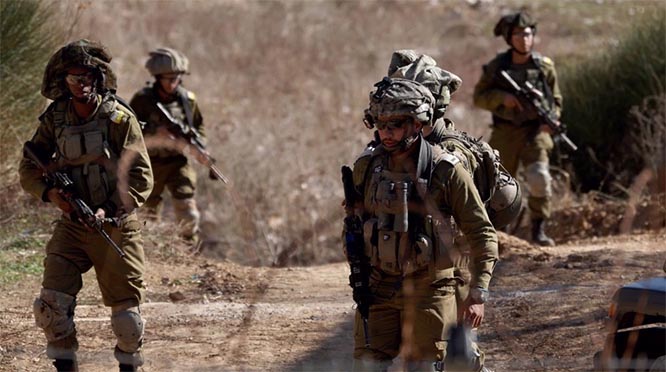
Israeli forces have pushed over the Syrian frontier, erecting a checkpoint and stopping vehicles in the southwestern city of Quneitra, in yet another breach of the Arab country’s sovereignty.

The violation took place on Sunday, when the troops made their way across the border, setting up the outpost near the Ain al-Bayda junction in northern Quneitra, Syrian outlets reported.

According to the al-Ikhbariya paper, an Israeli detachment positioned itself at the junction, halting cars and conducting searches.

The Syrian Arab News Agency (SANA) reported that three Israeli military vehicles then moved further into the northern countryside, deploying between the town of Jubata al-Khashab and the villages of Ofaniya and Ain al-Bayda. The agency added that a separate Israeli unit mounted a new incursion in the central region, approaching the villages of Umm Batina and al-Ajraf.

Residents said such activities have surged in recent months, pointing to Israeli advances onto farmland, leveling of extensive forested areas, arrests, and spread of mobile checkpoints.

The Israeli regime began markedly increasing its military aggression against Syria last year.

The escalation coincided with increasingly ferocious onslaughts throughout the country by the so-called Hay'at Tahrir al-Sham (HTS) Takfiri terrorist group, which the government of President Bashar al-Assad had confined to northwestern Syria. The HTS, however, managed to overthrow the government as the Israeli attacks would pummel the country’s civilian and defensive infrastructure.

Various reports have shown that, during the escalation, the regime conducted more than 1,000 airstrikes on the Syrian territory and over 400 ground raids into the south.

Following the collapse of the Assad government, Tel Aviv also widened its grip over the occupied Golan Heights by taking control of a demilitarized buffer zone, in defiance of a 1974 Disengagement Agreement. Earlier this month, senior Israeli officials, including Prime Minister Benjamin Netanyahu, visited the buffer zone, prompting expressions of alarm on the part of the United Nations.

The United States, the regime’s biggest ally, has, meanwhile, been fraternizing the HTS head Abu Mohammed al-Jolani amid the widely reported prospect of rapprochement with Tel Aviv.

Comments

Add new comment

  • Coastaldigest.com reserves the right to delete or block any comments.
  • Coastaldigset.com is not responsible for its readers’ comments.
  • Comments that are abusive, incendiary or irrelevant are strictly prohibited.
  • Please use a genuine email ID and provide your name to avoid reject.