



Justice Chelameswar red flags govt interference, asks CJI to convene full court

DHNS
March 30, 2018

New Delhi, Mar 30: Any "bonhomie" between the judiciary and the government would sound the "death knell" for democracy, senior-most Supreme Court judge Justice J Chelameswar has told the Chief Justice of India (CJI) and urged him to convene a full court to deal with the alleged executive interference in the judiciary.
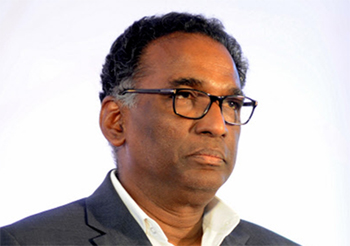
In an unprecedented letter to the CJI, copies of which were also sent to 22 other apex court judges on March 21, Justice Chelameswar has questioned the probe initiated by Karnataka High Court Chief Justice Dinesh Maheshwari against District and Sessions Judge Krishna Bhat at the request of the Union Ministry of Law and Justice, despite his name being recommended for elevation twice by the Collegium.

Efforts to get a response to the letter from the office of CJI Dipak Misra did not fructify, while several legal luminaries, when contacted, chose not to comment on the matter.

Justice Chelameswar, who had held the unprecedented January 12 press conference along with three other senior judges raising issues including the allocation of cases by the CJI, expressed concern over the executive directly asking the Karnataka Chief Justice to conduct a probe against Bhat, saying this was done even after his name was recommended twice for judgeship by the apex court collegium.

In 2016, then Chief Justice of India T S Thakur had asked the then high court chief justice S K Mukherjee to hold an inquiry against Bhat on certain allegations levelled by a subordinate woman judicial officer. After the probe had given him a clean chit, Bhat's name was recommended by the collegium for elevation.

"Someone from Bangalore (sic) has already beaten us in the race to the bottom. The Chief Justice of Karnataka High Court is more than willing to do the executive bidding, behind our back," Justice Chelameswar wrote in his six-page letter.

Raising the issue of judicial independence, he said, "We, the judges of the Supreme Court of India, are being accused of ceding our independence and our institutional integrity to the Executive's incremental encroachment.

"The executive is always impatient and brooks no disobedience even of the judiciary if it can. Attempts were always made to treat the Chief Justices as the Departmental Heads in the Secretariat. So much for our 'independence and pre-eminence' as a distinct State organ."

The letter said: "Let us also not forget that the bonhomie between the judiciary and the government in any State sounds the death knell to democracy. We both are mutual watchdogs, so to say, no mutual admirers, much less constitutional cohorts".

Justice Chelameswar referred to the "unhappy experience" where the government sat tight over the files even after the Collegium recommends names for appointment in the higher judiciary.

"For some time, our unhappy experience has been that the government's accepting our recommendations is an exception and sitting on them is the norm. 'Inconvenient' but able judges or judges to be are being bypassed through this route," he alleged.

The apex court judge, who demits office on June 22, took serious note of the communication between the Karnataka High Court chief justice and the executive saying, "the role of the High Court ceases with its recommendation".

He said that any correspondence, clarificatory or otherwise, has to be between the executive and the Supreme Court.

The top court judge also said the day may not be "far off" when the executive would directly communicate with the High Court about pending cases and ask what orders are to be passed.

While referring to Bhat's case, he said, "To my mind, I could recollect no instance from the past, of the executive bypassing the Supreme Court, more particularly while its recommendations are pending, to look into the allegations already falsified and conclusively rejected by us.

"Asking the High Court to re-evaluate our recommendation in this matter has to be deemed improper and contumacious."

Beseeching the CJI to take up the issue of executive interference in judiciary by convening a full court on the judicial side, he said this was necessary in order to ensure that the institution (Supreme Court) remained relevant under the scheme of the Constitution.

He also referred to a past instance when the apex court had taken serious note of a direct communication of the then Law Minister to the High Courts on the issue of judges' transfer which had finally led to the judgement in first judges case in 1981. Later, the Collegium had assumed power with regard to judges' appointment in the higher judiciary.

Comments

Add new comment

  • Coastaldigest.com reserves the right to delete or block any comments.
  • Coastaldigset.com is not responsible for its readers’ comments.
  • Comments that are abusive, incendiary or irrelevant are strictly prohibited.
  • Please use a genuine email ID and provide your name to avoid reject.
News Network
December 4,2025

indigoflight.jpg

Domestic carrier IndiGo has cancelled over 180 flights from three major airports — Mumbai, Delhi and Bengaluru — on Thursday, December 4, as the airline struggles to secure the required crew to operate its flights in the wake of new flight-duty and rest-period norms for pilots.

While the number of cancellations at Mumbai airport stands at 86 (41 arrivals and 45 departures) for the day, at Bengaluru, 73 flights have been cancelled, including 41 arrivals, according to a PTI report that quoted sources.

"IndiGo cancelled over 180 flights on Thursday at three airports-Mumbai, Delhi and Bengaluru," the source told the news agency.

Besides, it had cancelled as many as 33 flights at Delhi airport for Thursday, the source said, adding, "The number of cancellations is expected to be higher by the end of the day."

The Gurugram-based airline's On-Time Performance (OTP) nosedived to 19.7 per cent at six key airports — Delhi, Mumbai, Chennai, Kolkata, Bengaluru and Hyderabad — on December 3, as it struggled to get the required crew to operate its services, down from almost half of December 2, when it was 35 per cent.

"IndiGo has been facing acute crew shortage since the implementation of the second phase of the FDTL (Flight Duty Time Limitations) norms, leading to cancellations and huge delays in its operations across the airports," a source had told PTI on Wednesday.

Chaos continued at several major airports for the third day on Thursday because of the cancellations.

A spokesperson for the Kempegowda International Airport (KIA) in Bengaluru said that 73 IndiGo flights had been cancelled on Thursday.

At least 150 flights were cancelled and dozens of others delayed on Wednesday, airport sources said, leaving thousands of travellers stranded, according to news agency Reuters.

The Directorate General of Civil Aviation (DGCA) has said it is investigating IndiGo flight disruptions and has asked the airline to submit the reasons for the current situation, as well as its plans to reduce flight cancellations and delays.

It may be mentioned here that the pilots' body, Federation of Indian Pilots (FIP), has alleged that IndiGo, despite getting a two-year preparatory window before the full implementation of new flight duty and rest period norms for cockpit crew, "inexplicably" adopted a "hiring freeze".

The FIP said it has urged the safety regulator, the DGCA, not to approve airlines' seasonal flight schedules unless they have adequate staff to operate their services "safely and reliably" in accordance with the New Flight Duty Time Limitations (FDTL) norms.

In a letter to the DGCA late on Wednesday, the FIP urged the DGCA to consider re-evaluating and reallocating slots to other airlines, which have the capacity to operate them without disruption during the peak holiday and fog season if IndiGo continues to "fail in delivering on its commitments to passengers due to its own avoidable staffing shortages."

Comments

Add new comment

  • Coastaldigest.com reserves the right to delete or block any comments.
  • Coastaldigset.com is not responsible for its readers’ comments.
  • Comments that are abusive, incendiary or irrelevant are strictly prohibited.
  • Please use a genuine email ID and provide your name to avoid reject.
News Network
December 6,2025

pilot.jpg

New Delhi: IndiGo, India’s largest airline, faced major operational turbulence this week after failing to prepare for new pilot-fatigue regulations issued by the Directorate General of Civil Aviation (DGCA). The stricter rules—designed to improve flight safety—took effect in phases through 2024, with the latest implementation on November 1. IndiGo has acknowledged that inadequate roster planning led to widespread cancellations and delays.

Below are the key DGCA rules that affected IndiGo’s operations:

1. Longer Mandatory Weekly Rest

Weekly rest for pilots has been increased from 36 hours to 48 hours.

The government says the extended break is essential to curb cumulative fatigue. This rule remains in force despite the current crisis.

2. Cap on Night Landings

Pilots can now perform only two night landings per week—a steep reduction from the earlier limit of six.

Night hours, defined as midnight to early morning, are considered the least alert period for pilots.

Given the disruptions, this rule has been temporarily relaxed for IndiGo until February 10.

3. Reduced Maximum Night Flight Duty

Flight duty that stretches into the night is now capped at 10 hours.

This measure has also been kept on hold for IndiGo until February 10 to stabilize operations.

4. Weekly Rest Cannot Be Replaced With Personal Leave

Airlines can no longer count a pilot’s personal leave as part of the mandatory 48-hour rest.

Pilots say this closes a loophole that previously reduced actual rest time.

Currently, all airlines are exempt from this rule to normalise travel.

5. Mandatory Fatigue Monitoring

Airlines must submit quarterly fatigue reports along with corrective actions to DGCA.

This system aims to create a transparent fatigue-tracking framework across the industry.

The DGCA has stressed that these rules were crafted to strengthen flight safety and align India with global fatigue-management standards. The temporary relaxations are expected to remain until February 2025, giving IndiGo time to stabilise its schedules and restore normal air travel.

Comments

Add new comment

  • Coastaldigest.com reserves the right to delete or block any comments.
  • Coastaldigset.com is not responsible for its readers’ comments.
  • Comments that are abusive, incendiary or irrelevant are strictly prohibited.
  • Please use a genuine email ID and provide your name to avoid reject.
News Network
December 4,2025

Mangaluru: Chaos erupted at Mangaluru International Airport (MIA) after IndiGo flight 6E 5150, bound for Mumbai, was repeatedly delayed and ultimately cancelled, leaving around 100 passengers stranded overnight. The incident highlights the ongoing country-wide operational disruptions affecting the airline, largely due to the implementation of new Flight Duty Time Limitations (FDTL) norms for crew.

The flight was initially scheduled for 9:25 PM on Tuesday but was first postponed to 11:40 PM, then midnight, before being cancelled around 3:00 AM. Passengers expressed frustration over last-minute communication and the lack of clarity, with elderly and ailing travellers particularly affected. “Though the airline arranged food, there was no proper communication, leaving us confused,” said one family member.

An IndiGo executive at MIA cited the FDTL rules, designed to prevent pilot fatigue by limiting crew working hours, as the cause of the cancellation. While alternative arrangements, including hotel stays, were offered, about 100 passengers chose to remain at the airport, creating tension. A replacement flight was arranged but also faced delays due to the same constraints, finally departing for Mumbai around 1:45 PM on Wednesday. Passengers either flew, requested refunds, or postponed their travel.

The Mangaluru delay is part of a broader crisis for IndiGo. The airline has been forced to make “calibrated schedule adjustments”—a euphemism for widespread cancellations and delays—after stricter FDTL norms came into effect on November 1.

While an IndiGo spokesperson acknowledged unavoidable flight disruptions due to technology issues, operational requirements, and the updated crew rostering rules, the DGCA has intervened, summoning senior airline officials to explain the chaos and outline corrective measures.

The ripple effect has been felt across the country, with major hubs like Bengaluru and Mumbai reporting numerous cancellations. The Mangaluru incident underscores the systemic operational strain currently confronting India’s largest carrier, leaving passengers nationwide grappling with uncertainty and delays.

Comments

Add new comment

  • Coastaldigest.com reserves the right to delete or block any comments.
  • Coastaldigset.com is not responsible for its readers’ comments.
  • Comments that are abusive, incendiary or irrelevant are strictly prohibited.
  • Please use a genuine email ID and provide your name to avoid reject.
