In latest twist to air force procurement, India now eying Boeing's F/A-18 Super Hornet

Agencies
March 17, 2018

New Delhi/Singapore, Mar 17: Boeing Co, considered the frontrunner in the race to supply the Indian navy with new fighter jets, is now in contention for a much bigger $15 billion order after the government abruptly asked the air force to consider the twin-engine planes.

Until recently, Lockheed Martin Corp’s F-16 and Saab AB’s Gripen were in a two-horse race supply at least 100 single-engine jets to build up the Indian Air Force’s fast-depleting combat fleet.

Both had offered to build the planes in India in collaboration with local companies as part of Prime Minister Narendra Modi’s drive to build a domestic industrial base and cut back on arms imports.

But last month the government asked the air force to open up the competition to twin-engine aircraft and to evaluate Boeing’s F/A-18 Super Hornet, a defense ministry source said. That jet is a finalist for the Indian navy’s $8 billion to $9 billion contract for 57 fighters.

The defense ministry plans to within weeks issue a request for information (RFI), the first stage of a procurement process, for a fighter to be built in India. The competition will be open to both single and twin-engine jets, the official said, but both Lockheed and Saab said they had not been informed about the new requirements.

The latest change of heart is a major opportunity for Boeing, whose only foreign Super Hornet customer so far is the Royal Australian Air Force.

It also illustrates how dysfunctional the weapons procurement process and arms industry are in the world’s second-most-populous country. The need for new fighters has been known for nearly 15 years, but after many announcements, twists and turns, the country’s air force has only three-quarters of the aircraft it needs.

An indigenous light combat aircraft, the Tejas, is still not operational, 35 years after it was first proposed. 

An Indian Air Force source said fighter procurement was urgent: the branch’s operational strength has fallen to just 33 squadrons, its weakest level in four decades, as it decommissions Soviet-era MiG-21s.

“The IAF wants the RFI issued within weeks and get the process started,” said the source, who declined to be identified because he was not authorized to speak to the media. “The problem is that government keeps shifting what it wants.”

A PRESSING NEED

Over the next decade, 13 more squadrons will be retired as their aircraft age out of service, parliament’s standing committee on defense said in a December report.

The defense ministry declined to comment on the air force’s aircraft modernization program, saying it was not in a position to do so.

Lockheed, which had offered to shift its F-16 production line in Fort Worth, Texas, to India, said it had not been told of any change to the Indian plan for single-engine fighters.

“Our proposed F-16 partnership with India stands firm,” the company said in an email. Last year it picked Tata Advanced Systems as its local partner and said it was in talks with dozens of firms to build up the supplier network.

“The Government of India has not yet issued formal requirements but we are continuing to support government-to-government discussions and engage with Indian companies about F-16 industrial opportunities,” Lockheed said.

Sweden’s Saab was also caught off guard.

“We have seen the reports in the Indian media, but no new formal communication has been made to us regarding the fighter program,” said Rob Hewson, Saab Asia Pacific’s head of communications.

France’s Dassault Systemes SE’s Rafale, the Eurofighter Typhoon and Russian aircraft are also potential contenders under the new requirements, the air force source and industry analysts said.

Admiral Harry Harris, the head of U.S. Pacific Command, told the U.S. House Armed Services Committee last month that India was considering the stealthy F-35, among other options. But the Indian air force said no request had been made to Lockheed for even a briefing on the aircraft.

An order the size of India’s is rare. The only comparable opportunity for the Super Hornet is Canada’s request for 88 fighters, which could be worth as much as $14.6 billion.

The Indian air force competition has echoes of a 2007 tender for 126 medium multi-role combat aircraft, for which Dassault was selected for exclusive negotiations. But the talks quickly bogged down over local production and prices, and in the end, the government ordered just 36 Rafales in 2016 for $8.7 billion.

LOCAL FIGHTER

The air force ideally would like a combination of lighter single-engine and twin-engine jets, as well as stealthy aircraft, but cannot afford such a range of foreign systems, analysts said.

A twin-engine foreign fighter would perhaps offer the best value while the Tejas finishes development, they said.

India’s annual defense capital procurement budget of $14 billion to $15 billion has to be spread over the army, navy, air force and the indigenous defense research organization. 

“The operational costs are going up with increased manpower, higher wages and general inflation. Ministry of Defence doesn’t have the luxury to go for too many platforms despite the rapidly falling squadron strength of the air force,” said Amber Dubey, partner and India head of aerospace and defense at global consultancy KPMG.

Boeing India President Pratyush Kumar said the company was ready to respond to any request from the air force.

“We will follow the MoD’s lead on their process and will be responsive to their needs if we are asked to provide any information,” he said.

Kumar said Boeing was committed to building the planes in India and had offered to help with India’s plans to develop its own advanced medium combat aircraft.

But the experience with the Rafale contract has made experts skeptical that the latest tender will proceed as planned.

Richard A. Bitzinger, visiting senior fellow at Singapore’s S.Rajaratnam School of International Studies, said he did not expect a resolution in even the next two to three years.

“I am never surprised by what the Indians do when it comes to their procurement tenders. They are constantly changing the rules, changing their minds, and often even cancelling orders mid-way through,” he said.

“The Indians have a remarkable knack for snatching defeat from the jaws of victory.”

Comments

Add new comment

  • Coastaldigest.com reserves the right to delete or block any comments.
  • Coastaldigset.com is not responsible for its readers’ comments.
  • Comments that are abusive, incendiary or irrelevant are strictly prohibited.
  • Please use a genuine email ID and provide your name to avoid reject.
News Network
December 4,2025

indigoflight.jpg

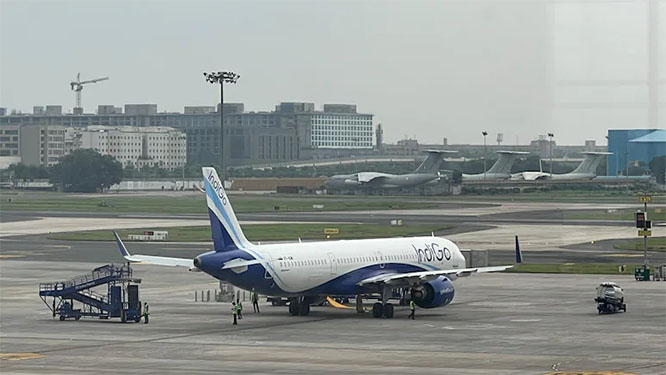
Domestic carrier IndiGo has cancelled over 180 flights from three major airports — Mumbai, Delhi and Bengaluru — on Thursday, December 4, as the airline struggles to secure the required crew to operate its flights in the wake of new flight-duty and rest-period norms for pilots.

While the number of cancellations at Mumbai airport stands at 86 (41 arrivals and 45 departures) for the day, at Bengaluru, 73 flights have been cancelled, including 41 arrivals, according to a PTI report that quoted sources.

"IndiGo cancelled over 180 flights on Thursday at three airports-Mumbai, Delhi and Bengaluru," the source told the news agency.

Besides, it had cancelled as many as 33 flights at Delhi airport for Thursday, the source said, adding, "The number of cancellations is expected to be higher by the end of the day."

The Gurugram-based airline's On-Time Performance (OTP) nosedived to 19.7 per cent at six key airports — Delhi, Mumbai, Chennai, Kolkata, Bengaluru and Hyderabad — on December 3, as it struggled to get the required crew to operate its services, down from almost half of December 2, when it was 35 per cent.

"IndiGo has been facing acute crew shortage since the implementation of the second phase of the FDTL (Flight Duty Time Limitations) norms, leading to cancellations and huge delays in its operations across the airports," a source had told PTI on Wednesday.

Chaos continued at several major airports for the third day on Thursday because of the cancellations.

A spokesperson for the Kempegowda International Airport (KIA) in Bengaluru said that 73 IndiGo flights had been cancelled on Thursday.

At least 150 flights were cancelled and dozens of others delayed on Wednesday, airport sources said, leaving thousands of travellers stranded, according to news agency Reuters.

The Directorate General of Civil Aviation (DGCA) has said it is investigating IndiGo flight disruptions and has asked the airline to submit the reasons for the current situation, as well as its plans to reduce flight cancellations and delays.

It may be mentioned here that the pilots' body, Federation of Indian Pilots (FIP), has alleged that IndiGo, despite getting a two-year preparatory window before the full implementation of new flight duty and rest period norms for cockpit crew, "inexplicably" adopted a "hiring freeze".

The FIP said it has urged the safety regulator, the DGCA, not to approve airlines' seasonal flight schedules unless they have adequate staff to operate their services "safely and reliably" in accordance with the New Flight Duty Time Limitations (FDTL) norms.

In a letter to the DGCA late on Wednesday, the FIP urged the DGCA to consider re-evaluating and reallocating slots to other airlines, which have the capacity to operate them without disruption during the peak holiday and fog season if IndiGo continues to "fail in delivering on its commitments to passengers due to its own avoidable staffing shortages."

Comments

Add new comment

  • Coastaldigest.com reserves the right to delete or block any comments.
  • Coastaldigset.com is not responsible for its readers’ comments.
  • Comments that are abusive, incendiary or irrelevant are strictly prohibited.
  • Please use a genuine email ID and provide your name to avoid reject.
News Network
December 3,2025

indigo.jpg

IndiGo, India’s largest airline, is battling one of its worst operational disruptions in recent years, with hundreds of delays and cancellations throwing domestic travel into chaos.

Government data on Tuesday showed its on-time performance plunging to 35%, an unusual dip for a carrier long associated with punctuality.

By Wednesday afternoon, airports in Delhi, Mumbai, Bengaluru and Hyderabad had collectively reported close to 200 cancellations, stranding travellers across the country.

Crew Shortage After New Duty Norms

A major trigger behind the meltdown is a severe crew shortage, especially among pilots, following the rollout of revised Flight Duty Time Limitation (FDTL) norms last month.

The rules mandate longer rest hours and more humane rosters — a shift IndiGo has struggled to incorporate across its vast network.

Sources said several flights were grounded due to lack of cabin crew, while some delays stretched upwards of eight hours.

With IndiGo controlling over 60% of India’s domestic aviation market, the ripple effect has impacted airports nationwide.

IndiGo Issues Apology, Lists “Compounding Factors”

In a statement, IndiGo acknowledged the large-scale disruption:

“We sincerely apologise to customers. A series of unforeseen operational challenges — technology glitches, winter schedule changes, adverse weather, system congestion and updated FDTL norms — created a compounding impact that could not have been anticipated.”

To stabilise operations, the airline has begun calibrated schedule adjustments for the next 48 hours, aiming to restore punctuality. Affected passengers are being offered refunds or alternate travel arrangements, IndiGo said.

What the FDTL Rules Require

The FDTL norms, designed to reduce pilot fatigue, cap duty and flying hours as follows:
•    Maximum 8 hours of flying per day
•    35 hours per week
•    125 hours per month
•    1,000 hours per year

Crew must also receive rest equalling twice the flight duration, with a minimum 10-hour rest period in any 24-hour window.

The DGCA introduced these limits to enhance flight safety.

Hyderabad: 33 Flights Cancelled, Long Queues Reported

Hyderabad’s Rajiv Gandhi International Airport saw heavy early-morning crowds as 33 IndiGo flights (arrivals and departures) were cancelled.

The airport clarified on X that operations were normal, advising passengers to contact IndiGo directly for latest flight status.

Cancellations included flights to and from Visakhapatnam, Goa, Ahmedabad, Delhi, Bengaluru, Chennai, Madurai, Hubli, Bhopal and Bhubaneswar.

Bengaluru: 42 Flights Disrupted

Bengaluru’s Kempegowda International Airport recorded 42 cancellations — 22 arrivals and 20 departures — affecting routes to Delhi, Mumbai, Chennai, Hyderabad, Goa, Kolkata and Lucknow.

Passengers Vent on Social Media

Irate travellers took to X to share their experiences. One passenger stranded in Hyderabad wrote: “I have been here since 3 a.m. and missed an important meeting.”

Another said: “My flight was pushed from 1:55 PM to 2:55 PM and now 4:35 PM. I was informed only three minutes before entering the airport.”

Delhi Airport Hit by Tech Glitch

At Delhi Airport, the disruption deepened due to a slowdown in the Amadeus system — used for reservations, check-ins and departure control.

The technical issue led to longer queues and sluggish processing, adding to delays already worsened by staff shortages.

Comments

Add new comment

  • Coastaldigest.com reserves the right to delete or block any comments.
  • Coastaldigset.com is not responsible for its readers’ comments.
  • Comments that are abusive, incendiary or irrelevant are strictly prohibited.
  • Please use a genuine email ID and provide your name to avoid reject.
P A Hameed Padubidri
November 26,2025

CD.jpg

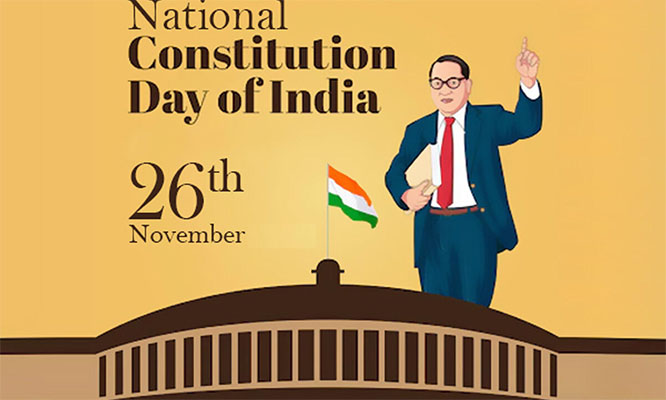
Constitution Day, also known as Samvidhan Divas, is observed every year on November 26 to honor the adoption of the Constitution of India and to recognize the visionary effort that shaped the world’s largest democracy.

Historical Background

It’s on November 26, 1949, the Constituent Assembly of India formally adopted the Constitution.This date is commemorated to acknowledge the completion of nearly three years of drafting, debate, and refinement.

On January 26, 1950, the Constitution came into force, marking India’s transition from a dominion to a sovereign republic.

The date 26 January was chosen to honor the “Purna Swaraj” declaration made in 1930 that marked the relentless efforts & sacrifices of the many. 

Why Constitution Day is Celebrated

* To honor & remember the framers of the Constitution, especially Dr. B. R. Ambedkar, the Chairman of the Drafting Committee, & many others. 

* To remind the citizens of the values, responsibilities, and rights enshrined in the Constitution.

* To promote constitutional values & literacy among students, institutions, and the general public.

* To reaffirm the nation’s commitment to justice, equality, liberty, fraternity and secular values. 

Vision and Significance of the Constitution

It establishes the fundamental political and legal framework for the nation.

Defines the structure, powers and functions of:
    •    The Executive
    •    The Legislature
    •    The Judiciary
    •    Guarantees a comprehensive set of Fundamental Rights, including:

-Equality before law
-Freedom of speech & expression
-Protection of life and personal liberty
-Freedom of religion
-Embeds Directive Principles of State Policy, guiding governance toward social justice and welfare.
-Introduces Fundamental Duties to ensure civic responsibility among citizens.

Key Features Celebrated on Constitution Day

-The Indian constitution is considered one of the longest written constitutions of the world. It’s systematically drafted considering almost all aspects that properly fits to the country. 

-Blend of multiple global constitutional principles while staying rooted in Indian values and realities.

-Framework that balances Federalism, Secularism, Democracy and Rule of Law. This makes everyone-from President to common man-below the law & are equal in the sight of law. 

-Another feature is that it’s based on built-in mechanisms for amendments, ensuring the Constitution grows with changing needs.

Message of the Day

The core ethos of this  Constitution Day is not merely about looking back at history-it’s a reminder of the continuous duty to protect democratic values, respect diversity and uphold the principles that define India as a sovereign, socialist, secular and democratic republic.

Happy Constitution Day to all my compatriots

Comments

Add new comment

  • Coastaldigest.com reserves the right to delete or block any comments.
  • Coastaldigset.com is not responsible for its readers’ comments.
  • Comments that are abusive, incendiary or irrelevant are strictly prohibited.
  • Please use a genuine email ID and provide your name to avoid reject.