In latest twist to air force procurement, India now eying Boeing's F/A-18 Super Hornet

Agencies
March 17, 2018

New Delhi/Singapore, Mar 17: Boeing Co, considered the frontrunner in the race to supply the Indian navy with new fighter jets, is now in contention for a much bigger $15 billion order after the government abruptly asked the air force to consider the twin-engine planes.

Until recently, Lockheed Martin Corp’s F-16 and Saab AB’s Gripen were in a two-horse race supply at least 100 single-engine jets to build up the Indian Air Force’s fast-depleting combat fleet.

Both had offered to build the planes in India in collaboration with local companies as part of Prime Minister Narendra Modi’s drive to build a domestic industrial base and cut back on arms imports.

But last month the government asked the air force to open up the competition to twin-engine aircraft and to evaluate Boeing’s F/A-18 Super Hornet, a defense ministry source said. That jet is a finalist for the Indian navy’s $8 billion to $9 billion contract for 57 fighters.

The defense ministry plans to within weeks issue a request for information (RFI), the first stage of a procurement process, for a fighter to be built in India. The competition will be open to both single and twin-engine jets, the official said, but both Lockheed and Saab said they had not been informed about the new requirements.

The latest change of heart is a major opportunity for Boeing, whose only foreign Super Hornet customer so far is the Royal Australian Air Force.

It also illustrates how dysfunctional the weapons procurement process and arms industry are in the world’s second-most-populous country. The need for new fighters has been known for nearly 15 years, but after many announcements, twists and turns, the country’s air force has only three-quarters of the aircraft it needs.

An indigenous light combat aircraft, the Tejas, is still not operational, 35 years after it was first proposed. 

An Indian Air Force source said fighter procurement was urgent: the branch’s operational strength has fallen to just 33 squadrons, its weakest level in four decades, as it decommissions Soviet-era MiG-21s.

“The IAF wants the RFI issued within weeks and get the process started,” said the source, who declined to be identified because he was not authorized to speak to the media. “The problem is that government keeps shifting what it wants.”

A PRESSING NEED

Over the next decade, 13 more squadrons will be retired as their aircraft age out of service, parliament’s standing committee on defense said in a December report.

The defense ministry declined to comment on the air force’s aircraft modernization program, saying it was not in a position to do so.

Lockheed, which had offered to shift its F-16 production line in Fort Worth, Texas, to India, said it had not been told of any change to the Indian plan for single-engine fighters.

“Our proposed F-16 partnership with India stands firm,” the company said in an email. Last year it picked Tata Advanced Systems as its local partner and said it was in talks with dozens of firms to build up the supplier network.

“The Government of India has not yet issued formal requirements but we are continuing to support government-to-government discussions and engage with Indian companies about F-16 industrial opportunities,” Lockheed said.

Sweden’s Saab was also caught off guard.

“We have seen the reports in the Indian media, but no new formal communication has been made to us regarding the fighter program,” said Rob Hewson, Saab Asia Pacific’s head of communications.

France’s Dassault Systemes SE’s Rafale, the Eurofighter Typhoon and Russian aircraft are also potential contenders under the new requirements, the air force source and industry analysts said.

Admiral Harry Harris, the head of U.S. Pacific Command, told the U.S. House Armed Services Committee last month that India was considering the stealthy F-35, among other options. But the Indian air force said no request had been made to Lockheed for even a briefing on the aircraft.

An order the size of India’s is rare. The only comparable opportunity for the Super Hornet is Canada’s request for 88 fighters, which could be worth as much as $14.6 billion.

The Indian air force competition has echoes of a 2007 tender for 126 medium multi-role combat aircraft, for which Dassault was selected for exclusive negotiations. But the talks quickly bogged down over local production and prices, and in the end, the government ordered just 36 Rafales in 2016 for $8.7 billion.

LOCAL FIGHTER

The air force ideally would like a combination of lighter single-engine and twin-engine jets, as well as stealthy aircraft, but cannot afford such a range of foreign systems, analysts said.

A twin-engine foreign fighter would perhaps offer the best value while the Tejas finishes development, they said.

India’s annual defense capital procurement budget of $14 billion to $15 billion has to be spread over the army, navy, air force and the indigenous defense research organization. 

“The operational costs are going up with increased manpower, higher wages and general inflation. Ministry of Defence doesn’t have the luxury to go for too many platforms despite the rapidly falling squadron strength of the air force,” said Amber Dubey, partner and India head of aerospace and defense at global consultancy KPMG.

Boeing India President Pratyush Kumar said the company was ready to respond to any request from the air force.

“We will follow the MoD’s lead on their process and will be responsive to their needs if we are asked to provide any information,” he said.

Kumar said Boeing was committed to building the planes in India and had offered to help with India’s plans to develop its own advanced medium combat aircraft.

But the experience with the Rafale contract has made experts skeptical that the latest tender will proceed as planned.

Richard A. Bitzinger, visiting senior fellow at Singapore’s S.Rajaratnam School of International Studies, said he did not expect a resolution in even the next two to three years.

“I am never surprised by what the Indians do when it comes to their procurement tenders. They are constantly changing the rules, changing their minds, and often even cancelling orders mid-way through,” he said.

“The Indians have a remarkable knack for snatching defeat from the jaws of victory.”

Comments

Add new comment

  • Coastaldigest.com reserves the right to delete or block any comments.
  • Coastaldigset.com is not responsible for its readers’ comments.
  • Comments that are abusive, incendiary or irrelevant are strictly prohibited.
  • Please use a genuine email ID and provide your name to avoid reject.
News Network
December 4,2025

indigocrisis.jpg

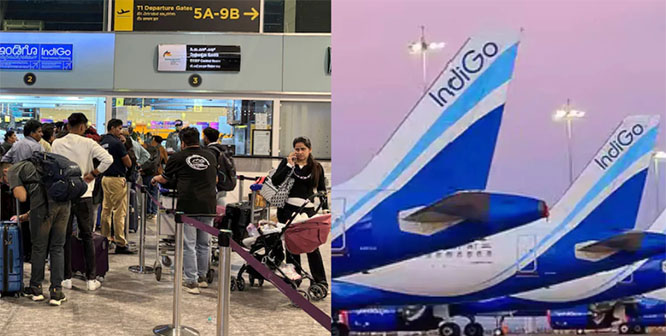
Angry outbursts, long queues, and desperate appeals filled airports across India today as IndiGo grappled with a severe operational breakdown. Hundreds of flights have been cancelled or delayed, leaving thousands of passengers stranded through the night and forcing many to spend long hours at helpdesks.

Social media was flooded with videos of fliers pleading for assistance, accusing the airline of misleading updates, and demanding accommodation after being stuck for 10 to 12 hours at airports such as Hyderabad and Bengaluru.

What Triggered the Meltdown?

IndiGo has attributed the widespread disruption to “a multitude of unforeseen operational challenges.” These include:

•    Minor technology glitches
•    Winter-season schedule adjustments
•    Bad weather
•    Congestion in the aviation network
•    New crew rostering rules (Flight Duty Time Limitations or FDTL)

Among these, the most disruptive has been the implementation of the updated FDTL norms introduced by the Directorate General of Civil Aviation (DGCA) in January 2024.

These rules were designed to reduce pilot fatigue and improve passenger safety. Key changes include:

•    Longer weekly rest periods for flight crew
•    A revised definition of “night,” extending it by an extra hour
•    Tighter caps on flight duty timing and night landings
•    Cutting night shifts for pilots and crew from six per roster cycle to just two

Once these norms became fully enforceable, airlines were required to overhaul rosters well in advance. For IndiGo, this triggered a sudden shortage of crew available for duty, leading to cascading delays and cancellations.

Why IndiGo Was Hit the Hardest

IndiGo is India’s largest airline by a wide margin, operating over 2,200 flights daily. That’s roughly double the number operated by Air India.

When an airline of this size experiences even a 10–20% disruption, it translates to 200–400 flights being delayed or grounded — producing massive spillover effects across the country.

IndiGo also relies heavily on high-frequency overnight operations, a model typical of low-cost carriers that aim to maximise aircraft utilisation and reduce downtime. The stricter FDTL norms clash with these overnight-heavy schedules, forcing the airline to pull back services.

Aviation bodies have also criticised IndiGo’s preparedness. The Airline Pilots' Association of India (ALPA) said airlines were given a two-year window to plan for the new rules but “started preparing rather late.” IndiGo, it said, failed to rebuild crew rosters 15 days in advance as required.

The Federation of Indian Pilots (FIP) went further, calling the crisis the result of IndiGo’s “prolonged and unorthodox lean manpower strategy,” and alleging that the airline adopted a hiring freeze even as it knew the new rules would require more careful staffing.

How Many Flights Are Affected?

In the past 48 hours, over 300 flights have been cancelled. At least 100 more are expected to be cancelled today.

City-wise impact:

•    Hyderabad: 33 expected cancellations; several fliers stranded overnight
•    Bengaluru: over 70 expected cancellations
•    Delhi, Mumbai, Chennai, Kolkata: widespread delays and missed connections

Passengers shared distressing accounts online.

One customer at Hyderabad airport said they waited from 6 PM to 9 AM with “no action taken” regarding their delayed Pune flight. Another said IndiGo repeatedly told them the crew was “arriving soon,” only for the delay to stretch over 12 hours.

IndiGo has apologised for the disruption and promised that operations will stabilise within 48 hours, adding that “calibrated adjustments” are being made to contain the chaos.

What Should Passengers Do Now?

For those flying in the next few days, especially with IndiGo, here are key precautions:

1. Keep Checking Flight Status
Monitor your flight closely before leaving for the airport, as delays may be announced last-minute.

2. Arrive Early
Expect long queues at counters and security due to crowding and rescheduling.

3. Carry Essentials
Pack snacks, water, basic medicines, chargers, and items for children or senior citizens. Extended waiting times should be anticipated.

4. Use Flexible Booking Options
If you booked tickets with a free-date-change or cancellation option, consider using them.
If you haven’t booked yet, prefer refundable or flexible fares, or even consider alternate airlines.

5. Follow IndiGo’s Updates
Keep an eye on IndiGo’s official social media channels and contact customer support for rebooking and refund queries.

What Needs to Change?

Pilot groups have raised concerns not just about staffing but also the planning practices behind it.
The Federation of Indian Pilots accused IndiGo of:

•    Imposing an unexplained hiring freeze despite knowing the FDTL changes were coming
•    Entering non-poaching agreements that limited talent movement
•    Keeping pilot pay frozen
•    Underestimating the need to restructure operations in advance

They have urged DGCA to approve seasonal schedules only after airlines prove they have adequate pilot strength under the new norms.

ALPA also warned that some airlines might be using the delays as an “immature pressure tactic” to push DGCA for relaxations in the new rules — which, if granted, could compromise the very safety standards the norms were meant to protect.

Both pilot bodies stressed that no exemption should dilute safety, and any deviations should be based solely on scientific risk assessment.

Is a Solution in Sight?

While IndiGo says normalcy will return within two days, aviation experts believe that fully stabilising operations could take longer, depending on how quickly the airline can:
•    Re-align rosters
•    Mobilise rested crew
•    Boost staffing
•    Adjust its winter schedule to match regulatory requirements
Passengers are advised to remain prepared for continued delays over the next few days as the airline works through its backlog. 

Comments

Add new comment

  • Coastaldigest.com reserves the right to delete or block any comments.
  • Coastaldigset.com is not responsible for its readers’ comments.
  • Comments that are abusive, incendiary or irrelevant are strictly prohibited.
  • Please use a genuine email ID and provide your name to avoid reject.
News Network
December 5,2025

Mangaluru: In a significant step to curb online hate and intimidation, Mangaluru City Police have registered a suo motu case against multiple Instagram accounts accused of circulating alleged provocative and threatening content.

While monitoring social media activity on Tuesday, Kankanady Town PSI Anitha Nikkam identified the Instagram handle ‘team_targetttt_900’ for posting a hate message alongside images of lethal weapons. Another account, ‘team_nagara_900’, allegedly shared a threatening post targeting activist Bharath Kumdelu, tagging additional pages such as KARAVALI-OFFICIAL.

Several other accounts — including ‘immu_bhai.fan’, ‘target_boy_900’, ‘kings_of_manglore’, ‘team_target_boys.900’, ‘arshad_mangalore’, ‘target_ka19_ullal’, ‘team_target__’, ‘troll_tigersz_900’, ‘tr_group_900’, and ‘team_target_900’ — are also under scrutiny for spreading similar inflammatory material, police said.

Authorities have urged citizens, especially young social media users, to report suspicious pages and avoid engaging with groups that glorify violence or threaten individuals. Online hate can quickly escalate into real-world harm, and police stress that sharing or promoting such content can attract legal consequences.

Comments

Add new comment

  • Coastaldigest.com reserves the right to delete or block any comments.
  • Coastaldigset.com is not responsible for its readers’ comments.
  • Comments that are abusive, incendiary or irrelevant are strictly prohibited.
  • Please use a genuine email ID and provide your name to avoid reject.
News Network
December 3,2025

arrival.jpg

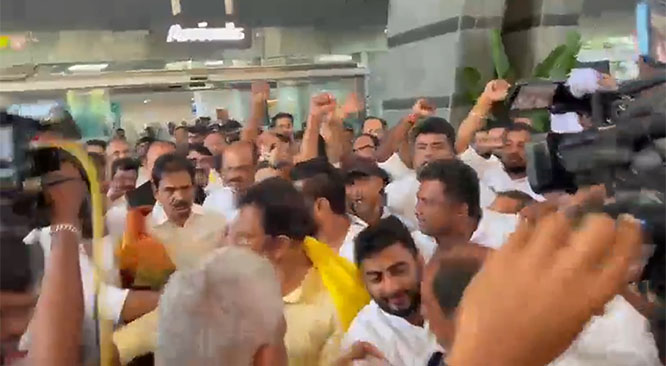
Mangaluru, Dec 3: A group of Congress workers gathered at the Mangaluru International Airport on Wednesday to welcome AICC general secretary K C Venugopal, but the reception quickly turned into a display of support for Deputy Chief Minister D K Shivakumar.

Venugopal arrived in the city to participate in the centenary commemoration of the historic dialogue between Mahatma Gandhi and Narayana Guru. The event, organised by the Sivagiri Mutt, Varkala, in association with the Mangalore University Sri Narayana Guru Study Chair, is being held on the university’s Konaje campus.

KPCC general secretary Mithun Rai and several party workers had assembled at the airport to receive Venugopal. However, the moment he stepped out, workers began raising slogans backing Shivakumar.

The university programme will be inaugurated by Chief Minister Siddaramaiah.

This show of support comes just a day after Siddaramaiah remarked that Shivakumar would lead the government “when the high command decides.” The chief minister made the comment after a breakfast meeting at Shivakumar’s residence—another public display of camaraderie between the two leaders amid ongoing attempts by the party high command to downplay their leadership rivalry.

Comments

Add new comment

  • Coastaldigest.com reserves the right to delete or block any comments.
  • Coastaldigset.com is not responsible for its readers’ comments.
  • Comments that are abusive, incendiary or irrelevant are strictly prohibited.
  • Please use a genuine email ID and provide your name to avoid reject.