Lockdown 4.0: What rules changed, relaxations allowed?

News Network
May 18, 2020

The Centre on Sunday extended the COVID-19 lockdown for two more weeks till May 31 with more exemptions as the Centre allowed states more powers for profiling its zones, re-starting of inter-state and intra-state bus travel, plying of autos and taxis and opening of all shops, including in markets but barring those in malls.

Here are the answers to all your questions:

What is 'Lockdown 4.0'?

On March 24, 2020, Prime Minister Narendra Modi announced a 21-day nation-wide lockdown to prevent the spread of the coronavirus outbreak. India follows several countries in its measures to curb the pandemic, which was the first lockdown. Prime Minister then extended the coronavirus lockdown till May 3, which was dubbed as 'Lockdown 2.0'. This lockdown was further prolonged till May 17 which became 'Lockdown 3.0' and now, as the government aims at a staggered re-opening of the country while maintaining the norms such as social distancing, the fourth extension till May 31 is called 'Lockdown 4.0'.

Who issues the guidelines for the lockdown?

The Ministry of Home Affairs (MHA) issues the guidelines for the lockdown.

Are guidelines different during a lockdown compared to normal life?

Well, of course. Guidelines during a lockdown instruct people on all matters from whether you are allowed to leave your house, to whether an MNC is allowed to function and with what percentage of attendance.

Are masks compulsory even now?

Masks are made mandatory in all public places, by the Union Health Ministry. All the states and UTs are to strictly abide by this law. Not wearing masks will attract penalties which are specified by the state.

How would that be determined for an area?

By Lockdown 3.0, all areas of state districts were segregated into containment, red, orange and green zones. In the Lockdown 4.0, states will categorise the areas into red, orange and green zones.

Colourful... but what are red, orange and green zones?

According to the guidelines issued by the Ministry of Health and Family Welfare, states can categorise districts or municipal corporations as red or orange zones.

"States may, however, also choose to categorise a sub-division or ward or any other appropriate administrative unit as red/orange/green zone after detailed analysis at their end, duly taking into consideration the geographical spread of cases, contacts and their zone of influence in terms of disease spread," the ministry said.

With the commencement of the third phase of lockdown, the Union Health Ministry listed 130 districts across the country in the red zone, 284 in the orange zone and 319 in green zones based on the incidence of cases of COVID-19, doubling rate, the extent of testing and surveillance feedback.

Districts were earlier designated as hotspots/red-zones, orange zones and green zones primarily based on the cumulative cases reported and the doubling rate.

A district will be considered under green zone if there have been no confirmed cases of COVID-19 so far or there is no reported case since last 21 days in the district, according to the letter.

Now, what is a buffer zone?

A buffer zone is an area of spread in a 5-kilometre radius (7 Kms in rural areas) of a containment zone.

How do I find out the zone I am in?

You either look at your state or city's municipal corporation pages to avail the zone details. You can also look at your district magistrate's Twitter handle or Facebook account to find out the list of the zone under which your area falls.

Can I leave my home now?

That depends. If you are in a containment zone or a red zone, you may not be allowed to leave your residence. Otherwise, in the other zones, the state governments and the district magistrates will decide upon the level of movement within and outside the zones.

Can I shift from a red zone to an orange or green zone?

You cannot. The residents of a red or containment zone cannot move out of their zones, nobody may enter the zones as well.

What about my office?

The private offices can operate in non-containment zones. The guidelines for offices to work will be listed by the state governments and the DMs (district magistrates).

Will I be allowed to use my bike/car or any other personal vehicle?

There is a likely chance of you being allowed to take out your bike or car or other vehicles (not helicopters or aeroplanes), if you are not in a containment zone. You need to check the rules listed by your state government or DM. The number of people who can ride at one time will also be decided by the state.

Can my driver, house help or neighbour drive me to my office/destination? Will I be allowed to take them to my workplace?

Yes, provided they are not from a red zone which may be risky for the passenger. This facility is prohibited in a containment zone. Also, check with your workplace regarding the norms to follow within the office. For the details on travelling with others in the car, look into the info provided by your state government, DM and Resident Welfare Association (RWA).

Will be able to fill petrol or diesel for my vehicle?

Definitely, yes. All petrol pumps, LPG and oil agencies will continue to be open.

What if I need to take a cab, auto or book one via Ola/Uber?

The same rules apply to them as well. Unless you are in a containment zone, the restrictions for using cabs and autos will be eased.

What if I need to use public transport like buses?

Some states have allowed buses to run, such as in Tamil Nadu in certain areas. You will have to check with the state government or DM's regulations enlisted for knowing the routes and norms to follow inside a bus.

Can I use my city's Metro line?

Unfortunately, metro lines are not allowed to open and will remain closed until further notification from the Centre.

Can I walk around in my area?

Walking will be permitted under the guidelines issued by the state and DM. Walking in groups will be prohibited and social distancing norms are to be followed in public at all times. Movement is allowed between 7 am to 7 pm in any zone - containment, red, orange or green.

Can I take my grandparents/kids out for a walk?

People older than 65 years of age, or younger than 10, persons with co-morbidities, pregnant women are not allowed to venture out of their residences, as they are highly susceptible to the infection.

Can I go out with my friends?

A group of less than 5 people are allowed to walk together. If you are planning to use vehicles such as bikes, every induvial must have their own as more than one person on atwo-wheeler is not allowed in certain areas. Curfew timings are from 7 am to 7 pm as movent is prohibited beyond these timings. Check the regulations issued by your local DM or state government to know further details.

What if I need to see my friends, relatives or others?

The Resident Welfare Association (RWA) will make a decision about allowing visitors inside a zone, barring containment zones. Nobody is allowed within the containment zone or permitted to leave.

Can we now go to restaurants?

Restaurants are still closed irrespective of the zone. Take-away or delivery services will be available, nevertheless.

Can we go to malls?

Malls and restaurants and shops in the malls will remain closed irrespective of the zone, as these are crowd-pulling zones.

Does that mean multiplexes, theatres and drama/concert halls are closed as well?

Cinema halls, theatres, multiplexes and drama/concert halls will remain closed regardless of which zone they are in, till further instructions are sent by the Centre.

Can I go to the beach or a monument/heritage site?

Since such public places will attract a huge crowd that will be tough to control, beaches, monuments, heritage sites and such public places will be closed.

Can I go to coffee shops?

As coffee shops will fall under the category of restaurants, they will also be closed. Take-away and delivery services can be availed from the shops.

What about essentials?

Grocery shops, milk vendors, newspaper circulation are allowed to stay open. Proper sanitisation must be done from time-to-time to ensure customer and vendors’ safety.

I need to repair my phone. Will stand-alone non-essential services be open?

Such non-essential services are allowed to open in non-containment zones. Refer the state governments and DMs rules for knowing the type of shops and state and districts they are permitted in.

What about in-house repairs or services? Can I call a mechanic to my house?

Yes, provided your RWA has permitted to allow mechanics, workmen and labourers inside in non-containment zones.

Comments

Add new comment

  • Coastaldigest.com reserves the right to delete or block any comments.
  • Coastaldigset.com is not responsible for its readers’ comments.
  • Comments that are abusive, incendiary or irrelevant are strictly prohibited.
  • Please use a genuine email ID and provide your name to avoid reject.
News Network
December 4,2025

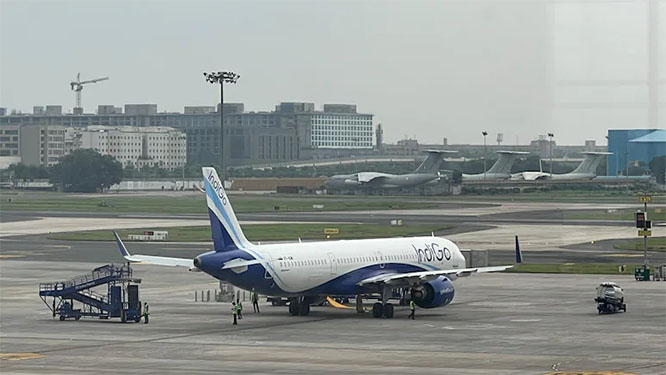
indigoflight.jpg

Domestic carrier IndiGo has cancelled over 180 flights from three major airports — Mumbai, Delhi and Bengaluru — on Thursday, December 4, as the airline struggles to secure the required crew to operate its flights in the wake of new flight-duty and rest-period norms for pilots.

While the number of cancellations at Mumbai airport stands at 86 (41 arrivals and 45 departures) for the day, at Bengaluru, 73 flights have been cancelled, including 41 arrivals, according to a PTI report that quoted sources.

"IndiGo cancelled over 180 flights on Thursday at three airports-Mumbai, Delhi and Bengaluru," the source told the news agency.

Besides, it had cancelled as many as 33 flights at Delhi airport for Thursday, the source said, adding, "The number of cancellations is expected to be higher by the end of the day."

The Gurugram-based airline's On-Time Performance (OTP) nosedived to 19.7 per cent at six key airports — Delhi, Mumbai, Chennai, Kolkata, Bengaluru and Hyderabad — on December 3, as it struggled to get the required crew to operate its services, down from almost half of December 2, when it was 35 per cent.

"IndiGo has been facing acute crew shortage since the implementation of the second phase of the FDTL (Flight Duty Time Limitations) norms, leading to cancellations and huge delays in its operations across the airports," a source had told PTI on Wednesday.

Chaos continued at several major airports for the third day on Thursday because of the cancellations.

A spokesperson for the Kempegowda International Airport (KIA) in Bengaluru said that 73 IndiGo flights had been cancelled on Thursday.

At least 150 flights were cancelled and dozens of others delayed on Wednesday, airport sources said, leaving thousands of travellers stranded, according to news agency Reuters.

The Directorate General of Civil Aviation (DGCA) has said it is investigating IndiGo flight disruptions and has asked the airline to submit the reasons for the current situation, as well as its plans to reduce flight cancellations and delays.

It may be mentioned here that the pilots' body, Federation of Indian Pilots (FIP), has alleged that IndiGo, despite getting a two-year preparatory window before the full implementation of new flight duty and rest period norms for cockpit crew, "inexplicably" adopted a "hiring freeze".

The FIP said it has urged the safety regulator, the DGCA, not to approve airlines' seasonal flight schedules unless they have adequate staff to operate their services "safely and reliably" in accordance with the New Flight Duty Time Limitations (FDTL) norms.

In a letter to the DGCA late on Wednesday, the FIP urged the DGCA to consider re-evaluating and reallocating slots to other airlines, which have the capacity to operate them without disruption during the peak holiday and fog season if IndiGo continues to "fail in delivering on its commitments to passengers due to its own avoidable staffing shortages."

Comments

Add new comment

  • Coastaldigest.com reserves the right to delete or block any comments.
  • Coastaldigset.com is not responsible for its readers’ comments.
  • Comments that are abusive, incendiary or irrelevant are strictly prohibited.
  • Please use a genuine email ID and provide your name to avoid reject.
News Network
December 13,2025

New Delhi: School-going children are picking up drug and smoking habits and engaging in consumption of alcohol, with the average age of introduction to such harmful substances found to be around 13 years, suggesting a need for earlier interventions as early as primary school, a multi-city survey by AIIMS-Delhi said.

The findings also showed substance use increased in higher grades, with grade XI/XII students two times more likely to report use of substances when compared with grade VIII students. This emphasised the importance of continued prevention and intervention through middle and high school.

The study led by Dr Anju Dhawan of AIIMS's National Drug Dependence Treatment Centre, published in the National Medical Journal of India this month, looks at adolescent substance use across diverse regions.

The survey included 5,920 students from classes 8, 9, 11 and 12 in urban government, private and rural schools across 10 cities -- Bengaluru, Chandigarh, Delhi, Dibrugarh, Hyderabad, Imphal, Jammu, Lucknow, Mumbai, and Ranchi. The data were collected between May 2018 and June 2019.

The average age of initiation for any substance was 12.9 (2.8) years. It was lowest for inhalants (11.3 years) followed by heroin (12.3 years) and opioid pharmaceuticals (without prescription; 12.5 years).

Overall, 15.1 per cent of participants reported lifetime use, 10.3 per cent reported past year use, and 7.2 per cent reported use in the past month of any substance, the study found.

The most common substances used in the past year, after tobacco (4 per cent) and alcohol (3.8 per cent), were opioids (2.8 per cent), followed by cannabis (2 per cent) and inhalants (1.9 per cent). Use of non-prescribed pharmaceutical opioids was most common among opioid users (90.2 per cent).

On being asked, 'Do you think this substance is easily available for a person of your age' separately for each substance category, nearly half the students (46.3 per cent) endorsed that tobacco products and more than one-third of the students (36.5 per cent) agreed that a person of their age can easily procure alcohol products.

Similarly, for Bhang (21.9 per cent), ganja/charas (16.1 per cent), inhalants (15.2 per cent), sedatives (13.7 per cent), opium and heroin (10 per cent each), the students endorsed that these can be easily procured.

About 95 per cent of the children, irrespective of their grade, agreed with the statement that 'drug use is harmful'.

The rates of substance use (any) among boys were significantly higher than those of girls for substance use (ever), use in the past year and use in the past 30 days. Compared to grade VIII students, grade IX students were more likely, and grade XI/XII students were twice as likely to have used any substance (ever).

The likelihood of past-year use of any substance was also higher for grade IX students and for grade XI/XII students as compared to grade VIII students.

About 40 per cent of students mentioned that they had a family member who used tobacco or alcohol each. The use of cannabis (any product) and opioid (any product) by a family member was reported by 8.2 per cent and 3.9 per cent of students, respectively, while the use of other substances, such as inhalants/sedatives by family was 2-3 per cent, the study found.

A relatively smaller percentage of students reported use of tobacco or alcohol among peers as compared to among family members, while a higher percentage reported inhalants, sedatives, cannabis or opioid use among peers.

Children using substances (past year) compared to non-users reported significantly higher any substance use by their family members and peers.

There were 25.7 per cent students who replied 'yes' to the question 'conflicts/fights often occur in your family'. Most students also replied affirmatively to 'family members are aware of how their time is being spent' and 'damily members are aware of with whom they spend their time'.

Comments

Add new comment

  • Coastaldigest.com reserves the right to delete or block any comments.
  • Coastaldigset.com is not responsible for its readers’ comments.
  • Comments that are abusive, incendiary or irrelevant are strictly prohibited.
  • Please use a genuine email ID and provide your name to avoid reject.
News Network
December 3,2025

indigo.jpg

IndiGo, India’s largest airline, is battling one of its worst operational disruptions in recent years, with hundreds of delays and cancellations throwing domestic travel into chaos.

Government data on Tuesday showed its on-time performance plunging to 35%, an unusual dip for a carrier long associated with punctuality.

By Wednesday afternoon, airports in Delhi, Mumbai, Bengaluru and Hyderabad had collectively reported close to 200 cancellations, stranding travellers across the country.

Crew Shortage After New Duty Norms

A major trigger behind the meltdown is a severe crew shortage, especially among pilots, following the rollout of revised Flight Duty Time Limitation (FDTL) norms last month.

The rules mandate longer rest hours and more humane rosters — a shift IndiGo has struggled to incorporate across its vast network.

Sources said several flights were grounded due to lack of cabin crew, while some delays stretched upwards of eight hours.

With IndiGo controlling over 60% of India’s domestic aviation market, the ripple effect has impacted airports nationwide.

IndiGo Issues Apology, Lists “Compounding Factors”

In a statement, IndiGo acknowledged the large-scale disruption:

“We sincerely apologise to customers. A series of unforeseen operational challenges — technology glitches, winter schedule changes, adverse weather, system congestion and updated FDTL norms — created a compounding impact that could not have been anticipated.”

To stabilise operations, the airline has begun calibrated schedule adjustments for the next 48 hours, aiming to restore punctuality. Affected passengers are being offered refunds or alternate travel arrangements, IndiGo said.

What the FDTL Rules Require

The FDTL norms, designed to reduce pilot fatigue, cap duty and flying hours as follows:
•    Maximum 8 hours of flying per day
•    35 hours per week
•    125 hours per month
•    1,000 hours per year

Crew must also receive rest equalling twice the flight duration, with a minimum 10-hour rest period in any 24-hour window.

The DGCA introduced these limits to enhance flight safety.

Hyderabad: 33 Flights Cancelled, Long Queues Reported

Hyderabad’s Rajiv Gandhi International Airport saw heavy early-morning crowds as 33 IndiGo flights (arrivals and departures) were cancelled.

The airport clarified on X that operations were normal, advising passengers to contact IndiGo directly for latest flight status.

Cancellations included flights to and from Visakhapatnam, Goa, Ahmedabad, Delhi, Bengaluru, Chennai, Madurai, Hubli, Bhopal and Bhubaneswar.

Bengaluru: 42 Flights Disrupted

Bengaluru’s Kempegowda International Airport recorded 42 cancellations — 22 arrivals and 20 departures — affecting routes to Delhi, Mumbai, Chennai, Hyderabad, Goa, Kolkata and Lucknow.

Passengers Vent on Social Media

Irate travellers took to X to share their experiences. One passenger stranded in Hyderabad wrote: “I have been here since 3 a.m. and missed an important meeting.”

Another said: “My flight was pushed from 1:55 PM to 2:55 PM and now 4:35 PM. I was informed only three minutes before entering the airport.”

Delhi Airport Hit by Tech Glitch

At Delhi Airport, the disruption deepened due to a slowdown in the Amadeus system — used for reservations, check-ins and departure control.

The technical issue led to longer queues and sluggish processing, adding to delays already worsened by staff shortages.

Comments

Add new comment

  • Coastaldigest.com reserves the right to delete or block any comments.
  • Coastaldigset.com is not responsible for its readers’ comments.
  • Comments that are abusive, incendiary or irrelevant are strictly prohibited.
  • Please use a genuine email ID and provide your name to avoid reject.