12-day war against Iran costs Israel an estimated $20 billion

News Network
June 26, 2025

israeldamaged.jpg

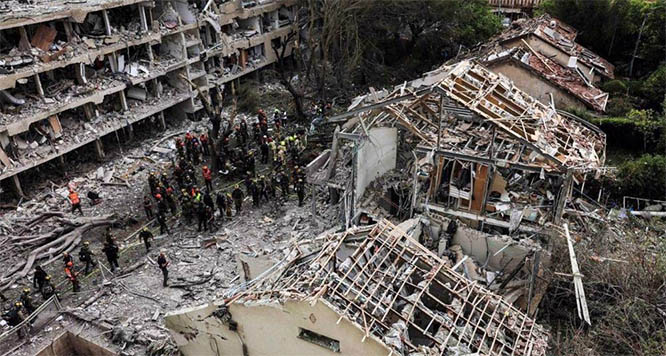
Israel has suffered an estimated $12 billion in direct losses from its 12-day war of aggression against Iran, with total losses potentially rising to $20 billion, according to Israeli media and economic reports.

The losses encompass military expenditures, missile strike damages, payouts to affected individuals and businesses, and infrastructure repairs.

Experts warn the final tally may reach $20 billion once indirect economic impacts and civilian compensation claims are fully calculated.

According to Israeli newspaper Yedioth Ahronoth, the regime’s treasury has already sustained 22 billion shekels ($6.46 billion) in damages.

The Israeli military is now seeking an extra 40 billion shekels ($11.7 billion) to restock arms supplies, purchase additional interceptors and offensive weapons, and maintain reserve units, following pre-war requests of 10 billion and later 30 billion shekels.

Israel’s budget deficit is expected to rise to approximately 6 percent amid challenges to finance war expenses, building on deficits already accumulated during the Gaza war.

The move coincides with forecasts of at least a 0.2 percent economic slowdown, which would further reduce tax revenues.

Massive military spending

Israeli business daily Calcalist reported that the regime’s cabinet had spent roughly $5 billion, around $725 million per day, on offensive operations against Iran and defensive measures to intercept Tehran’s missile and drone barrages

Compensation alone is expected to cost at least five billion shekels ($1.5 billion).

TheMarker confirmed on Monday that physical damage from Iranian missile attacks has already surpassed 5 billion shekels ($1.5 billion).

Economic analysts had cautioned that prolonging the war could have pushed Israel's embattled economy to the brink of collapse.

According to property tax estimates, approximately 15,000 Israeli settlers were forced to evacuate their units due to damages caused by Iranian retaliatory operations, with many relocating to hotels across the occupied territories.

The cost of their hotel accommodation is currently estimated at around 100 million shekels ($29 million. The regime will have to pay rent for an unknown period of time to hundreds or thousands of families, some of them long-term, until the collapsed buildings are rebuilt - a process that could take years.”

So far, more than 41,000 claims have been submitted to the regime’s compensation fund, with many more expected, according to data published by the right-wing newspaper Israel Hayom.

Of these, approximately 33,000 claims were for damage to buildings, while over 8,000 related to damage to vehicles, property, and equipment. The majority of claims - around 26,000 - were submitted by residents of Tel Aviv.

Before October 7, 2023, around 6,000 settlers were receiving permanent compensation from the regime. That number rose sharply to 25,000 following the Hamas-led operation inside southern settlements.

According to TheMarker, this figure is expected to increase further in the aftermath of the war on Iran.

Calls for US support

According to a report, citing a finance ministry insider, Israel is considering asking Washington for additional financial backing, whether as aid or guaranteed loans, to mitigate war costs and fund pressing military priorities.

On June 13, Israel launched an unprovoked aggression against Iran, targeting nuclear facilities and assassinating senior military commanders and scientists along with ordinary civilians.

In response, Iran launched hundreds of ballistic missiles and drones that struck multiple sensitive and strategic Israeli locations, as confirmed by Israeli media outlets.

The Israeli health ministry confirmed 29 fatalities and 3,238 injuries from the Iranian retaliatory attacks, though observers say the figure is likely to be much higher due to Israel's history of censoring casualty statistics.

The Marker characterized the missile strikes as creating “apocalyptic'” devastation, with preliminary damage assessments reaching at least 5 billion shekels ($1.4 billion).

Israel was forced to unilaterally accept a US-proposed ceasefire after incurring heavy losses and failing to destroy Iran’s nuclear infrastructure.

After the ceasefire went into effect on Tuesday, Israel’s extremist finance minister Bezalel Smotrich was quoted as saying “There is no doubt that this morning leaves a bitter taste.”

Comments

Add new comment

  • Coastaldigest.com reserves the right to delete or block any comments.
  • Coastaldigset.com is not responsible for its readers’ comments.
  • Comments that are abusive, incendiary or irrelevant are strictly prohibited.
  • Please use a genuine email ID and provide your name to avoid reject.
News Network
November 24,2025

israelsyra.jpg

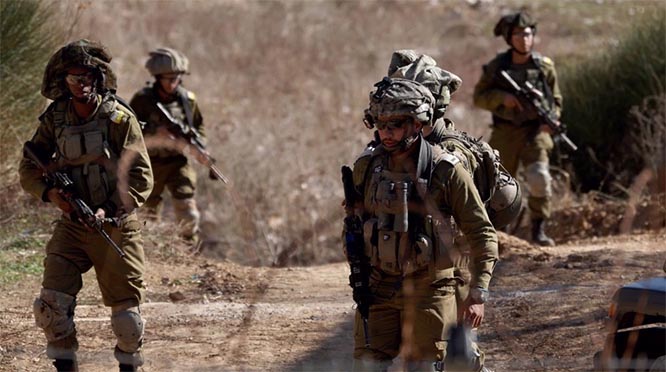
Israeli forces have pushed over the Syrian frontier, erecting a checkpoint and stopping vehicles in the southwestern city of Quneitra, in yet another breach of the Arab country’s sovereignty.

The violation took place on Sunday, when the troops made their way across the border, setting up the outpost near the Ain al-Bayda junction in northern Quneitra, Syrian outlets reported.

According to the al-Ikhbariya paper, an Israeli detachment positioned itself at the junction, halting cars and conducting searches.

The Syrian Arab News Agency (SANA) reported that three Israeli military vehicles then moved further into the northern countryside, deploying between the town of Jubata al-Khashab and the villages of Ofaniya and Ain al-Bayda. The agency added that a separate Israeli unit mounted a new incursion in the central region, approaching the villages of Umm Batina and al-Ajraf.

Residents said such activities have surged in recent months, pointing to Israeli advances onto farmland, leveling of extensive forested areas, arrests, and spread of mobile checkpoints.

The Israeli regime began markedly increasing its military aggression against Syria last year.

The escalation coincided with increasingly ferocious onslaughts throughout the country by the so-called Hay'at Tahrir al-Sham (HTS) Takfiri terrorist group, which the government of President Bashar al-Assad had confined to northwestern Syria. The HTS, however, managed to overthrow the government as the Israeli attacks would pummel the country’s civilian and defensive infrastructure.

Various reports have shown that, during the escalation, the regime conducted more than 1,000 airstrikes on the Syrian territory and over 400 ground raids into the south.

Following the collapse of the Assad government, Tel Aviv also widened its grip over the occupied Golan Heights by taking control of a demilitarized buffer zone, in defiance of a 1974 Disengagement Agreement. Earlier this month, senior Israeli officials, including Prime Minister Benjamin Netanyahu, visited the buffer zone, prompting expressions of alarm on the part of the United Nations.

The United States, the regime’s biggest ally, has, meanwhile, been fraternizing the HTS head Abu Mohammed al-Jolani amid the widely reported prospect of rapprochement with Tel Aviv.

Comments

Add new comment

  • Coastaldigest.com reserves the right to delete or block any comments.
  • Coastaldigset.com is not responsible for its readers’ comments.
  • Comments that are abusive, incendiary or irrelevant are strictly prohibited.
  • Please use a genuine email ID and provide your name to avoid reject.
News Network
November 21,2025

Bantwal: A domestic dispute appears to have led to a violent confrontation in BC Road area, where the owner of a textile shop was allegedly attacked with a knife by his wife on Wednesday evening.

Krishna Kumar Somayaji, the owner of Somayaji Textiles, sustained serious injuries in the incident and was immediately taken to a hospital for treatment. He is currently receiving care in the intensive care unit and is reported to have survived the assault, according to police.

The Bantwal Town police have registered a case against Somayaji's wife, Jyothi KT, who has since been taken into custody.

Police stated that the complainant, Namita, an employee at the shop, reported the sequence of events. She stated that around 7 p.m. on Wednesday, the suspect entered the shop, wearing a burqa and disguised as a customer, before attacking Somayaji with a knife. The employee then transported the injured owner to a local hospital via an autorickshaw.

Superintendent of Police Arun K confirmed that an ongoing domestic dispute between Somayaji and his wife reportedly preceded the attack. Police noted that Jyothi KT had previously visited the shop and issued threats.

Based on the complaint, Bantwal Town police have registered a case under relevant sections of the Bharatiya Nyaya Sanhita (BNS) and the Indian Arms Act-1959. An investigation into the incident is currently underway.

Comments

Add new comment

  • Coastaldigest.com reserves the right to delete or block any comments.
  • Coastaldigset.com is not responsible for its readers’ comments.
  • Comments that are abusive, incendiary or irrelevant are strictly prohibited.
  • Please use a genuine email ID and provide your name to avoid reject.
News Network
November 28,2025

ministerPM.jpg

Mangaluru, Nov 28: Karnataka Health Minister and Dakshina Kannada district in-charge minister Dinesh Gundu Rao on Friday handed over Chief Minister Siddaramaiah’s letter to Prime Minister Narendra Modi, highlighting the severe distress faced by farmers due to crashing crop prices.

PM Modi arrived at the Mangaluru International Airport en route to Udupi, where Gundu Rao welcomed him and submitted the letter. The chief minister’s message stressed that farmers are suffering heavy losses because maize and green gram are being bought far below the Minimum Support Price (MSP). The state urged the Centre to immediately begin procurement at MSP.

According to the letter, Karnataka has a bumper harvest this year—over 54.74 lakh metric tons of maize and 1.98 lakh metric tons of green gram—yet farmers are unable to secure fair prices. Against the MSP of ₹2,400/MT for maize and ₹8,768/MT for green gram, market rates have plunged to ₹1,600–₹1,800 and ₹5,400 respectively.

The chief minister has requested the Centre to:

• Direct NAFED, FCI and NCCF to start MSP procurement immediately.
• Ensure ethanol units purchase maize directly from farmers or FPOs.
• Increase Karnataka’s ethanol allocation, citing high production capacity.
• Stop maize imports, which have depressed domestic prices.
• Relax quality norms for green gram, allowing up to 10% discoloration due to rains.

The letter stresses that MSP is crucial for farmer dignity and income stability and calls for swift central intervention to prevent a deepening crisis.

Comments

Add new comment

  • Coastaldigest.com reserves the right to delete or block any comments.
  • Coastaldigset.com is not responsible for its readers’ comments.
  • Comments that are abusive, incendiary or irrelevant are strictly prohibited.
  • Please use a genuine email ID and provide your name to avoid reject.