Bahrain’s long-serving PM Khalifa bin Salman Al Khalifa, 84, passes away

News Network
November 11, 2020

king.JPG

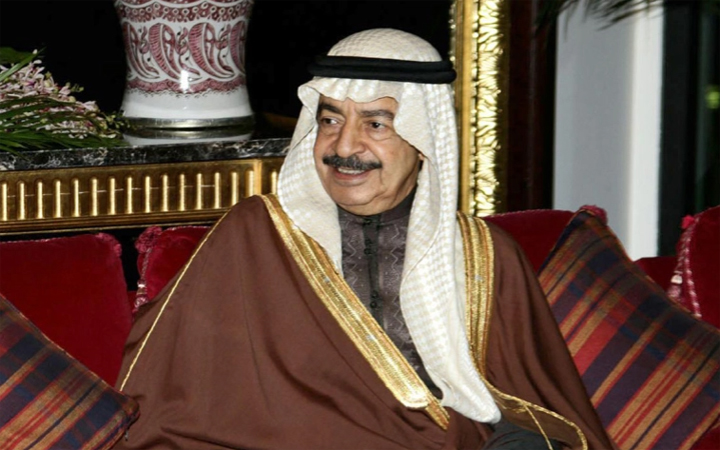
Manama, Nov 11: Bahrain’s long-serving Prime Minister Sheikh Khalifa bin Salman Al Khalifa has died, the state media reported. He was 84.

“The Royal Court mourns His Royal Highness … who passed away this morning at Mayo Clinic Hospital in the United States of America,” the Bahrain News Agency said on Wednesday, without elaborating.

The Gulf state’s King Sheikh Hamad bin Isa Al Khalifa announced official mourning for a week during which flags will be flown at half-mast, the agency said.

The burial ceremony will take place upon the repatriation of his body and the funeral will be limited to a specific number of relatives, it said.

Sheikh Khalifa was one of the world’s longest-serving prime ministers who led his island nation’s government for decades and survived the 2011 Arab Spring protests that demanded his removal over corruption allegations.

His stern response to the pro-democracy protests and criticism of similar unrest across the Arab world underlined what for many was the defining characteristic of his career, namely a stalwart defence of dynastic rule. The Al Khalifa family has ruled Bahrain since 1783.

In August, Sheikh Khalifa left the kingdom for what official media called at the time “a private visit abroad”. Earlier this year, he spent time in Germany for unspecified medical treatment, returning to Bahrain in March.

Bahrain, a staunch ally of neighbouring Saudi Arabia and the United States, is also the home base of the US Navy’s Fifth Fleet.

Controversial figure

Sheikh Khalifa’s power and wealth could be seen everywhere in Bahrain. His official portrait hung for decades on walls alongside the country’s ruler.

He had his own private island where he met foreign dignitaries, complete with a marina and a park that had peacocks and gazelle roam its grounds.

“Khalifa bin Salman represented the old guard in more ways than just age and seniority,” said Kristin Smith Diwan, a senior resident scholar at the Washington-based Arab Gulf States Institute.

“He represented an old social understanding rooted in royal privilege and expressed through personal patronage.”

The son of Bahrain’s former ruler, Sheikh Salman bin Hamad Al Khalifa, who ruled from 1942 to 1961, Sheikh Khalifa learned governance at his father’s side as the island remained a British protectorate.

His brother, Sheikh Isa bin Salman Al Khalifa, took power in 1961 and served as monarch when Bahrain gained its independence from Britain in 1971. Under an informal arrangement, Sheikh Isa handled the island’s diplomacy and ceremonial duties while Sheikh Khalifa ran the government and economy.

The years that followed saw Bahrain develop rapidly as it sought to move beyond its dependence on dwindling oil reserves. Manama at that time served as what Dubai in the United Arab Emirates ultimately became, a regional financial, service and tourism hub.

The opening of the King Fahd Causeway in 1986 gave the island nation its first land link with its rich and powerful neighbour, Saudi Arabia, and offered an escape for Westerners in the kingdom who wanted to enjoy Bahrain’s alcohol-soaked nightclubs and beaches.

But Sheikh Khalifa increasingly saw his name entangled in corruption allegations, such as a major foreign corruption practices case against aluminium producer Alcoa over using a London-based middleman to facilitate bribes for Bahraini officials. Alcoa agreed to pay $384m in fines to the US government to settle the case in 2014.

The US embassy in Manama similarly had its own suspicions about Sheikh Khalifa, writing in cables that the prince had “off-the-books access to income from the state-owned enterprises” such as the Bahrain Petroleum Co and Aluminium Bahrain, the country’s aluminium producer.

“I believe that Shaikh Khalifa is not wholly a negative influence,” wrote former US Ambassador Ronald E Neumann in 2004 in a cable released by WikiLeaks. “While certainly corrupt, he has built much of modern Bahrain.”

Those corruption allegations fuelled discontent, particularly among Bahrain’s Shia majority. In February 2011, protesters inspired by the Arab Spring demonstrations across the Middle East filled the streets and occupied the capital Manama’s Pearl Roundabout to demand political reforms and a greater say in the country’s future.

While some called for a constitutional monarchy, many others pressed for the removal of the long-ruling prime minister and other members of the Sunni royal family altogether, including King Hamad bin Isa Al Khalifa.

At one point during the height of the unrest in March 2011, thousands of protesters besieged the prime minister’s office while officials met inside, demanding Sheikh Khalifa step down.

Protesters also took to waving one Bahraini dinar notes over allegations the prime minister bought the land on which Bahrain’s Financial Harbour development sits for just a single dinar.

Bahraini officials soon crushed the protests with the backing of troops from neighbouring Saudi Arabia and the UAE. Low-level unrest continued in the years that followed, with Shia protesters frequently clashing with riot police.

In recent years, Sheikh Khalifa’s influence waned as he faced unexplained health problems.

Comments

Nasir ahmmed
 - 
Thursday, 26 Nov 2020

Please sir i need green signal because i need go back abudhabi please sir

Add new comment

  • Coastaldigest.com reserves the right to delete or block any comments.
  • Coastaldigset.com is not responsible for its readers’ comments.
  • Comments that are abusive, incendiary or irrelevant are strictly prohibited.
  • Please use a genuine email ID and provide your name to avoid reject.
News Network
December 2,2025

Puttur: The long-cherished dream of a government medical college in Puttur has moved a decisive step closer to reality, with the Karnataka State Finance Department granting its official approval for the construction of a new 300-bed hospital.

Puttur MLA Ashok Kumar Rai announced the crucial development to reporters on Monday, confirming that the official communication from the finance department was issued on November 27. This 300-bed facility is intended to be the cornerstone for the establishment of the government medical college, a project announced in the state budget.

Fast-Track Implementation

The MLA outlined an aggressive timeline for the project:

•    A Detailed Project Report (DPR) for the hospital is expected to be ready within 45 days.

•    The tender process for the construction will be completed within two months.

Following the completion of the tender process, Chief Minister Siddaramaiah is scheduled to lay the foundation stone for the project.

"Setting up a medical college in Puttur is a historical decision by the Congress government in Karnataka," Rai stated. The project has an estimated budget allocation of Rs 1,000 crore for the medical college.

Focus on Medical Education Department

The MLA highlighted a key strategic move: requesting the government to implement the hospital construction through the Medical Education Department instead of the Health and Family Welfare Department. This is intended to streamline the entire process of establishing the full medical college, ensuring the facilities—including labs, operation theatres, and other necessary infrastructure—adhere to the strict guidelines set by the Medical Council of India (MCI). The proposed site for the project is in Bannur.

Rai also took the opportunity to address political criticism, stating that the government has fulfilled its promise despite "apprehensions" and "mocking and criticising" from opposition parties who had failed to take similar initiatives when they were in power. "Chief Minister Siddaramaiah has kept his word," he added.

Comments

Add new comment

  • Coastaldigest.com reserves the right to delete or block any comments.
  • Coastaldigset.com is not responsible for its readers’ comments.
  • Comments that are abusive, incendiary or irrelevant are strictly prohibited.
  • Please use a genuine email ID and provide your name to avoid reject.
News Network
November 24,2025

israelsyra.jpg

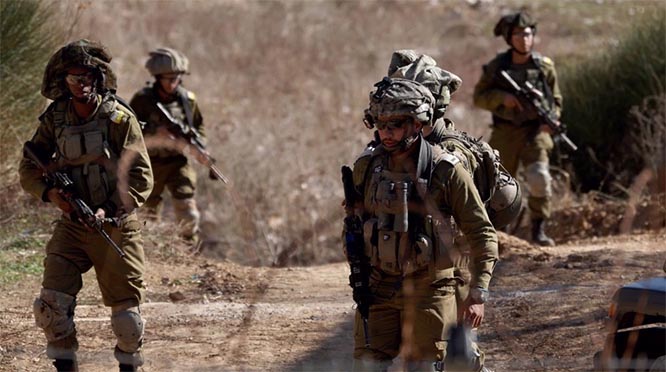
Israeli forces have pushed over the Syrian frontier, erecting a checkpoint and stopping vehicles in the southwestern city of Quneitra, in yet another breach of the Arab country’s sovereignty.

The violation took place on Sunday, when the troops made their way across the border, setting up the outpost near the Ain al-Bayda junction in northern Quneitra, Syrian outlets reported.

According to the al-Ikhbariya paper, an Israeli detachment positioned itself at the junction, halting cars and conducting searches.

The Syrian Arab News Agency (SANA) reported that three Israeli military vehicles then moved further into the northern countryside, deploying between the town of Jubata al-Khashab and the villages of Ofaniya and Ain al-Bayda. The agency added that a separate Israeli unit mounted a new incursion in the central region, approaching the villages of Umm Batina and al-Ajraf.

Residents said such activities have surged in recent months, pointing to Israeli advances onto farmland, leveling of extensive forested areas, arrests, and spread of mobile checkpoints.

The Israeli regime began markedly increasing its military aggression against Syria last year.

The escalation coincided with increasingly ferocious onslaughts throughout the country by the so-called Hay'at Tahrir al-Sham (HTS) Takfiri terrorist group, which the government of President Bashar al-Assad had confined to northwestern Syria. The HTS, however, managed to overthrow the government as the Israeli attacks would pummel the country’s civilian and defensive infrastructure.

Various reports have shown that, during the escalation, the regime conducted more than 1,000 airstrikes on the Syrian territory and over 400 ground raids into the south.

Following the collapse of the Assad government, Tel Aviv also widened its grip over the occupied Golan Heights by taking control of a demilitarized buffer zone, in defiance of a 1974 Disengagement Agreement. Earlier this month, senior Israeli officials, including Prime Minister Benjamin Netanyahu, visited the buffer zone, prompting expressions of alarm on the part of the United Nations.

The United States, the regime’s biggest ally, has, meanwhile, been fraternizing the HTS head Abu Mohammed al-Jolani amid the widely reported prospect of rapprochement with Tel Aviv.

Comments

Add new comment

  • Coastaldigest.com reserves the right to delete or block any comments.
  • Coastaldigset.com is not responsible for its readers’ comments.
  • Comments that are abusive, incendiary or irrelevant are strictly prohibited.
  • Please use a genuine email ID and provide your name to avoid reject.
News Network
November 26,2025

Mangaluru, Nov 26: Assembly Speaker and local MLA U.T. Khader has initiated a high-level push to resolve one of Mangaluru’s longest-standing traffic headaches: the narrow, high-density stretch of National Highway-66 between Nanthoor and Talapady.

He announced on Tuesday that a formal proposal has been submitted to the Union Ministry of Road Transport and Highways (MoRTH) seeking approval to prepare a Detailed Project Report (DPR) for the widening of this crucial corridor.

The plan specifically aims to expand the existing 45-meter road width to a full 60 meters, coupled with the construction of dedicated service roads. Khader highlighted that land for a 60-meter highway was originally acquired during the initial four-laning project, but only 45 meters were developed, leading to a perpetual bottleneck.

"With vehicle density rising sharply, the expansion has become unavoidable," Khader stated, stressing that the upgrade is essential for ensuring smoother traffic flow and improving safety at the city's main entry and exit points.

The stretch between Nanthoor and Talapady is a vital link on the busy Kochi-Panvel coastal highway and connects to major city junctions. The move to utilize the previously acquired land for the full 60-meter width is seen as a necessary measure to catch up with the region's rapid vehicular growth and prevent further traffic gridlocks.

Comments

Add new comment

  • Coastaldigest.com reserves the right to delete or block any comments.
  • Coastaldigset.com is not responsible for its readers’ comments.
  • Comments that are abusive, incendiary or irrelevant are strictly prohibited.
  • Please use a genuine email ID and provide your name to avoid reject.