



IAEA, Iran thrash out 'temporary solution' ahead of deadline

Agencies
February 22, 2021

rgy-agency.jpg

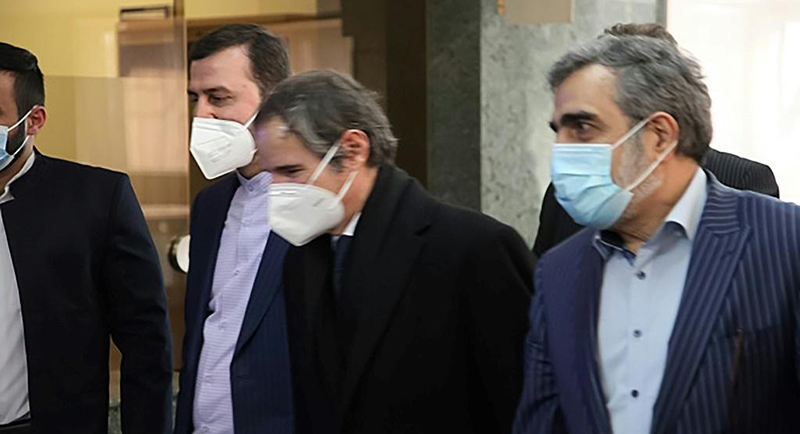
Vienna, Feb 22: The UN nuclear watchdog chief announced on Sunday a “temporary solution” to allow Iranian facility inspections to continue after days of talks with officials, giving some much needed breathing space for diplomatic negotiations.

However, Rafael Grossi admitted that under the new three-month arrangement, the International Atomic Energy Agency (IAEA) would not have the same level of access after a law comes into force on Tuesday limiting some inspections.

Grossi’s visit to Iran came amid stepped-up efforts between US President Joe Biden’s administration, European powers and Tehran to salvage the 2015 nuclear deal that has been on the brink of collapse since Donald Trump withdrew from it and went on to impose sanctions on the nation.

In December, Iran’s conservative-dominated parliament passed the law demanding a suspension of some inspections if the United States failed to lift sanctions by this Sunday.

Tehran had notified the UN body that if the suspensions were lifted it would suspend “voluntary transparency measures” — notably inspections to non-nuclear sites, including military sites suspected of nuclear-related activity.

Grossi said that under the new “temporary technical understanding... there is less access, let’s face it”.

“But still we were able to retain the necessary degree of monitoring and verification work,” he added.

“What we agreed is something that is viable — it is useful to bridge this gap that we are having now, it salvages the situation now,” Grossi told reporters after landing back in Vienna.

Under the temporary agreement Tehran will for “three months record and keep the information of some activities and monitoring equipment”, Iran’s Atomic Energy Organization (IAEO) said.

“During this period, the IAEA will not have access to this information,” the statement said, appearing to confirm comments from Foreign Minister Mohammad Javad Zarif that the law mandates the government to “not provide the tapes” of cameras at sites to the IAEA.

“If the sanctions are completely lifted within three months, Iran will provide this information to the IAEA, otherwise the information will be deleted forever,” the statement added.

Zarif had signalled the Islamic republic wanted to avoid an “impasse” over inspections, but also warned it could further step away from its commitments if Washington does not lift sanctions.

Grossi had said earlier his hope in visiting Tehran was “to stabilise a situation which was very unstable”.

“I think this technical understanding does it so that other political discussions at other levels can take place, and most importantly we can avoid a situation in which we would have been, in practical terms, flying blind,” he added.

Iran’s deputy foreign minister Abbas Araghchi acknowledged on Saturday that his country’s inspection capability would be “reduced by about 20-30 percent” when Tuesday’s law came into effect.

Grossi declined to give his own estimate of how much the IAEA’s inspection capability would be reduced but said the number of inspectors would not be scaled down, and that the agency would still be able to carry out some snap probes.

Biden has committed to rejoining talks on Tehran’s nuclear programme in a shift from Trump’s policy of “maximum pressure” towards the Islamic republic.

Tehran has repeatedly said it is ready to return to its nuclear commitments, on the condition Washington makes the first move by lifting the sanctions that have heaped economic pain on Iran.

But foreign minister Zarif warned that, if sanctions were not lifted, his nation would continue scaling back its commitments under the 2015 deal with the five UN Security Council permanent members and Germany.

The stockpile of “enriched uranium will increase”, he said, stressing that Tehran had the right within the agreement to stop observing commitments “totally or partially” if the other parties fail to honour theirs.

“We are still in the partial phase,” Zarif said. “We can be total.”

The European Union’s political director Enrique Mora has proposed an “informal meeting” involving Iran, with Washington accepting in principle.

Araghchi said Saturday that Tehran was reviewing the proposal, and discussing it with “friends and allies” China and Russia.

Meanwhile Recep Tayyip Erdogan, president of neighbouring Turkey, said on Sunday there was a “window of opportunity” for the lifting of Iran sanctions, calling it “legal and logical”.

Comments

Add new comment

  • Coastaldigest.com reserves the right to delete or block any comments.
  • Coastaldigset.com is not responsible for its readers’ comments.
  • Comments that are abusive, incendiary or irrelevant are strictly prohibited.
  • Please use a genuine email ID and provide your name to avoid reject.
News Network
November 24,2025

israelsyra.jpg

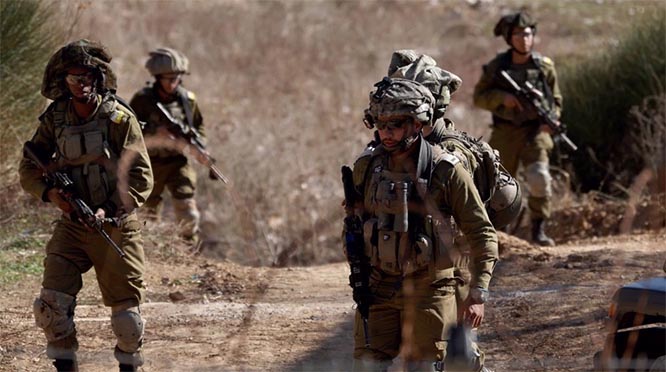
Israeli forces have pushed over the Syrian frontier, erecting a checkpoint and stopping vehicles in the southwestern city of Quneitra, in yet another breach of the Arab country’s sovereignty.

The violation took place on Sunday, when the troops made their way across the border, setting up the outpost near the Ain al-Bayda junction in northern Quneitra, Syrian outlets reported.

According to the al-Ikhbariya paper, an Israeli detachment positioned itself at the junction, halting cars and conducting searches.

The Syrian Arab News Agency (SANA) reported that three Israeli military vehicles then moved further into the northern countryside, deploying between the town of Jubata al-Khashab and the villages of Ofaniya and Ain al-Bayda. The agency added that a separate Israeli unit mounted a new incursion in the central region, approaching the villages of Umm Batina and al-Ajraf.

Residents said such activities have surged in recent months, pointing to Israeli advances onto farmland, leveling of extensive forested areas, arrests, and spread of mobile checkpoints.

The Israeli regime began markedly increasing its military aggression against Syria last year.

The escalation coincided with increasingly ferocious onslaughts throughout the country by the so-called Hay'at Tahrir al-Sham (HTS) Takfiri terrorist group, which the government of President Bashar al-Assad had confined to northwestern Syria. The HTS, however, managed to overthrow the government as the Israeli attacks would pummel the country’s civilian and defensive infrastructure.

Various reports have shown that, during the escalation, the regime conducted more than 1,000 airstrikes on the Syrian territory and over 400 ground raids into the south.

Following the collapse of the Assad government, Tel Aviv also widened its grip over the occupied Golan Heights by taking control of a demilitarized buffer zone, in defiance of a 1974 Disengagement Agreement. Earlier this month, senior Israeli officials, including Prime Minister Benjamin Netanyahu, visited the buffer zone, prompting expressions of alarm on the part of the United Nations.

The United States, the regime’s biggest ally, has, meanwhile, been fraternizing the HTS head Abu Mohammed al-Jolani amid the widely reported prospect of rapprochement with Tel Aviv.

Comments

Add new comment

  • Coastaldigest.com reserves the right to delete or block any comments.
  • Coastaldigset.com is not responsible for its readers’ comments.
  • Comments that are abusive, incendiary or irrelevant are strictly prohibited.
  • Please use a genuine email ID and provide your name to avoid reject.
News Network
November 28,2025

fire.jpg

Several Syrians were killed and more than two dozen others injured in Israeli strikes on the outskirts of Damascus, amid intensified incursions by the occupying regime since the fall of former president Bashar al-Assad and the rise of Hayat Tahrir al-Sham (HTS) rule.

Syrian state TV reported that the casualties occurred during an overnight Israeli assault involving helicopters and drones on the town of Beit Jinn in the Damascus countryside. The attack followed an Israeli military unit’s entry into the town, where they were surrounded by local residents, leading to gunfire and direct confrontations.

According to the report, “The occupation army’s helicopters and artillery shelled Beit Jinn, located at the foothills of Mount Hermon, resulting in 13 martyrs and 25 injured civilians.” The broadcaster did not specify the full extent of damage.

Al-Ikhbariyah Syria confirmed that the shelling coincided with Israeli soldiers entering Beit Jinn, while artillery pounded surrounding areas. The broadcaster stated that the escalation began after local residents clashed with an Israeli patrol that had infiltrated the southern town and “kidnapped” three young men.

Following a two-hour exchange of heavy fire, Israeli forces withdrew and repositioned on the hill of Butt al-Warda at the town’s outskirts.

Israeli media acknowledged that six soldiers were wounded in the clashes—three of them seriously—describing the confrontation as a “sudden ambush” that forced the deployment of reserve units and air support to secure an exit route. No further details were provided.

The aggression has fueled renewed displacement from Beit Jinn, with residents fleeing to nearby villages amid increasingly frequent Israeli attacks.

The raid came just a day after Israeli troops carried out another ground incursion into Umm al-Luqas village in Quneitra province. According to SANA, an Israeli unit in four vehicles entered the village, raided several homes, and later withdrew.

Syria condemned the repeated incursions as violations of the 1974 Disengagement Agreement and UN resolutions, urging the international community to enforce compliance and pressure Israel to halt its operations and withdraw fully.

Israel has expanded its attacks across Syrian territory following the collapse of the Assad government last year. Prime Minister Benjamin Netanyahu has reportedly instructed his forces to push deeper into Syrian territory and seize strategic positions.

Meanwhile, critics say the HTS-led interim government’s inaction and growing normalization gestures toward Israel have emboldened Tel Aviv to intensify its military operations. HTS, formerly linked to al-Qaeda, seized control of Damascus last December, formally ending Assad’s rule.

Comments

Add new comment

  • Coastaldigest.com reserves the right to delete or block any comments.
  • Coastaldigset.com is not responsible for its readers’ comments.
  • Comments that are abusive, incendiary or irrelevant are strictly prohibited.
  • Please use a genuine email ID and provide your name to avoid reject.
News Network
November 30,2025

The United Nations Committee against Torture (CAT) has condemned the Israeli regime for enforcing a policy of “organized torture” against Palestinians.

In a report published on Friday, CAT stated that the occupying regime enforces a deliberate policy of “organized and widespread torture and ill-treatment” against Palestinian abductees, particularly since October 7, 2023, when Israel launched its genocidal war on Gaza.

The committee expressed “deep concern over repeated severe beatings, dog attacks, electrocution, water-boarding, use of prolonged stress positions [and] sexual violence” inflicted on Palestinians.

Palestinian prisoners were degraded by “being made to act like animals or being urinated on,” systematically denied medical care, and subjected to excessive restraints, “in some cases resulting in amputation,” the report added.

CAT also condemned the routine application of “unlawful combatants law” to justify the prolonged detention without trial of thousands of Palestinian men, women, and children.

More than 10,000 Palestinians, including women and children, are currently held in Israeli prisons, according to Palestinian and international human rights groups, with 3,474 Palestinians in “administrative detention,” meaning they are imprisoned without trial for indefinite periods.

The report highlighted the “high proportion of children who are currently detained without charge or on remand,” noting that while Israel sets the age of criminal responsibility at 12, even younger children have been abducted.

Children designated as security prisoners face severe restrictions on family contact, may be subjected to solitary confinement, and are denied access to education, in clear violation of international law.

The committee further suggested that Israel’s policies across the Occupied Territories constitute collective torture against the Palestinian population.

“A range of policies adopted by Israel in the course of its continued unlawful presence in the Occupied Palestinian Territory amounts to cruel, inhuman or degrading living conditions for the Palestinian population,” the report said.

On Thursday, the Palestinian resistance movement Hamas condemned the systematic killing and torture of Palestinian abductees in Israeli prisons, urging international action to halt these abuses.

Citing human rights data, Hamas stated that 94 Palestinians have been killed in Israeli prisons since the start of Tel Aviv’s genocidal war on Gaza.

“This reflects an organized criminal approach that has turned these prisons into direct killing grounds to eliminate our people,” the resistance movement said.

Hamas called on the international community, the UN, and human rights organizations to immediately pressure Israel to end crimes against prisoners and uphold their rights as guaranteed by all international conventions and norms.

Comments

Add new comment

  • Coastaldigest.com reserves the right to delete or block any comments.
  • Coastaldigset.com is not responsible for its readers’ comments.
  • Comments that are abusive, incendiary or irrelevant are strictly prohibited.
  • Please use a genuine email ID and provide your name to avoid reject.