



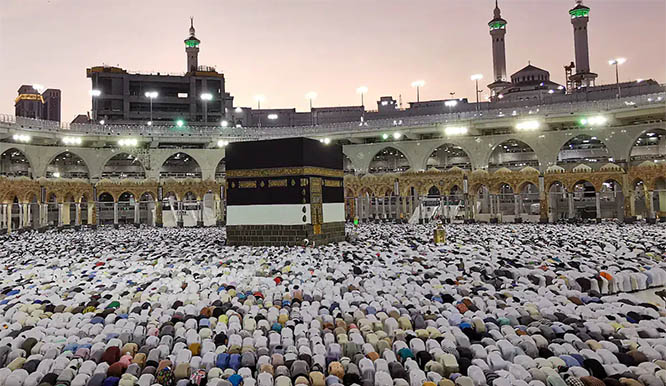
Over 1,300 deaths during Hajj due to intense heat; 83% of them unauthorised pilgrims: Saudi

News Network
June 24, 2024

hajj1300.jpg

Saudi Arabia said Sunday that more than 1,300 faithful died during the hajj pilgrimage which took place during intense heat and that most of them who died did not have official permits.

"Regrettably, the number of mortalities reached 1,301, with 83 percent being unauthorised to perform hajj and having walked long distances under direct sunlight, without adequate shelter or comfort," the official Saudi Press Agency reported.

An AFP tally last week, based on official statements and reports from diplomats involved in their countries' responses, put the count at more than 1,100.

The dead came from more than 10 countries stretching from the United States to Indonesia, and some governments are continuing to update their totals.

Arab diplomats told AFP last week that Egyptians accounted for 658 deaths -- 630 of them unregistered pilgrims. 

The diplomats said the cause of death in most cases was heat-related. 

Temperatures in Mecca this year climbed as high as 51.8 degrees Celsius (125 degrees Fahrenheit), according to Saudi Arabia's national meteorological centre. 

Riyadh had not publicly commented on the deaths or provided its own count until Sunday. 

On Friday, however, a senior Saudi official gave AFP a partial count of 577 deaths for the two busiest days of hajj: June 15, when pilgrims gathered for hours of prayers in the blazing sun on Mount Arafat, and June 16, when they participated in the "stoning of the devil" ritual in Mina.

The official also defended Riyadh's response, saying: "The state did not fail, but there was a misjudgement on the part of people who did not appreciate the risks."

'Heat stress'

The Saudi health minister, Fahd Al-Jalajel, on Sunday described management of the hajj this year as "successful", SPA reported. 

He said the health system "provided more than 465,000 specialised treatment services, including 141,000 services to those who didn't obtain official authorisation to perform hajj," according to SPA, which summarised an interview he gave to the state-affiliated Al-Ekhbariya channel.

Jalajel did not specify how many deaths Saudi officials attributed to heat.

"The health system addressed numerous cases of heat stress this year, with some individuals still under care," SPA reported. 

"Among the deceased were several elderly and chronically ill individuals."

The hajj is one of the five pillars of Islam that all Muslims with the means must complete at least once in their lives.

Saudi officials have said 1.8 million pilgrims took part this year, a similar number to last year, and that 1.6 million came from abroad.

For the past several years the mainly outdoor rituals have fallen during the sweltering Saudi summer.

The timing of the hajj moves forward about 11 days each year in the Gregorian calendar, meaning that next year it will take place earlier in June, potentially in cooler conditions.

A 2019 study by the journal Geophysical Research Letters said because of climate change, heat stress for hajj pilgrims will exceed the "extreme danger threshold" from 2047 to 2052 and 2079 to 2086, "with increasing frequency and intensity as the century progresses".

Off-the-books hajj

Hajj permits are allocated to countries on a quota system and distributed to individuals by lottery.

Even for those who can obtain them, the steep costs spur many to attempt the hajj without a permit, though they risk arrest and deportation if caught.

Saudi authorities said before the hajj that they had cleared hundreds of thousands of unregistered pilgrims from Mecca.

But the Saudi official who spoke to AFP on Friday said around 400,000 unregistered pilgrims took part, and that "almost all of them (were) from one nationality", an apparent reference to Egypt. 

On Saturday, Egyptian Prime Minister Mostafa Madbouly ordered 16 tourism companies stripped of their licences and referred their managers to the public prosecutor over illegal pilgrimages to Mecca, Egypt's cabinet said.

It said the rise in the number of deaths of unregistered Egyptian pilgrims stemmed from some companies which "organised the hajj programmes using a personal visit visa, which prevents its holders from entering Mecca" via official channels.

Unregistered pilgrims in many cases did not have access to amenities meant to make the pilgrimage more bearable, including air-conditioned tents.

Unregistered Egyptian pilgrims told AFP last week that in some cases they struggled to access hospitals or hail ambulances for loved ones, some of whom ended up dying.

Comments

Add new comment

  • Coastaldigest.com reserves the right to delete or block any comments.
  • Coastaldigset.com is not responsible for its readers’ comments.
  • Comments that are abusive, incendiary or irrelevant are strictly prohibited.
  • Please use a genuine email ID and provide your name to avoid reject.
News Network
January 23,2026

Karnataka Governor Thaawarchand Gehlot read only three lines from the 122-paragraph address prepared by the Congress-led state government while addressing the joint session of the Legislature on Thursday, effectively bypassing large sections critical of the BJP-led Union government.

The omitted portions of the customary Governor’s address outlined what the state government described as a “suppressive situation in economic and policy matters” under India’s federal framework. The speech also sharply criticised the Centre’s move to replace the Mahatma Gandhi National Rural Employment Guarantee Act (MGNREGA) with the Viksit Bharat–Guarantee for Rozgar and Ajeevika Mission (Gramin) Act, commonly referred to as the VB-GRAM (G) Act.

Governor Gehlot had earlier conveyed his objection to several paragraphs that were explicitly critical of the Union government. On Thursday, he confined himself to the opening lines — “I extend a warm welcome to all of you to the joint session of the State legislature. I am extremely pleased to address this august House” — before jumping directly to the concluding sentence of the final paragraph.

He ended the address by reading the last line of paragraph 122: “Overall, my government is firmly committed to doubling the pace of the State’s economic, social and physical development. Jai Hind — Jai Karnataka.”

According to the prepared speech, the Karnataka government demanded the scrapping of the VB-GRAM (G) Act, describing it as “contractor-centric” and detrimental to rural livelihoods, and called for the full restoration of MGNREGA. The state government argued that the new law undermines decentralisation, weakens labour protections, and centralises decision-making in violation of constitutional norms.

Key points from the unread sections of the speech:

•    Karnataka facing a “suppressive” economic and policy environment within the federal system

•    Repeal of MGNREGA described as a blow to rural livelihoods

•    VB-GRAM (G) Act accused of protecting corporate and contractor interests

•    New law alleged to weaken decentralised governance

•    Decision-making said to be imposed by the Centre without consulting states

•    Rights of Adivasis, women, backward classes and agrarian communities curtailed

•    Labourers allegedly placed under contractor control

•    States facing mounting fiscal stress due to central policies

•    VB-GRAM (G) Act accused of enabling large-scale corruption

Comments

Add new comment

  • Coastaldigest.com reserves the right to delete or block any comments.
  • Coastaldigset.com is not responsible for its readers’ comments.
  • Comments that are abusive, incendiary or irrelevant are strictly prohibited.
  • Please use a genuine email ID and provide your name to avoid reject.
News Network
January 23,2026

oscar.jpg

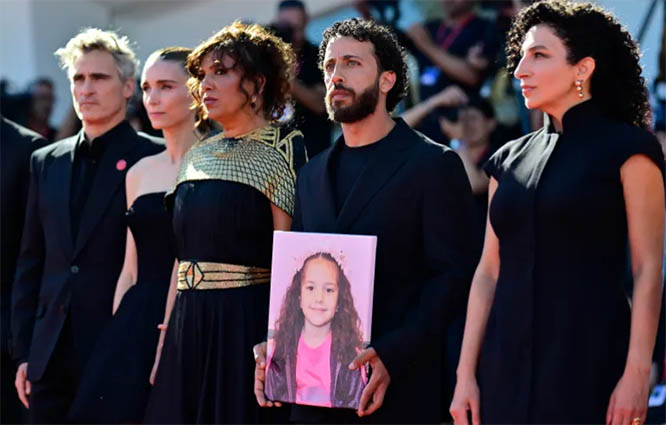
The Voice of Hind Rajab, inspired by the tragic final moments of a young Palestinian girl killed by Israeli fire in Gaza, has been nominated for an Academy Award in the Best International Feature Film category.

Directed by Tunisian filmmaker Kaouther Ben Hania, the film recounts the true story of five-year-old Hind Rajab, who lost her life in January 2024 while fleeing Israeli bombardment with her family.

The film features the real audio of Hind’s desperate call to the Palestinian Red Crescent Society, where she pleaded for help moments before the vehicle she was in was struck by 355 bullets.

The haunting narrative begins with a brief call made from the besieged Tel al-Hawa neighborhood of Gaza, where gunfire and armored vehicles drowned out every sound.

After witnessing the brutal killing of her family, she made a trembling call, her voice reduced to a whisper as she spoke of the massacre and her unbearable loneliness as the sole survivor.

Premiering at the Venice International Film Festival in September 2025, The Voice of Hind Rajab garnered widespread acclaim, receiving a record-setting 23-minute standing ovation and the Silver Lion Grand Jury Prize, the festival’s second-highest honor.

In her acceptance speech, Ben Hania dedicated the film to humanitarian workers and first responders in Gaza, emphasizing that Hind's voice symbolizes countless civilians affected by war.

She aims to give voice to victims often reduced to mere statistics, highlighting the broader suffering of civilians in war zones.

The film’s Oscar nomination underscores its powerful storytelling and ethical approach to depicting real-life tragedy, making it a crucial piece of contemporary cinema.

It serves not only as a narration of individual tragedy but also as an artistic and documentary response to the silence and censorship that often overshadow West Asian struggles and wars.

Using an innovative method she calls docufiction, Ben Hania bridges unvarnished reality and narrative structure, creating a work that is both artistically valuable and socially impactful.

Born in 1977 in Sidi Bouzid—later the epicenter of the Arab revolution—her background profoundly influenced her worldview and artistic approach.

She is a graduate of the Higher School of Audiovisual Arts of Tunis, Pantheon-Sorbonne University, and La Fémis in Paris, where her studies equipped her with the technical and theoretical tools needed to address complex subjects. 

Comments

Add new comment

  • Coastaldigest.com reserves the right to delete or block any comments.
  • Coastaldigset.com is not responsible for its readers’ comments.
  • Comments that are abusive, incendiary or irrelevant are strictly prohibited.
  • Please use a genuine email ID and provide your name to avoid reject.
News Network
January 20,2026

iran.jpg

Iranian security and intelligence forces have captured more than 470 individuals in three provinces, identified as key figures behind the recent wave of violent unrest and terrorist activities linked to foreign-backed networks.

The Intelligence Ministry's provincial office in Khorasan Razavi announced on Monday the arrest of 192 armed terrorists, identified as the main agents behind recent riots in the region. 

According to an official statement, the detainees were involved in the killing of several security personnel and civilians, setting fire to mosques, public service facilities, and buses, as well as attacks on military and law enforcement centers.

The seized items from the group include several bulletproof vests, Kalashnikov rifles, hunting weapons, Winchester rifles, and various cold weapons such as daggers, swords, brass knuckles, tactical knives, crossbows, and chains.

Evidence indicates that some of the individuals were tied to hostile movements and terrorist organizations, with links overseas. Others were identified as members of violent criminal gangs, actively taking part in the unrest alongside their associates.

Simultaneously, in the western province of Lorestan, the IRGC announced the arrest of 134 individuals as the main leaders and influential field agents of a US-Israeli terrorist network.

The IRGC statement stated that these individuals formed terrorist cells during the recent unrest, committing "Daesh-like" acts.

They wounded security forces with firearms and cold weapons, and burned and destroyed public and private properties, including mosques, shops, banks, and private and public vehicles.

In the northwestern province of Zanjan, the police reported detaining 150 people identified as principal leaders and agents behind recent riots.

Authorities noted that these individuals were responsible for destroying public and private property and intentionally setting fire to vehicles in the province's squares.

Their crimes include shedding the blood of innocent people, destroying public and private property, attempting to enter military sites, disrupting public order, and spreading terror among citizens.

A variety of cold weapons were reportedly seized from the detainees.

What began late last month as peaceful protests over economic hardship across Iran turned violent after public statements by US and Israeli regime figures encouraged vandalism and disorder.

During the unrest, foreign-backed mercenaries rampaged through cities, killing security forces and civilians and damaging public property.

Comments

Add new comment

  • Coastaldigest.com reserves the right to delete or block any comments.
  • Coastaldigset.com is not responsible for its readers’ comments.
  • Comments that are abusive, incendiary or irrelevant are strictly prohibited.
  • Please use a genuine email ID and provide your name to avoid reject.
