TVTC, MYNM sign deal to train 400 young Saudis

April 11, 2012

ECO_TVTC

Riyadh, April 11: As part of an ambitious public-partnership plan to reduce dependence on foreign workers, the state-owned Technical and Vocational Training Corporation (TVTC) and Mohamed Yousuf Naghi Motors (MYNM) signed a memorandum of understanding (MoU) yesterday to train 400 young Saudis for jobs in automobile sector. On completion of the training, the MYNM, which has a nationwide network of sales and after-sales facilities for Hyundai cars, will provide employment to the Saudi graduates also.

The agreement was signed in the presence of TVTC Gov. Ali Bin Nasser Al-Ghafis who said that the Kingdom was committed to develop the public-private partnership initiative to provide technology training and tools for young Saudi boys and girls. Al-Ghafis said: "This was one of the major MoUs signed by the TVTC with private organizations, which will go a long way in providing necessary skills to Saudis to work in automobile sector."

He added that the Saudi trainees under this program will receive a monthly stipend of SR1,500 during the training period besides other benefits including medical insurance. "The training program will have components of Korean car technology with focus on a range of skills, which will help the trainees after two years of their employment to open their own workshops," said Al-Ghafis.

The MoU was signed by Hamad Al-Aqla, TVTC deputy governor, in a brief ceremony organized at the headquarters of the TVTC in the Saudi capital. Hazm Sami Jamjoom, NYNM managing director, inked the agreement representing Naghi Motors. Top TVTC officials and MYNM executives attended the event. After the signing ceremony, Fahad M. Al-Otaibi, TVTC media relations manager, conducted reporters on a tour of the exhibition hall to watch the models of new TVTC colleges.

Al-Aqla said: "This program with Naghi Motors will help to provide intensive training to Saudis and eventually the company will hire the graduates." Those joining the program will be given extensive lessons and practical training to become world-class auto mechanics, diesel mechanics, spare parts salesmen, auto technicians, painters and motor electricians."

He added that there was a greater scope for employment in automotive sector of the Kingdom, which is poised to sustain a positive growth outlook over a five-year period. In fact, the sales value of the automobile sector during the five-year period is expected to reach over SR80.6 billion, precisely by 2014. "The robust growth forecast is underpinned by the positive performance of the commercial vehicle segment, which is expected to remain strong over the next five years," said an executive of NYNM/Hyundai.

Asked about the major policies and the future plans of the TVTC, Al-Ghafis said the TVTC had endorsed similar agreements with a few major companies in different sectors. "The plan is to train workers for jobs that are in demand in Saudi Arabia," he said, adding that the new initiative launched by the TVTC is intended to help better align with technical college curriculums with the demands of local companies.

"Some similar partnerships between TVTC and private companies already exist," said Al-Ghafis. The TVTC is working hard to address the training needs of young Saudi boys and girls. "A number of studies, a number of discussions and several projects currently under way to address the skills' gap among Saudis, and how that's related to unemployment and how they can be addressed," he said while giving an overview of the TVTC's programs.

"The commitments from private partners are really commendable," said the TVTC chief, adding that the TVTC is helping to prepare skilled workers for the labor market by designing appropriate training programs and developing partnerships with the private sector. He added that the plan is under way to build 40 technology institutes for girls and 50 for boys in near future. The TVTC projects include the establishment of institutes for training, especially in strategically significant fields.

In fact, the total enrolment of Saudi boys and girls at the existing TVTC colleges exceeds 100,000 now. According to a TVTC report obtained by Arab News yesterday, the TVTC also selects qualified trainers to teach specialist training courses aimed at developing the skills. "The private sector has become a genuine partner of the TVTC in training technical workers," the report added.

It is also seeking international and domestic expertise to operate its training and professional institutes, said the report. The TVTC, which is a premier Saudi government organization entrusted with the task to train Saudi youngsters for jobs in different sectors, currently has 35 technical colleges for boys and 14 technical institutes for girls. It also owns and operates three institutes for military vocational training and 69 industrial institutes across the Kingdom.

On the other hand, the Naghi Motors is a well known name in automotive business, which is one of the best distributors of Hyundai cars in the region mainly because of its excellent sales service, customer handling and innovative support service programs. Naghi Motors is the first company to introduce leasing program for Hyundai cars and offer flexible credit terms. In a short span of time, the Naghi Motors has a strong network of sub-dealers and branches across the Kingdom.

It has its branches in Makkah, Madinah, Jazan, Tabuk, Taif, Khamis Mushayit, Abha, and Bisha, aside from several outlets in Jeddah. "Our ability to provide quality products and personalized after sales service has been instrumental in our rapid and successful growth," said Naghi Motors in a press statement here Tuesday.

Comments

Add new comment

  • Coastaldigest.com reserves the right to delete or block any comments.
  • Coastaldigset.com is not responsible for its readers’ comments.
  • Comments that are abusive, incendiary or irrelevant are strictly prohibited.
  • Please use a genuine email ID and provide your name to avoid reject.
News Network
November 28,2025

fire.jpg

Several Syrians were killed and more than two dozen others injured in Israeli strikes on the outskirts of Damascus, amid intensified incursions by the occupying regime since the fall of former president Bashar al-Assad and the rise of Hayat Tahrir al-Sham (HTS) rule.

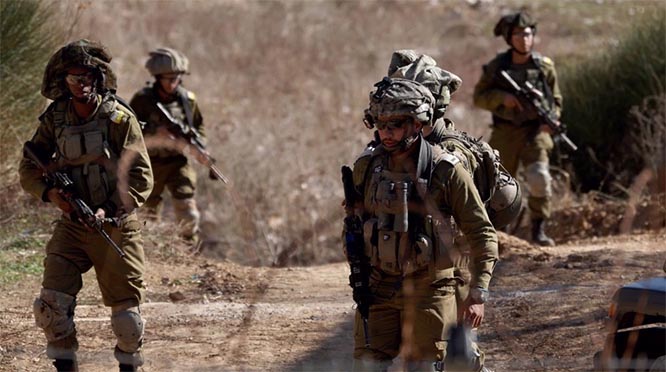
Syrian state TV reported that the casualties occurred during an overnight Israeli assault involving helicopters and drones on the town of Beit Jinn in the Damascus countryside. The attack followed an Israeli military unit’s entry into the town, where they were surrounded by local residents, leading to gunfire and direct confrontations.

According to the report, “The occupation army’s helicopters and artillery shelled Beit Jinn, located at the foothills of Mount Hermon, resulting in 13 martyrs and 25 injured civilians.” The broadcaster did not specify the full extent of damage.

Al-Ikhbariyah Syria confirmed that the shelling coincided with Israeli soldiers entering Beit Jinn, while artillery pounded surrounding areas. The broadcaster stated that the escalation began after local residents clashed with an Israeli patrol that had infiltrated the southern town and “kidnapped” three young men.

Following a two-hour exchange of heavy fire, Israeli forces withdrew and repositioned on the hill of Butt al-Warda at the town’s outskirts.

Israeli media acknowledged that six soldiers were wounded in the clashes—three of them seriously—describing the confrontation as a “sudden ambush” that forced the deployment of reserve units and air support to secure an exit route. No further details were provided.

The aggression has fueled renewed displacement from Beit Jinn, with residents fleeing to nearby villages amid increasingly frequent Israeli attacks.

The raid came just a day after Israeli troops carried out another ground incursion into Umm al-Luqas village in Quneitra province. According to SANA, an Israeli unit in four vehicles entered the village, raided several homes, and later withdrew.

Syria condemned the repeated incursions as violations of the 1974 Disengagement Agreement and UN resolutions, urging the international community to enforce compliance and pressure Israel to halt its operations and withdraw fully.

Israel has expanded its attacks across Syrian territory following the collapse of the Assad government last year. Prime Minister Benjamin Netanyahu has reportedly instructed his forces to push deeper into Syrian territory and seize strategic positions.

Meanwhile, critics say the HTS-led interim government’s inaction and growing normalization gestures toward Israel have emboldened Tel Aviv to intensify its military operations. HTS, formerly linked to al-Qaeda, seized control of Damascus last December, formally ending Assad’s rule.

Comments

Add new comment

  • Coastaldigest.com reserves the right to delete or block any comments.
  • Coastaldigset.com is not responsible for its readers’ comments.
  • Comments that are abusive, incendiary or irrelevant are strictly prohibited.
  • Please use a genuine email ID and provide your name to avoid reject.
News Network
November 24,2025

israelsyra.jpg

Israeli forces have pushed over the Syrian frontier, erecting a checkpoint and stopping vehicles in the southwestern city of Quneitra, in yet another breach of the Arab country’s sovereignty.

The violation took place on Sunday, when the troops made their way across the border, setting up the outpost near the Ain al-Bayda junction in northern Quneitra, Syrian outlets reported.

According to the al-Ikhbariya paper, an Israeli detachment positioned itself at the junction, halting cars and conducting searches.

The Syrian Arab News Agency (SANA) reported that three Israeli military vehicles then moved further into the northern countryside, deploying between the town of Jubata al-Khashab and the villages of Ofaniya and Ain al-Bayda. The agency added that a separate Israeli unit mounted a new incursion in the central region, approaching the villages of Umm Batina and al-Ajraf.

Residents said such activities have surged in recent months, pointing to Israeli advances onto farmland, leveling of extensive forested areas, arrests, and spread of mobile checkpoints.

The Israeli regime began markedly increasing its military aggression against Syria last year.

The escalation coincided with increasingly ferocious onslaughts throughout the country by the so-called Hay'at Tahrir al-Sham (HTS) Takfiri terrorist group, which the government of President Bashar al-Assad had confined to northwestern Syria. The HTS, however, managed to overthrow the government as the Israeli attacks would pummel the country’s civilian and defensive infrastructure.

Various reports have shown that, during the escalation, the regime conducted more than 1,000 airstrikes on the Syrian territory and over 400 ground raids into the south.

Following the collapse of the Assad government, Tel Aviv also widened its grip over the occupied Golan Heights by taking control of a demilitarized buffer zone, in defiance of a 1974 Disengagement Agreement. Earlier this month, senior Israeli officials, including Prime Minister Benjamin Netanyahu, visited the buffer zone, prompting expressions of alarm on the part of the United Nations.

The United States, the regime’s biggest ally, has, meanwhile, been fraternizing the HTS head Abu Mohammed al-Jolani amid the widely reported prospect of rapprochement with Tel Aviv.

Comments

Add new comment

  • Coastaldigest.com reserves the right to delete or block any comments.
  • Coastaldigset.com is not responsible for its readers’ comments.
  • Comments that are abusive, incendiary or irrelevant are strictly prohibited.
  • Please use a genuine email ID and provide your name to avoid reject.