



SABIC approves SR15bn dividends

April 16, 2012

Sabic


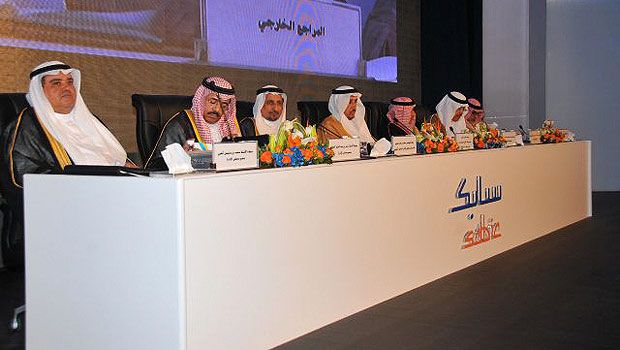
Jubail, April 16: The Annual General Assembly meeting of Saudi Basic Industries Corporation (SABIC) held on Saturday, under the chairmanship of Prince Saud bin Abdullah bin Thunayan Al-Saud, chairman of the Royal Commission for Jubail and Yanbu, and chairman of SABIC, approved payment of SR15 billion dividends to shareholders at SR5 per share for its operations in 2011.


The company had distributed dividends to shareholders for the first half of 2011 at SR2 per share. Eligibility for receiving the second half dividend payment at SR3 will be for shareholders listed in Tadawul (Saudi stock exchange) records as at the end of trading on the day of the General Assembly meeting.


The General Assembly also approved all other items on its agenda including the board of directors' report for the fiscal year ending Dec. 31, 2011, the company's audit report, the final accounts for the year, the board of directors' remunerations for the year, the conditions for holding the board of directors free from any liabilities for the year, and the addition of the remaining profits to the next general reserves.


The General Assembly also approved the recommendation of the auditing committee, which involves the selection of an external auditor to audit SABIC's quarterly and annual accounts. In addition to this, the fees for this independent auditor for the fiscal year 2012 were also determined and two members from the board of directors' list of candidates were selected to represent the private sector.


In his remarks, Prince Saud praised the participation of SABIC's shareholders on helping to achieve corporate development objectives and leadership ambitions. He pointed out that the company's growing success and performance is the result of integrated and combined efforts of SABIC's board, executive management, employees, shareholders, customers and suppliers. He also highlighted the important role of Custodian of the Two Holy Mosques King Abdullah and his government in contributing toward this success.


Prince Saud highlighted that SABIC has increased its production and marketing operations in the past year, bringing the total production of the company's manufacturing complexes to approximately 69 million tons, which is 3.3 percent above last year's. Also, sales rose by 5 percent to reach 54.2 million tons.


The company's total assets grew to SR333 billion compared to SR316 billion and the net income increased to SR29.2 billion compared to SR 21.5 billion. Furthermore, the shareholders' equity increased to SR138 billion compared to SR 121 billion and dividends increased to SR15 billion at SR5 per share compared to SR10.5 billion at SR3.5 per share.


Mohamed Al-Mady, SABIC vice chairman and CEO, outlined the company's achievements during 2011 and its efforts to double its national contributions and enhance its competitiveness in global markets.


"SABIC continues to invest in China and it represents the company's fastest growing global market. Perhaps the most important factor of our success in China is our partnership with Sinopec. We laid the foundation for a polycarbonate production complex with a 260 kilo metric tons per annum capacity. When fully operational in 2015, SABIC will be one of the largest producers of polycarbonate in the world. We also launched a technology center in China to serve the purpose of research and development of products in this promising market," said Al-Mady.


He also addressed the importance of the SABIC Academy, which was launched by the company last month. "The Academy is SABIC's own university. Its role is not limited to education and training, as it contributes strongly to the national gross domestic product and will have a positive effect on our company in the short and long run." He added: "We recognize that our future success depends primarily on our ability to overcome the challenges we are faced with, meet the needs of our customers, and ensure their success. I am confident that we have a talented team that is able to meet these challenges."


New SABIC brand

Meanwhile, Al-Mady unveiled the new SABIC brand at Saturday’s meeting. With the introduction of the new SABIC brand, the company is signaling and further reinforcing its intent to become the preferred world leader in chemicals.


SABIC's new tagline, Chemistry that matters, demonstrates a renewed focus on creating long-term relationships that deliver profitable growth and success. It represents SABIC's commitment toward partnering closely with customers, employees, suppliers, and the communities in which SABIC operates, powering mutual success and growth.


"Chemistry that matters, unites and inspires us all by capturing the true essence of SABIC," said Al-Mady. Over the past 24 months, we've listened closely to what matters most to our stakeholders, and have co-created a solid new foundation and positioning for our brand and organization. We are investing in our brand long-term, and adding three key ingredients to our formula for success - a strong global call to action, a renewed emphasis on existing SABIC values that guide our behavior and delivery, and a new identity and visual system to boldly project our brand and our company worldwide.

Comments

Add new comment

  • Coastaldigest.com reserves the right to delete or block any comments.
  • Coastaldigset.com is not responsible for its readers’ comments.
  • Comments that are abusive, incendiary or irrelevant are strictly prohibited.
  • Please use a genuine email ID and provide your name to avoid reject.
News Network
November 24,2025

israelsyra.jpg

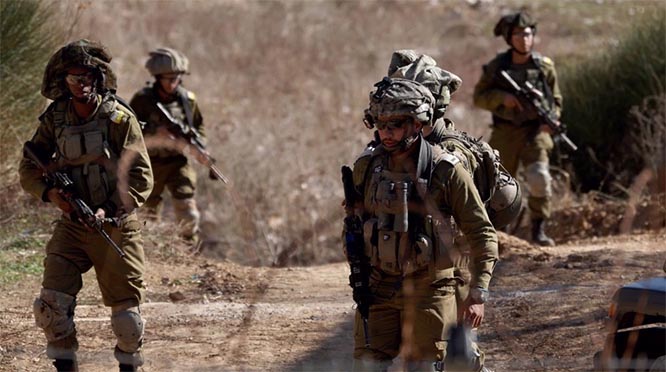
Israeli forces have pushed over the Syrian frontier, erecting a checkpoint and stopping vehicles in the southwestern city of Quneitra, in yet another breach of the Arab country’s sovereignty.

The violation took place on Sunday, when the troops made their way across the border, setting up the outpost near the Ain al-Bayda junction in northern Quneitra, Syrian outlets reported.

According to the al-Ikhbariya paper, an Israeli detachment positioned itself at the junction, halting cars and conducting searches.

The Syrian Arab News Agency (SANA) reported that three Israeli military vehicles then moved further into the northern countryside, deploying between the town of Jubata al-Khashab and the villages of Ofaniya and Ain al-Bayda. The agency added that a separate Israeli unit mounted a new incursion in the central region, approaching the villages of Umm Batina and al-Ajraf.

Residents said such activities have surged in recent months, pointing to Israeli advances onto farmland, leveling of extensive forested areas, arrests, and spread of mobile checkpoints.

The Israeli regime began markedly increasing its military aggression against Syria last year.

The escalation coincided with increasingly ferocious onslaughts throughout the country by the so-called Hay'at Tahrir al-Sham (HTS) Takfiri terrorist group, which the government of President Bashar al-Assad had confined to northwestern Syria. The HTS, however, managed to overthrow the government as the Israeli attacks would pummel the country’s civilian and defensive infrastructure.

Various reports have shown that, during the escalation, the regime conducted more than 1,000 airstrikes on the Syrian territory and over 400 ground raids into the south.

Following the collapse of the Assad government, Tel Aviv also widened its grip over the occupied Golan Heights by taking control of a demilitarized buffer zone, in defiance of a 1974 Disengagement Agreement. Earlier this month, senior Israeli officials, including Prime Minister Benjamin Netanyahu, visited the buffer zone, prompting expressions of alarm on the part of the United Nations.

The United States, the regime’s biggest ally, has, meanwhile, been fraternizing the HTS head Abu Mohammed al-Jolani amid the widely reported prospect of rapprochement with Tel Aviv.

Comments

Add new comment

  • Coastaldigest.com reserves the right to delete or block any comments.
  • Coastaldigset.com is not responsible for its readers’ comments.
  • Comments that are abusive, incendiary or irrelevant are strictly prohibited.
  • Please use a genuine email ID and provide your name to avoid reject.
News Network
November 28,2025

fire.jpg

Several Syrians were killed and more than two dozen others injured in Israeli strikes on the outskirts of Damascus, amid intensified incursions by the occupying regime since the fall of former president Bashar al-Assad and the rise of Hayat Tahrir al-Sham (HTS) rule.

Syrian state TV reported that the casualties occurred during an overnight Israeli assault involving helicopters and drones on the town of Beit Jinn in the Damascus countryside. The attack followed an Israeli military unit’s entry into the town, where they were surrounded by local residents, leading to gunfire and direct confrontations.

According to the report, “The occupation army’s helicopters and artillery shelled Beit Jinn, located at the foothills of Mount Hermon, resulting in 13 martyrs and 25 injured civilians.” The broadcaster did not specify the full extent of damage.

Al-Ikhbariyah Syria confirmed that the shelling coincided with Israeli soldiers entering Beit Jinn, while artillery pounded surrounding areas. The broadcaster stated that the escalation began after local residents clashed with an Israeli patrol that had infiltrated the southern town and “kidnapped” three young men.

Following a two-hour exchange of heavy fire, Israeli forces withdrew and repositioned on the hill of Butt al-Warda at the town’s outskirts.

Israeli media acknowledged that six soldiers were wounded in the clashes—three of them seriously—describing the confrontation as a “sudden ambush” that forced the deployment of reserve units and air support to secure an exit route. No further details were provided.

The aggression has fueled renewed displacement from Beit Jinn, with residents fleeing to nearby villages amid increasingly frequent Israeli attacks.

The raid came just a day after Israeli troops carried out another ground incursion into Umm al-Luqas village in Quneitra province. According to SANA, an Israeli unit in four vehicles entered the village, raided several homes, and later withdrew.

Syria condemned the repeated incursions as violations of the 1974 Disengagement Agreement and UN resolutions, urging the international community to enforce compliance and pressure Israel to halt its operations and withdraw fully.

Israel has expanded its attacks across Syrian territory following the collapse of the Assad government last year. Prime Minister Benjamin Netanyahu has reportedly instructed his forces to push deeper into Syrian territory and seize strategic positions.

Meanwhile, critics say the HTS-led interim government’s inaction and growing normalization gestures toward Israel have emboldened Tel Aviv to intensify its military operations. HTS, formerly linked to al-Qaeda, seized control of Damascus last December, formally ending Assad’s rule.

Comments

Add new comment

  • Coastaldigest.com reserves the right to delete or block any comments.
  • Coastaldigset.com is not responsible for its readers’ comments.
  • Comments that are abusive, incendiary or irrelevant are strictly prohibited.
  • Please use a genuine email ID and provide your name to avoid reject.