Maiden in-depth report on Saudi film industry launched

News Network
October 2, 2020

Riyadh, Oct 2: The first in-depth report into film skills in Saudi Arabia was published on Thursday, outlining the skills and capabilities needed to strengthen and grow the sector in the future.

The “Saudi Film Skills” report by the British Council was commissioned to assess the current landscape of the Saudi film industry and involved surveying 422 people in the sector. It comes two years after cinema theater was officially allowed to open at a commercial level, and out of those surveyed, 40 percent were filmmakers, followed by students 30 percent and crew 17 percent.

The report found that Saudi Arabia has the potential to have more films made by Saudis, in Saudi Arabia, about Saudi.

When asked what they felt was the biggest advantage of the Saudi film sector, 35 percent of those surveyed said the cast and on-screen talent, followed by the availability of film locations 19 percent and market potential and audience demand 17 percent.

According to the report, there is a tremendous economic potential for film in Saudi Arabia, with Saudi consumers preferring to watch films depicting their own culture.

Ninety-three per cent of all Saudi film companies film locally, with over a third 39 percent of the film sector residing in Riyadh, followed by 29 percent residing in the western cities of Jeddah and Makkah.

The survey found that the typical Saudi film producer or company has produced 12 productions since inception, and the vast majority of these were short productions. Short films accounted for over half of all productions 54 percent, followed by web productions 30 percent, and only four percent were feature films. Meanwhile, there is a significant pipeline of production with 12 percent in development.

Currently, online streaming, 77 percent, is the most prominent form of Saudi film distribution. This is followed by film distribution at film festivals (46 percent), private screening/viewings (25 percent) and peer-to-peer sharing (11 percent). Out of those surveyed, only seven percent had screened in cinemas followed by four percent distributing via inflight entertainment.

In the future, those surveyed felt that online streaming and over-the-top services were the viewing platforms with the greatest opportunity for Saudi film; with Netflix (50 percent) presenting the greatest opportunity, followed by YouTube (39 percent) and Shahid by MBC (4 percent).

When asked where they would like to work, a large majority of companies (71 percent) indicated their desire to work in, partner with or co-produce films in the Middle East and North Africa. Key locations for foreign production mirrored current activities — and this may reflect existing links between Egypt and Saudi Arabia. This was followed by interest in working in the US and Americas (59 percent) and Europe (43 percent).

Within the industry, there is a considerable interest in working with the UK film sector, with nearly a third (31 percent) of film producers and companies indicating an interest in working with the UK. Seventy-two per cent of those surveyed were very interested in partnering with the UK, with Saudi film producers and companies highlighting the professionalism of the UK sector, and their strengths in pre-production. Of those who expressed interest in collaborating with the UK, almost half (47 percent) perceived the biggest benefit of collaborating to be UK’s leading film industry experience, followed by its international standards of working (21 percent). In terms of challenges, cultural differences were cited as the biggest issue, followed by the cost of travel (20 percent).

In terms of demographics, the report found that the film sector is characterized by a workforce of young people under 30, reflecting the national population. The average age of all respondents was 26, with almost three quarters (72 percent) of respondents being younger than 30 years. Out of these, a third (34 percent) were female.

The motivations for women working in the sector varied from their male peers. A higher percentage of women (51 percent) work in film because of their love of visual storytelling compared to the percentage of men (36 percent). The largest variation perhaps is the financial opportunity they see in the sector, with only 2 percent of women citing this as their motivation, compared to 16 percent of men.

However, the report highlighted several challenges for the Saudi film Industry. Nearly a half of respondents (43 percent) felt that the greatest barrier to growing the industry over the next five years was finance. This was followed by a skilled cast (13 percent) and access to film training and education (11 percent).

Many respondents felt that the recruitment of crew was a significant issue for film companies, with over half of those surveyed finding it difficult; 41 percent citing skills shortages as the biggest challenge in recruiting, followed closely by the cost of labor (38 percent) and a shortage of applicants (13 percent).

For future upskilling, 28 percent of respondents would prefer for the workforce to train in Saudi Arabia. This is currently limited to two women’s universities (Saudi Arabia – Effat University and Dar El Hekma University,) and outside providers (such as the New York Film Academy), with many obtaining training and work experience in other countries including in the US and the UK. Out of all the film students surveyed, 53 percent said they were extremely likely to pursue a career in film.

Speaking about the findings and the report, Eilidh Kennedy McLean, Director, British Council, Saudi Arabia said: “The British Council is delighted to support this Film Skills Research, helping map the skills needs in Saudi Arabia at an important moment in the Kingdom’s cultural journey. The report makes a number of recommendations and which we hope will help support opportunities for further training and development to deliver a vibrant and commercially successful film sector.

“The report will also facilitate engagement with organizations in the UK, identifying opportunities for collaboration and partnerships to further enable the development of the Saudi film sector, creating new opportunities for film makers, new jobs, careers and opportunities for future generations. I’m grateful for the engagement and support of the Ministry of Culture and look forward to building on this collaboration and creating even more partnerships and opportunity for Saudi Arabia and the UK.”

The Saudi Film Skills Research was carried out in 2019 and 2020 by Nordicity, a consulting company that specializes in policy and strategy research and is intended to provide evidence-based recommendations for the British Council’s Culture and Sport program in the Gulf. This program focuses on developing long term, collaborative relationships between organizations in the UK and in the Gulf through support to cultural institutions, festivals and public events. In particular, the program aims to share UK expertise in the creative industries with young people in the Arab world through capacity building programs.

Comments

Add new comment

  • Coastaldigest.com reserves the right to delete or block any comments.
  • Coastaldigset.com is not responsible for its readers’ comments.
  • Comments that are abusive, incendiary or irrelevant are strictly prohibited.
  • Please use a genuine email ID and provide your name to avoid reject.
News Network
November 22,2025

gaza.jpg

The Israeli regime’s forces have killed two Palestinian children in the Gaza Strip every day since the ceasefire began in early October, UNICEF has warned.

The UN children’s agency said on Friday that Israeli forces continue to attack Palestinians in Gaza even though the agreement was meant to stop the killing.

“Since 11 October, while the ceasefire has been in effect, at least 67 children have been killed in conflict-related incidents in the Gaza Strip. Dozens more have been injured. That is an average of almost two children killed every day since the ceasefire took effect,” UNICEF spokesperson Ricardo Pires said in Geneva, reminding that each number in the statistics represents a child whose life had ended violently.

“These are not statistics,” he said. “Each child had a story, a family, and a future that was stolen from them.”

Data from Palestinian factions, human rights groups, and government bodies recorded since the US-brokered ceasefire deal went into effect on October 10 show that Israeli forces have carried out numerous attacks, each constituting a separate ceasefire violation.

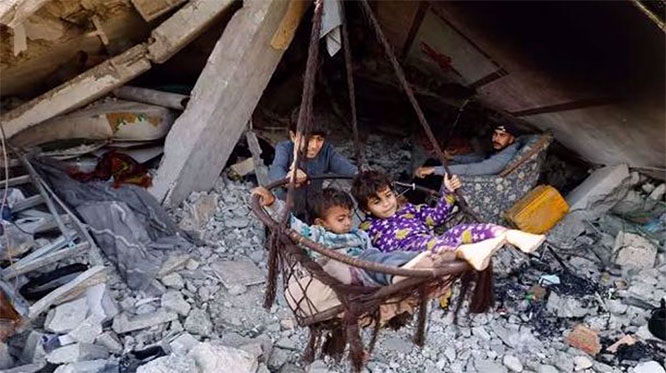
UNICEF teams say they repeatedly continue to witness heart-wrenching scenes of fearful Palestinian children sleeping outdoors with amputated limbs, while others live as orphans in flooded, makeshift shelters.

“I saw this myself in August. There is no safe place for them. The world cannot normalize their suffering,” Pires said, lamenting that the UN could “do a lot more if the aid that is really needed was entering faster.”

The UNICEF spokesperson warned that with the advent of winter, the risks for hundreds of thousands of displaced children will increase.

He warned, “The stakes are incredibly high” for children as winter acts as a threat multiplier, where children have no heating, no insulation, and few blankets. He said respiratory infections rise.

“Too many children have already paid the highest price,” Pires said. “Too many are still paying it, even under a ceasefire. The world promised them it would stop and that we would protect them.”

“Now we must act like it,” the UNICEF spokesperson added.

Since the Israeli regime launched its genocidal war against Palestinians in Gaza in October 2023, it has killed nearly 70,000 people in the territory, most of them women and children, and injured over 170,000 more, while reducing most of the structures in the enclave to rubble.

Comments

Add new comment

  • Coastaldigest.com reserves the right to delete or block any comments.
  • Coastaldigset.com is not responsible for its readers’ comments.
  • Comments that are abusive, incendiary or irrelevant are strictly prohibited.
  • Please use a genuine email ID and provide your name to avoid reject.
News Network
November 24,2025

lebanon.jpg

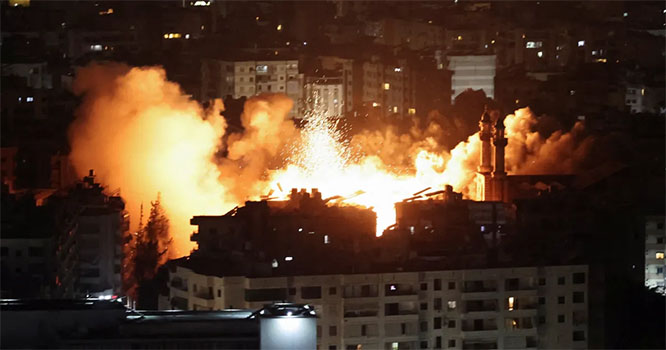
Israel has launched a new act of aggression on a residential neighborhood in Lebanon's capital, Beirut, killing and injuring about two dozen civilians.

The Israeli regime's military said in a statement that its forces carried out a so-called precise strike in a residential apartment in Dahiyeh in the southern suburbs of Beirut on Sunday.

The aggression targeted residential areas, killing at least five people and injuring more than 28 people, Lebanon's Health Ministry said. 

Hezbollah announced the martyrdom of senior Hezbollah commander Haytham Ali Tabatabai and four resistance fighters.

Lebanese President Michel Aoun condemned the airstrike, calling it a clear demonstration of Tel Aviv’s disregard for repeated international calls to halt violations on Lebanese soil.

“Israel refuses to implement international resolutions and all efforts aimed at ending the escalation and restoring stability,” Aoun said, urging the international community to take action to prevent further aggression.

The Palestinian Islamic Jihad movement also condemned the attack, holding the international community accountable. 

“The international community bears responsibility and continues to provide cover for these attacks as long as it does not restrain the occupiers,” said Ali Abu Shahin, a member of the group’s political bureau.

Israeli prime minister Benjamin Netanyahu’s office announced that the Israeli army carried out a strike “in the heart of Beirut."

Netanyahu reportedly approved the operation following recommendations from top Israeli security officials.

Two senior US officials commented on the Israeli strike.

The first official said that Israel did not notify Americans in advance about the attack. "We were informed immediately after the strike was carried out."

The second senior official said that the "US knew for several days that Israel was planning to escalate its strikes in Lebanon, but did not know in advance the timing, location, or target of the strike."

Speaking from the site of the Israeli strike, Lebanese MP Ali Ammar condemned the attack as part of a broader campaign of aggression that has targeted "all of Lebanon since the Washington-sponsored ceasefire."

He stated that "any attack on Lebanon is a violation of red lines; this aggression is part and parcel of the entity that targets Lebanon's dignity, sovereignty, and security of citizens."

Ammar went on to say the resistance is responding with "utmost wisdom, patience, and will confront the enemy at the appropriate time."

"Unfortunately, the enemy is emboldened to commit its aggression by voices within Lebanon that have turned themselves into tools that support its aggression," he added.

The Israeli attack on the southern suburbs of the Lebanese capital is the latest blatant violation of the ceasefire Israel signed with Hezbollah in November 2024, which was intended to end hostilities that had escalated into full-scale war.

An Israeli strike on the Ain al-Hilweh camp near Sidon in southern Lebanon late Tuesday killed at least 14 people. It wounded several others, including young students, according to the Lebanese health ministry.

The military claimed the attack targeted “a Hamas training compound” used to plan and carry out attacks against the regime -- a claim that has frequently been made without evidence.

Hamas rejected the allegations as “a blatant lie aimed at justifying the massacre,” stating it had “no military installations in the Palestinian camps in Lebanon” and that the targeted site was merely “an open sports field.”

According to Lebanese authorities, Israeli attacks have killed approximately 4,000 people and displaced more than 1.2 million residents across the country since October 2023.

Comments

Add new comment

  • Coastaldigest.com reserves the right to delete or block any comments.
  • Coastaldigset.com is not responsible for its readers’ comments.
  • Comments that are abusive, incendiary or irrelevant are strictly prohibited.
  • Please use a genuine email ID and provide your name to avoid reject.